
#1391. The French Connection S99
Ever wondered what it might be like to live in a sardine can for a month or two at a time ?

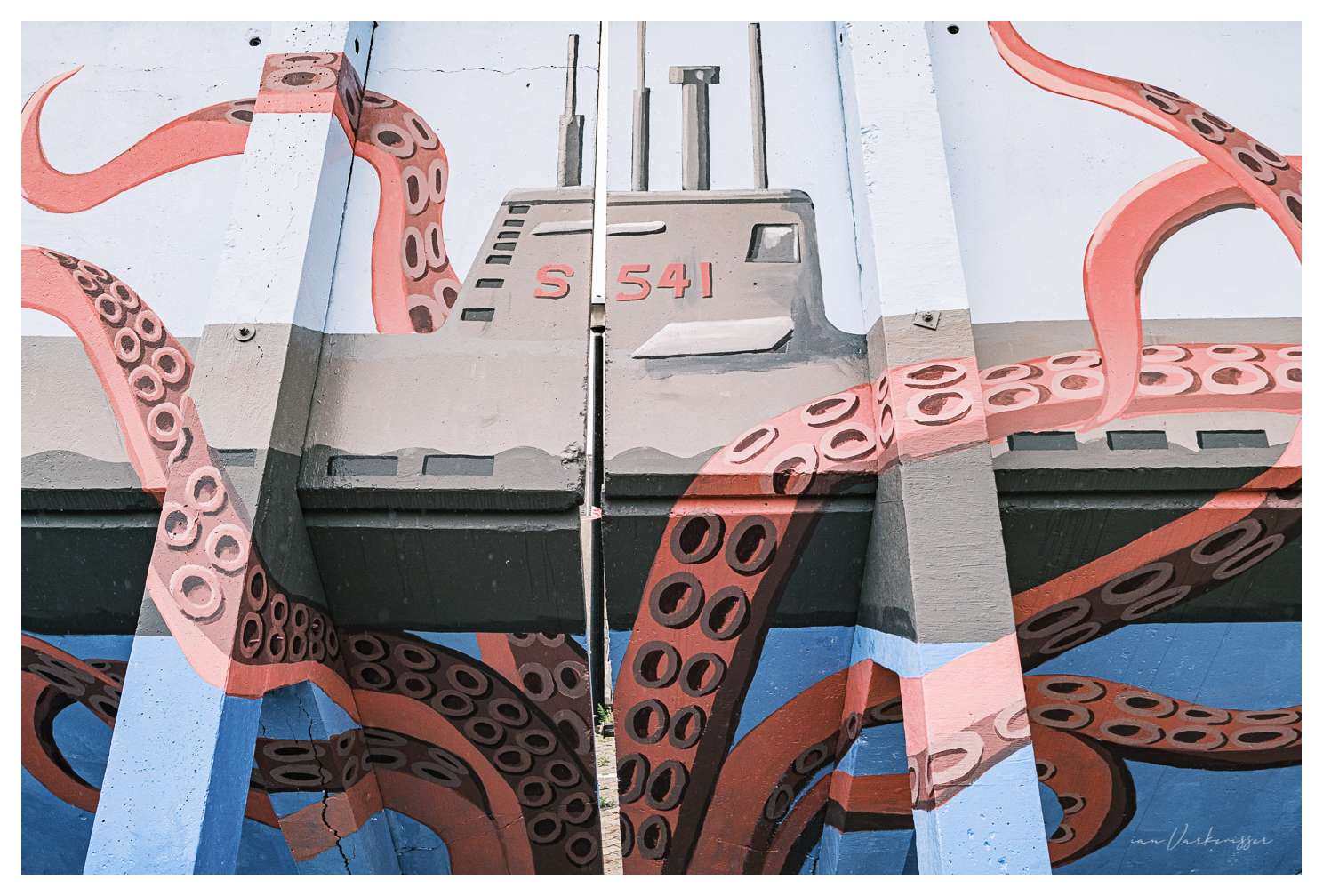
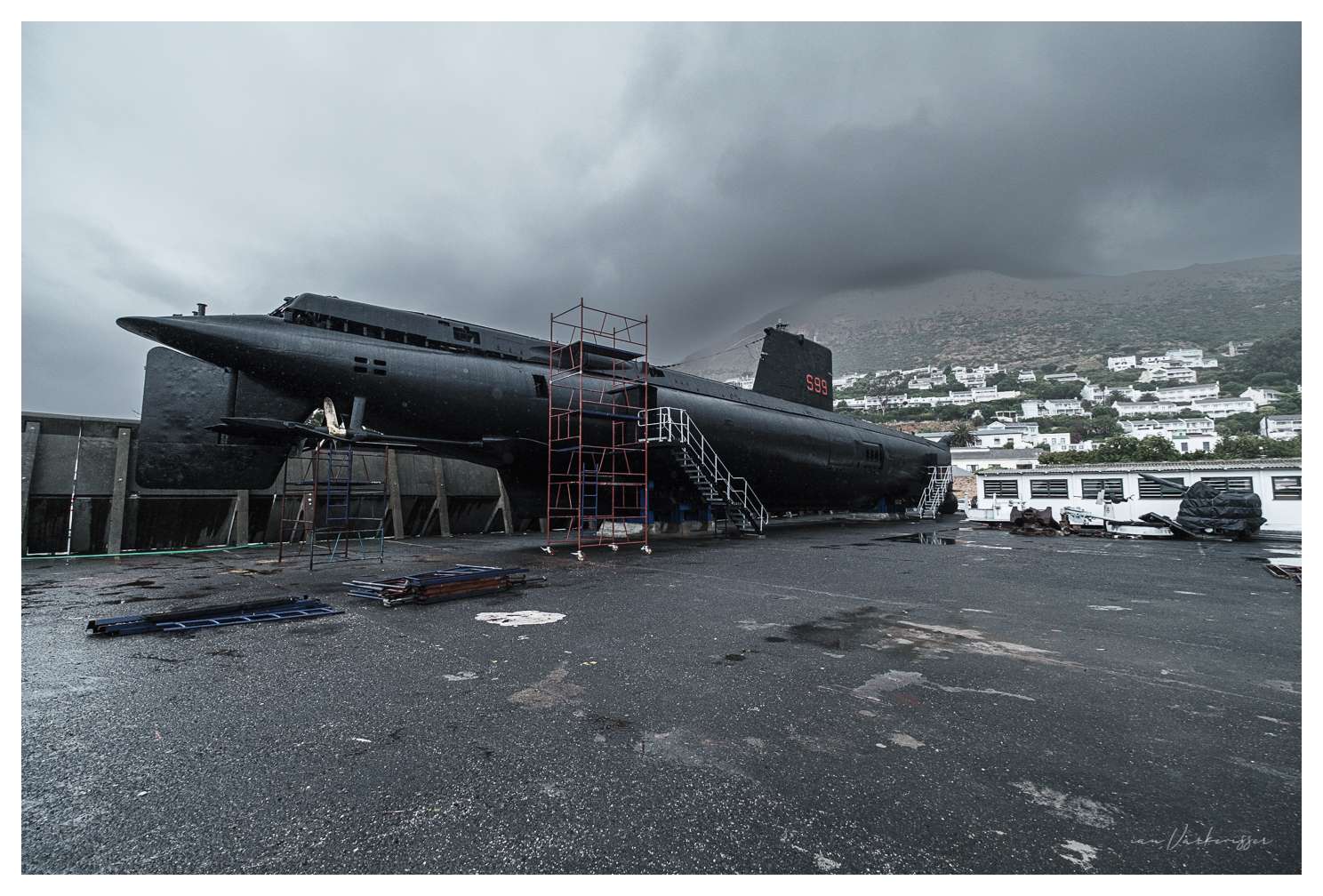
A friend , a naval architect , engineer and now retired admiral has been involved in the resiting and restoration of a decommissioned submarine. Decommissioned in 2003 the submarine lay rotting in the local naval base having been used for a period of time as a tourist attraction.

A group of retired naval personnel got together and raised funds to lift the sub from the water , move it to a site on dry land in the naval dockyard , restore it and turn it into a permanent museum recently. As it is nearing completion and before it re-opens to the public I was given the opportunity of an unhindered photo shoot before it opens to the public.

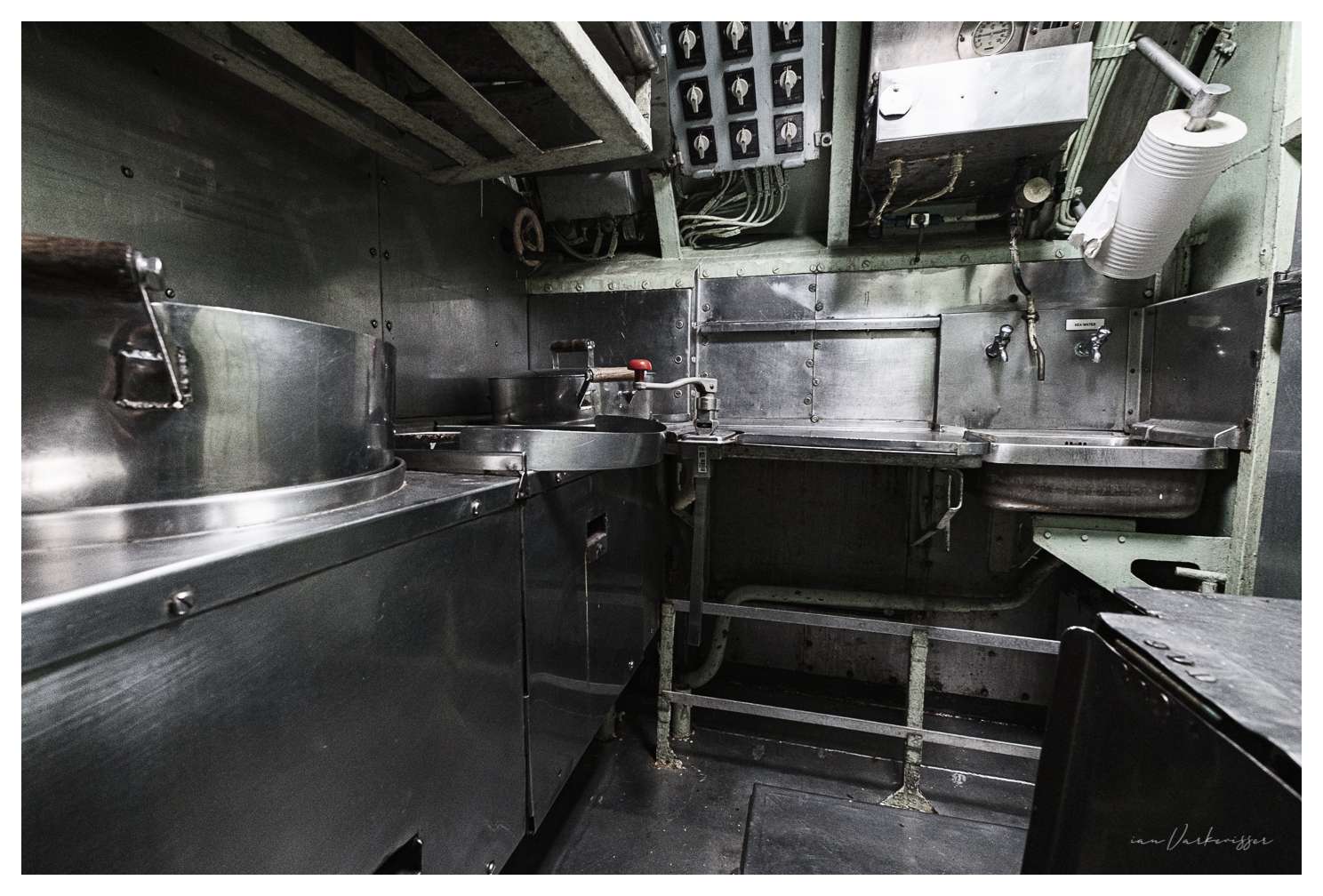
The submarine gives those who have never been on a submarine the opportunity to experience the life of a "bubblehead" ( Internationally recognized term of endearment for a submarine sailor) in a submarine and its intricacies, albeit for a brief visit.  The interior has been perfectly preserved and one is able to see and experience all its equipment in the cramped setting – for example, the tiny galley.

Working on the hot bunk system and 3 shifts the sparce accommodation catered for 1 bunk per 3 crew members. With limited available water for ablutions during extended operations the motto of the submarine corps was unsurprisingly "We come unclean".

To enhance the industrial look of the subject matter the Fujifilm Nostalgic Negative in camera E-Film has been used with added clarity. Of necessity a 10-24 mm focal length F/4 lens was used, and mostly shot at high ISO 3200 and above. The high ISO adds a little grit to the images which suits the subject matter.

I will put all the boring factual stuff and the French connection at the end of the post for those interested.
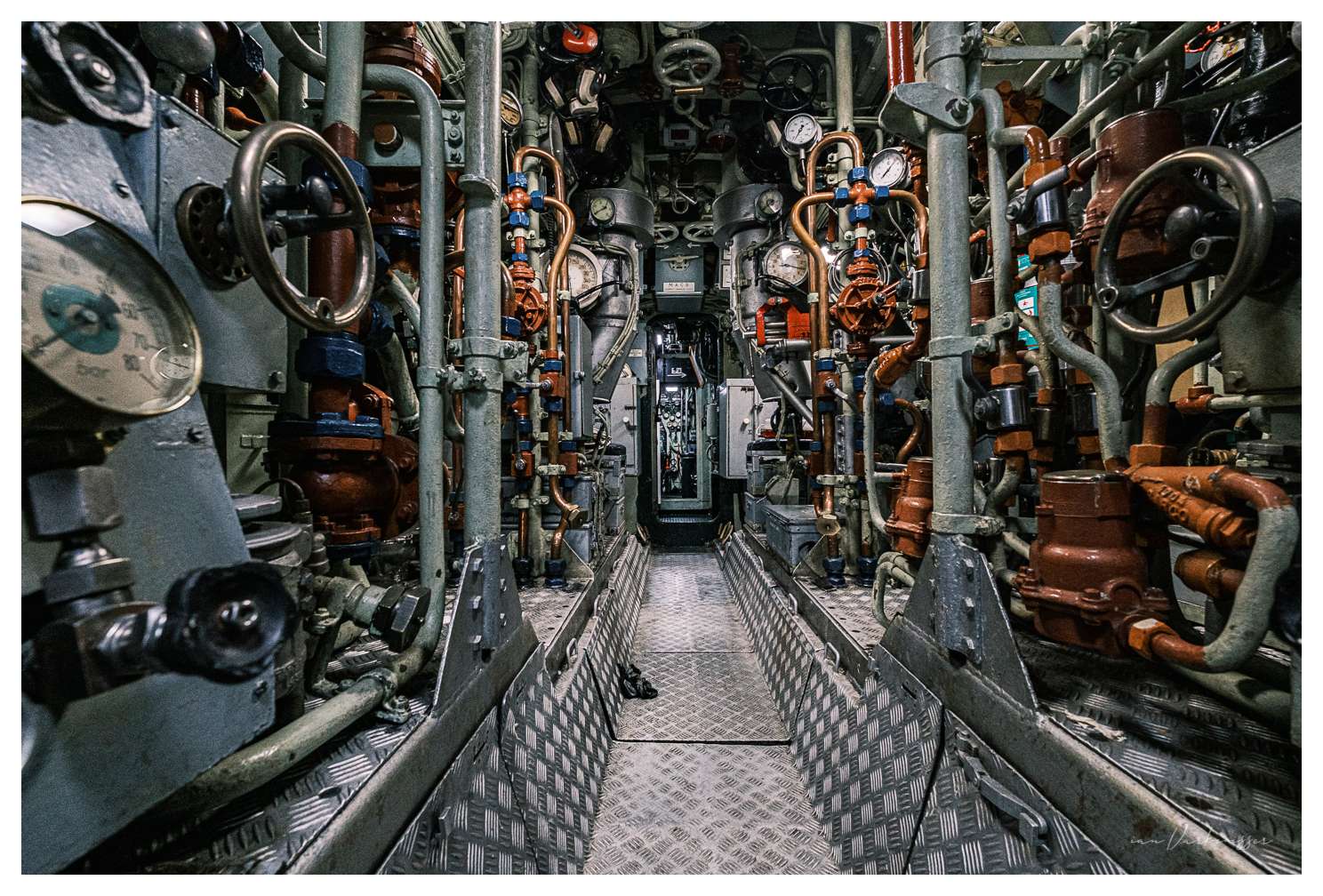
With a beam of 6.75m the gangway down the sub is only around 800mm , roughly the width of a doorway.
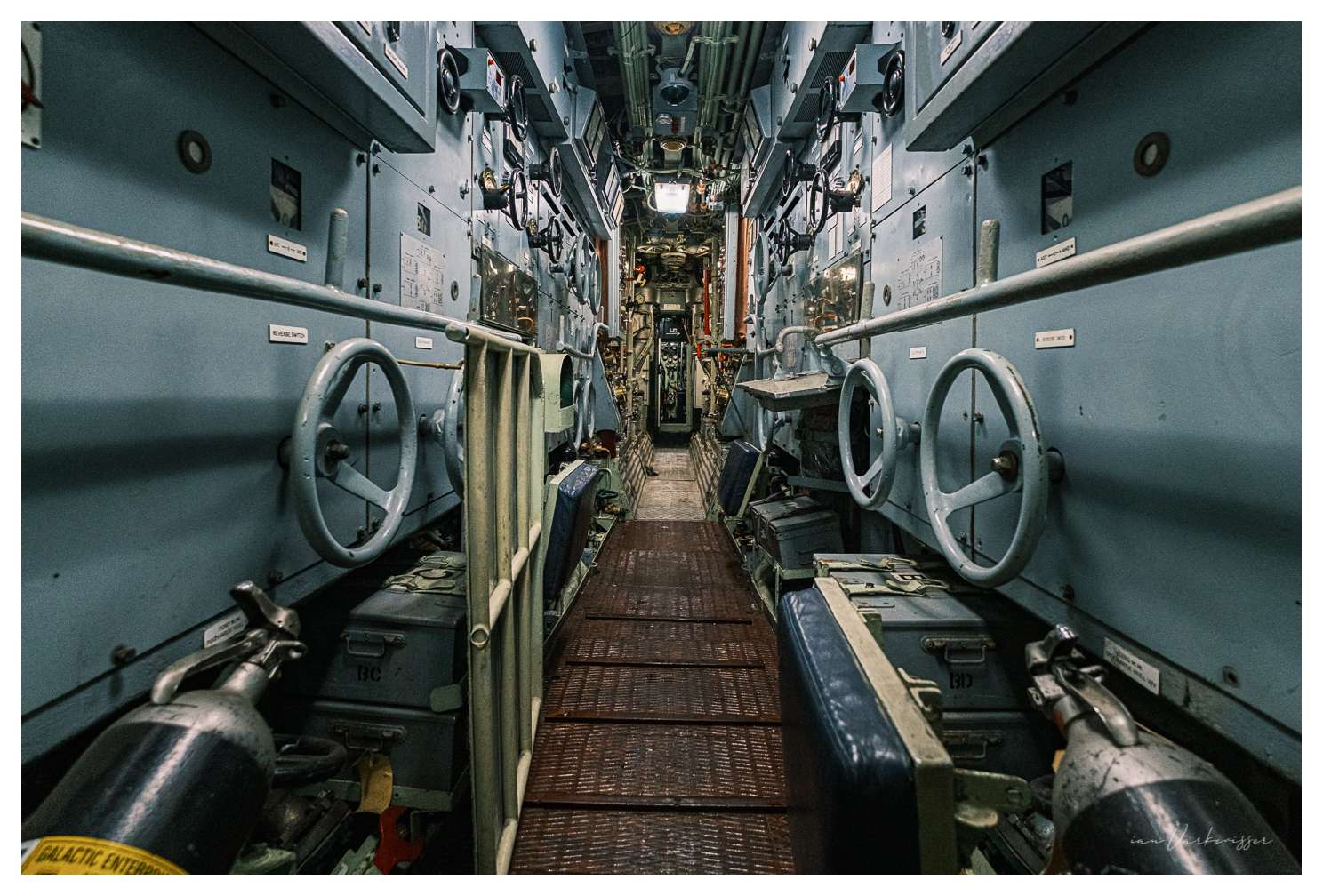
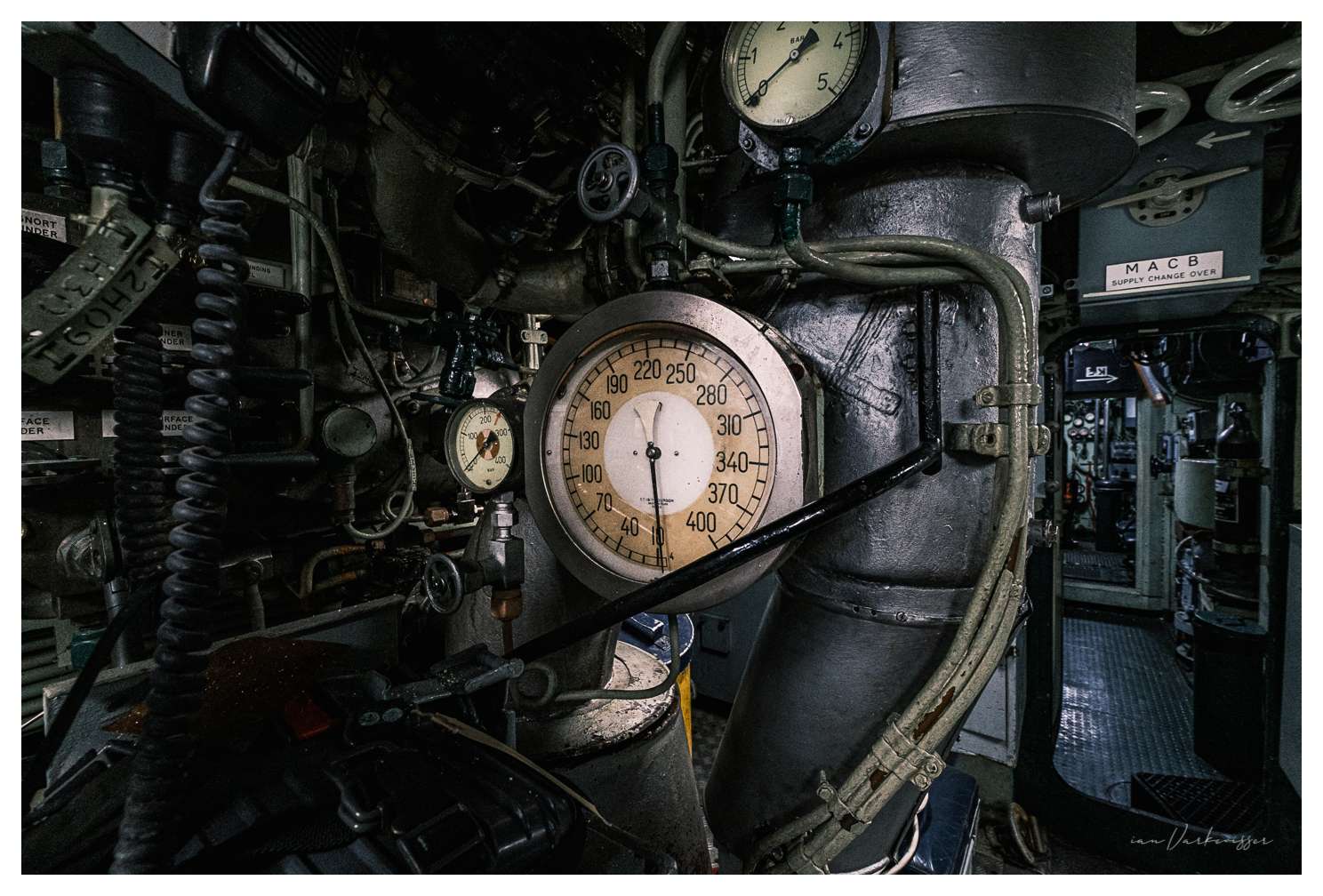
The piping inside the submarine is very chaotic, photogenic, and colourful yet functionally coded. For instance
- blue = fresh water
- black = waste
- brown = fuel
- green = sea water
- red = fire fighting
- yellow = flammables
- orange = oil other than fuel
- violet = acids and alkalis
The sparce 1 man galley. Being French built it was rumored that underneath the galley was the bulk wine storage compartment. However being of more sober habits ( of course ) it was never utilised as such.
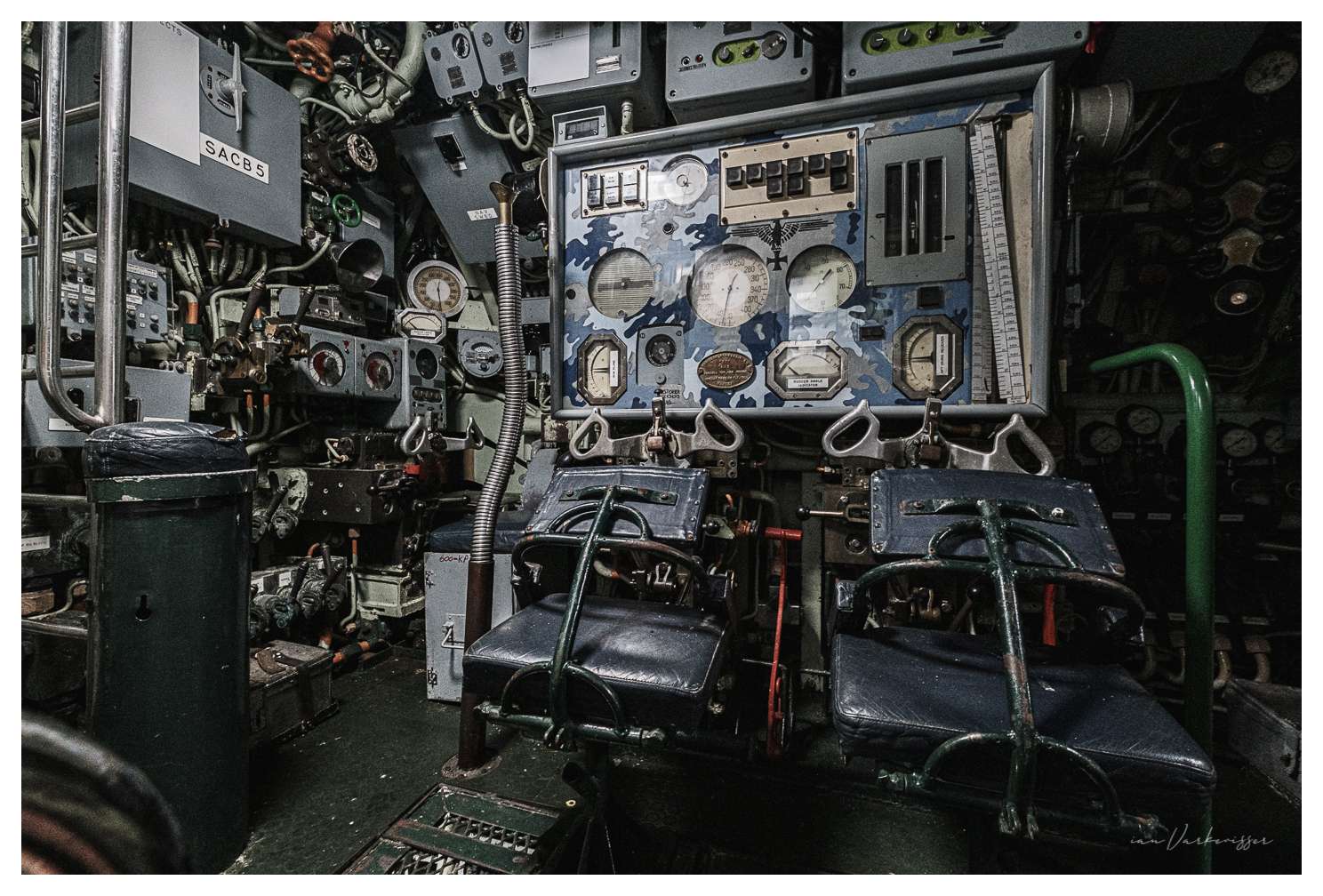
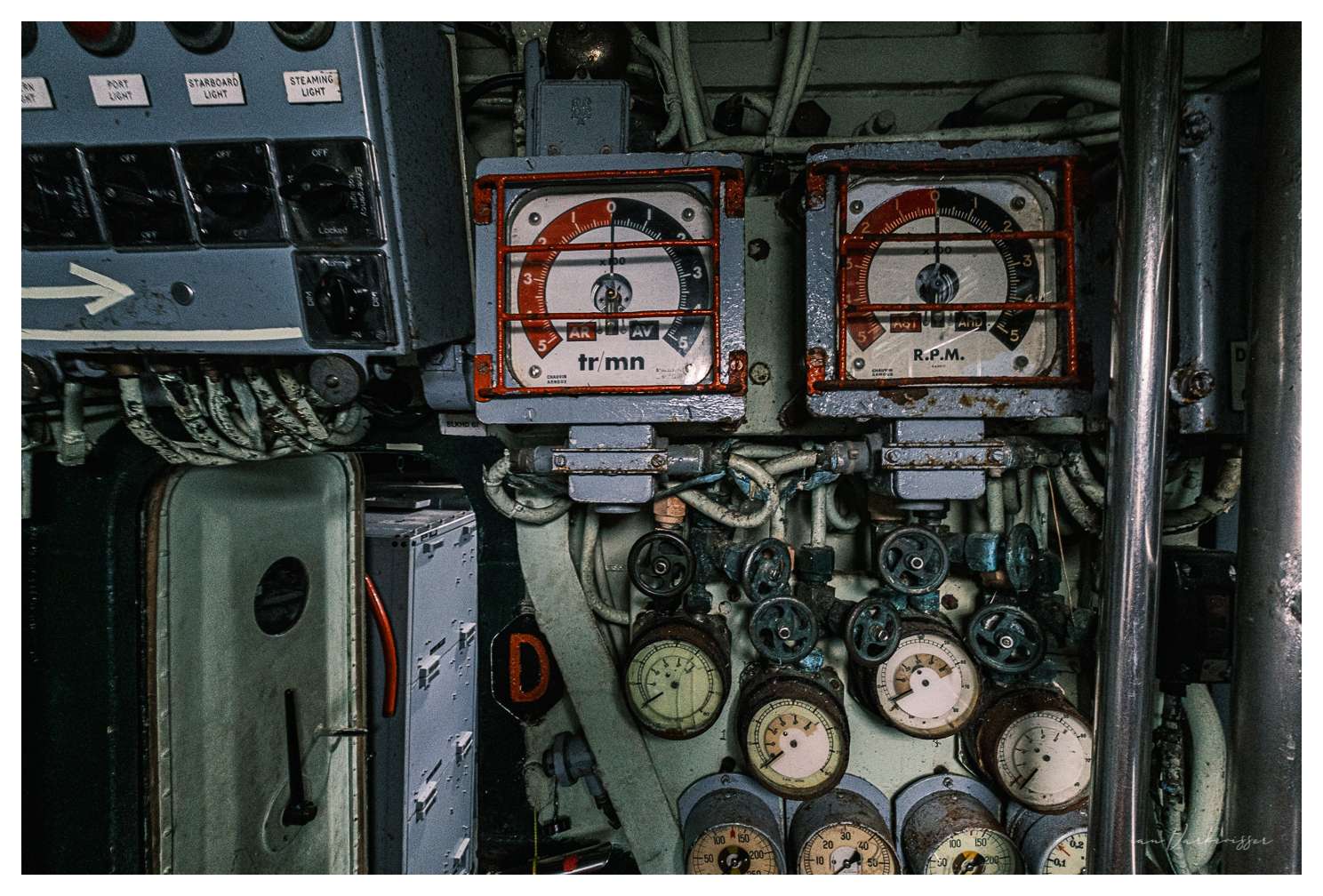
The pilot and co-pilots seat with pitch and trim control joysticks, rudder angle , bow plane and aft diving receiver indicators.
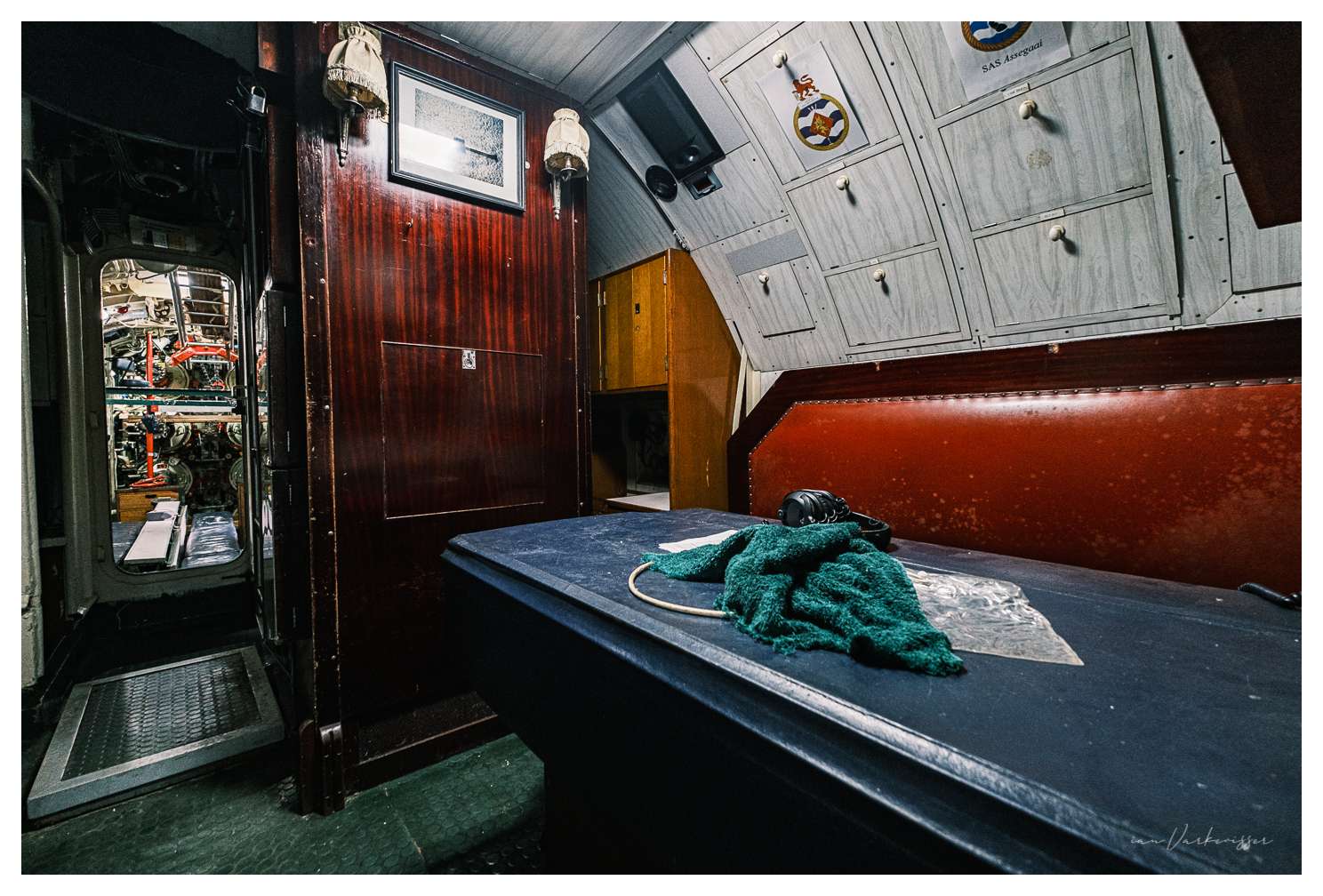
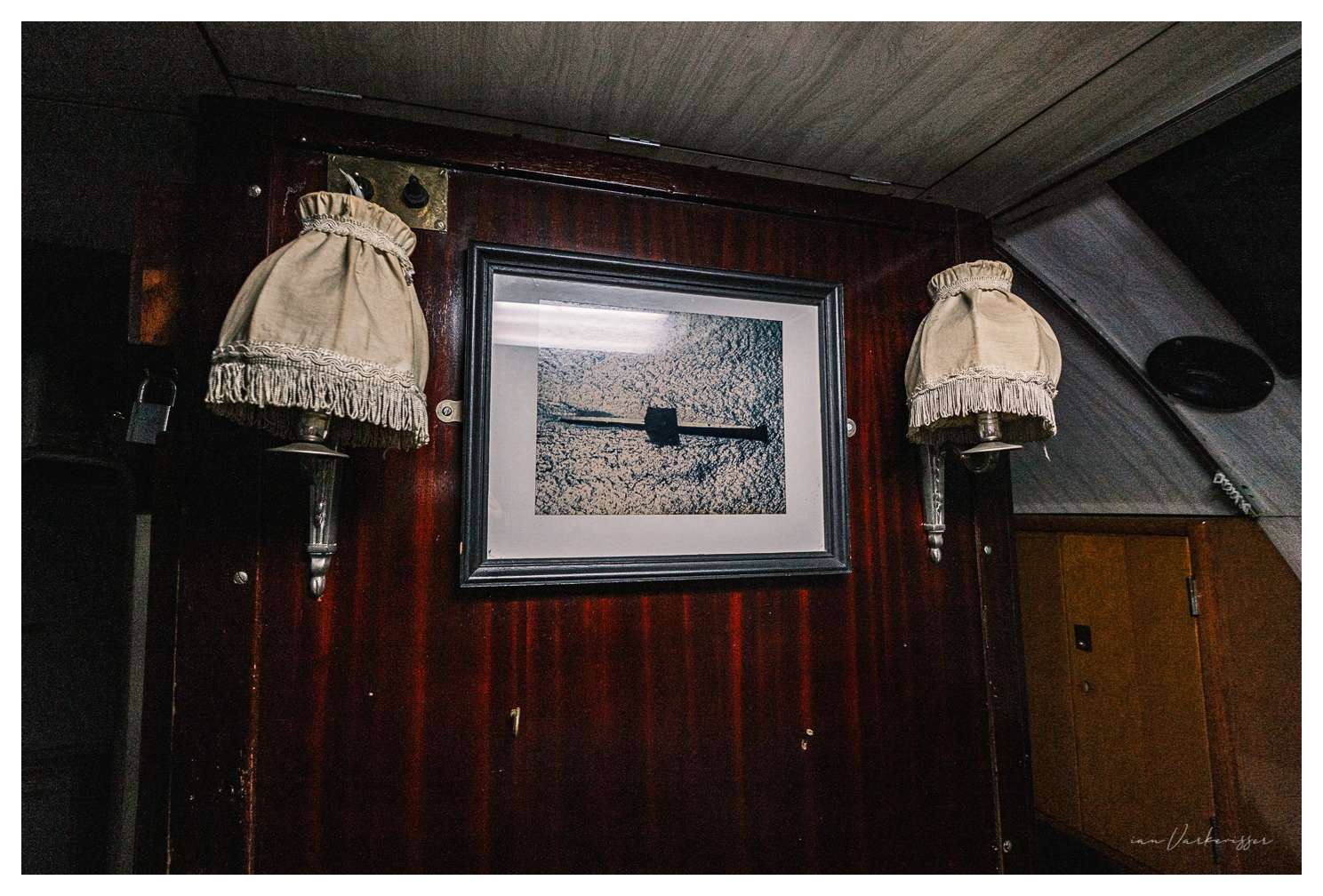
The wardroom ( doubling as captains quarters ) with ultra luxury light fittings.
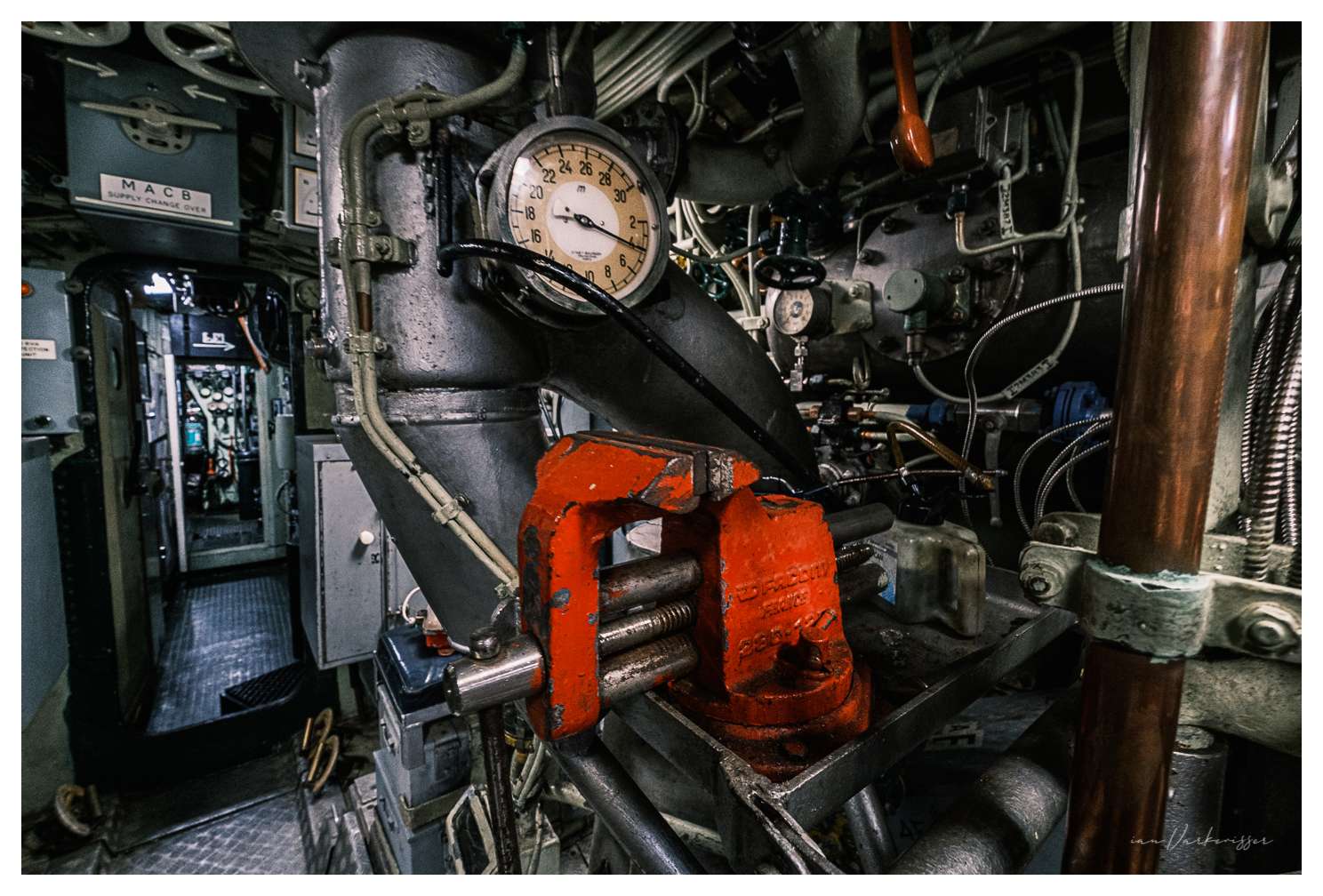
The fully fitted workshop 70s style for on the fly ad hoc repairs
The hi-fi wi-fi spotify and netflix connection for entertainment :)
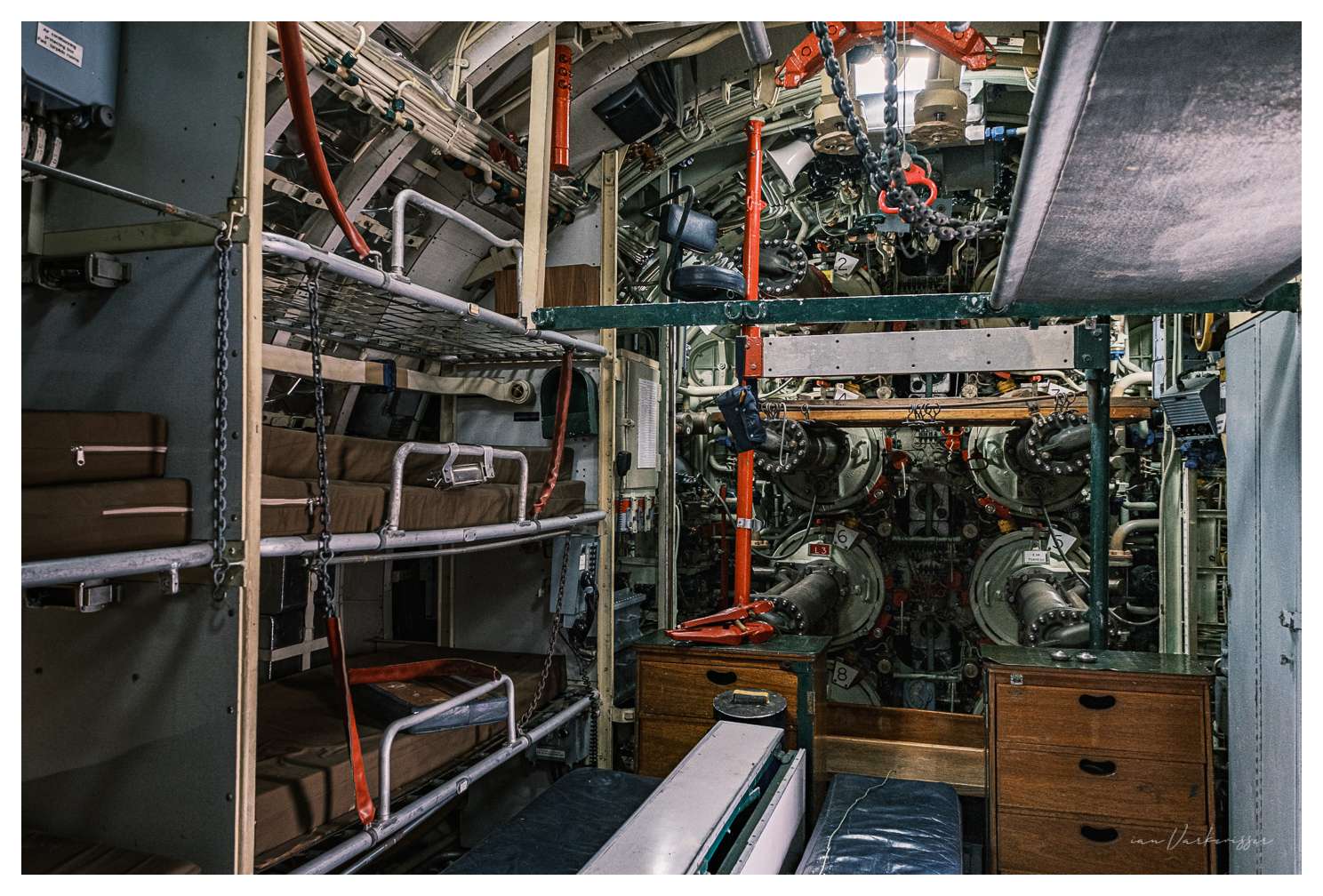
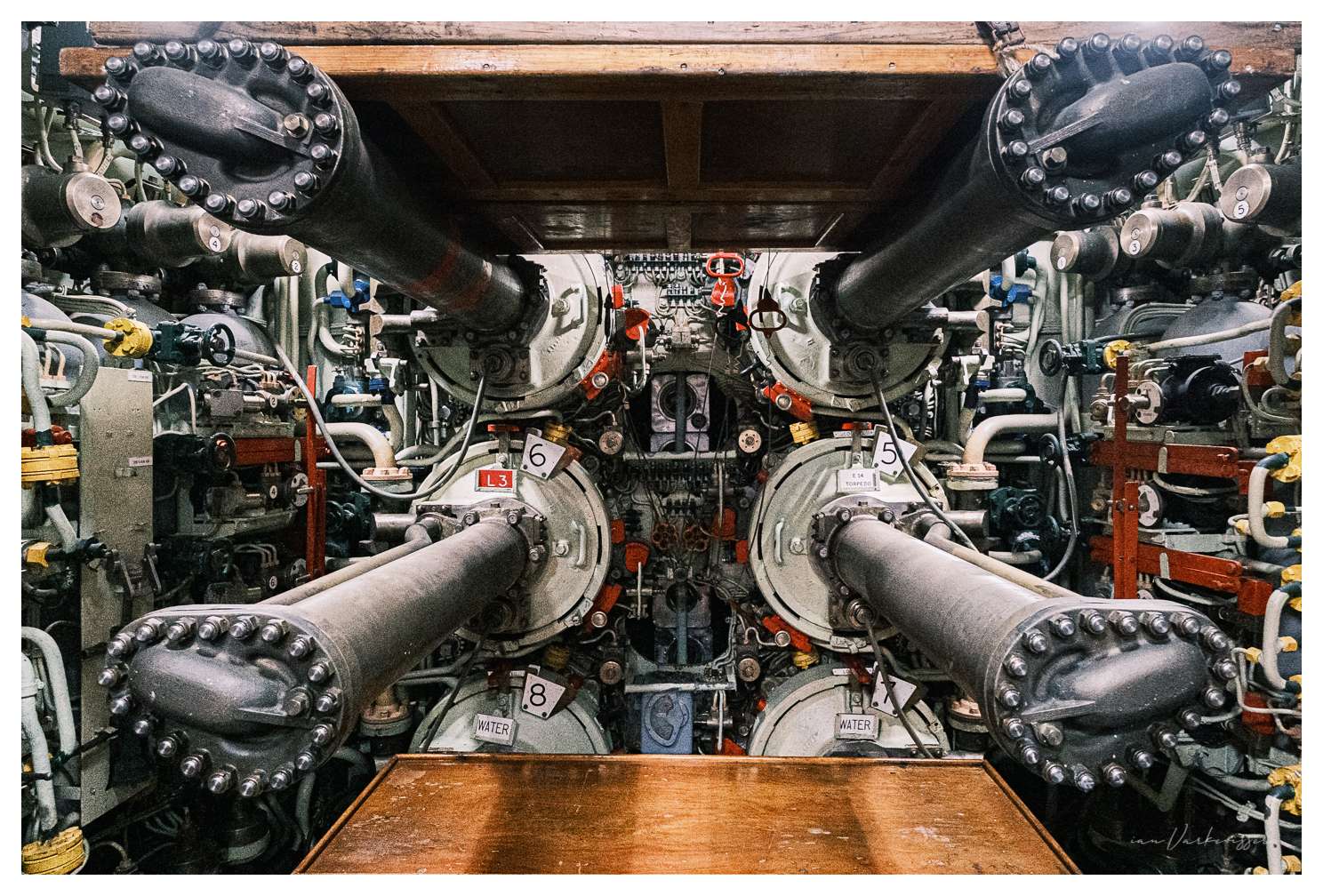
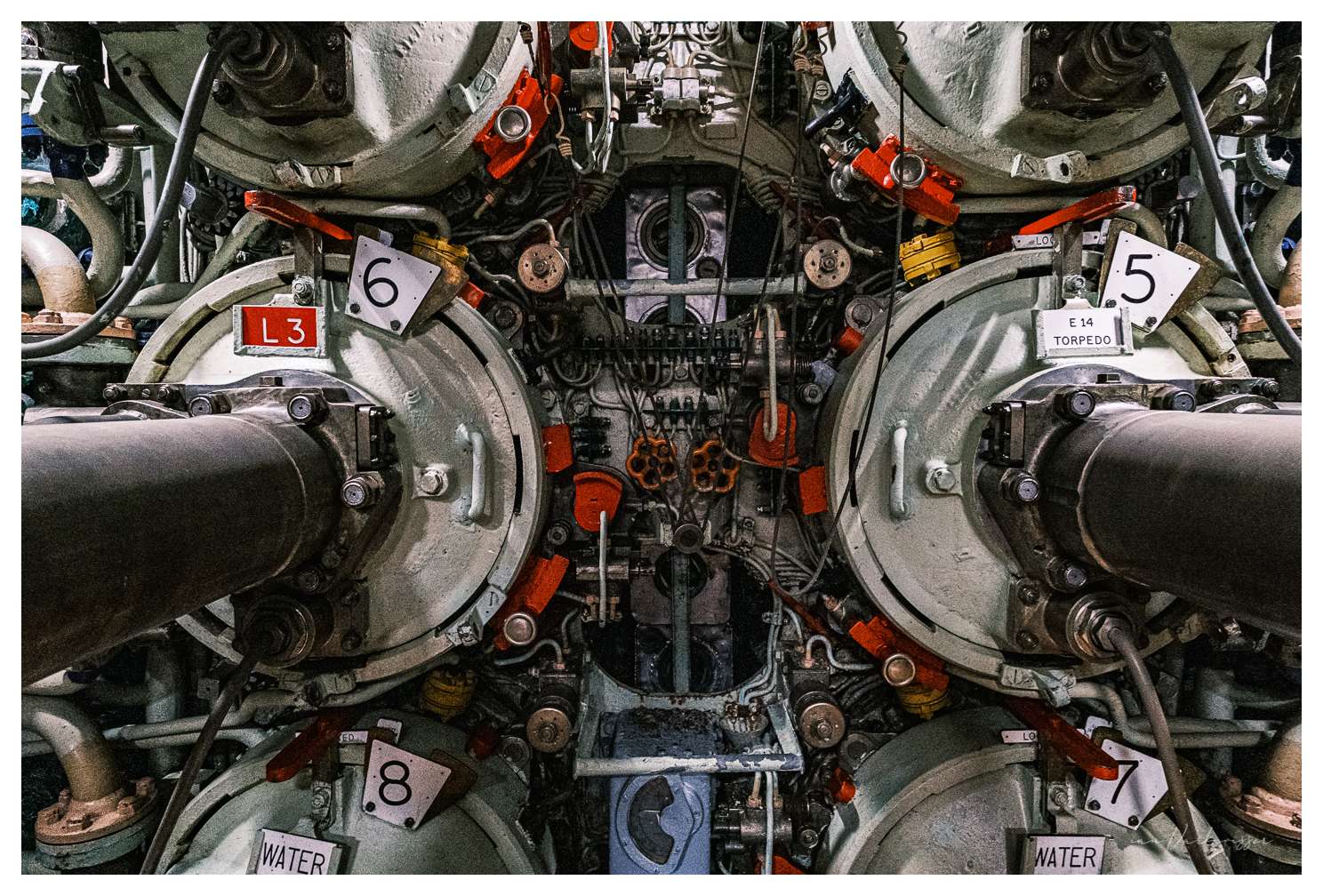
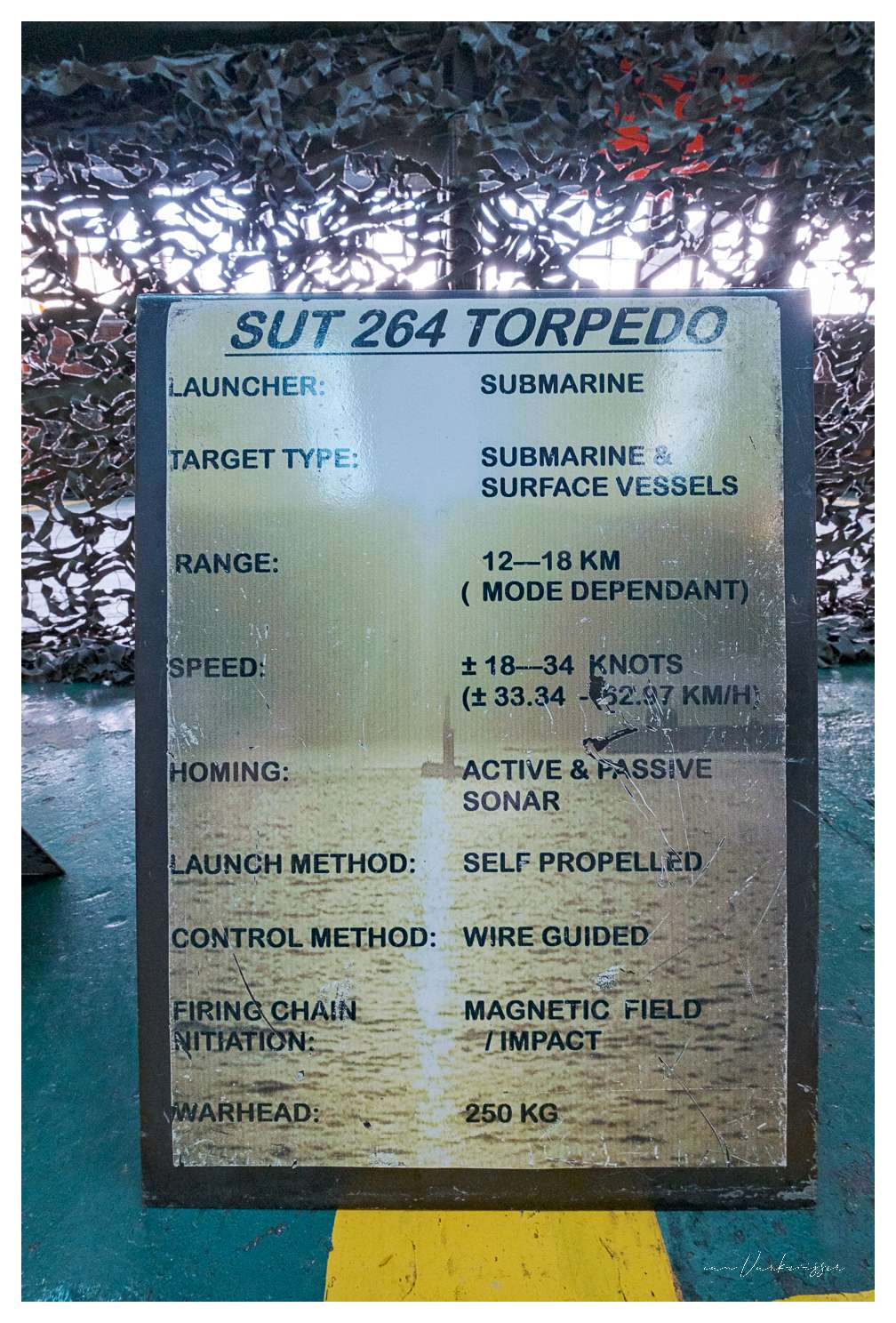
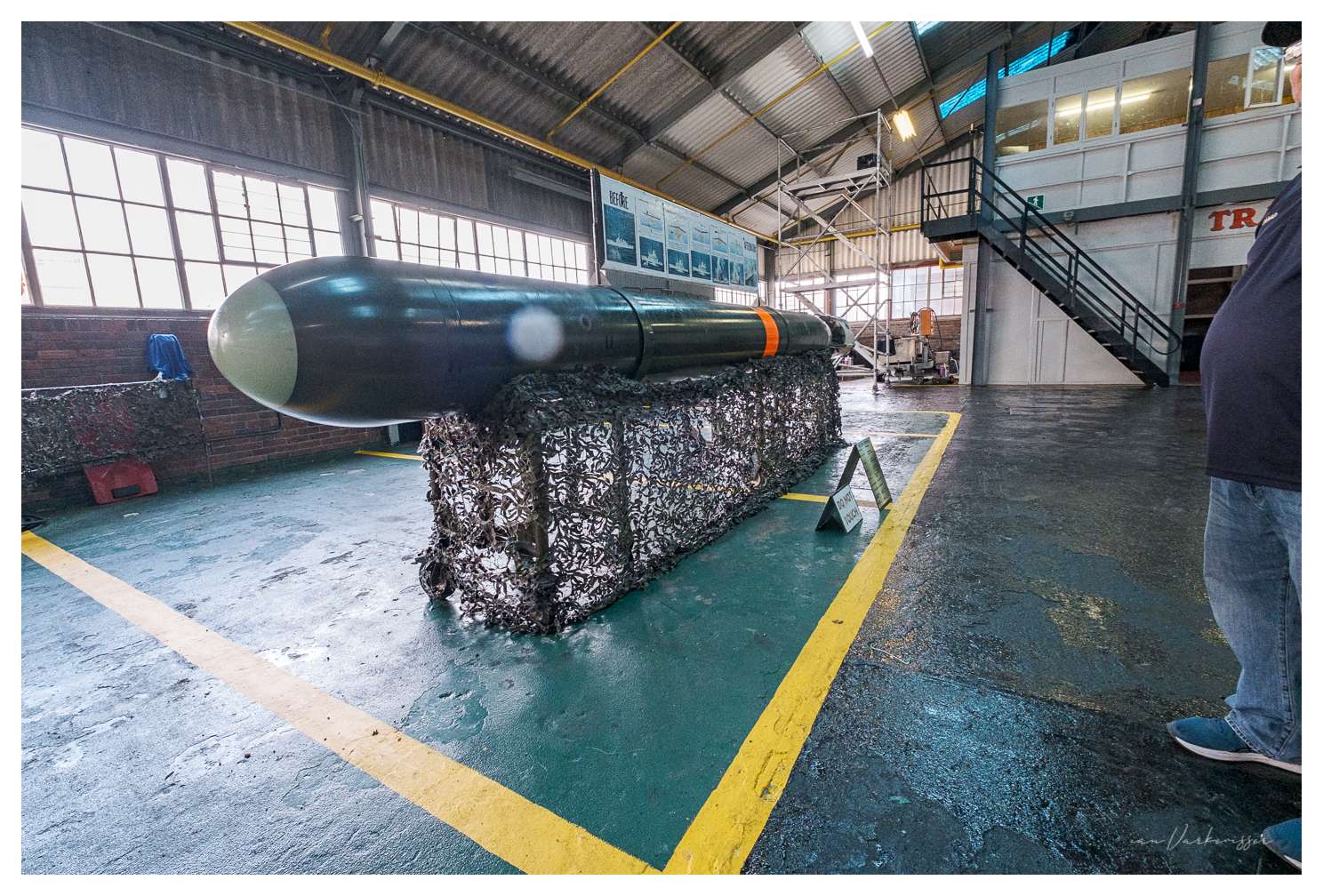
The forward torpedo compartment and hot bunks - often referred to as the honeymoon suite. Hardwood bunks above and below the torpedo tubes. It was rumoured that to keep the tubes lubricated and functional the ratings would be smeared in grease and pulled through the tubes. Contrary to popular belief the torpedoes were not designed to explode on contact with the hull of a ship. They are designed to explode underneath the hull creating a sudden vacuum , thus breaking the back of the ship causing it irreparable damage.
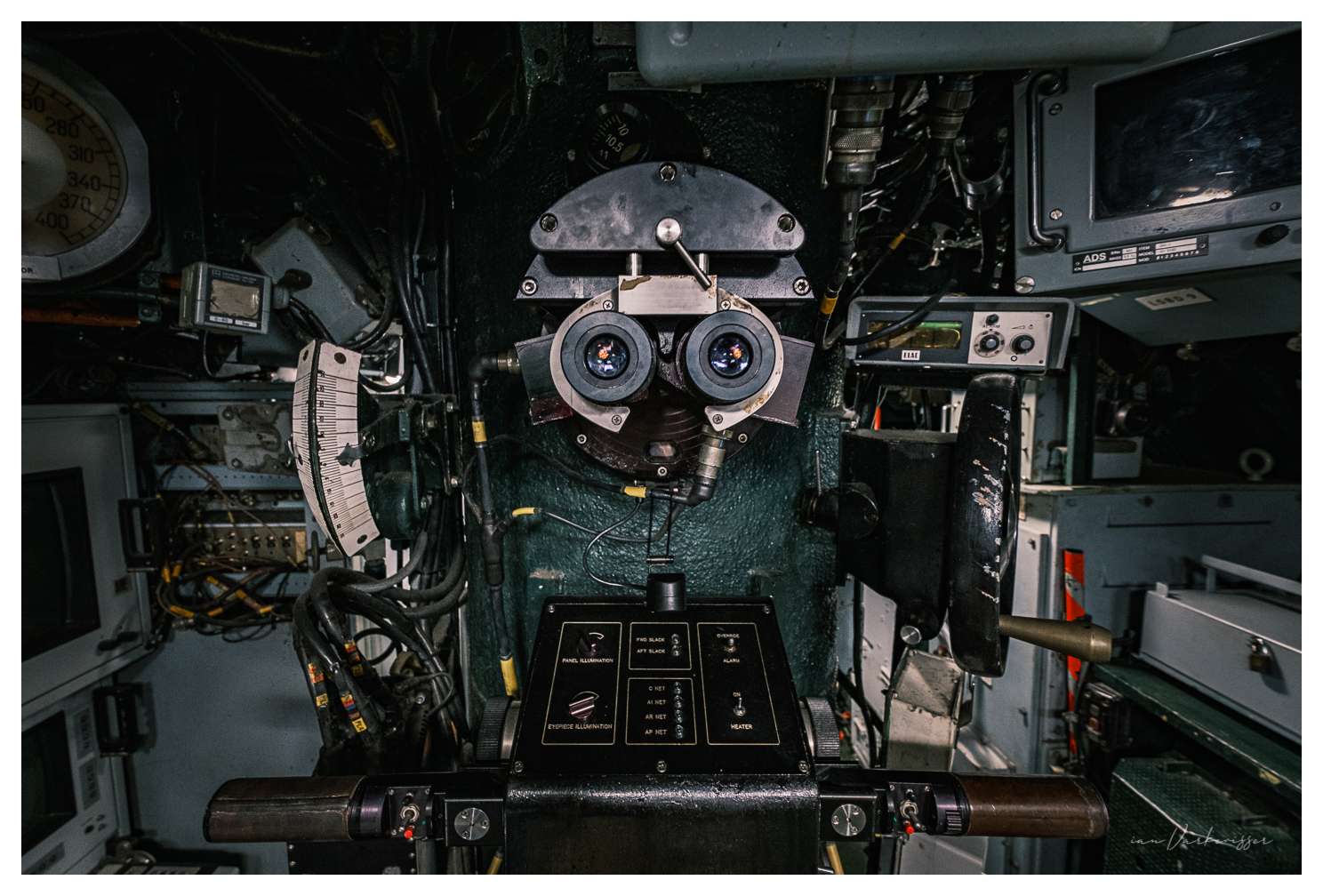
Not your average drivers licence eye test machine - the periscope
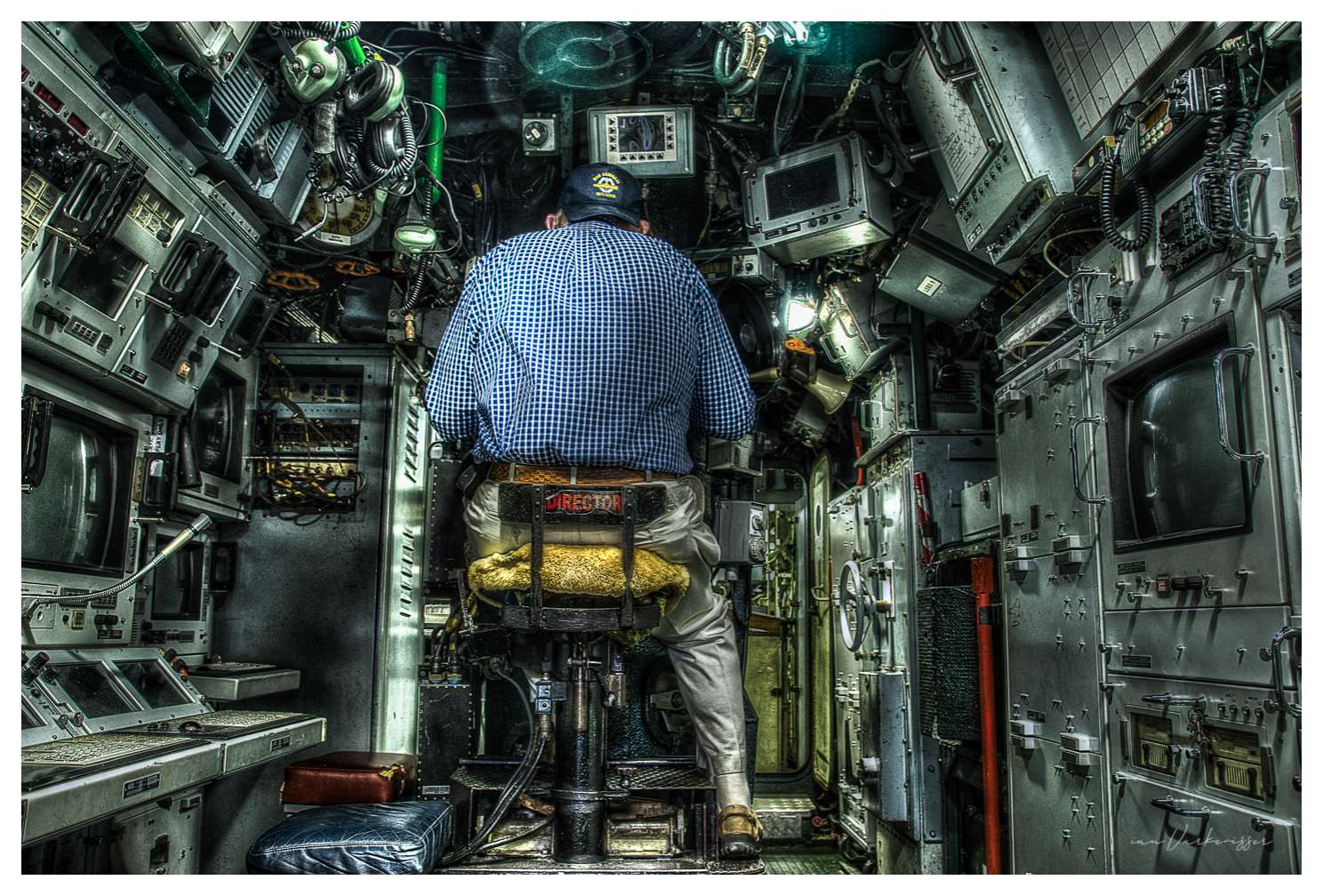
Admiral ( ret ) Pete Periscope ( as he is fondly known to me , and ex captain of the submarine during the border war period ) sits in the directors chair in the sonar and periscope compartment.
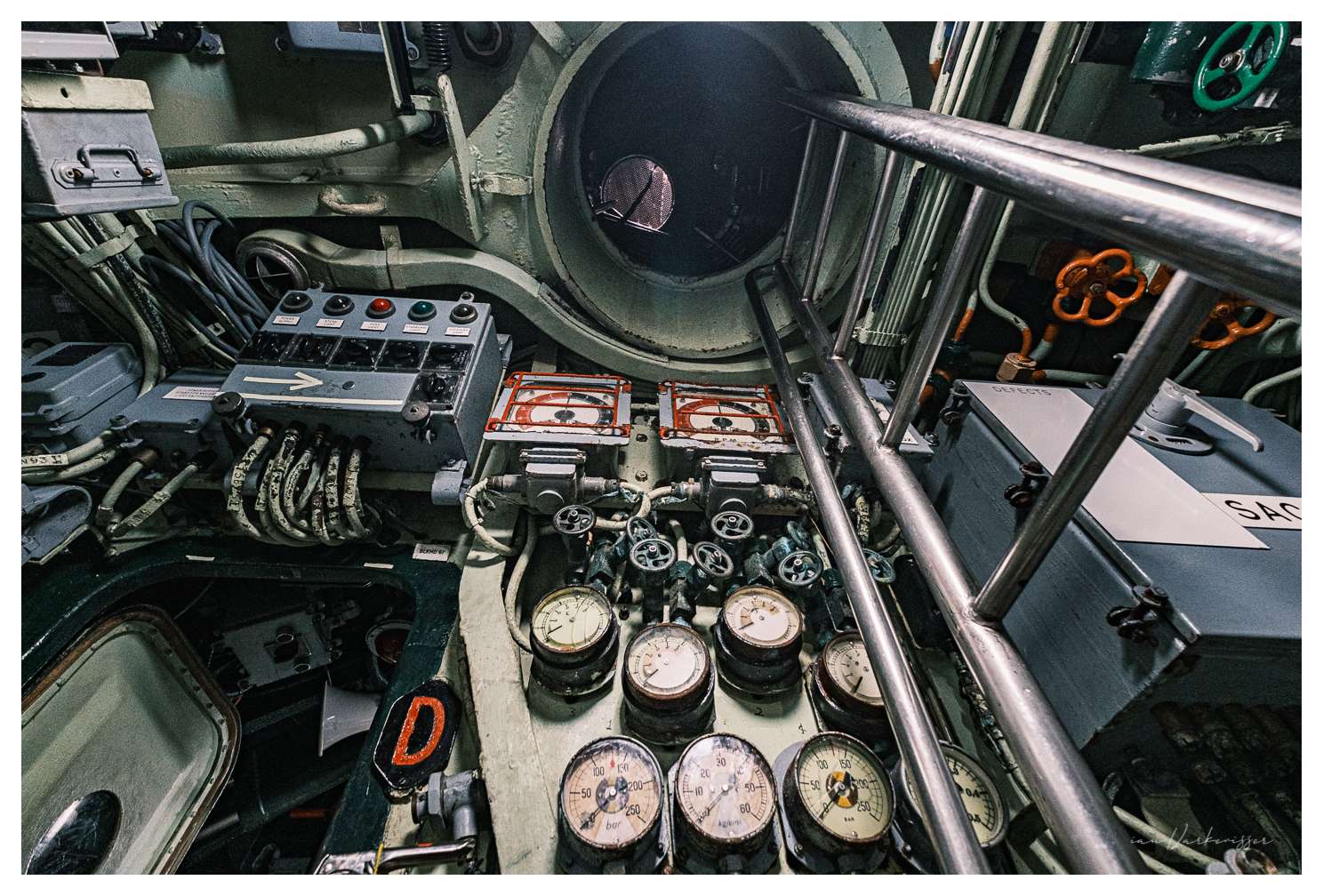
The conning tower - otherwise known as the stairway to heaven.
The history
SAS Johanna van der Merwe ( S99 ) was one of three Daphne-class submarines acquired from France during 1970 to 1972, which became the first submarines to serve in the South African Navy. She is 58m long and had a complement of six officers and 45 senior and junior ratings. Fitted with 12 x 550mm torpedo tubes, she could also carry sea mines.
She was renamed SAS Assegaai (Assegaai is the Afrikaans word for 'spear') in 1999 and was the last of the SA Navy’s Daphne class submarines in commission and finally decommissioned in 2003.
On 10 February 1967, after nearly two years of negotiation, an order was placed with the French Government to provide three Daphne class submarines plus training and infrastructure to run and maintain them.
The first of these submarines, SAS Maria van Riebeeck S97 was launched on 18 March 1969 - the date accepted as the birth of the SAN Submarine Service. The second boat was SAS Emily Hobhouse S98 and the last of the class was SAS Johanna van der Merwe.
Laid down at Dubigeon-Normandy shipyard in Nanteson 24 April 1969, she was launched on 21 July 1970. Commissioned under command of Lt Cdr Theo Honiball on 21 August 1971, she completed her workup training in the Mediterranean, operating out of Toulon, before sailing for home on 4 May 1972. During the long passage she was escorted by the frigate SAS President Steyn and called at Cadiz (Spain), Sao Vicente (Cape Verde Island), Luanda (Angola) and Walvis Bay in then South West Africa (now Namibia) before arriving in Simon's Town on 19 June 1972.
Her arrival home marked the successful culmination of five years of construction, trails and training to establish a submarine capability. It was not long before the boats were involved in operations and in 1975, just preceding operation SAVANNAH, SAS Johanna van der Merwe was deployed into Angolan waters under Operation YSKAS to prepare for evacuation of personnel. During the so-called Border War, she took part in some ten clandestine special operations.
During her career, she underwent four refits, which included additional fuel tanks and the fitting of a locally developed based RAKA combat suite in the 80s, which replaced the cumbersome plotting table. In the late 90s she received the South African developed NICKLES fully integrated software based combat suite and two state of the art rebuilt periscopes.
With the acquisition of the new Type 209 submarines for the SA Navy, she was finally paid off on 23 November 2003.
Daphne Class submarine fact file
Length: 57.75m
Beam: 6.75m
Draught:5.23m
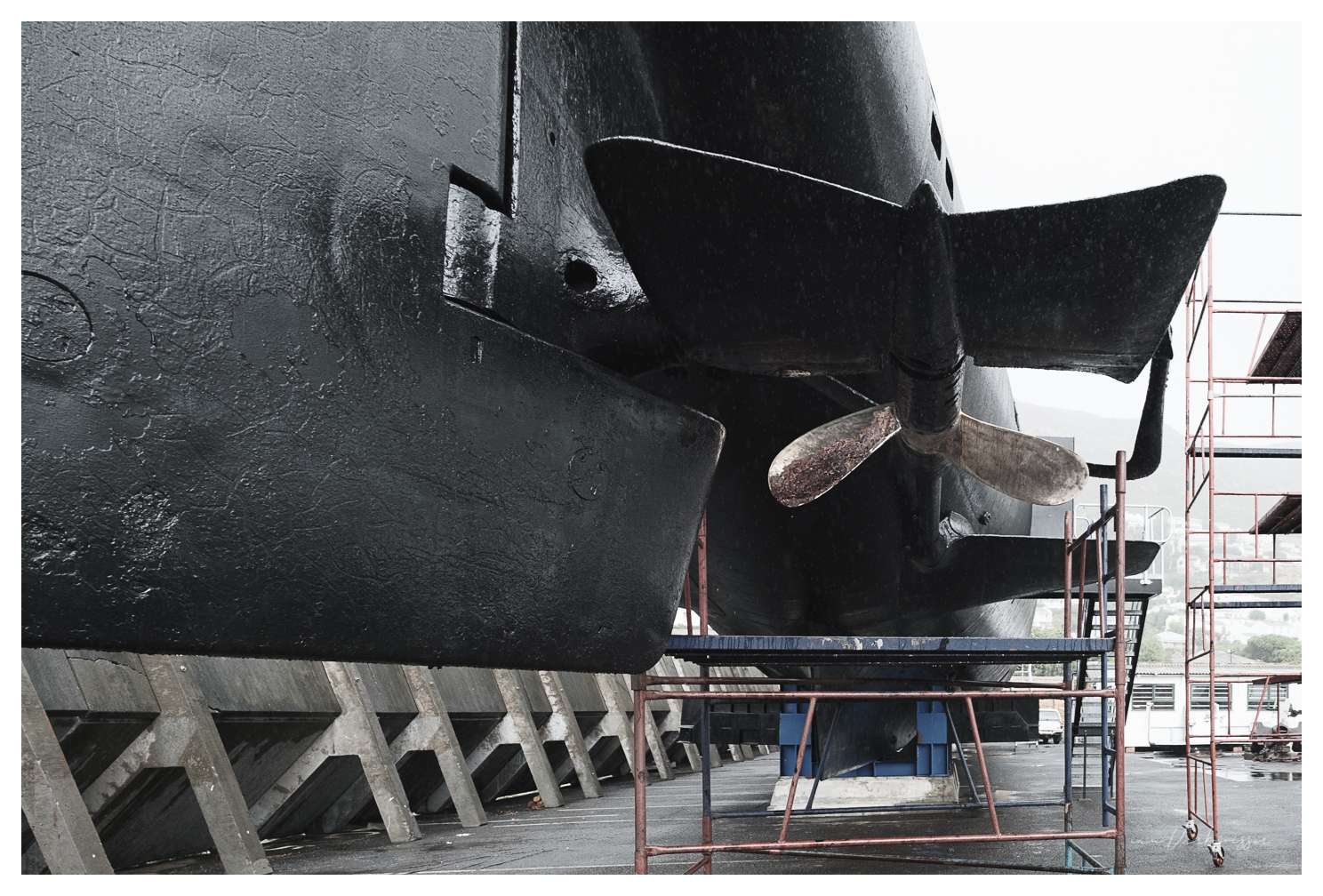
Shafts: 2 (3 blade propellers)
Displacement:860 tons (Surface) | 1034 tons (Submerged)
Diving Depth300m
Machinery: 2 x 8-cyl SEMT-Pielstick 8 PA4 185-450Kw diesel generators
Propulsion:2 x 800hp dual armature Jeumont-Schneider electric propulsion motors
Batteries:2 compartments (80 cells each)
Speed: 13.5 knots (25 km/h Surfaced) 16 knots (29.6 km/h Submerged)
Range: 4300nm (7 963km) @ 7.5 knots (Snorting)
2700nm (5 000km) @ 12.5 knots (Surface)
Torpedoes:
12 x 550mm (8 forward 4 aft - only reloadable when alongside)
8 Forward (Internal)
4 Aft (External)
Complement: 6 Officers and 45 Ratings
(+ 6 to 10 trainees)