#1199. A Tale of Two Cemeteries
The small city of Lexington, located in the western Valley of Virginia, has two cemeteries. One is Oak Grove, about eleven acres in extent, located prominently on Main Street.
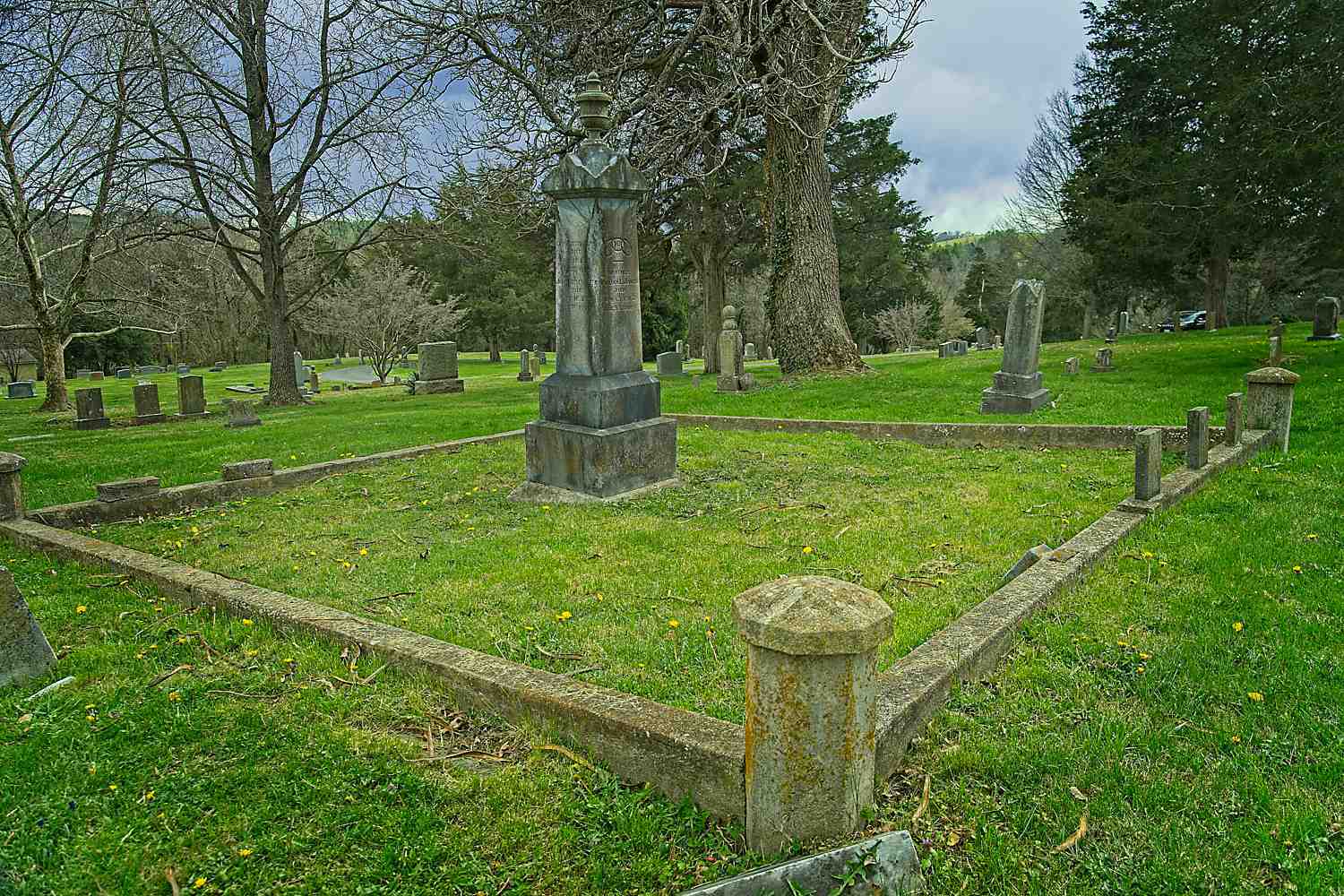
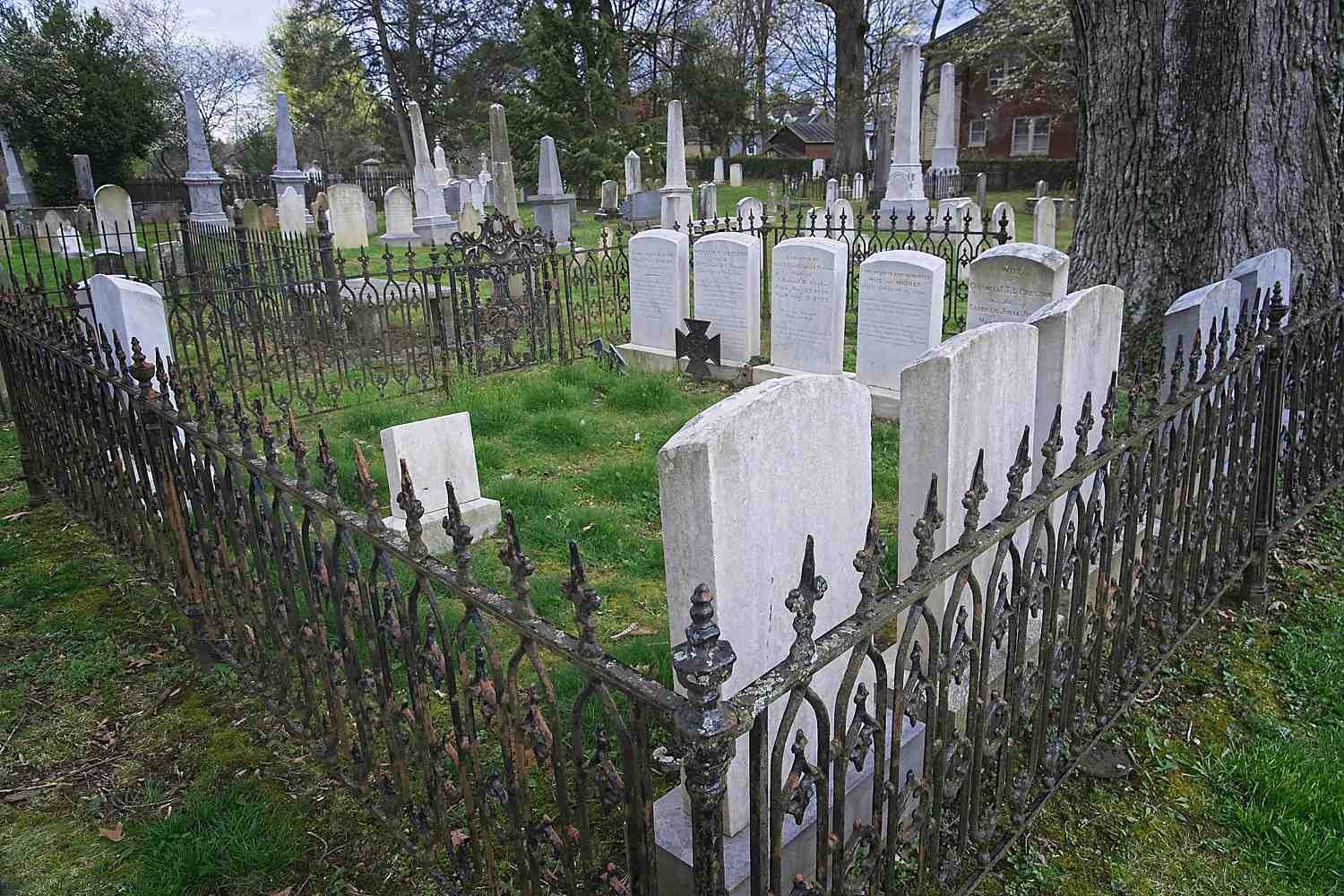
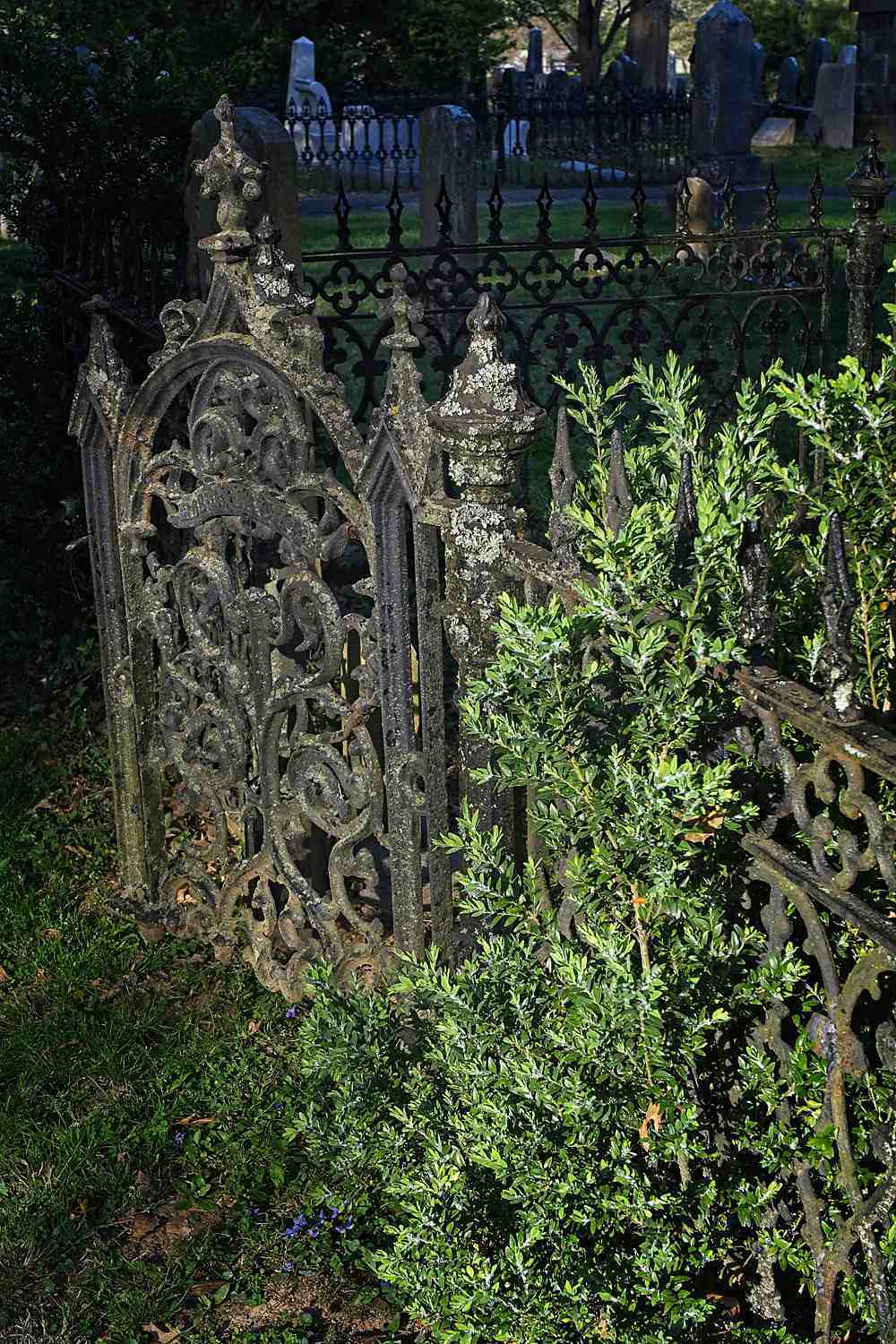
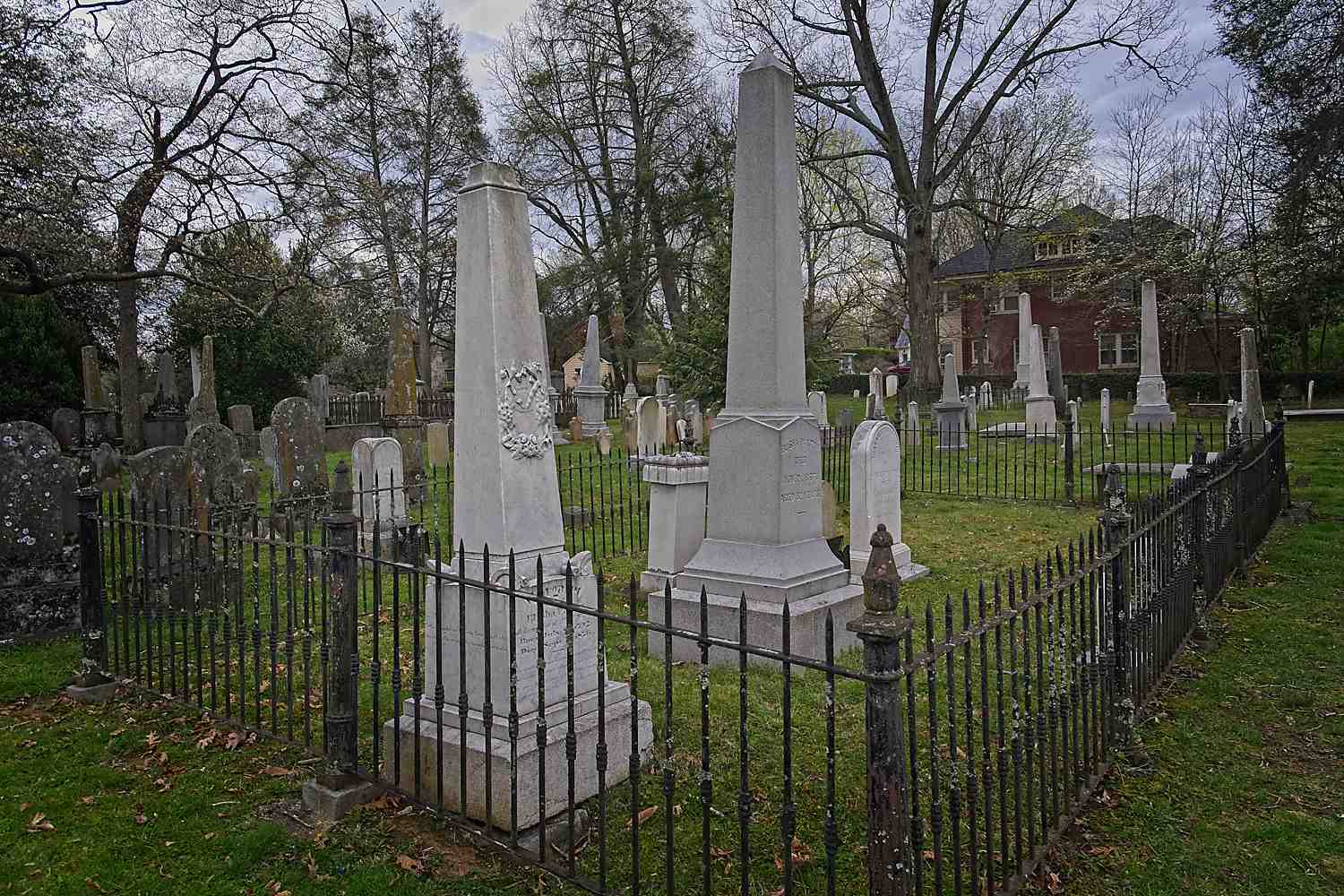
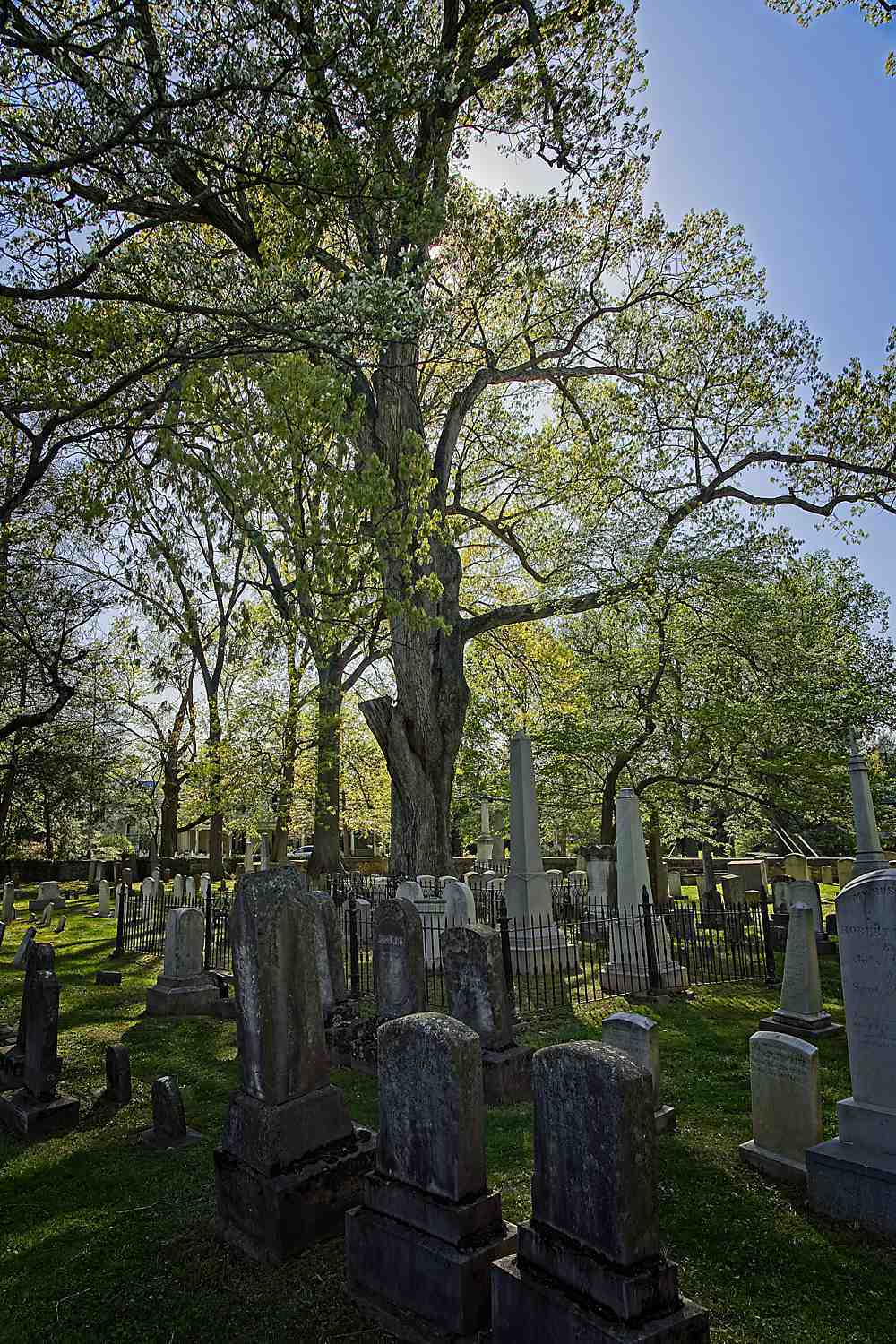
The second one, Evergreen, is half the size and down a back road. Oak Grove is far better known, even famous. It was formerly called the Stonewall Jackson Memorial Cemetery, because Stonewall is buried there; there are many large markers, good-sized family plots with wrought-iron fencing, as well as a variety of eye-catching statuary. Evergreen is quite a bit less imposing, with more open space, simpler headstones and modest statuary.
[NB: Usually when I pair two images, the first is from Evergreen, the second from Oak Grove.]
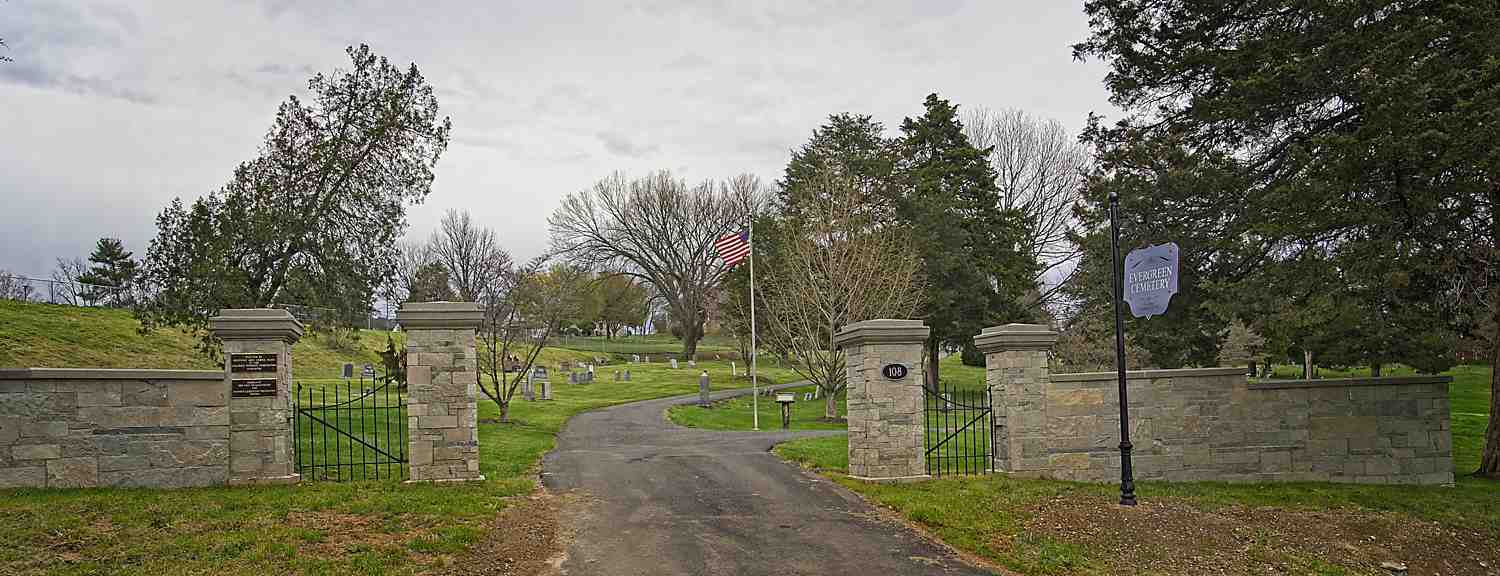
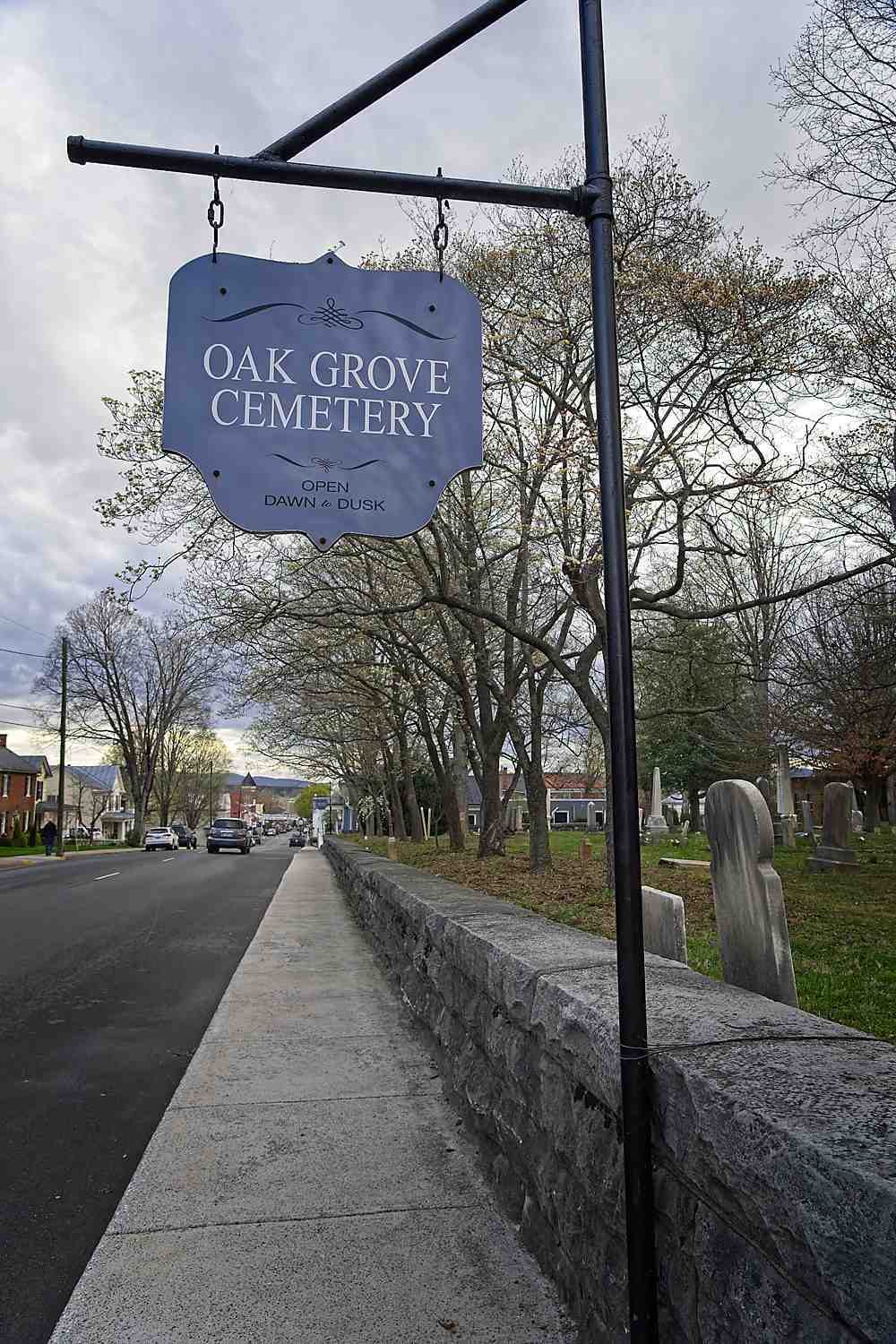
As you may have already surmised, Oak Grove is a cemetery for white people, Evergreen one for black people. I think each has its own quiet dignity, which I hope to illustrate in this post. There’s much to ponder in any cemetery, from lives lost to lives remembered to momento mori. But the social context shouldn’t be ignored. The history of cemeteries is a glimpse into the history of societies. Here’s a bit of Lexington’s.
Lexington is a shrine of the Confederacy, with not only Stonewall Jackson’s antebellum house and grave but also Robert E. Lee’s family crypt in Lee Chapel on the campus of Washington and Lee University. Jackson taught at the Virginia Military Institute before the Civil War, and Lee was president of Washington College for five years after the war, which subsequently added his name to Washington’s. Fifty years ago this was all celebrated without question, especially on Lee-Jackson Day, which is still observed. But the times they are a’changin’, as Lexington re-evaluates its history, like the rest of the United States.
Some people still march and wave Confederate flags on Lee-Jackson Day, but the flags are no longer permitted on public poles, and Lee-Jackson Day on a Friday attracts fewer people than M. L. King, Jr., Day the following Monday. The two universities and the city of Lexington have all sought to de-emphasize their ties to the Confederacy, with largely symbolic changes and a few more substantive steps. What used to be “The Robert E. Lee Episcopal Church” has reverted to its previous name, “Grace Episcopal Church”; Confederate flags were removed from Lee Chapel, now renamed “University Chapel,” and the prominent recumbent Lee statue at the rear of the chapel (in an addition provided by the Daughters of the Confederacy) has been screened off; the “Robert E. Lee Hotel” is now badly labeled “Gin” (to match another property called, of course, “Tonic”); and a statue of Stonewall was relocated from the VMI parade ground. But some structures embody memories that new names cannot erase, and this is true of the two cemeteries.
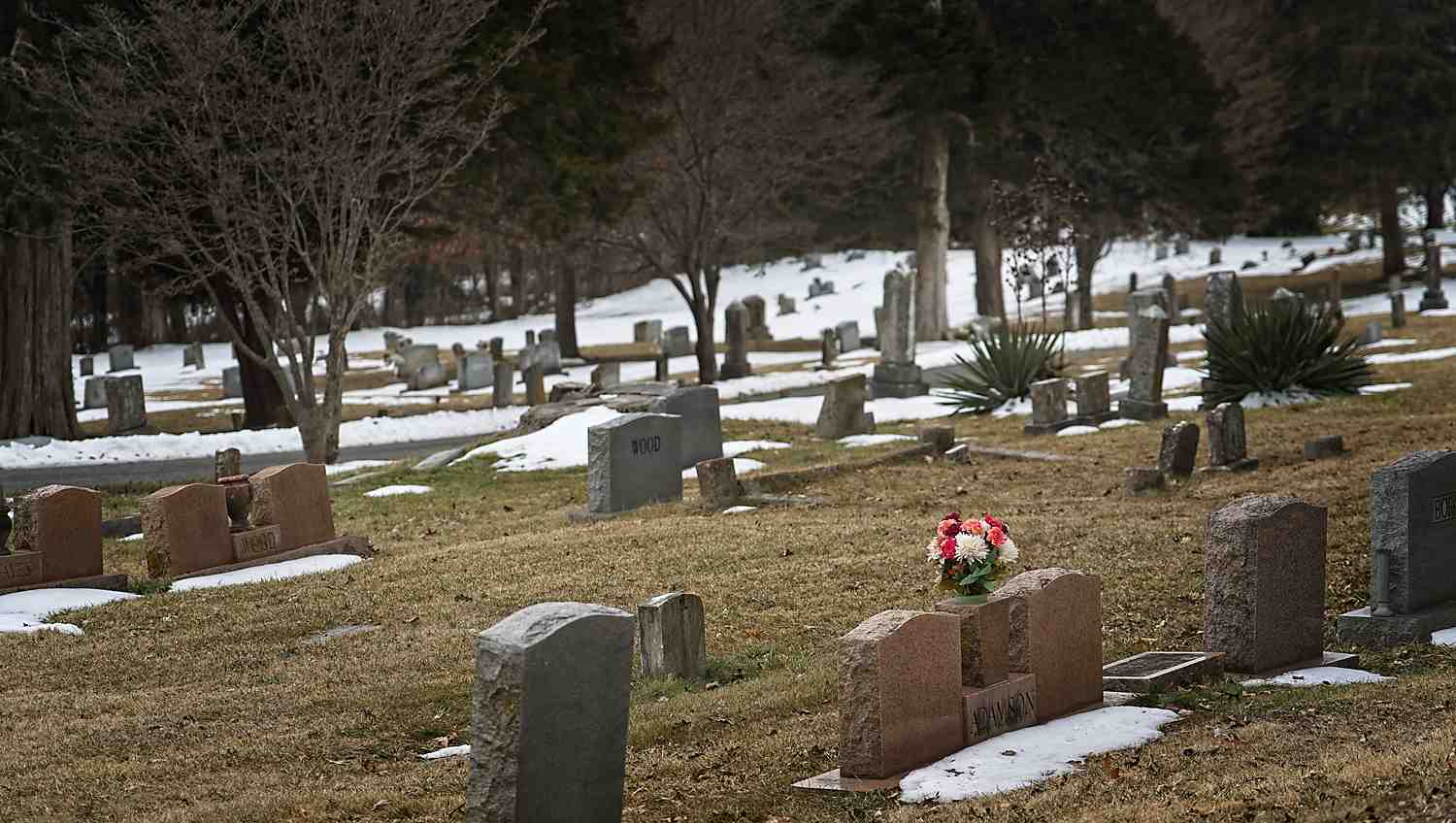
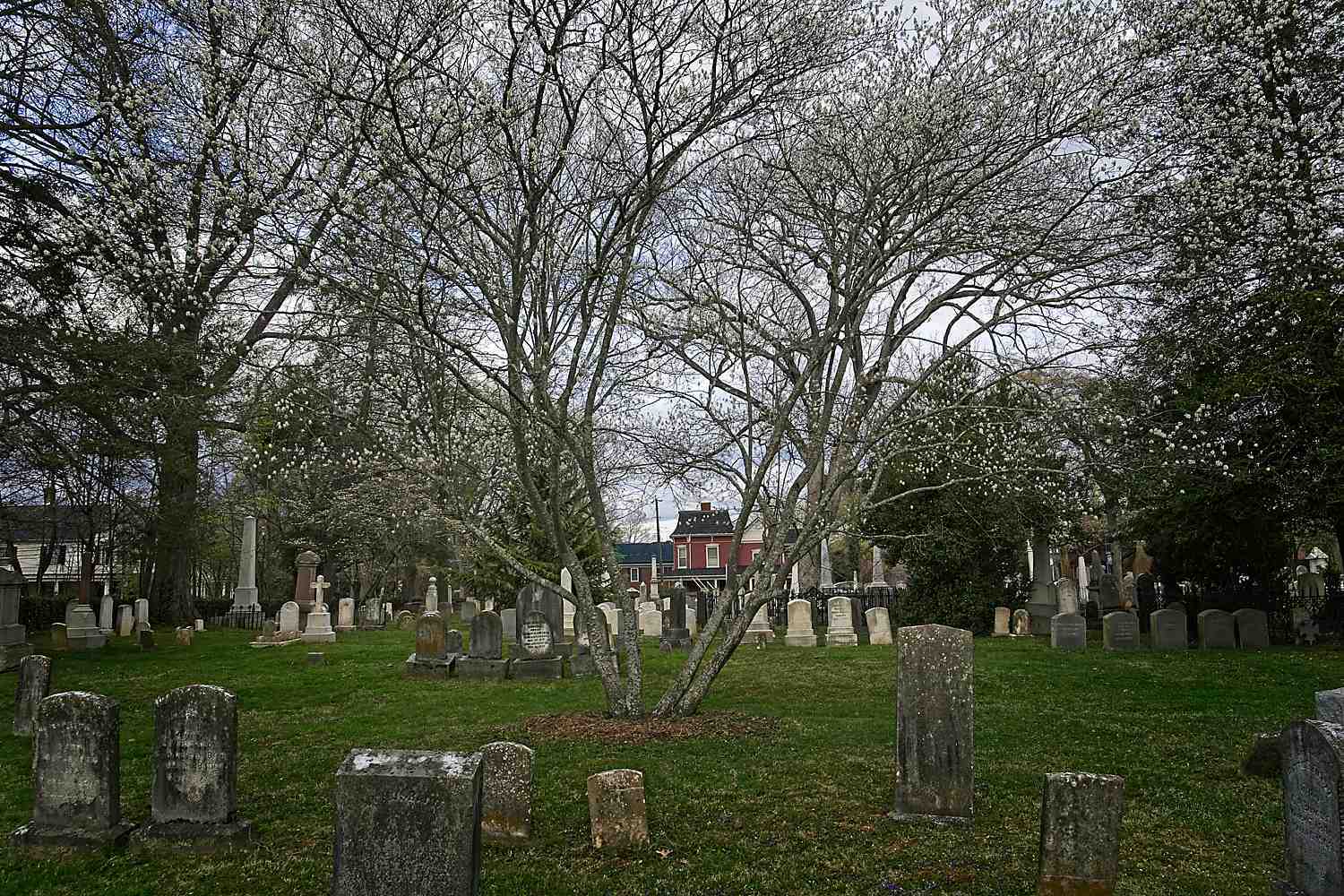
Oak Grove Cemetery began in 1797, in—what else?—an oak grove surrounding the former location of the Lexington Presbyterian Church. It was originally a cemetery for Presbyterians only, owned and operated by the church. In 1853, the church relocated down Main Street to the center of town, and the cemetery became a public burial ground, open to all…white people. There may have been earlier restrictions, but the current city regulation for both cemeteries states: “Lots are sold for no purpose other than for the burial of human remains without regard to age, sex, race, color, creed, religion, place of residence, and national origin.” But the fact remains that there are very few black people buried in today’s Oak Grove (and no white people in Evergreen); and two of them were originally buried outside the original Presbyterian churchyard, but later incorporated as the cemetery expanded. It’s interesting to note their stories. [I’m very grateful to Cinder Staton, Eric Wilson and especially Larry Spurgeon for generous help on this and other matters.]
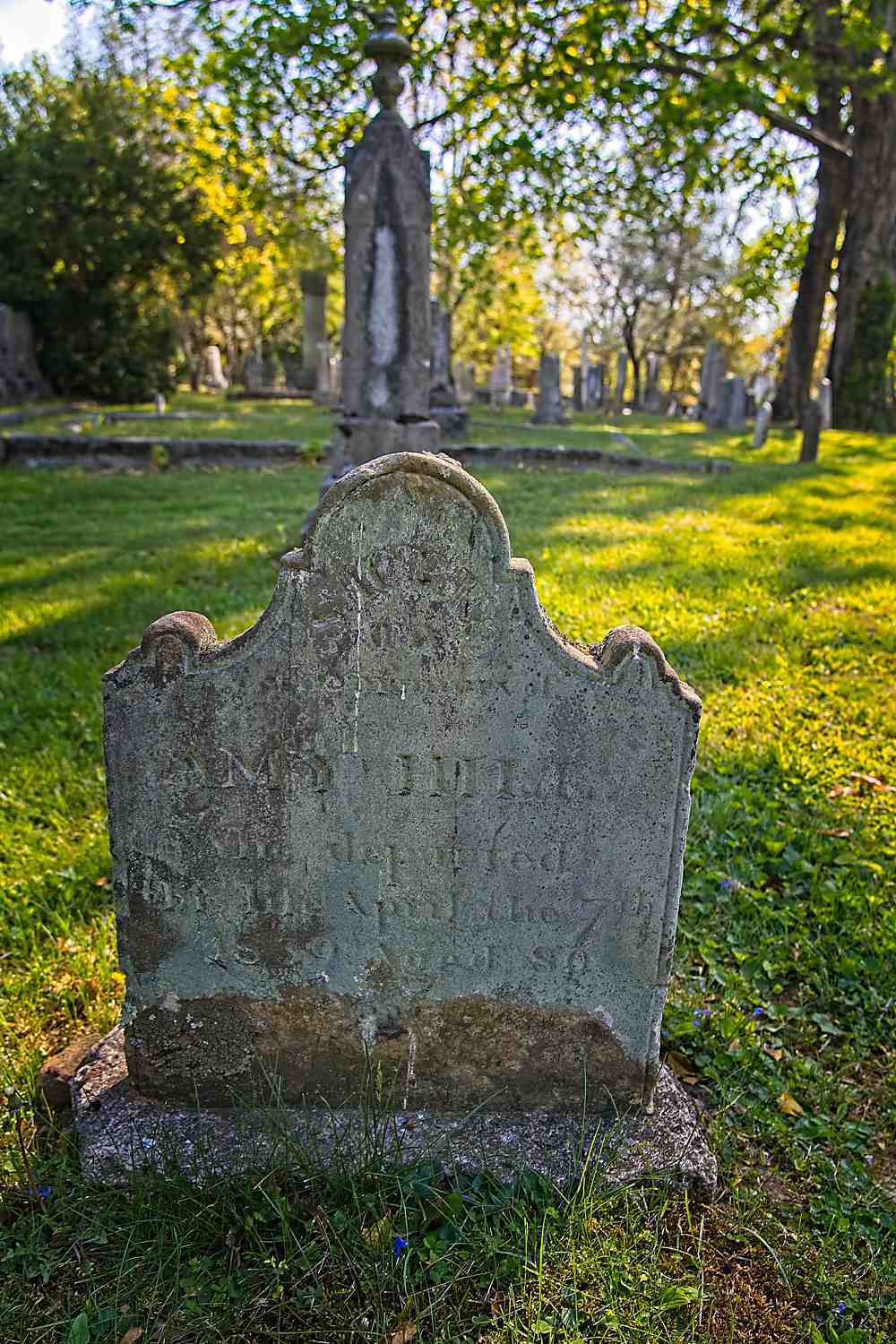
One was Amy Hill (1759-1839), a free black woman. Her will stated that she wished “to have my body interred as near the Presbyterian Church as possible,” and her estate appears to have purchased a plot next to the old church, later incorporated into the cemetery.
A second was David Hanna, aka Davy Buck (1770-1855), who served as the sexton of the Lexington Presbyterian Church for 40 years, burying many white people in the churchyard, and whose headstone notes that “he belonged to the estate of Matthew Hanna, deceased”—in thrall even in death! His modest headstone is in the furthest corner of the cemetery, where his toolshed stood just outside the old church.
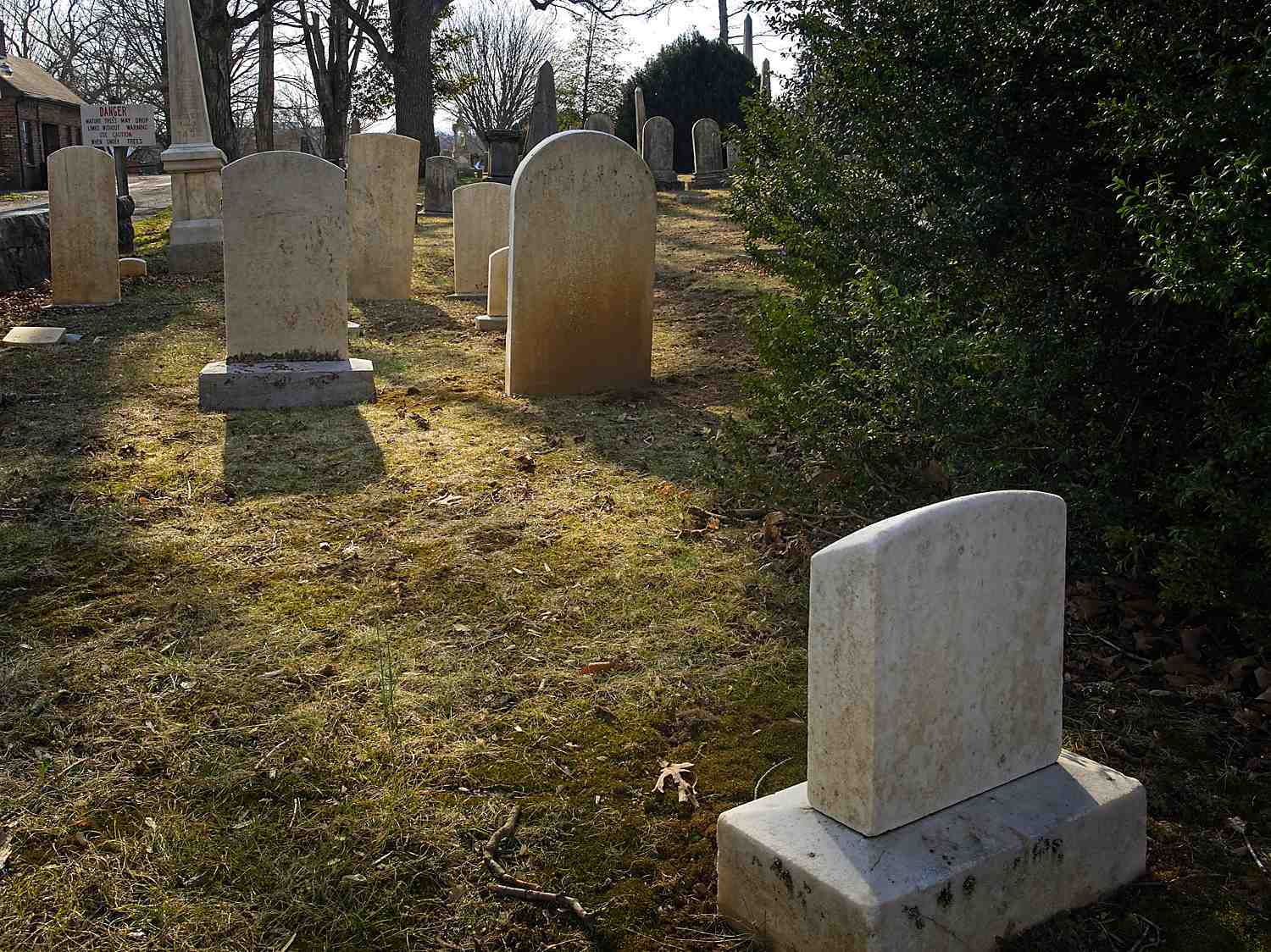
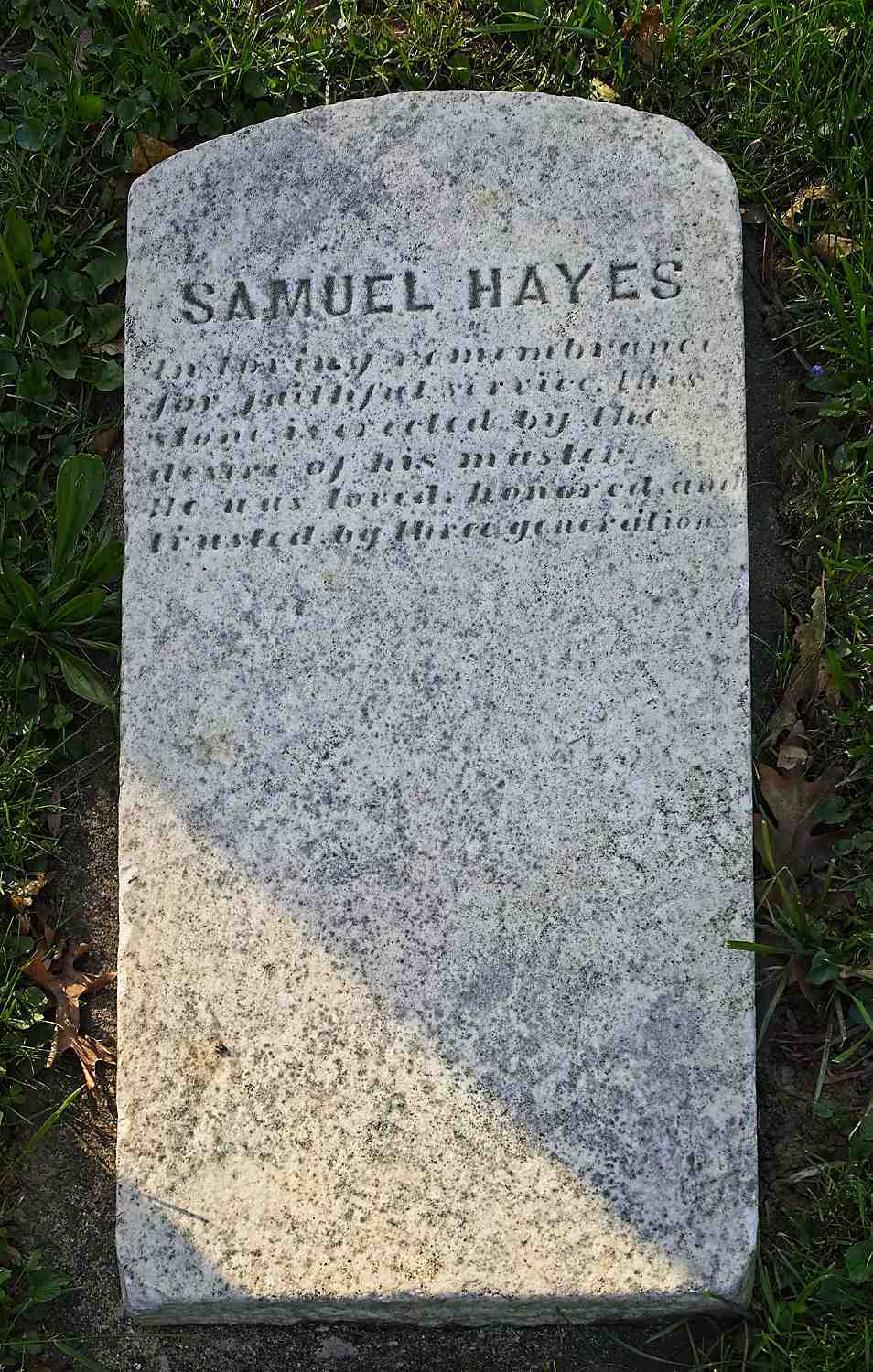
A third was the enslaved Samuel Hayes or Hays (c. 1805-1865), buried in the family plot of the Robert I. White family. Hayes’ headstone reads: “In loving remembrance for faithful service, this stone is erected by the desire of his master. He was loved, honored, and trusted by three generations.”
And a fourth was Eliza Jane Smith (c. 1835-1911), whose burial in Oak Grove is a bit mysterious. She was the house servant in the John T. Gibbs family, deaf and dumb. Her headstone, oriented perpendicular to the rest, reads “Beloved Servant” on the front and “Faithful Unto Death” on the base, with the nickname of “Hoppie.”
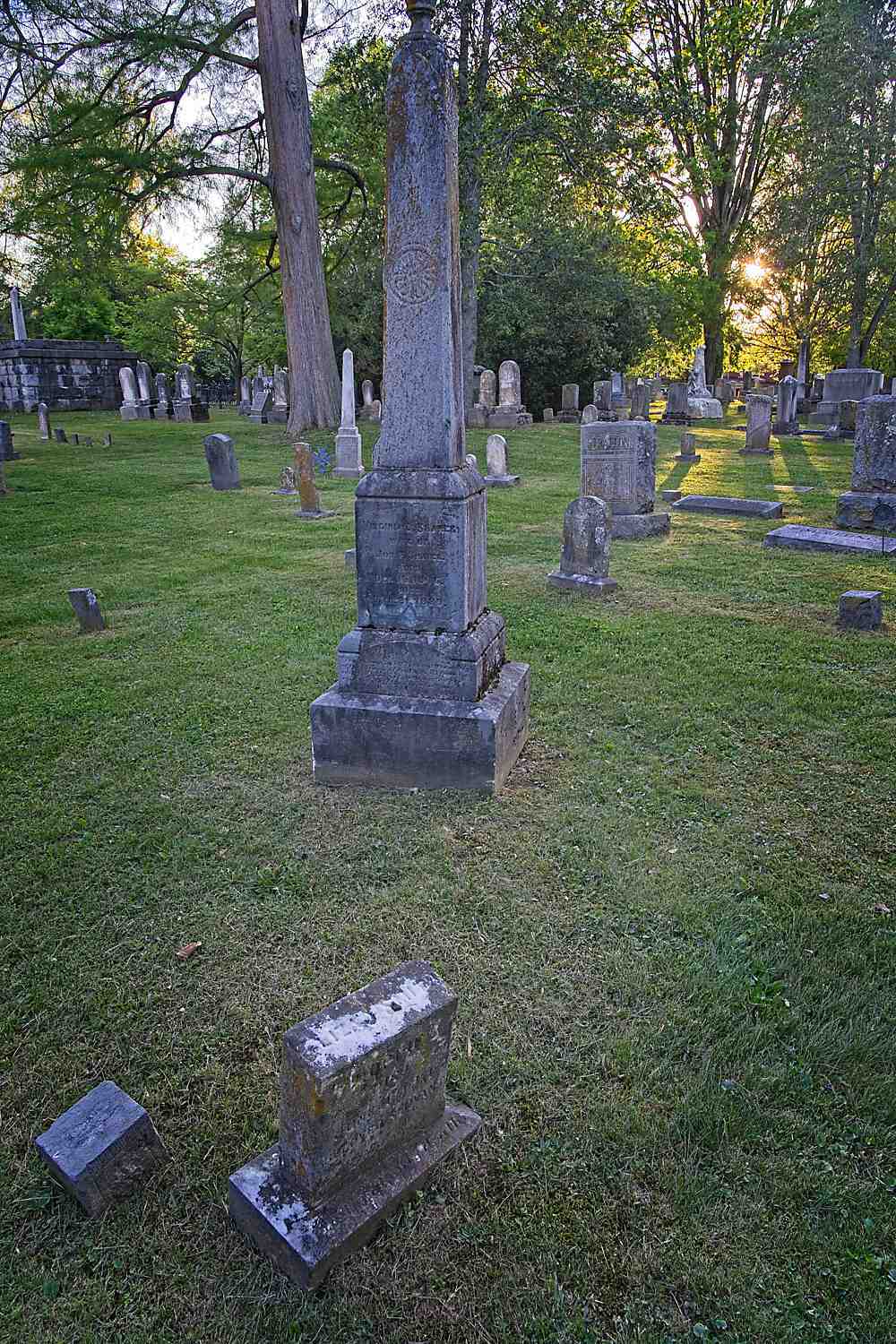
There may be more black people’s graves in Oak Grove that are unrecorded, but these four are the exceptions that prove the rule. More typical are Stonewall’s domestic slave Amy and his wartime servant James Lewis, both buried not in Oak Grove but in the old black cemetery, and probably not removed to Evergreen, with no headstones to mark their graves, so their memory has no monument.
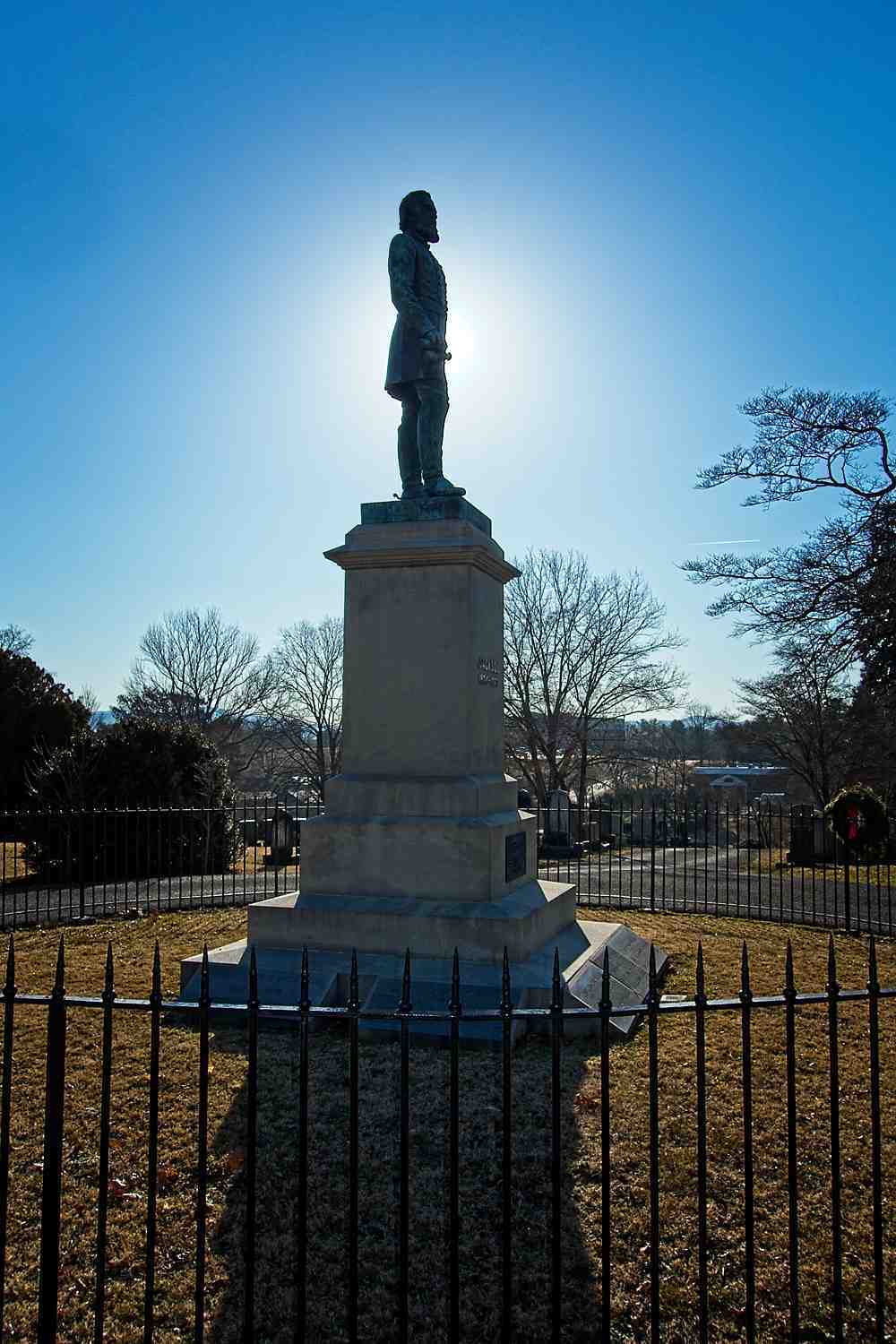
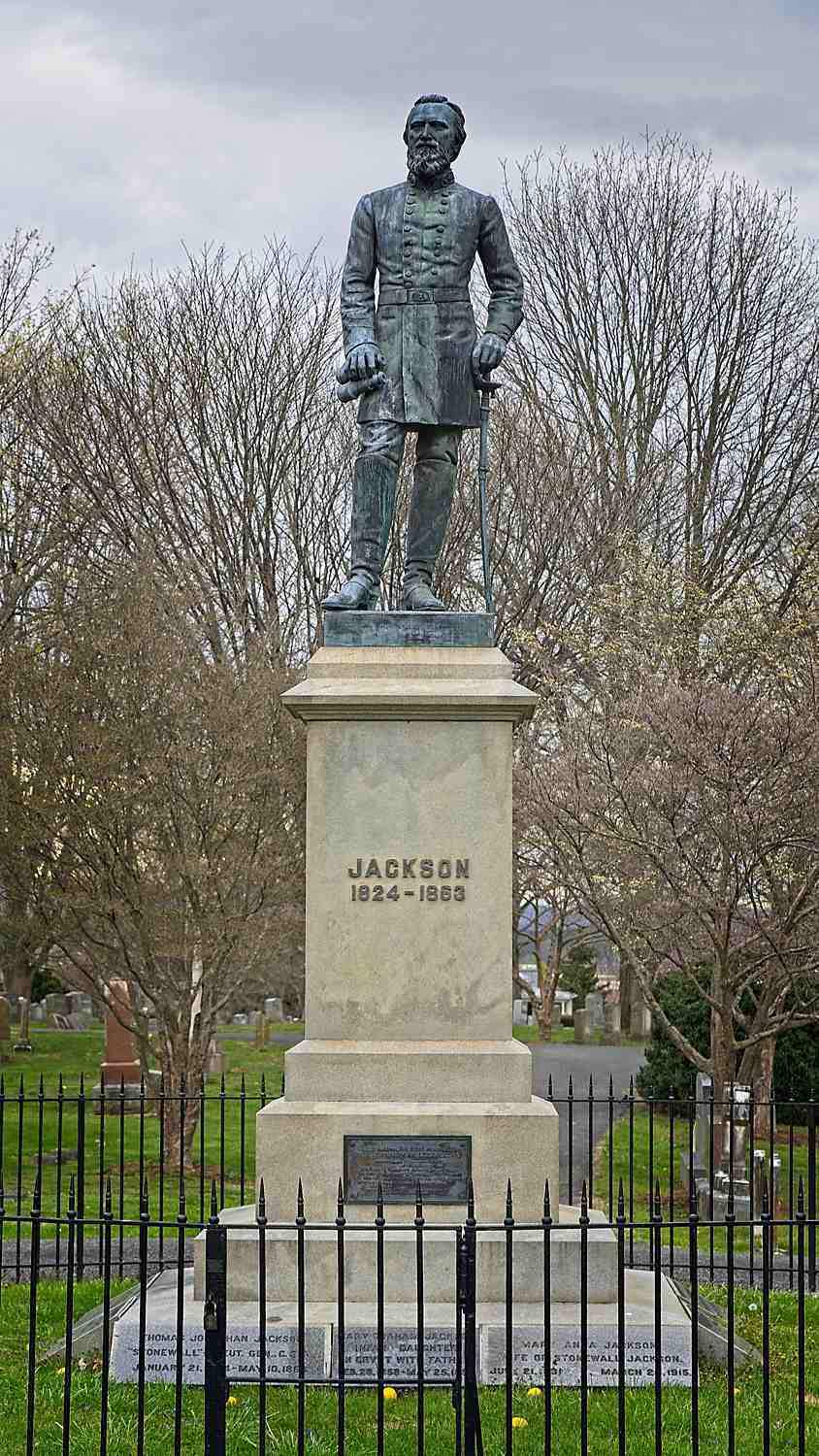
After the Civil War, the cemetery became a Confederate mecca, with hundreds of Confederate States of America soldiers interred, many from the Stonewall Brigade desiring rest beside their wartime leader. It was renamed the Stonewall Jackson Memorial Cemetery in 1949, when the city gained ownership of the cemetery, and reverted back to Oak Grove in 2020. But the old racial patterns persist; after all, there is another cemetery available for the non-white population, isn’t there? Oak Grove still has some mighty oaks, and it contains a considerable variety of headstones, monuments, crypts, fenced family areas and statuary, many with inscriptions tracing their connections to the Confederacy.
The towering statue of Stonewell, erected before a crowd of some 10,000 in 1895, was sculpted by E. V. Valentine, who also did the famous recumbent Lee statue in Lee Chapel.
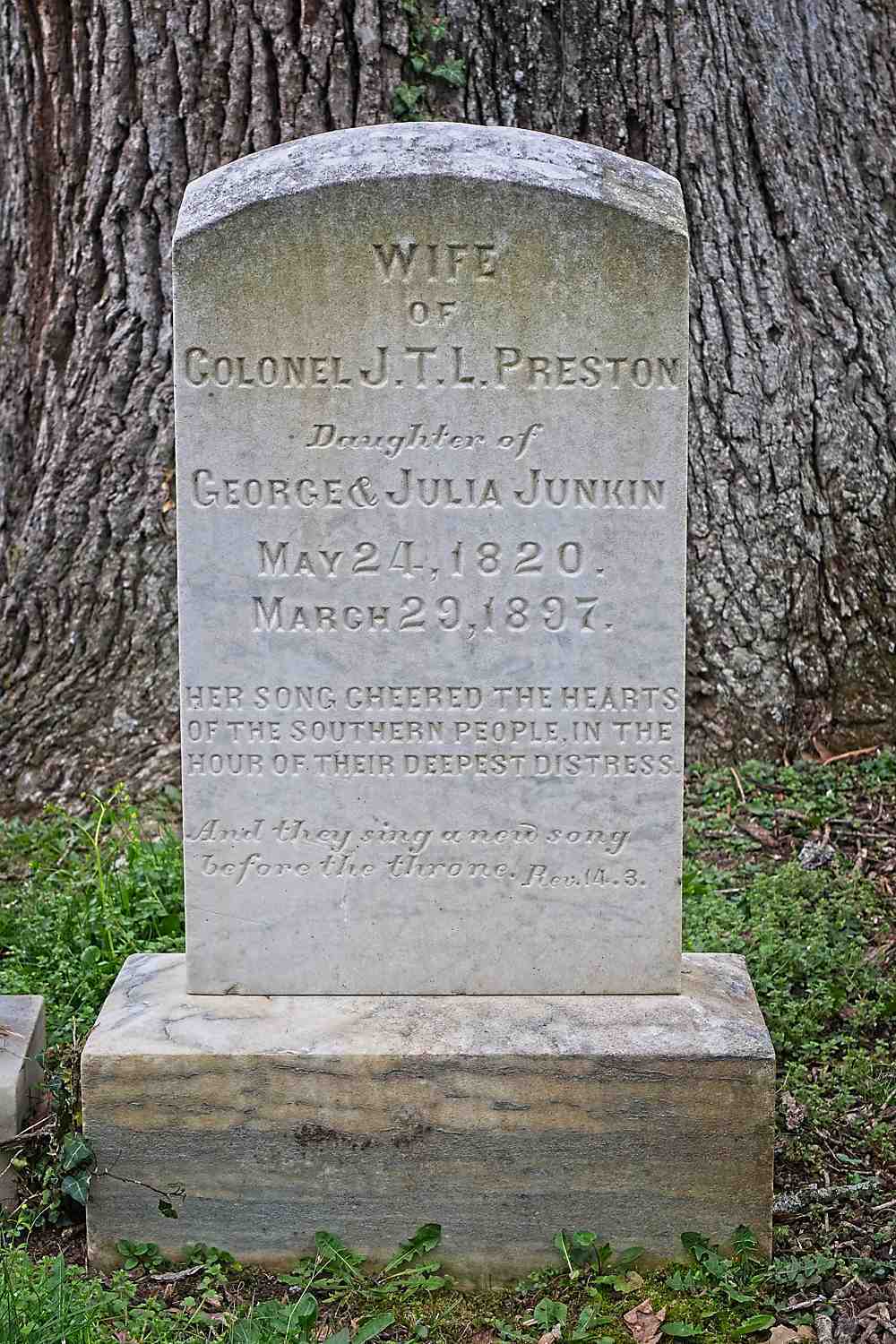
There are many monuments to other prominent people, including two governors of Virginia and Margaret Junkin Preston (1820-97), the “Civil War Poet Laureate of the South,” buried in the Preston family plot. “Her song cheered the hearts of the Southern People, in the hour of their deepest distress.”
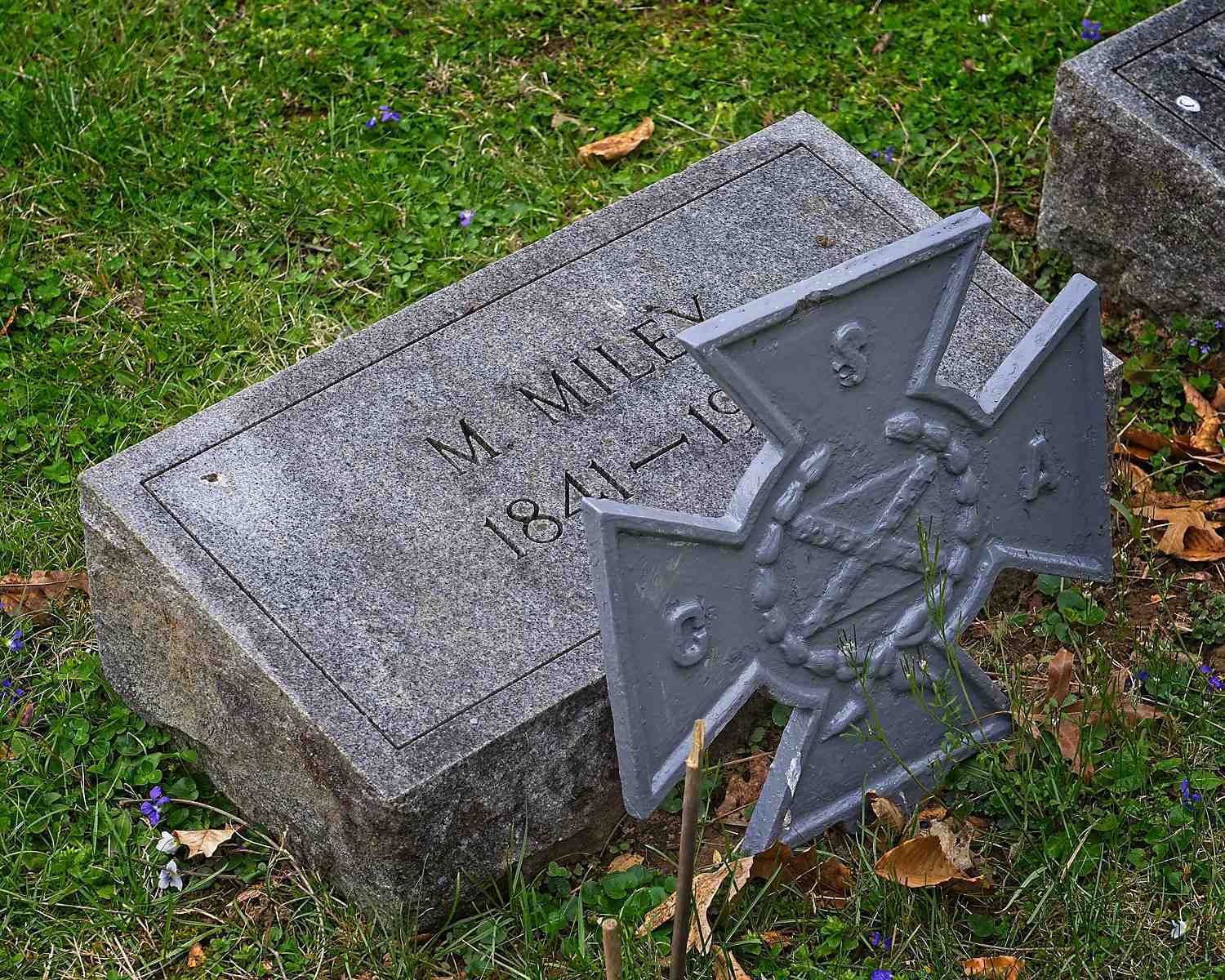
Oak Grove also has the distinction as the final resting place of a famous photographer, Michael Miley (1841-1918), a Rockbridge County native who served under Stonewall in “the war,” and after Appomattox returned to Lexington to establish a studio. He photographed the Rockbridge area and also took portraits of many famous Confederates, including the iconic 1866 image of Lee on his horse Traveler. He made perhaps the first color photographic prints on paper in the United States, and even patented his process in 1902, but it was never commercially developed, as Miley considered it too slow. His headstone is nondescript, overshadowed by a CSA emblem.
Evergreen Cemetery is actually the second one for black people in Lexington. There used to be a small cemetery for black people not far from city hall, but the space filled up and a new cemetery had to be created in 1880, on the outskirts of town, over a hill. Nothing visible remains of this old cemetery, which was covered over by residential buildings. Some very few remains were transferred to the new location, possibly by family members; probably there was little white motivation and black money to do more. Here are the headstones of two people in Evergreen whose deaths preceded creation of this space, so likely they were removed from the older cemetery.
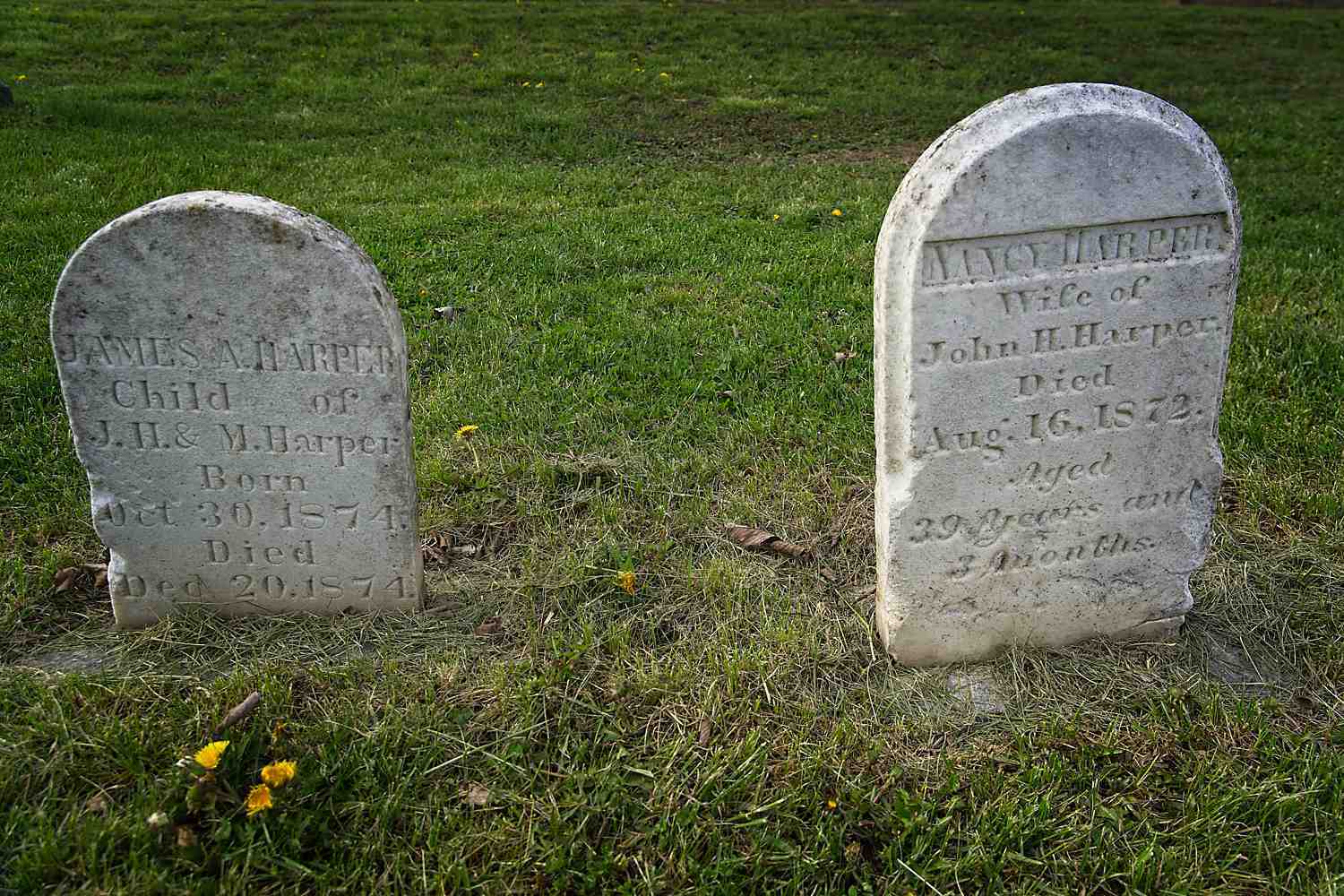
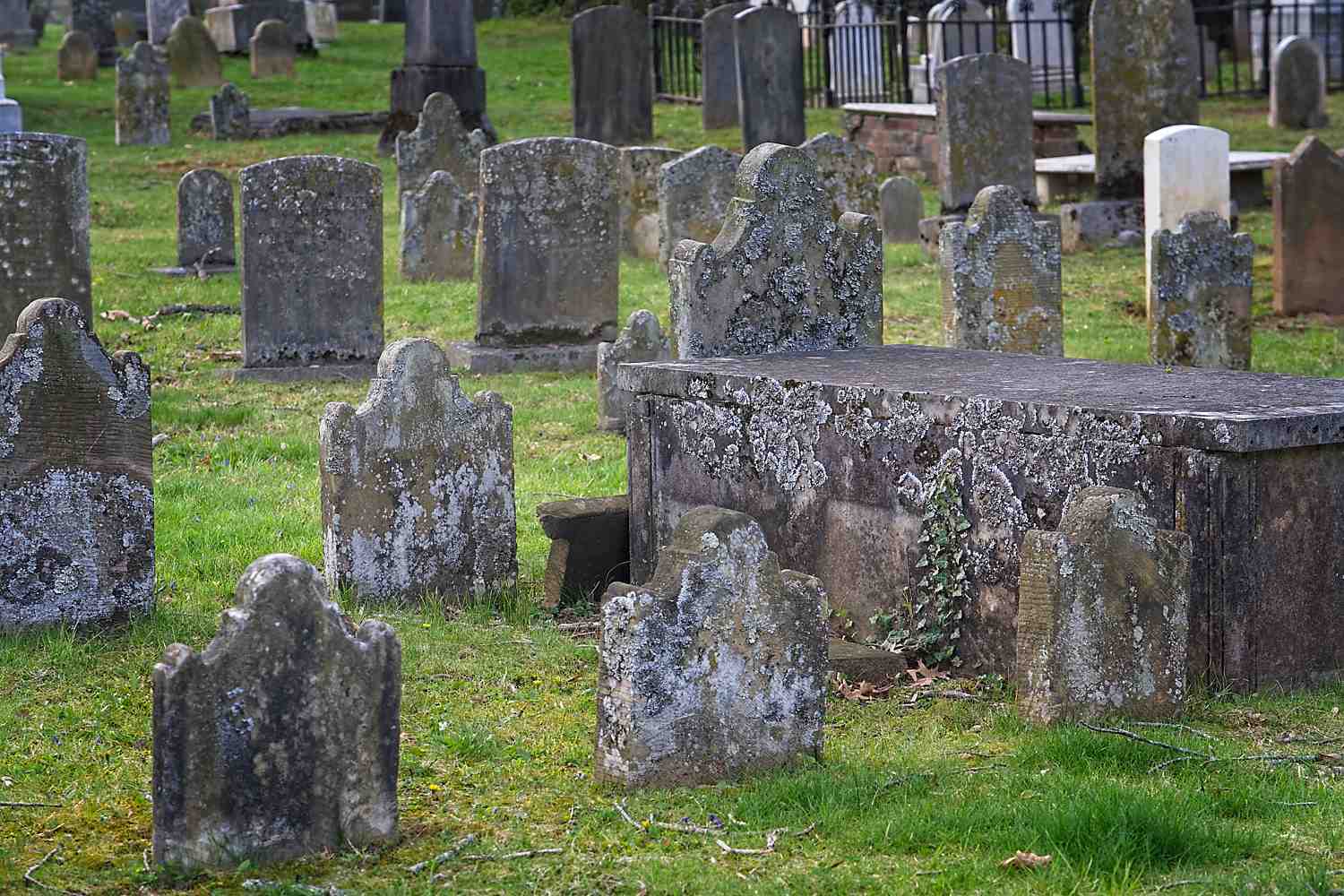
Black residents tended Evergreen until 1971, when the city took over its maintenance. It’s evident at first glance that Evergreen hasn’t been nearly as well-capitalized over the centuries as Oak Grove. Most blacks before the Civil War were enslaved, and even free blacks were poorer than most whites, unable to afford large headstones, crypts and fences. Even by 1890, Lexington whites owned about $1.2 million in property, blacks only $61 thousand. So there are fewer memorials in Evergreen; recent ones are larger and more substantial than the earliest ones, but none are as elaborate as the homage to Stonewall in Oak Grove. One thing the two cemeteries do have in common, though, is lichen.
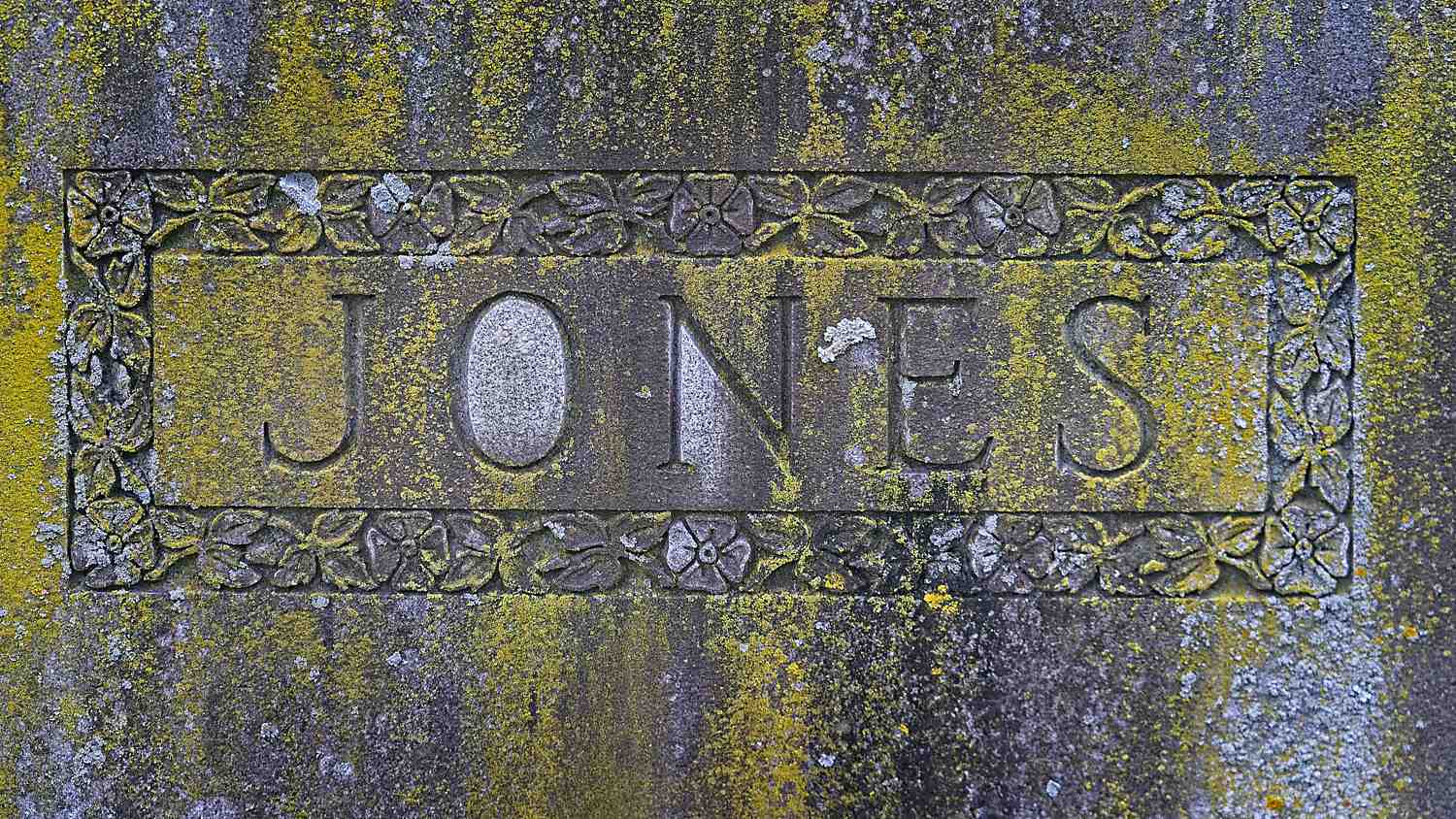
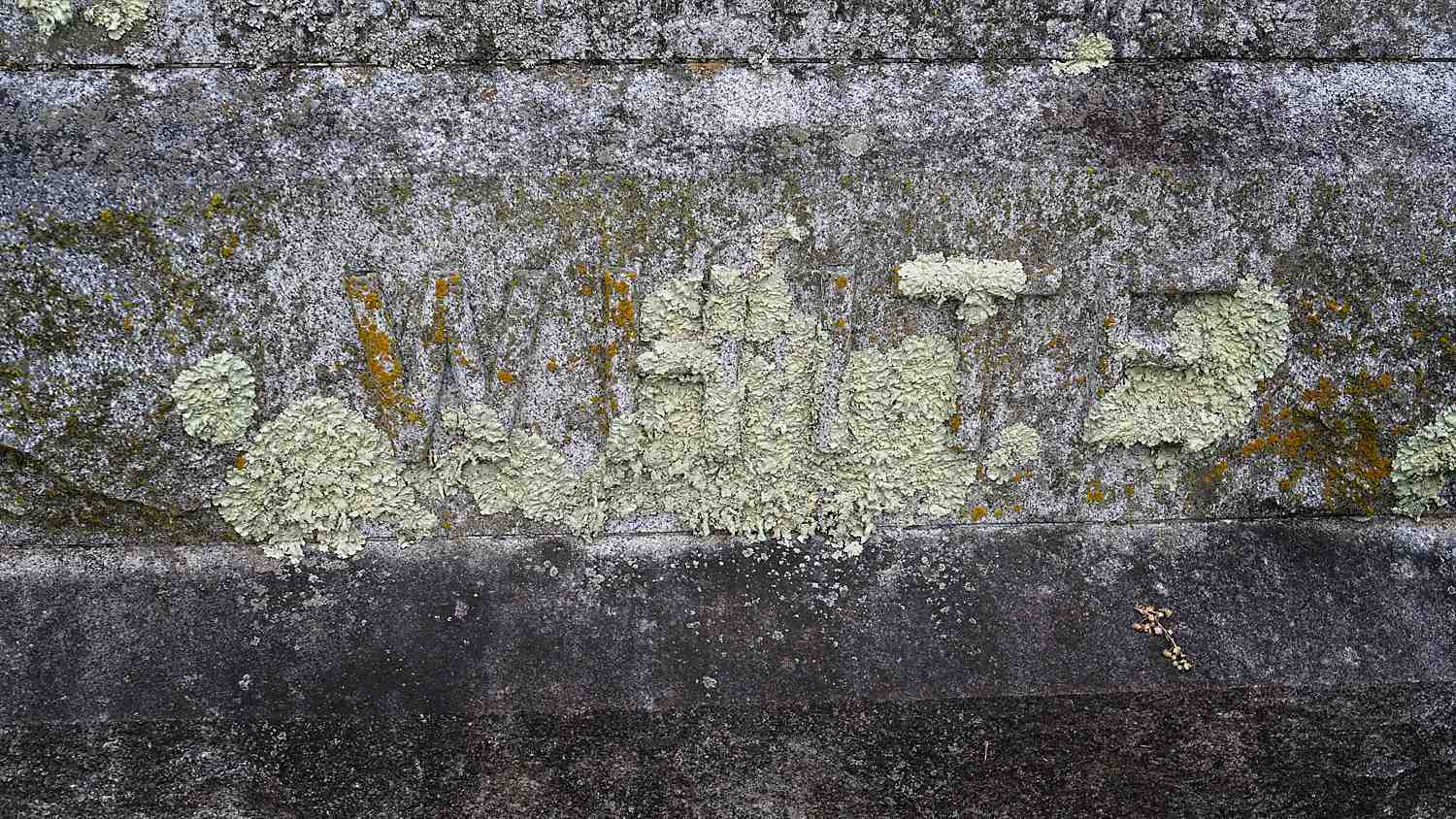
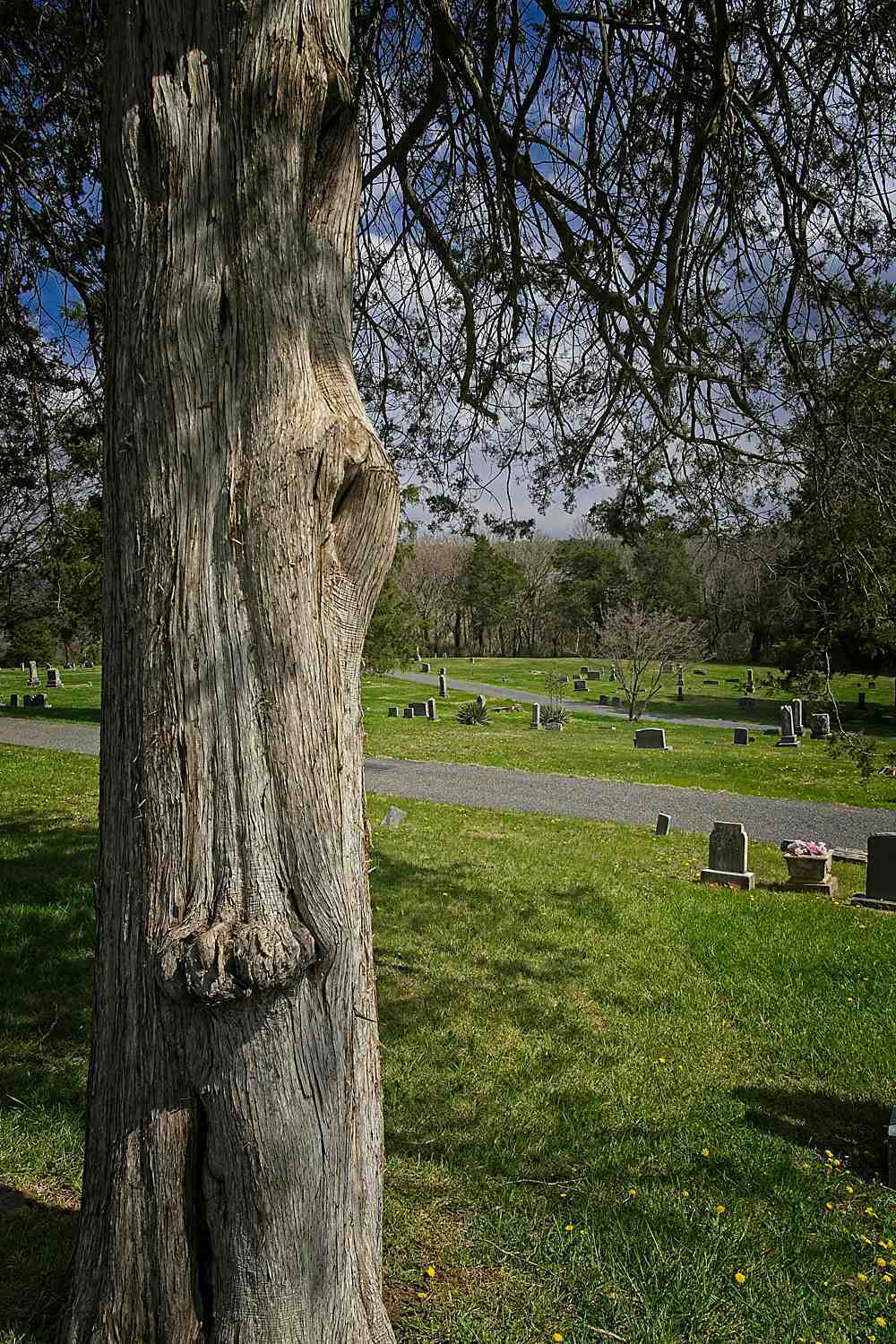
Despite the relative lack of monuments, Evergreen has a quiet tranquility, evident not least in the winter, when little is green save the native red cedar trees, Juniperus Virginiana. When the lawn greens up in the spring, it almost feels like a park.
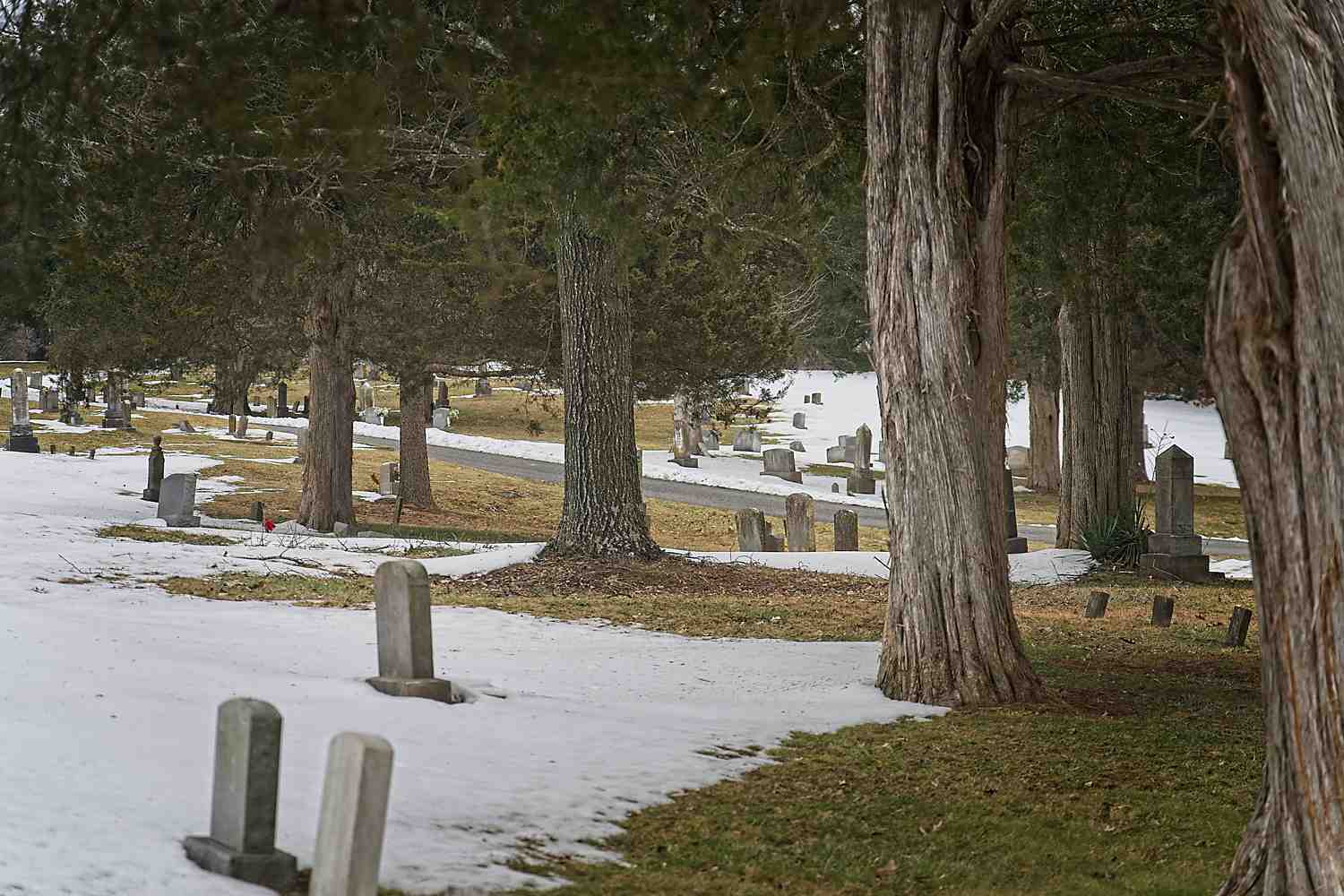
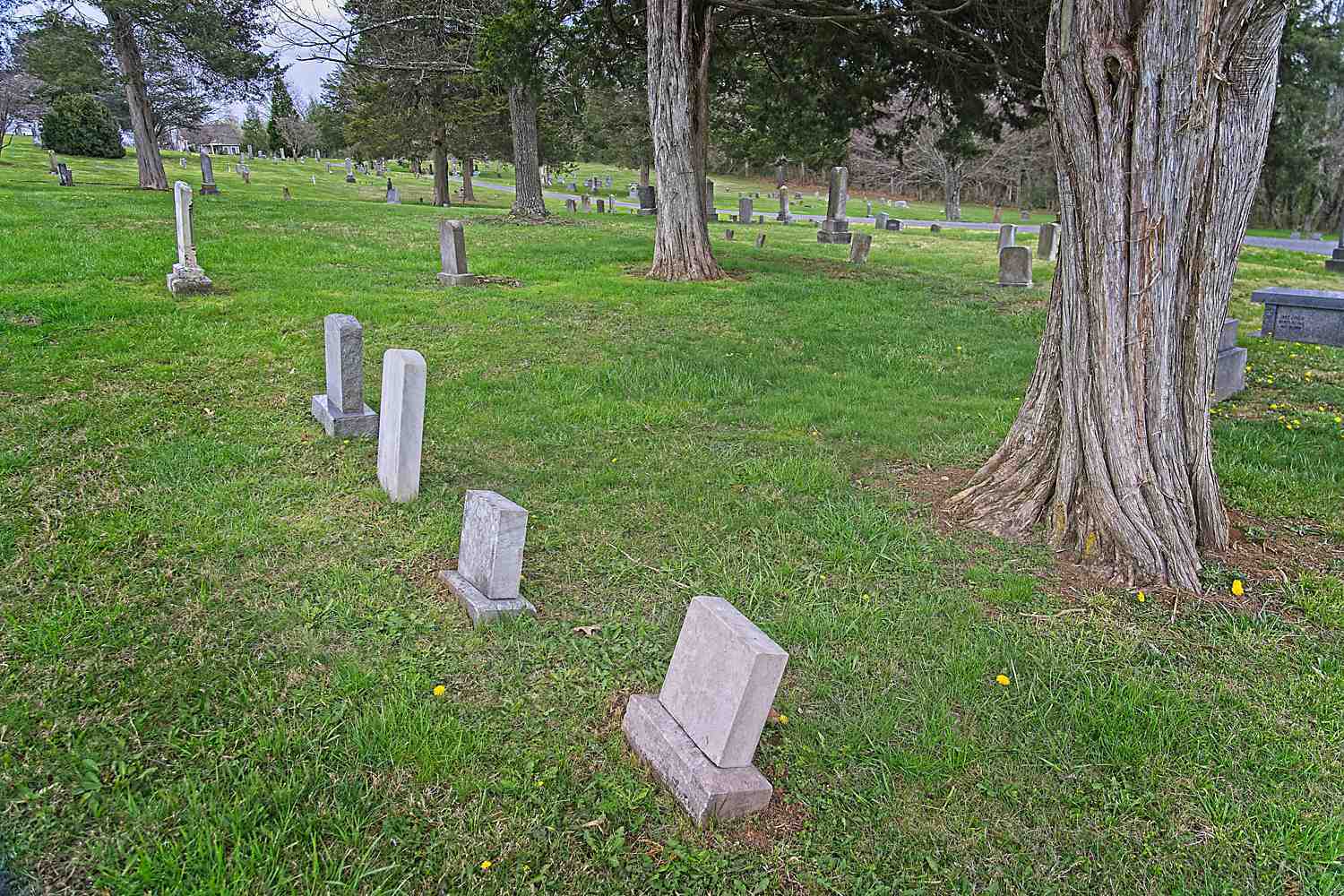
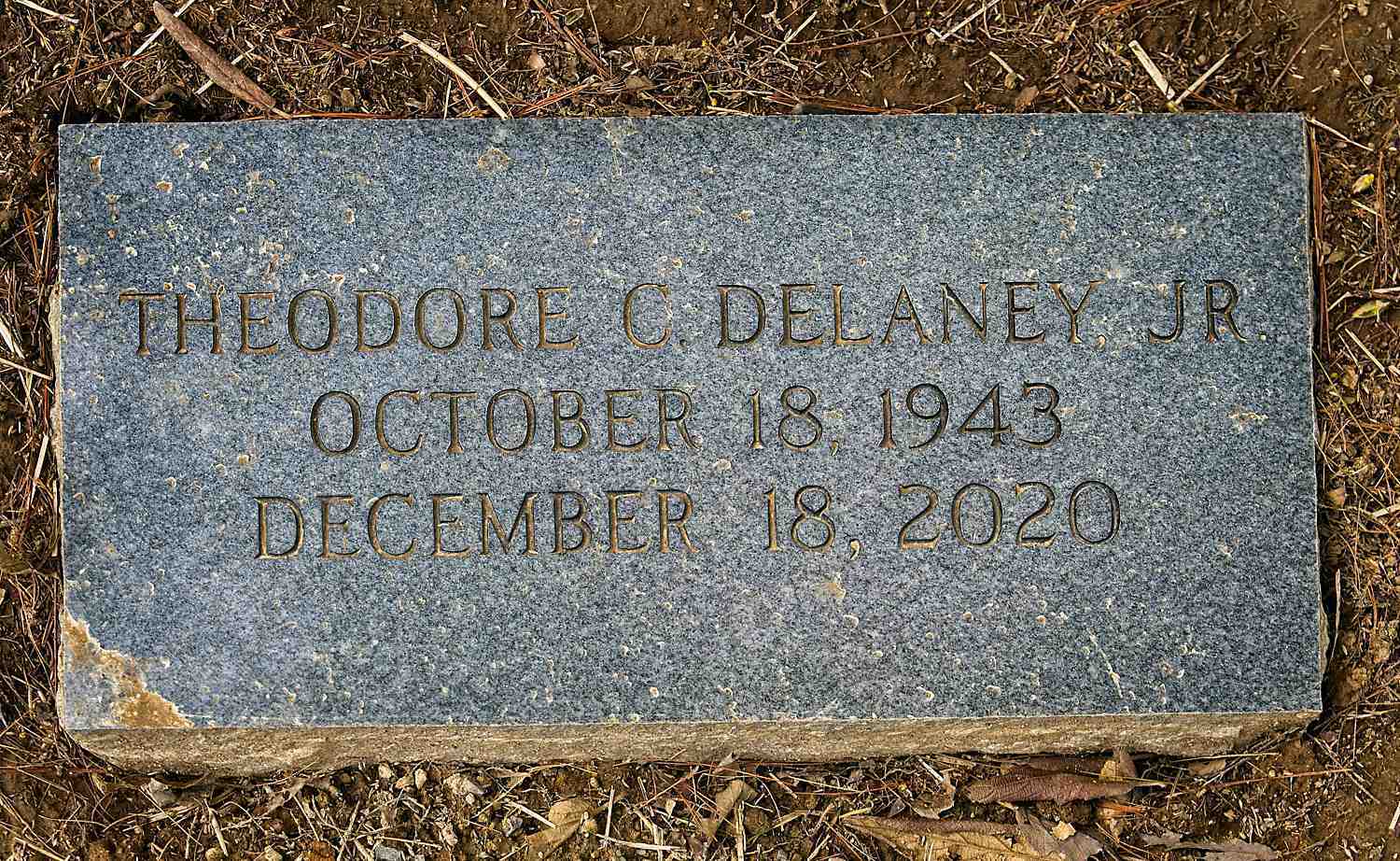
Needless to say there are few prominent people buried in Evergreen, as until recently local blacks have been denied access to power as well as to wealth. Still, there are some graves worth noting:
Ted Delaney (d. 2020) was a friend and colleague of mine at Washington and Lee University, and a pillar of both the school and the community.
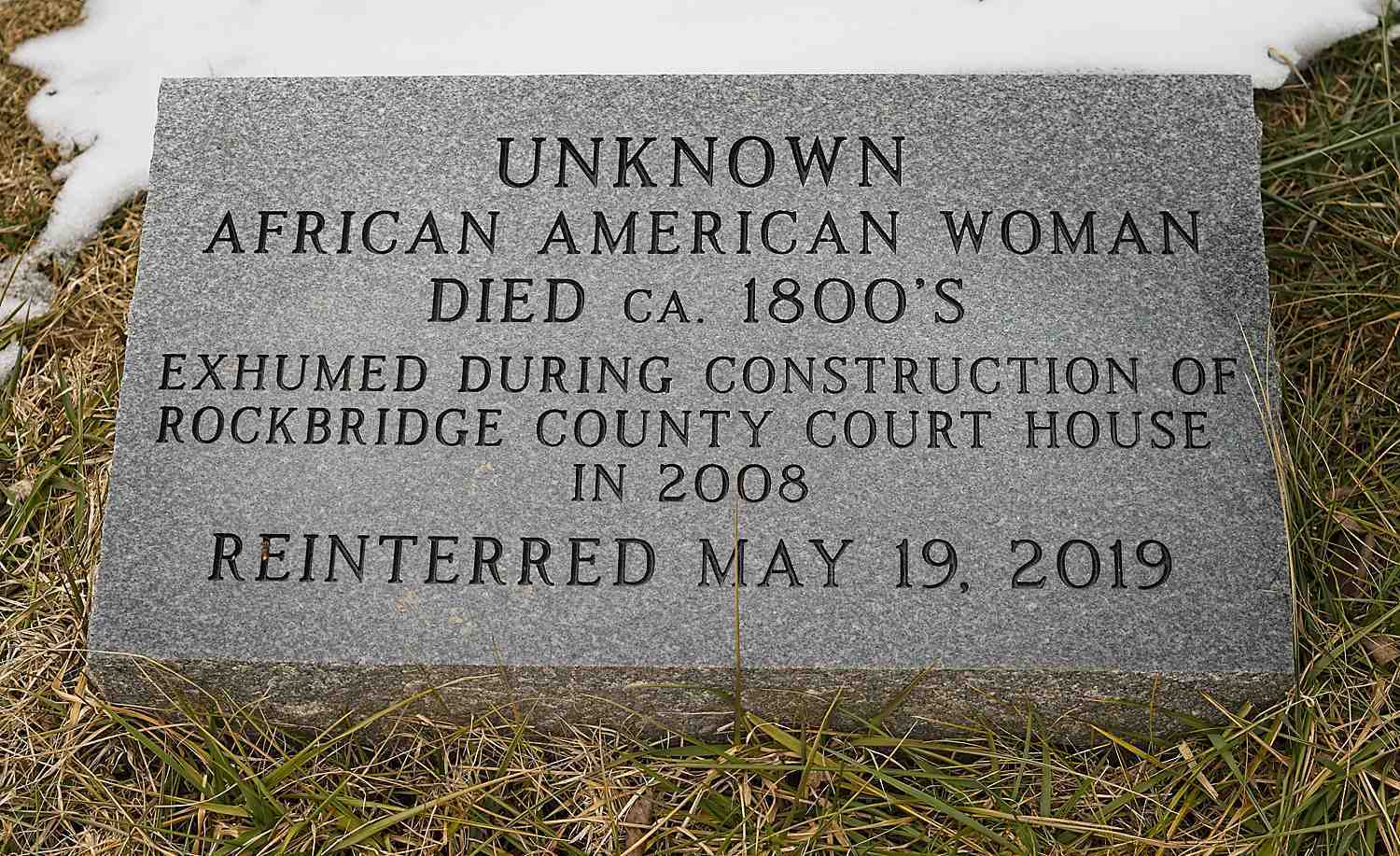
One “unknown African American woman” was exhumed in 2008 when building the new County Court House (not the area of the old Evergreen Cemetery), and removed to Evergreen.
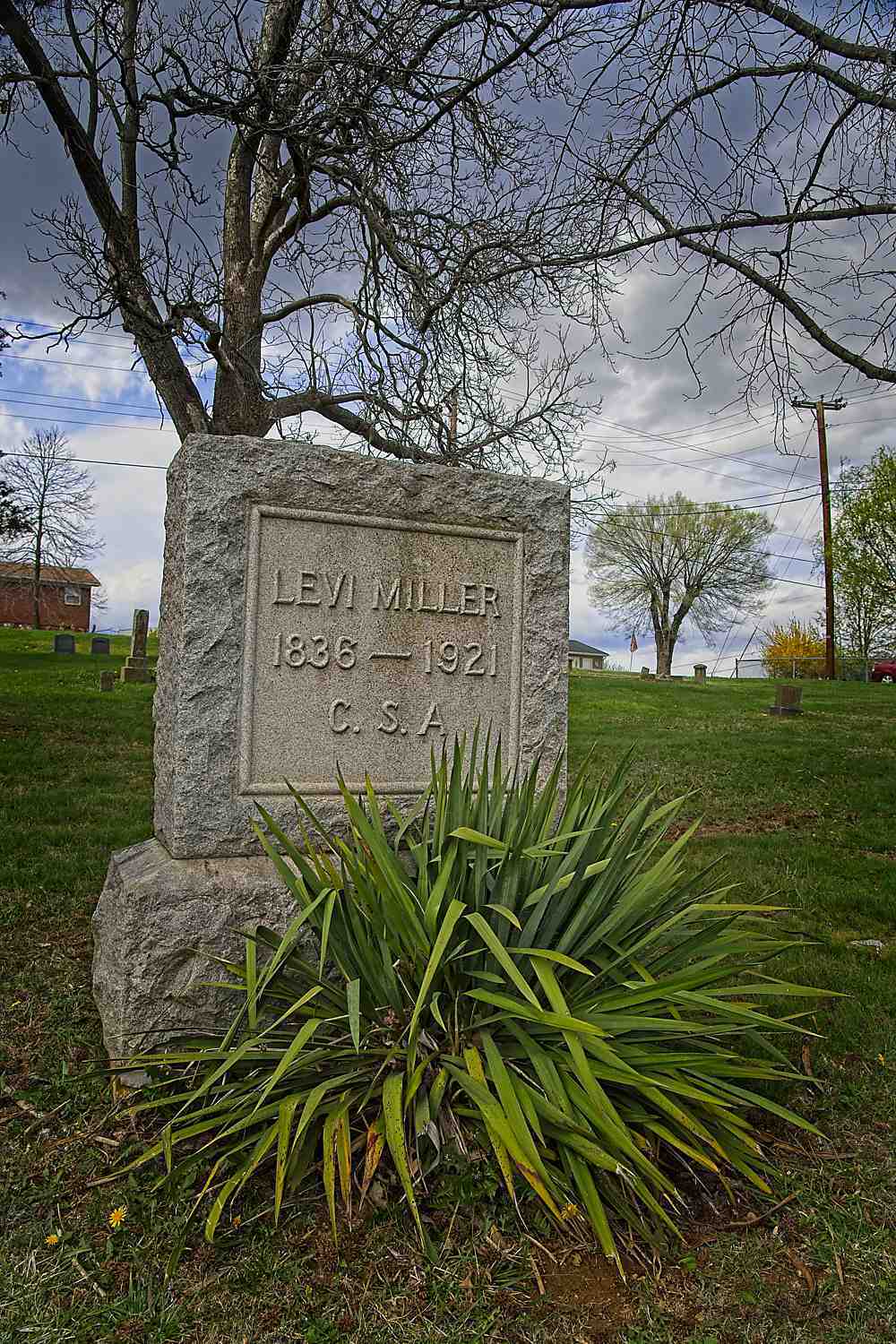
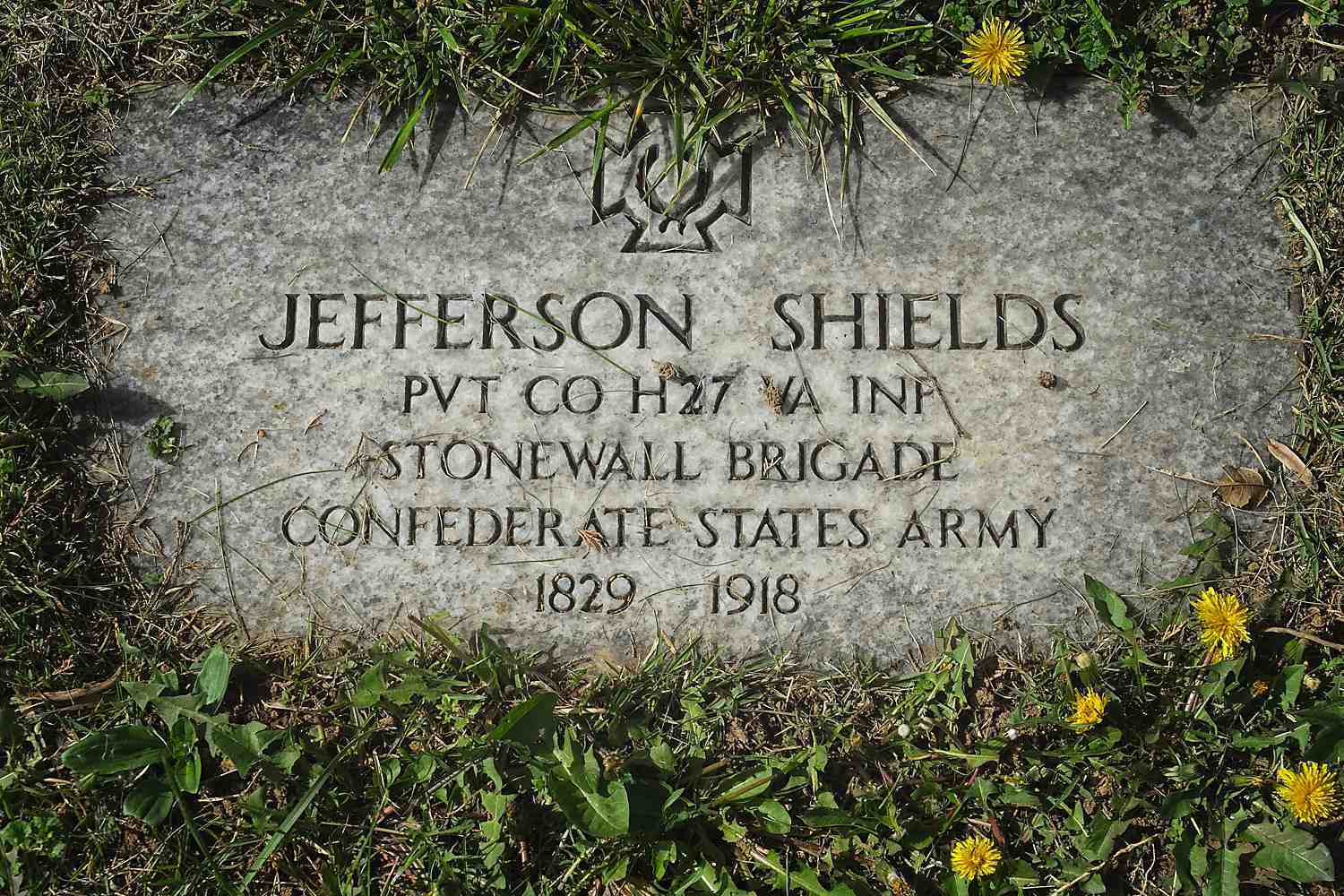
Perhaps surprisingly, there are two headstones with “CSA” markings.
One is Levi Miller’s (1836-1921). He was the war-time servant of Captain John McBride, who came from Texas and claimed Levi from his brother Robert. Levi appears to have accompanied John throughout the war, in a variety of battles, and in hospital after John was wounded in 1864.
Another belongs to Jefferson Shields (1824-1918), who became widely known as “a Confederate negro,” replete with badges and ribbons. During the Civil War, he served as a cook for his master, Col. James K. Edmonson, and occasionally for Stonewall, and after the war he was elected a member of the Stonewall Brigade Association.
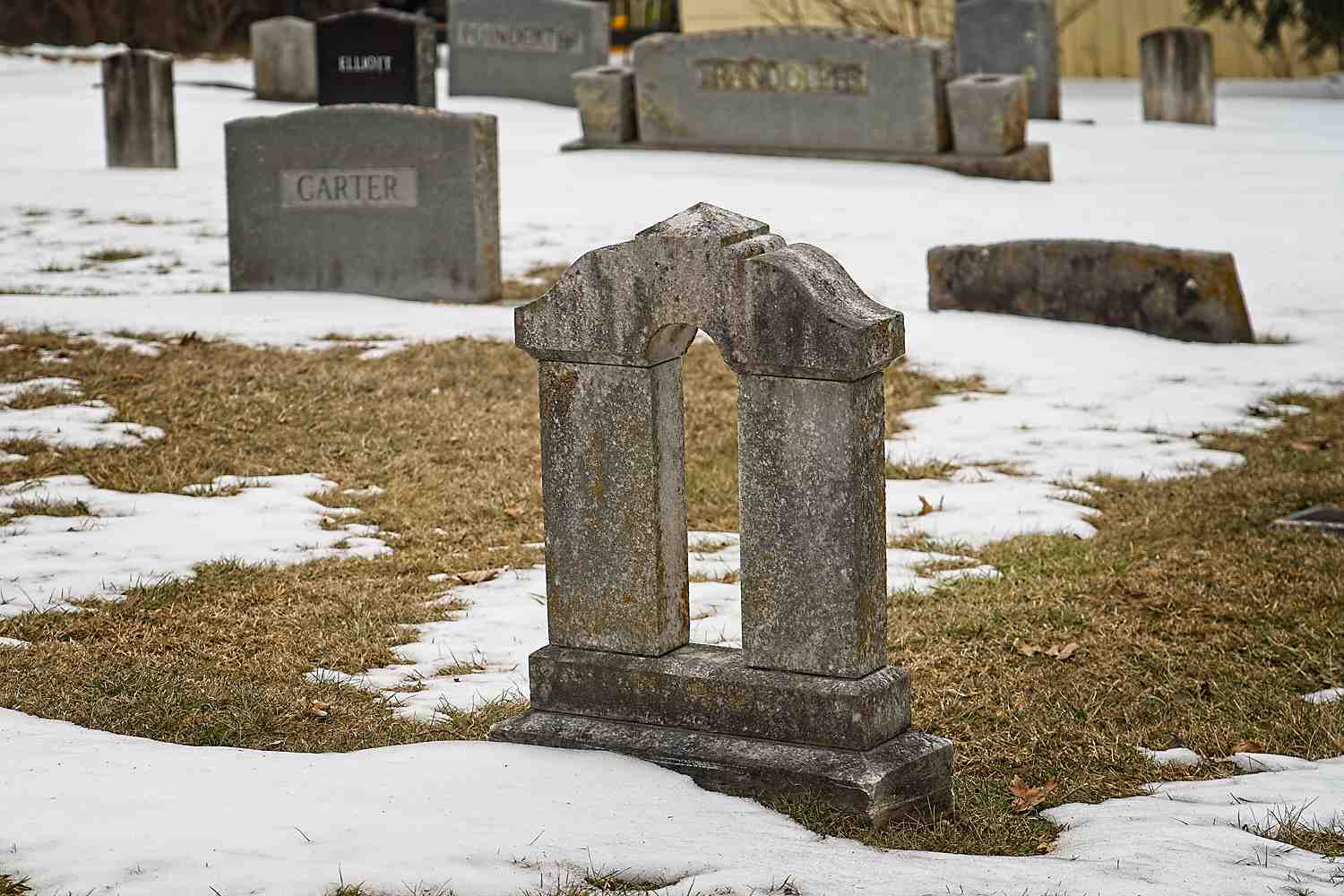
There are a number of small headstones in various states of disrepair, with the inscriptions eroded or effaced, along with their memories.

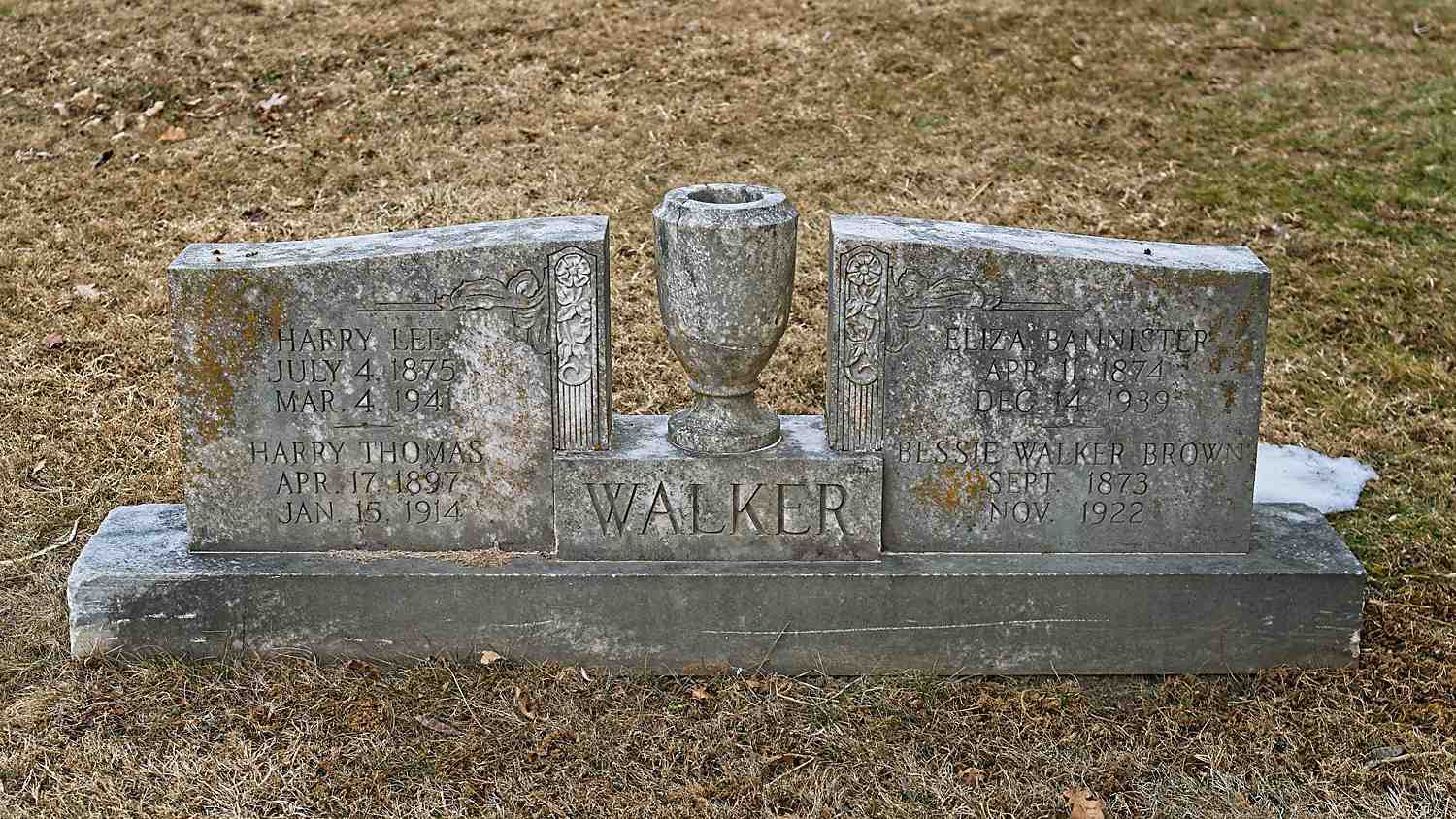
The Walker family headstone is more elaborate than most in Evergreen, but less than many in Oak Grove.
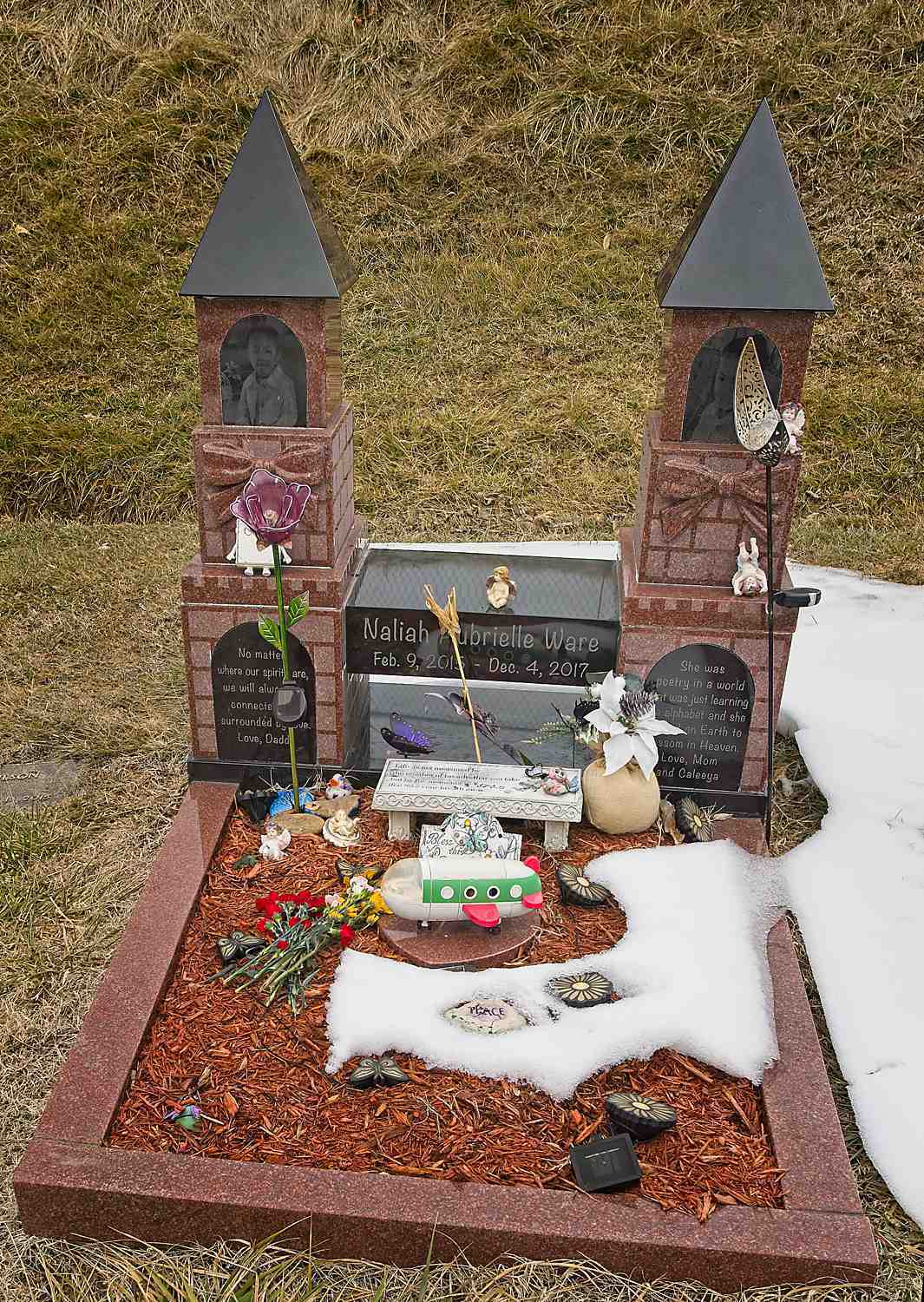
A recent plot memorializes a young child, Naliah Aubrielle Ware (who died less than two years old), with an interesting assortment of memorabilia and these inspired words from her mother: “She was poetry in a world that was just learning its alphabet.”
Just prior to the Civil War, the 1860 census showed that nearly a quarter (23%) of Rockbridge County residents were enslaved blacks. This probably was a high point in local black population, which has since been declining as a percentage of Lexington’s population. In 2020 there were 680 black citizens in Lexington, 6.4% of a total population of 7,320, about the same as the percentage of foreign-born residents. The reasons for the relative decline are many, but chief among them is the lack of local job opportunities; young blacks moved to where they could make more than a menial living. Doubtless prejudice and discrimination remain, but they are rarely overt in a polite Virginia town. VMI currently has a black superintendent and Washington and Lee a black provost and a black dean (both of them women!). Modest progress. Nevertheless, the two cemeteries vividly attest to the continuing chasm between white and black that afflicts this country.