
#1047. On Sharing Visions of Beauty and Horror
Earlier this year, before the pandemic, I traveled to the southeastern coast of the United States, to Georgia and South Carolina, to what is commonly called the "Lowcountry." Inspired by the work of photographers who have created remarkable images of the weathered trees and driftwood of the area, I made it a project to photograph the "ghost trees" of these barrier islands. I researched and decided which islands to visit. I picked places to camp; I checked weather and tide forecasts; and upon reaching my first stop, Jekyll Island in Georgia, I scouted “Driftwood Beach” for subjects.
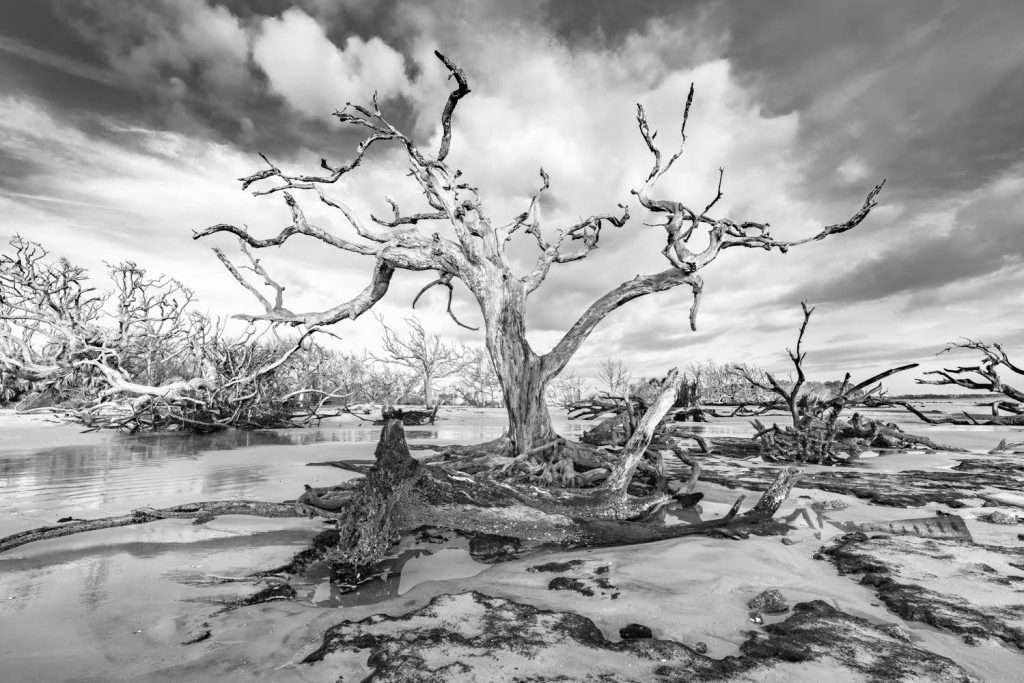
The next day, before dawn, my headlamp lit the way through the dunes and shrub vegetation to the beach and first light. The beach was empty, for a while, and dark and beautiful. Setting up that first morning was meditative. I worked in silence, enjoying the sound of water meeting and sliding over the sand. I worked within the process, the dance of choices: lens and filter, angle and color, dynamic range, aperture, ISO and shutter speed. I stopped to note the sea lights from ships out in the night and the first breezes from the dark ocean as they carried the scent of brine, sand, decaying wood and shell and plant. I was far away from the cares of the self; I was deep in the experience and techniques of photography.
Then, suddenly, the world became a photographer’s dream of color and light, a moment in which even the air itself seems to turn shades of lavender, orange, and purple.
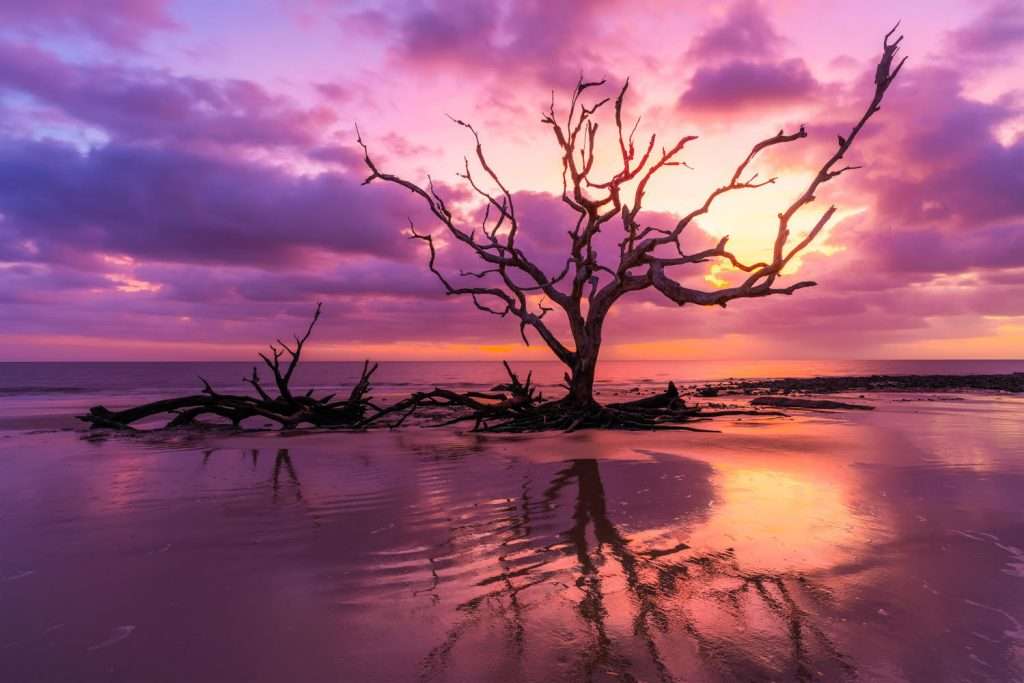
Time sped up. I took shots, quickly considering alternatives and positioning images in the viewfinder. Meditation was quickly competing with or complementing—I don’t know which—instinct and photographic practice. And all the while I worked, the setting seemed to reveal secrets about the beauty of being present. But, of course, lavender moments do not last. They are replaced with gratitude for the bearing of witness and a renewed appreciation for the meaning of change.
With the morning light of the sun, I began searching the beach for other subjects. I worked the scene for a couple of hours before a thought occurred to me. It started, I think, as a perturbation, and it developed into a question (or set of questions). It grew more compelling as the morning wore on: how should I see these trees? Was I observing them for what they were or for what I wanted them to be? How should my photographs represent these trees? Should my photos attempt beauty so as to be uplifting? Or should I conceptualize my images in a different perspective? My vision grew uncertain.
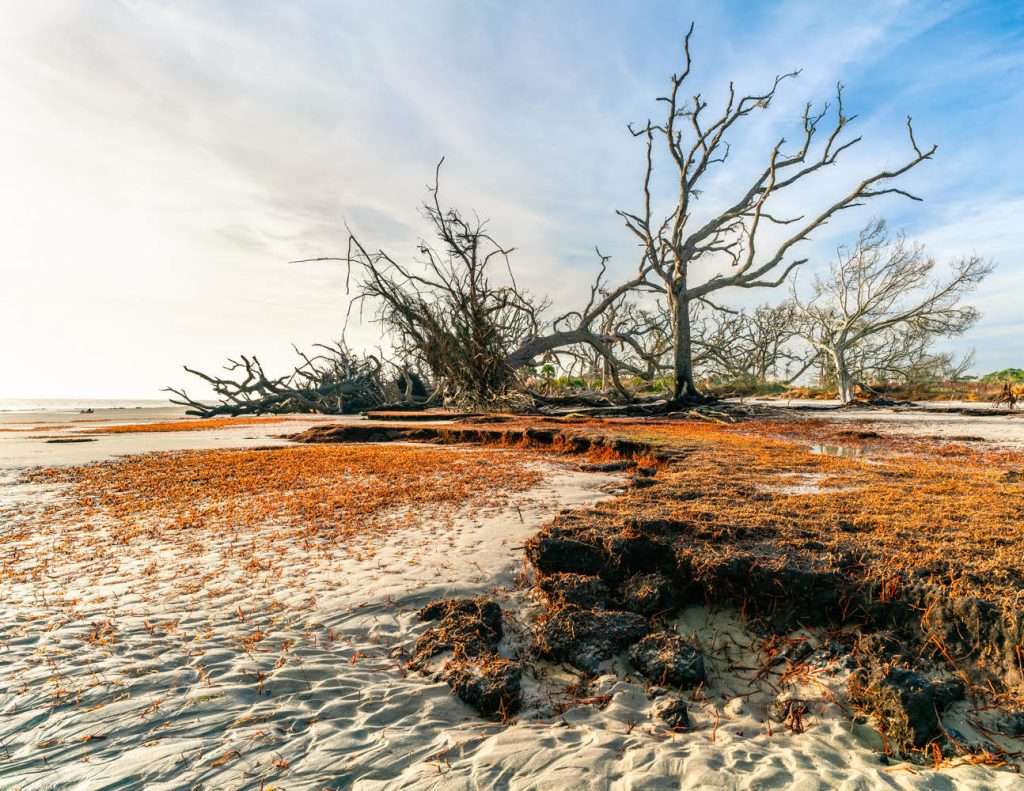
The problem was that as mournfully beautiful as the figures of the ghost trees were, they maintained a presence in their deaths that was resonant with mortality that, frankly, was chilling. As I worked, I began to comprehend what was bothering me. This was not only the kind of death that must be accepted for its inevitability, to be accounted for in a philosophy or religion. Rather, I was realizing that something other than natural coastal erosion was contributing to the deaths of these trees. It was dawning on me that I was also photographing destruction caused, at least in part, by sea level rise. So, while I had come to the Lowcountry to photograph the beauty of the coast, I was beginning to see that that my photographs were also going to be about something awful, about death and climate change.
In the Powers of Horror, Julia Kristeva argues that horror’s effect is based in abjection, the feeling of revulsion that occurs when a meaning that traditionally distances subject from object seems in danger of collapse. For instance, we experience abjection, Kristeva explains, at the sight of a corpse because its proximity unsettles our ability to ignore the reality of our mortality. Cringing at the idea of death is one way for us, then, psychologically speaking, to try to keep the inevitability of our mortality at bay. The chill I felt that morning on the beach was the breaking down of the traditional if artificial distance between nature and humanity, or, specifically, between these trees and me, or, even more specifically, the death of these trees and my own—or, in another elemental sense, between my deepest fears about climate change and the future waiting for my son and his wife.
One morning, after shooting at the Botany Bay preserve on Edisto Island in South Carolina, I located a docent and asked about the receding shoreline and dying trees. I wanted to know to what extent the trees were dying because of natural shore erosion and to what extent climate change was playing a role. She informed me that coastal erosion was historical on Edisto, but that, indeed, in recent years the process was speeding up. (Indeed even a cursory bit of research will prove the docent correct: sea level rise, as well as increased storm activity, is playing a role in South Carolina’s coastal erosion.)
So, what, I asked myself, was I to think about my photography? What was my intention? Was I photographing the beautiful or the horrible, or some combination of the two? Was I in control of my art—or not?
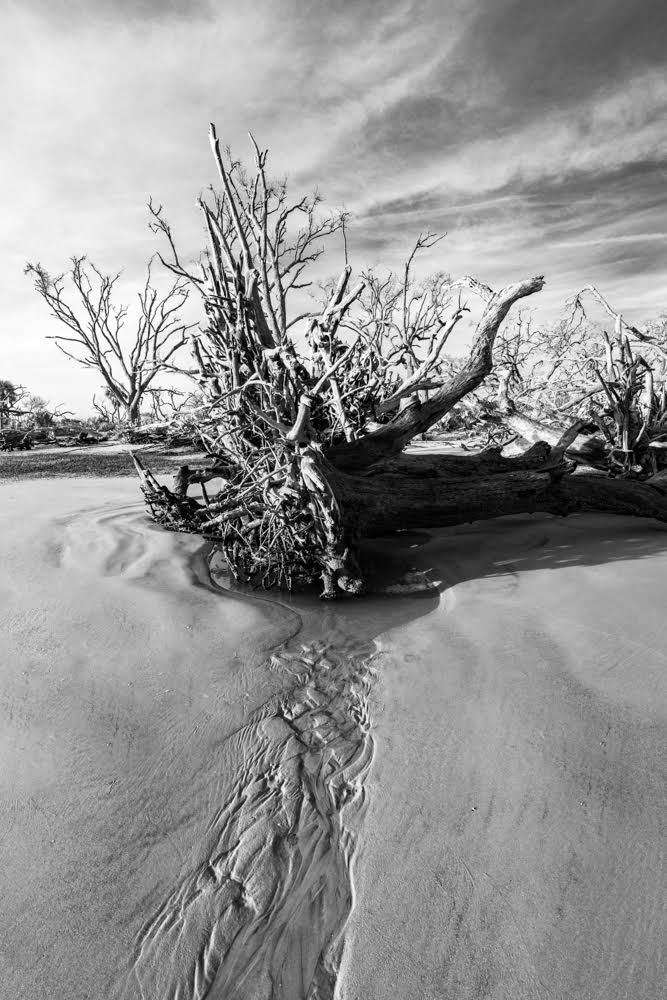
My thoughts were contradictory. On the one hand, my Lowcountry project was making it possible for me to recognize how the reality of climate change could sneak up on me despite the fact that I think and read about it every day. In other words, photography was making it possible to experience yet another dreadful realization that climate change is no longer sneaking up on any of us, but rather, is here. On the other and decidedly happier hand, my Lowcountry photography was allowing me to experience fascinating perspectives and realize images that are, for me, novel. I did not imagine, when I woke up on Jekyll Island, that I would that day look down the trunk of a tree and into the remains of a root system sticking into the sky.
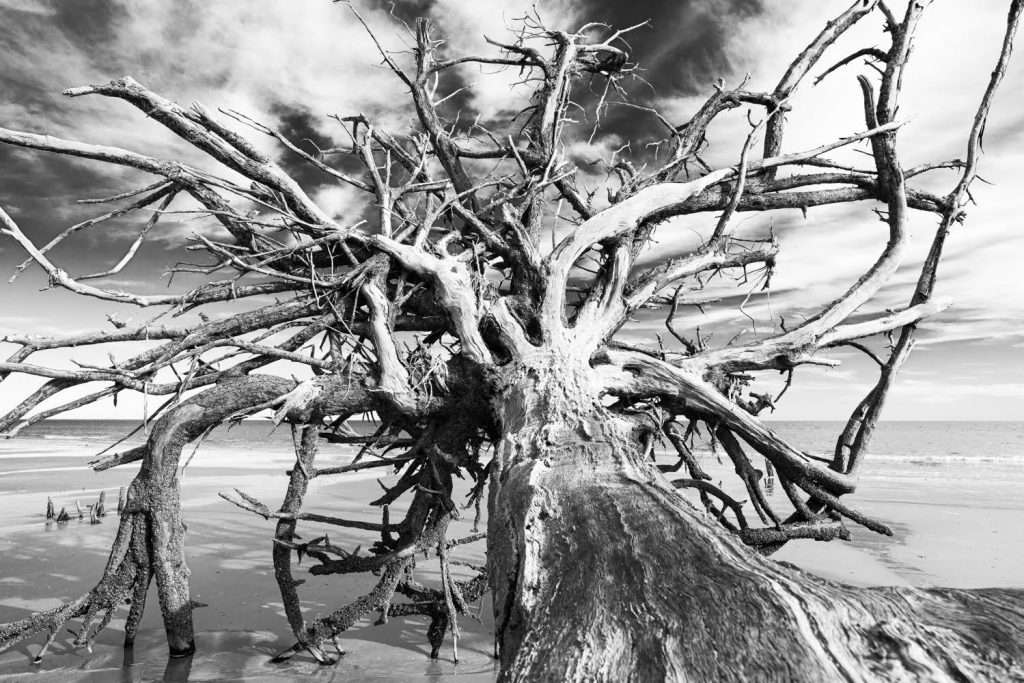
I did not get up that morning expecting to catch a glimpse into natural complexities usually hidden from me.
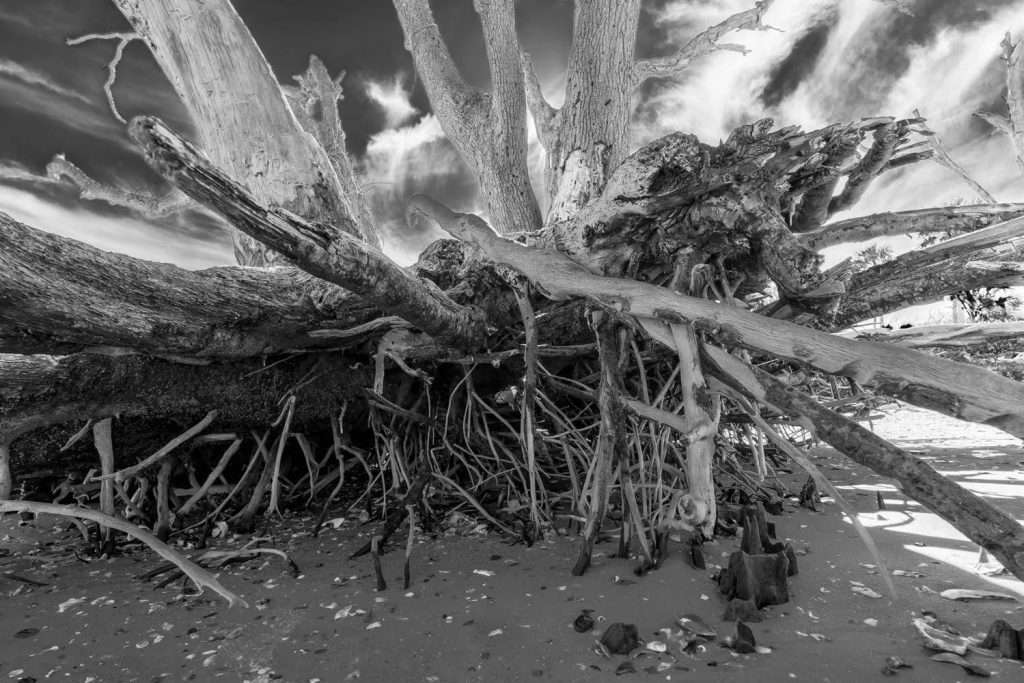
Photography was reminding me of the interconnectedness of life: all life, my life, life lying beyond immediate perception but essential to human well-being.
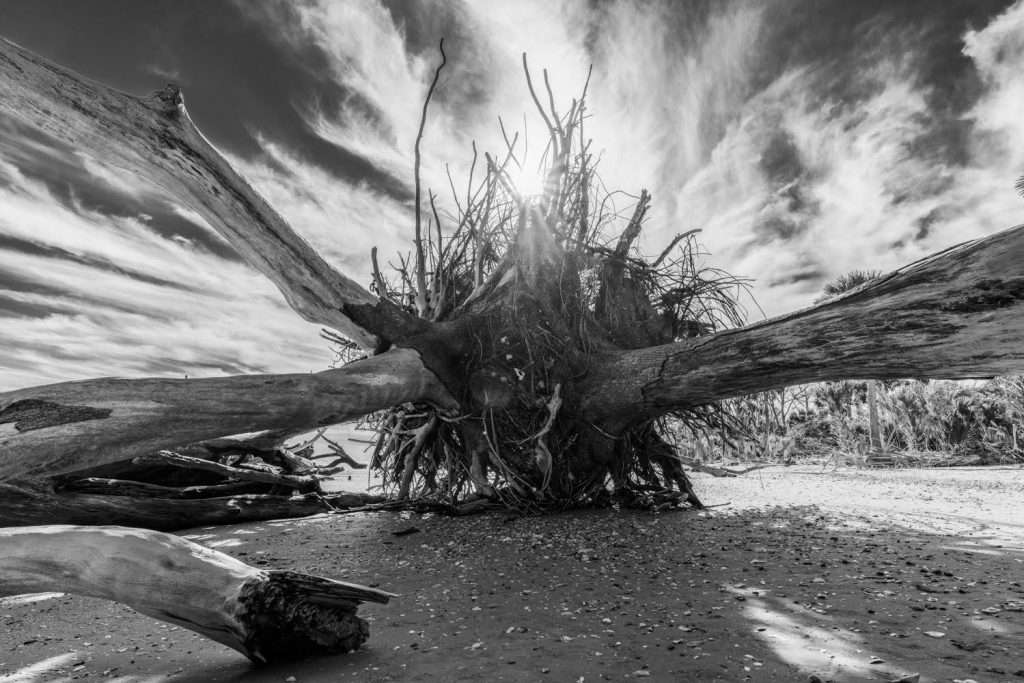
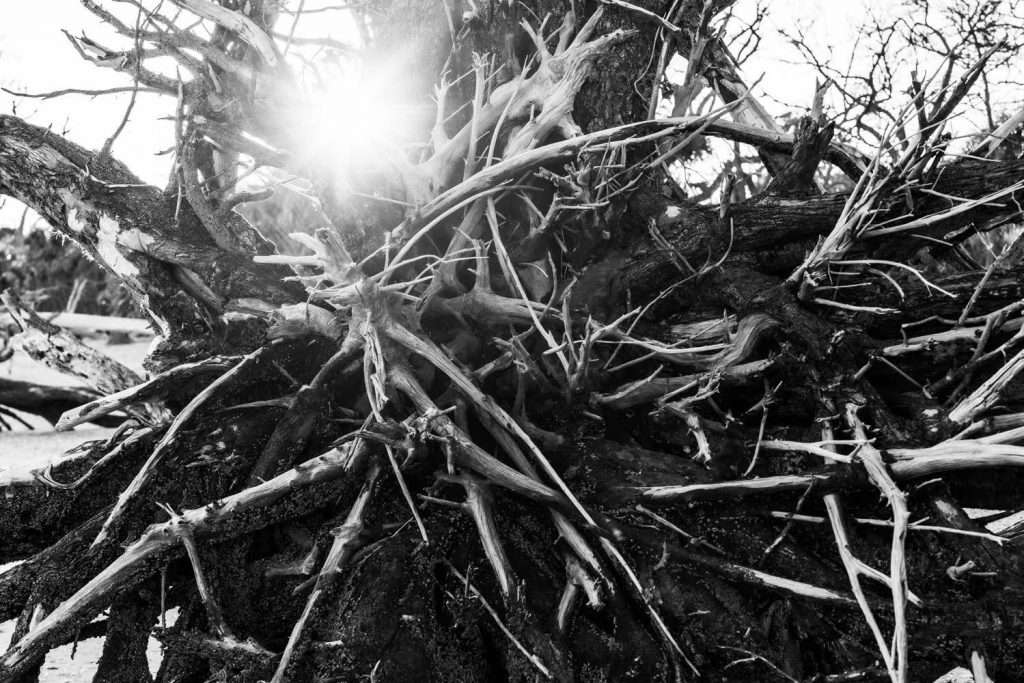
But, as I continued to photograph and as I have tried to portray, I remained perplexed. Would I be abnegating my responsibility as a photographer, not to mention as a citizen of the planet and as a human being, if my photos were to express the beauty of what I saw while eliding the terrible reality of climate change?
Do these trees offer, I thought, a message of and for survival that people need to see and hear? If so, could I find a way to photograph them so as to make that message accessible? Could the trees tell us how to survive? What is it we need to do in reality and not in the abstract? Are we willing to make the necessary changes or sacrifices? Will we survive if we just cling to each other, to life in the face of ecological loss? How do we do that? How can we? In other words, how are we to read—and photograph—the markers our world leaves for us?
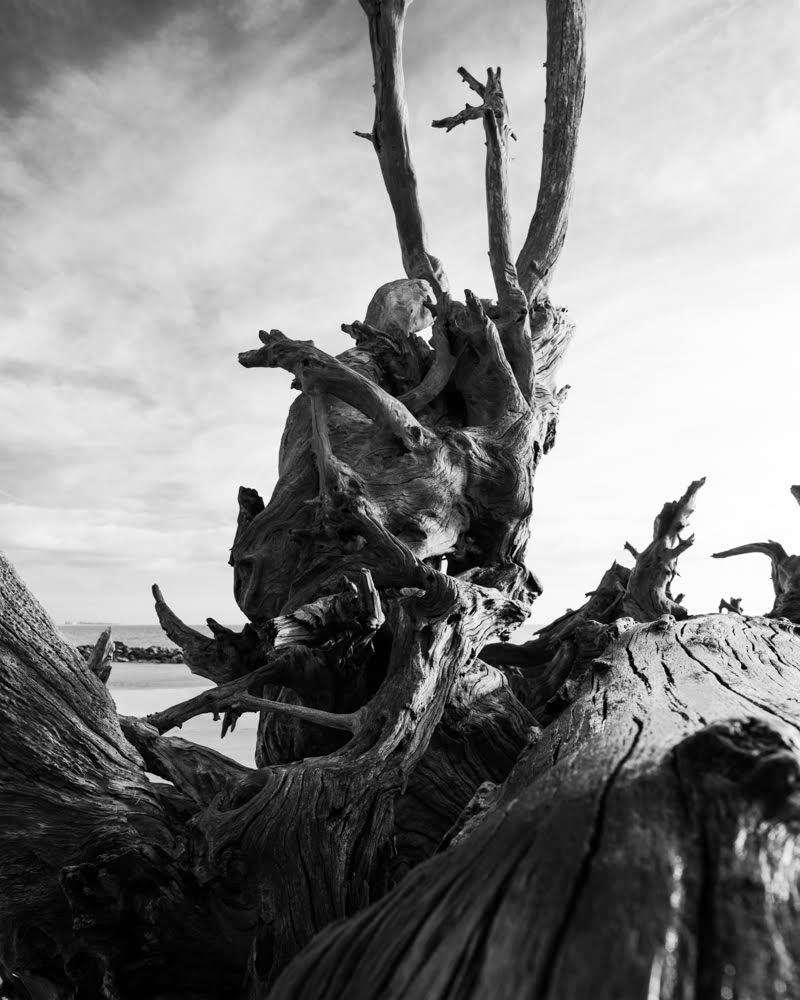
I ask these questions because I struggle with them. Just as trees fall, we fall. Was I photographing the human condition in the age of climate change? Or, is all of this a case of runaway anthropomorphism? The answer is, probably, “yes” to both questions. But facts remain.
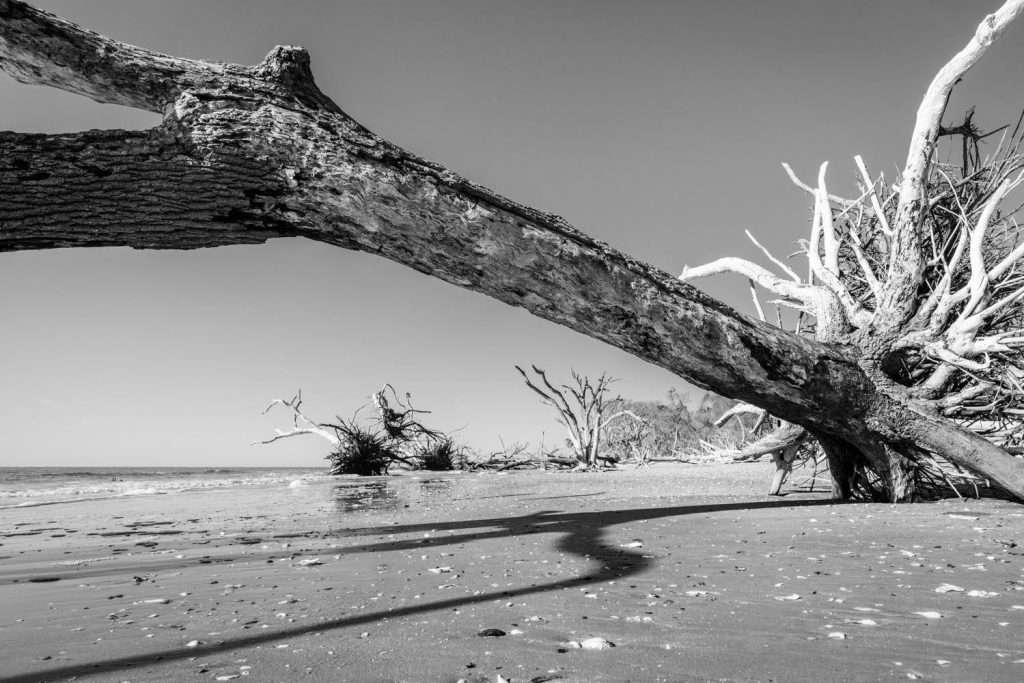
In On Photography, Susan Sontag reminds us that the question of ethics is always central in photography. Trees die. Some of these ghost trees die by the natural process of coastal erosion. But death by climate change that we have made is another matter, and it is, among other pressing matters, an issue of ethics. I am not ready to say these coastal trees should only be a memory or a matter of emulsion or pixels. I am also woefully unprepared, emotionally speaking, for the possible horrors of climate change (as I suspect the great majority of us are). I don't know how to photograph images of climate change; that is, I don’t know how to look at them, how to process them—how to endure the truth of them. I wish I had more answers, or more faith, or more something. I wish I knew the technology of saving us, though tantalizing, partial answers seem to come to light each day. And I wish that more politicians cared about the future of the planet as much as their political investments and bank accounts.
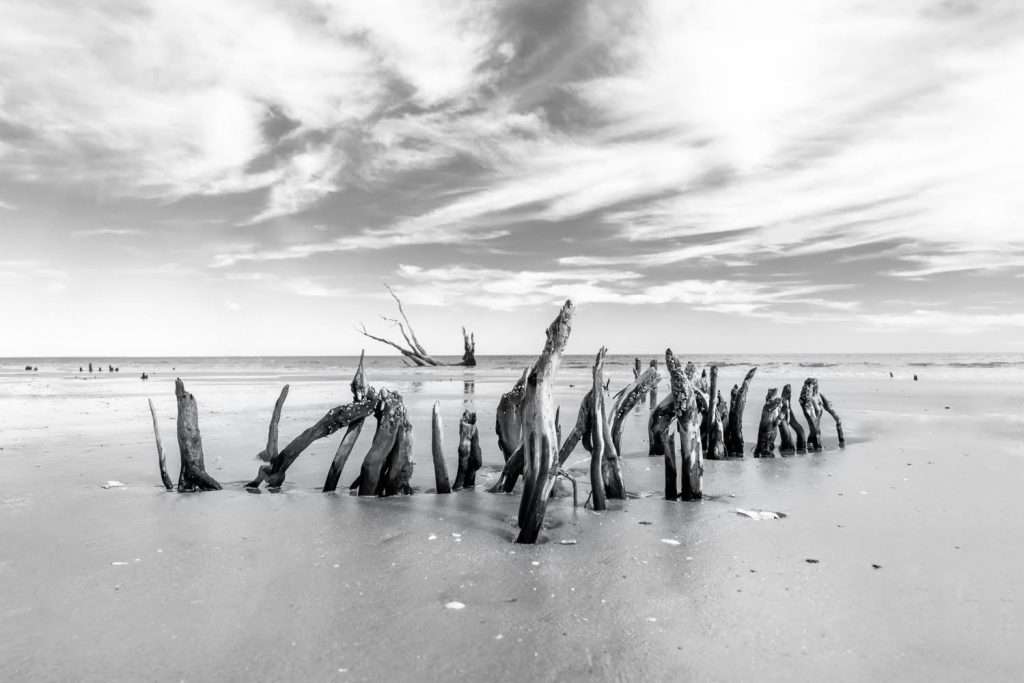
As for me, I vote, write letters, demonstrate, make choices, etc. But I also make images. Sometimes I make images of broken things and sometimes of somber truths. And, of course, I am not alone. I see the work of other photographers around the world wrestling with similar thoughts, though they so often seem to do so with better insights and technique, better visions and art. And while as a photographer it can be easy to be overwhelmed and silent in the face of so much talent, I think that it is important to add one's vision of the world, in whatever medium and form one finds essential. I know that the contributors to and readers of DearSusan know this.I suppose I am saying these things more for myself than for anyone else. But maybe, too, I hope that these ramblings will mean something to anyone in need of a reminder of the value of what we do with our cameras, even in dark times, maybe especially in dark times. So many photographers have given me so much, though they do not know it. Maybe I can pass some small part of the gift along. At any rate, there is this connection. We are essential to each other’s well-being.
While shooting one morning I decided that black and white long exposures might provide the best medium for the message of the trees. Minimalist photography, I thought, and maximum message. There should be no sugar coating the truth.
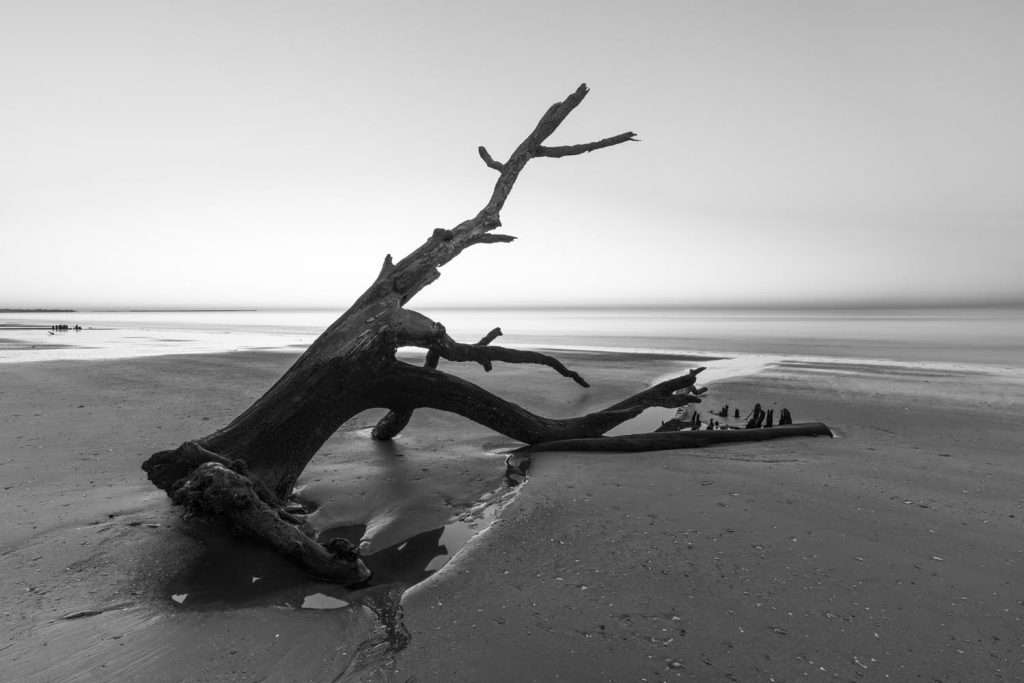
I decided to let the trees stand for themselves, to let them tell their own stories and make their own appeals. Long exposures. Smooth surfaces. No distractions, I thought. These trees just are. Somber. Surreal. And they are dead. They are horrible, and they are eloquent in their desolation.
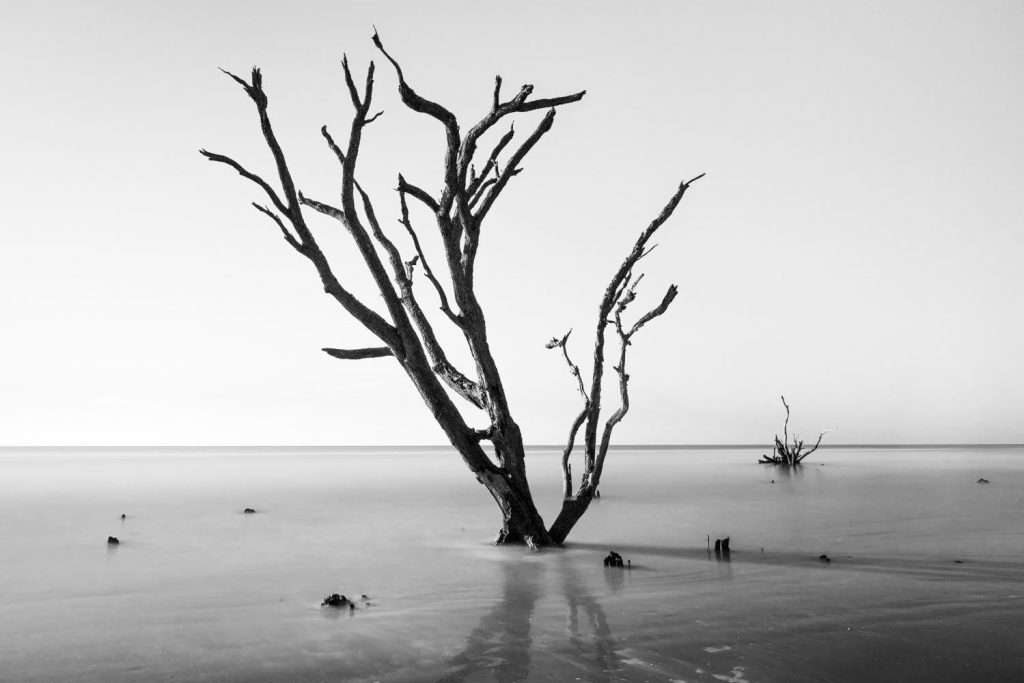
Of course, I have not achieved transparency in these photographs. I have not presented the trees themselves. Truth be told, I have not figured out how to photograph something that is both beautiful and horrible. For me, this is a beginning. But as climate change intensifies Kristeva’s process of abjection, as it powers up horror in emotional scope and global scale, the traditional meanings of our relationships to the world will no doubt be more deeply stressed. The beautiful may not turn horrible all at once, nor will it change to the same degree or at the same pace in all locations. The shift may even sneak up on some of us, but as it does, questions of representation will become more and more acute.
Landscape photographers already record the degradation of natural habitats and document what is lost so as to educate and encourage preservation. And I believe that the art of those photographers who document natural beauty in a way that sustains, uplifts and inspires will become more necessary as we continue to learn to fear our world. But this is the journey and the question I still face: how to photograph the shifting, the dynamic, even the fulcrum, between the sense of home and loss of home, between presence and absence in a world of climate change. Maybe such photography can help us learn something useful about adjusting, adapting, and mitigating—or understanding, even recovering. It remains to be seen.
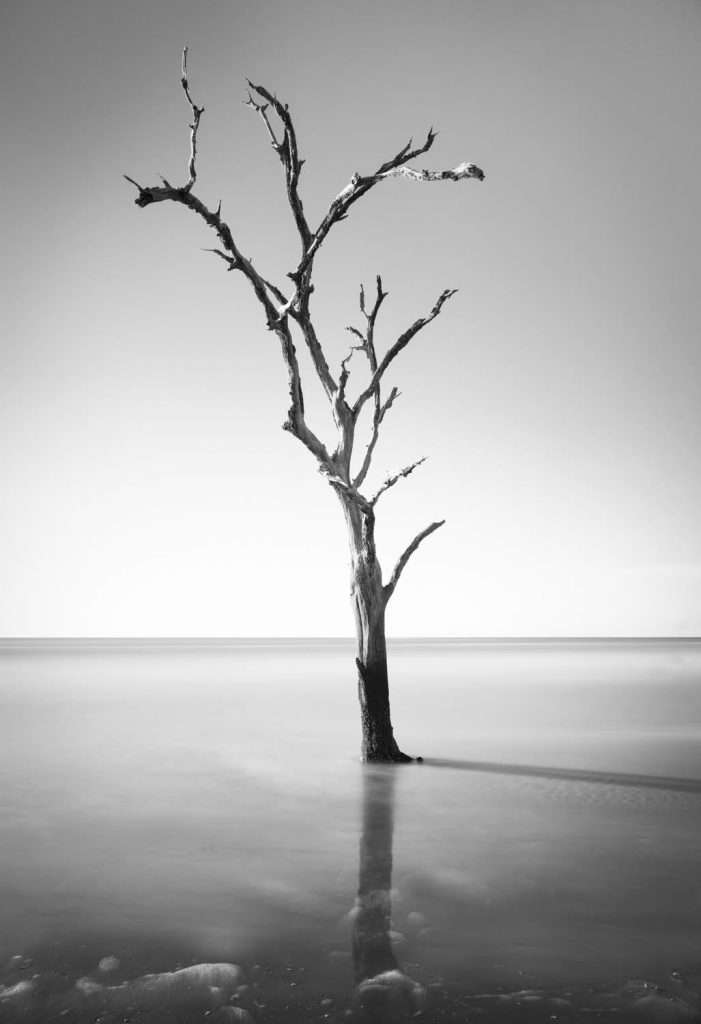
Today, then, there is an overriding issue in my mind as I postprocess these images: I did my best, but any one photographic technique, any one camera setting, and any one processing decision is not enough. The water is still coming. On calm days its approach is quiet, hardly seen or barely heard. And all the same, the water keeps coming.
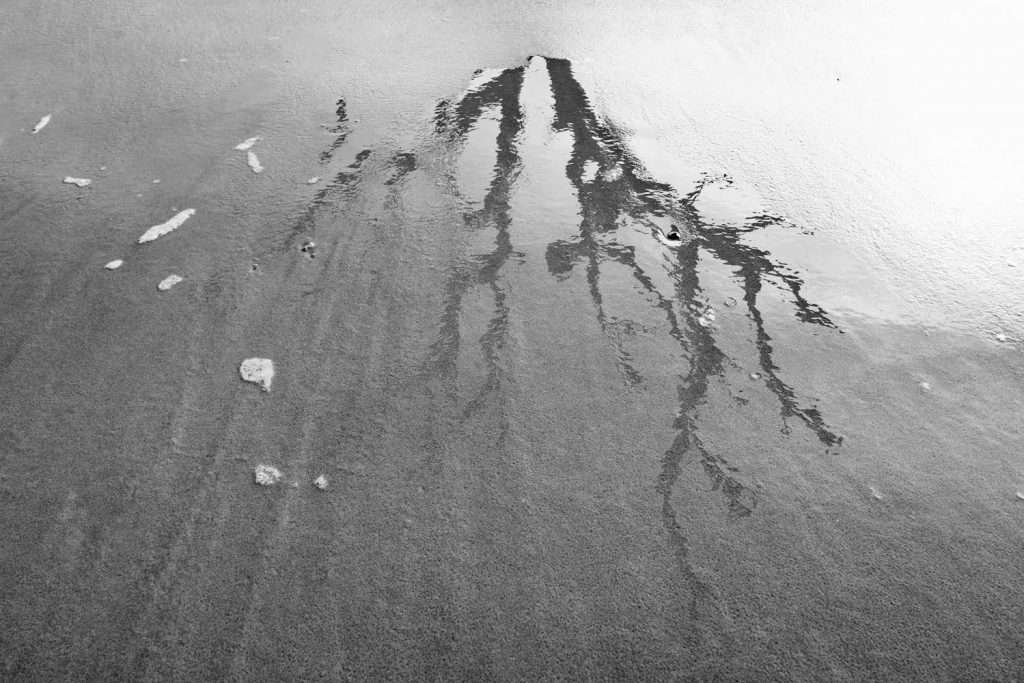
And with each dawn and each shared image, each shared vision, the truth of the story is told, hopefully, a bit more deeply, a bit more fully, again and again. Facts remain. So, too, the human imagination.
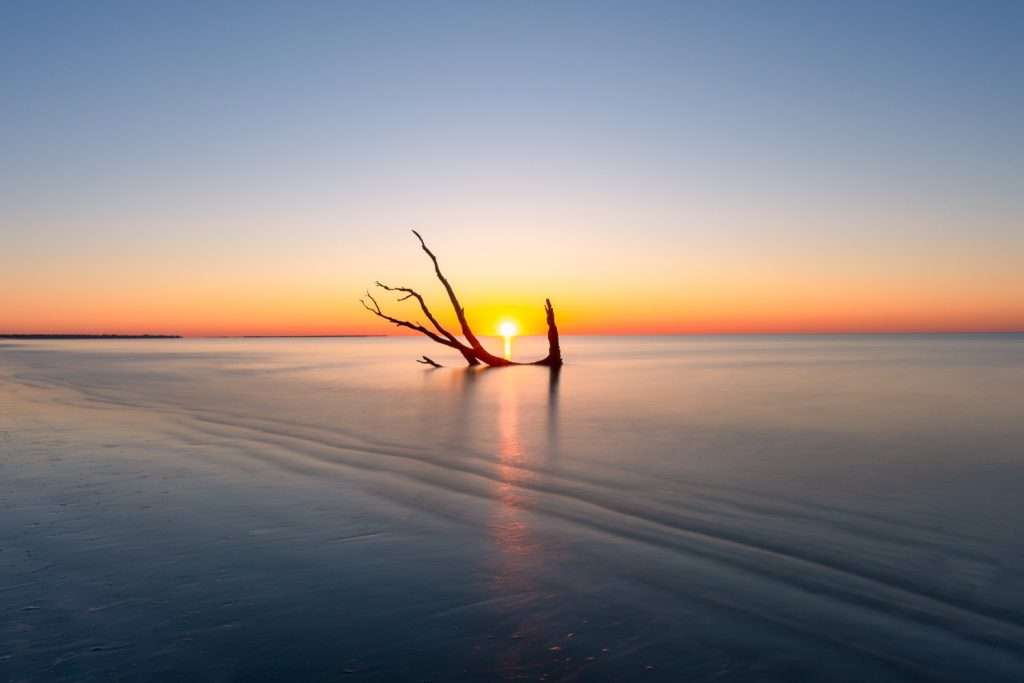
All photos were taken with a Sony a7rii and Zeiss Loxia 21, Batis 18, and Batis 85.
Other places to see my work:
claudehurlbert.smugmug.com
https://www.flickr.com/photos/modernism66/