
#882. The Un-Camera
Dear Susan's contributors have varied photographic interests, taken with varied equipment, but often with a unifying aim to avoid the obvious, and often taking an independent path to interesting photography. A couple of years ago, Dear Susan founder Pascal wrote about the concept of "undestination photography", to eschew the cliched and instagrammed spots over-run with marauding tourists and their selfie sticks, and instead try to find somewhere interesting that's a little off the tourist's over beaten track.

Recently in the comments of DS I came upon the idea of the "un camera" - cameras of so little consequence or significance that they basically fail to exist in the minds of most photographers. The internet is full of authorative advice about what is the best equipment for a particular task, telling the uninformed what they need to photograph whatever was asked about, but often with little understanding of what the questioner actually needs. Landscapes need an ultrawide angle lens, even though they turn detail into tiny specs on a far distant horizon and need careful use to ensure compositions maintain foreground interest and a sense of scale. Portraits need an 85mm f1.4 lens, even though such wide apertures require exceptionally careful composition to ensure you don't end up with a subject with only one eye in focus.

Similarly, forums and blogs abound with camera advice about whatis absolutely mandatory for any task - the Ricoh GR1 or Fuji X100 areabsolutely the camera you need for street photography; full frame is absolutelybetter than APS-C format; the Nikon D850 and Canon EOS 5Div are absolutely theonly cameras that are professional. I'veseen questions clearly from amateurs who were asking about a good first camerabeing advised to buy a full frame model costing several thousand dollarsbecause it will take the best photographs.

Since the internet opinion makers hold such influence over many other people's beliefs, what results is a kind of consensus group think, where everybody is absolutely convinced about what is best, and also what's not worth using. Enthusiast photographers often end up with very strongly held and inflexible opinions about what they think they "need" - views which often have little relevance to the capability of a camera to create photographs.
When I thought of the "un camera", the Sony A3000 immediately came to mind. It was an consumer grade camera at the entry level of the company's E mount mirrorless range, and was unique as it featured a DSLR-style body which was reportedly intended to appeal to buyers in developing markets, who favoured the SLR style but wanted a very low priced camera. When I discussed it with a very friendly sales assistant at a Sony Store in Singapore, I was told that although they had stocked it for some time, he'd completely ignored it and never once looked at it. Surely the mark of the ultimate "non camera"?

The A3000 is essentially a hollow plastic SLR style body shell which contains all the parts from the tiny Sony A5000, which was the evolution of the previously successful NEX-3 series of cameras - so it has pocket sized internal parts in a oversized sumo-suit. Sony user forums were full of enthusiasts who hated it because it wasn't what they wanted it to be. They had decided what Sony should make was an E mount APS-C camera in a "pro-grade" enthusiast SLR-style body. Since the lowly A3000 was an E mount camera that looked like an SLR, they couldn't accept it for what it was, and busied themselves listing the must have specifications for a £1000 camera.

It didn't have twin control dials. It didn't have an articulating rear screen. It didn't have PDAF on sensor focusing, and could only shoot 3fps. The grip was too small. It was too plastic and felt cheap and needed to be made from alloy. And finally, the 0.2Mp EVF was too low resolution and too small, and you had to press a button to switch between EVF and rear screen. Apparently, it was totally unusable, and most definitely not what they had decided that they needed.

The picture below shows the DXOMark scores for the veryinexpensive 20Mp APS-C sensor found in the A3000, compared to a couple of fullframe cameras from about a generation before it's release.
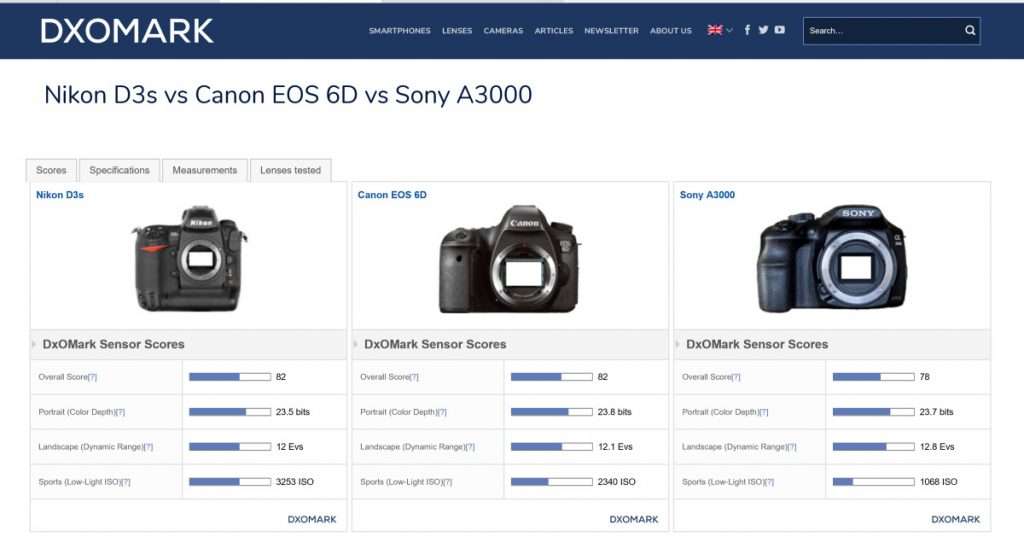
Now, obviously larger sensors are always better at signal to noise ratio than smaller ones, because you can't bend physics, but the sensor in the A3000 equals or betters the dynamic range and colour depth of both full frame cameras. The funny thing is that the A3000 can take surprisingly good photos, even though it was very very cheap. The Nikon D3s cost $5500 at release. The Canon EOS 6D cost $2000. My Sony A3000 cost £239 as a kit with an 18-55mm kit lens, a battery, and a charger. Of course, I am not saying that the A3000 is a better camera than the other two - but it is technically capable or taking pictures of similar quality in good light at a fraction of the cost.

"Un cameras" are those unloved cameras that are ignored by many, and hated by some. Nobody covets them, or even wants them, or even notices them, but perhaps surprisingly to some photographers who are very very sure about what camera they need, non-cameras can actually be used to take a decent photograph.
On the arbitrary scales of how enthusiasts measure "good" cameras, the A3000 is terrible, and yet I find a certain joyous simplicity in using it. The handling won't suit the knobs-and-buttons brigade as it has a rear scroll wheel and about 6 buttons. It does have a physical mode dial, the buttons can be customised, and an "Fn" menu can be assigned to a button and allows 6 functions to be put on a menu at the bottom of the screen. As a result, I just control as few settings as possible, leave everything else in "auto", and make life simpler by using some automated features such as in-camera multi-shot HDR and panorama stitching.

The enthusiasts who couldn't cope with the idea of having to press a button to switch between the screen and EVF obviously never use live view in bright Mediterranean or Asian sunshine, where I will happily press a button to use a 0.2Mp EVF instead of having to try and compose on a near invisible rear screen. The lightweight hollow plastic body is surprisingly comfortable to hold, and is so light it can easily he suspended by a wrist strap. Drop it and it will probably bounce - and if it does break, it won't break your heart or your bank balance.

Now, it's not a high ISO monster, so you can't shoot at ISO 25600 - I would say ISO3200 is the boundary of it's comfort zone. You can't use it as sports camera, as the CDAF focusing can't really handle motion. Nobody is going to try birding with it, as the EVF isn’t good enough and gives an indication of composition and structure rather than fine detail and expressions in large group shots. But... for general pictures, it's a remarkably capable camera, and the files it produces are good - which ultimately is what really counts, isn’t it?

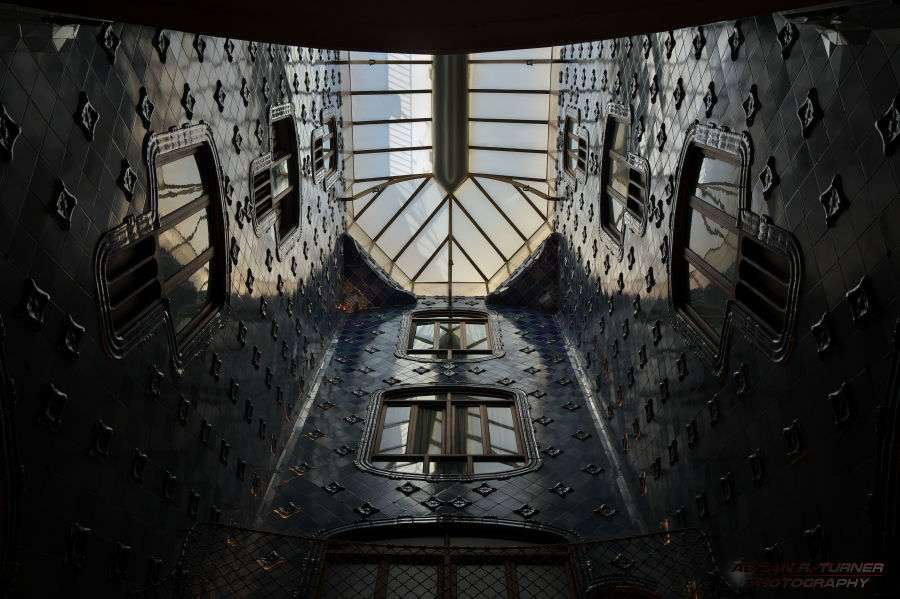
Everybody seemed to hate the A3000 when it came out, and I don't really understand why. Once you get over the bucket lists of what enthusiasts said it must, should or had to do, what's left is basic and does the job. I used it for a few days when visiting Barcelona, and never once did I think "I wish the EVF had more pixels". Never once did it matter when I was trying to compose a frame. It's a compositional tool, not 4K cinema.

I think some enthusiast photographers become spoilt and inflexible - the grip is too small, it doesn't have a front control wheel - as cameras and photography have become more about the male collector gene and basking in the reflected glory of spec sheet and conferred status, and little to do with the essence of photography. At worst, the A3000 is a cheap family camera to make memories, at best it could be a creative tool to tell stories and make art.

I think we should all go back to an entry level camera from time to time, to try and remind ourselves what is really important about the pictures we take. We often cling to our expensive "professional" cameras for emotional reasons as much as for what they can achieve. They confer on us a belief about the type of photographers we are, and perhaps about the importance of the photographs we are taking. We think they make our photographic lives simpler because of all that they can offer, convinced that "taking control" of all the little buttons and dials will make the picture better, yet they often make the photographic process more complex.
Less isn't more. More is more, apparently - but perhaps more camera leads to less fun? Does having a manual dial or the size of the grip make our pictures better? Perhaps more camera leads to less creativity when we worry about resolution, settings, and capability more than story telling, beauty and art?

I hadn't used my A3000 for several years, because more expensive cameras with more pixels and more specification were more... exciting. When I use a basic camera, my expectations are often so low that when the photographs look good, I'm surprised and pleased. Without many controls, I keep it simple and enjoy taking photographs. These cheap modern plastic cameras have considerably more processor power than put man on the moon, but are apparently unsuitable because the grip isn't the right size. Shouldn't we worry less about techno-whizz-bang, stop hiding behind specification and status, and be more concerned about photography?

Photos in this article were taken with a Sony A3000 using in-camera jpeg modes or processed from raw using SilkyPix Developer Studio Pro 9. Some pictures were taken using the Honor 10 Lite phone - because phones that don't cost £1000 can be "non-cameras" too.
Pascal adds
Adrian kindly offered me to add a few words to his post, but what could I say that would make this wonderful post any better? Nothing I can think of. In a sea of techno-centric drivel, reading something as intelligent and beautifully illustrated as this feels sooo right.
So, just a few words from me. Yes, an EVF is a compositional tool, not a wide screen TV to watch a film on. Yes, images are what matter. Yes, it is super important to recognise that complex cameras spoil the fun and put quality out of the financial reach of too many artistically gifted and deserving people. No, this doesn't imply high end cameras are a bad thing. Only that they should focus on image making, and that it's refreshing to see a cheap, simple camera like the A3000 punch so far above its price point in areas that matter.

If some young photographer is being discouraged by the stupidly complex and expensive standards being set today in this (suicidal) industry, I hope he finds this post, and newfound inspiration with it. Thank you Adrian.