
#853. Is your camera the same as your car?
After a hiatus of more than 10 years, last year I became a car owner again. Living in a city I didn't need a car, but circumstances had changed and a car gives more flexibility and ease when making long journeys at short notice. I've always had an interest in cars, but the process of looking at information about different models and looking into the options started to make me feel that our camera choices seem to have become similar to our car choices.
Before you dismissthis as a preposterous concept, allow me to explain.

Firstly, in the car market there is segmentation. There can never be enough ways to differentiate models, and there seems to be no limit to the number of segments that can be created. If you want a small car then perhaps you want a "sub-compact". However, if you look at a Citroen C3, a small hatchback, but think it's too big, then perhaps you want a Citroen C2, a "super-mini". However, maybe you look at a C2 and think "I like it, but it's just too big", in which case you want something smaller, so perhaps you should look at a "city car"?
So what exactly is the difference?
About 8", apparently. After that, it's hard to tell. They all have a wheel at each corner and 4 seats, but each one is ever so slightly different to the others.

Your camera isn'tlike this, surely?
Camera makers love segments too, because they think they can make different models aimed at different buyers, all of which do more or less the same thing with minor variations in body style, size and specification. Every DSLR makers camera range has an entry level model for beginners, then another model with basically the same sensor and inner workings in a different body shell that's aimed at slightly more serious "enthusiasts". Above that is a slightly aspirational model for the serious amateur which often has exactly the same sensor again, but in a bigger fancier body with more knobs and buttons. Generally, they all do more or less the same things.
Take Canon. EOS 2000D with 24Mp: "our newest". EOS 250D with 24Mp: "our lightest". EOS 800D with 24Mp: "our most advanced". City car, super mini, sub-compact. Try hard enough, you might be able to work out the difference.
As you get into the upper end of the product ranges, the differentiation can be a little easier to understand. You can have a "tourer" - marketing speak for an estate car - that tries to do everything, a sports coupe that promises to get you to to your destination as quickly as possible, or something made for absolutely luxury and the best possible ride.
Canon EOS 5D: general purpose. Canon EOS 1DX: sports camera. Canon EOS 5DS R: maximum resolution.

As you go up the model ranges, cars get more luxurious and offer endless features and configuration: 3 different gear change configurations, 5 suspension settings, headlights that can light your way home and be configured to the exact number of seconds you require. Should I set it to 25 seconds or 26 seconds? It's so difficult to decide.
Cameras are becoming the same, although it's not only the preserve of the top end models, as almost every camera now has DR expansion settings, custom control wheel settings, or a choice of AF tracking sensitivity. Should I set to 3 for a stage event? What if they walk quickly, maybe I need level 4? How can I choose?

If you are alreadyconfused, it's already getting worse. Not content with city cars, super-minis and sub-compacts, themanufacturers decided that what customers wanted were "cross-over"vehicles - cars that pretended to be off road vehicles, but without most of theability to actually, you know, go off road. People don't need that for the school run,they just want to look cool. So perhapsyou want a small cross-over vehicle rather than a car, perhaps something like aRenault Captur? It's essentially aRenault Clio dressed up in a sumo suit, but inside it has exactly the sameamount of space for it's passengers, but being taller it isn't so nice todrive, and it costs more.

Cross-over cars? Mirrorless cameras. They mostly have exactly the same sensors as their DSLR stablemates, and often the same electronics and software, but they are packaged in smaller, more fancy looking bodies and have the party trick of interchangeable lenses but no mirror. For quite some time they were also mostly not quite as good as the DSLRs on which they were based, and notably more expensive. Much like the car market, where growing demand for cross-overs led to vanishing sales of more traditional models, so too did DSLR sales fall as fancy expensive mirrorless models proved fashionable and more popular. So long DSLR, hello Samsung Galaxy NX.
Canon EOS 2000D vs Canon EOS M100. How can you decide?

Apart from the manufacturers themselves, there is another group of people who love market segments - reviewers. If you want a new city car or urban crossover, the media is awash with articles and comparisons detailing the merits of each model and telling you which is the best. There are a couple of things that are most prevalent in these comparisons: specification and quality.

Specification is very important to car reviewers as it allows them to make subjective and often skewed personal opinion be passed off as fact-based evaluation. The VW Up! Has class leading interior space, apparently. Firstly, note the phrase "class leading", more reference to segmentation, even though it may not actually be very clear to you what segment it's competitors are in. That’s good because perhaps the reviewer decided to ignore the Toyota Yaris even though it's got more space inside, merely because it's 8" longer, and on the arbitrary scale of "segment", it's different. Of course, all this specification "fact" almost certainly came from the manufacturers press pack, so when the review tells you about the wonderful economy and emissions data for your new VW Up!, you might just want to take it with a pinch of salt. Even the "class leading" interior space was measured by how many polystyrene chips it took to fill it, so all those handy door pockets, the space under the floor of the boot, and how many they could cram into the heating vents will make the number look great, even if your feet won't actually fit in the cup holders.
Lightest professional camera; class leading AF; professionally tuned.
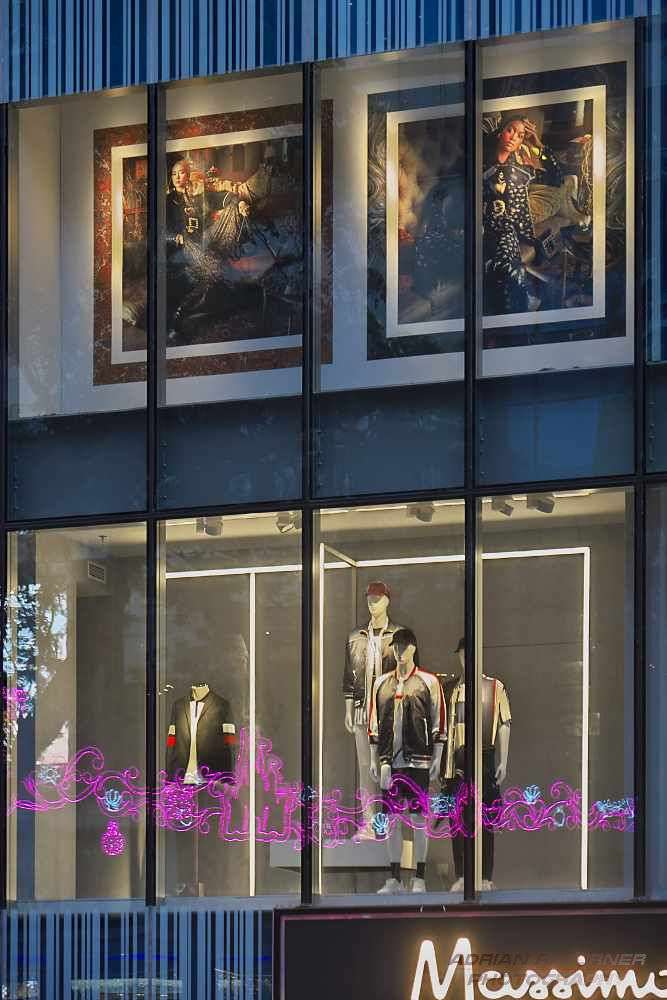
Quality is of course entirely subjective, and the manufacturers know it. If they spend a few extra euros and use some "soft touch" plastics on the dashboard, they know that reviews will talk at great length about "interior quality", particularly if you told them all about it in the press pack. It doesn't actually matter if the car turns out to have lots of niggling issues when it's delivered to you, or tends to break down when you use it - it has some nice plastics on the dash, and that appears to be the most important measure of "quality".
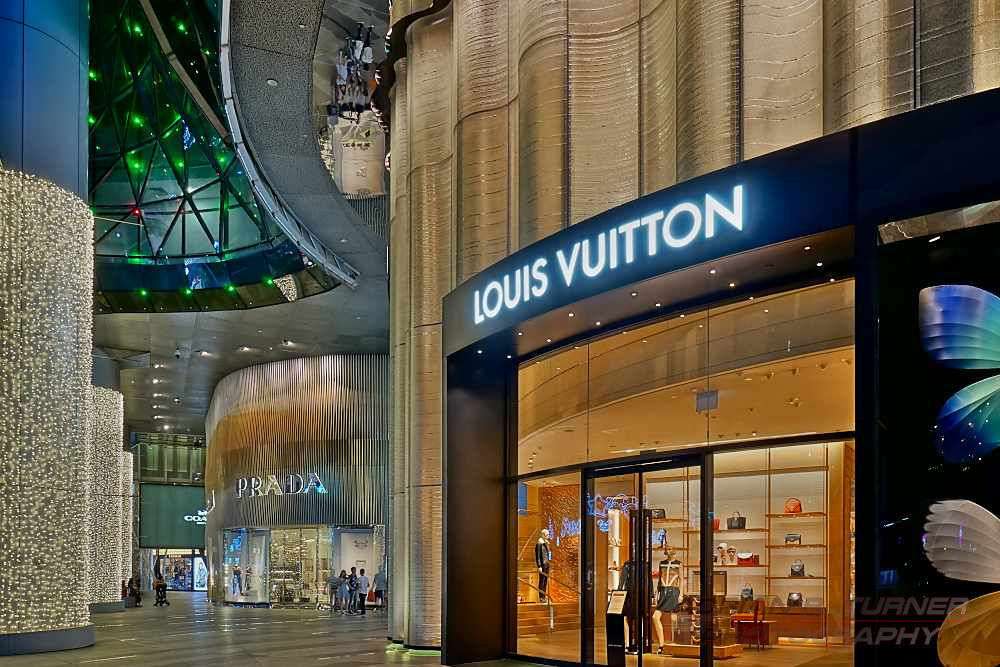
Camera makers know all about this too. It doesn't actually matter how strong, well built or long lived a camera is, because "quality" is measured by the touch and feel of the body. Soft touch is great, but to hit the motherload you need to make it out of "metal". Metal is absolute quality, because old cameras were metal. Of course, old cameras were brass, because engineering plastics weren't available, but fancy alloy is also metal even when it's the type of alloy that is brittle on impact and tends to crack. Manufacturers put a thin skin of alloy on a lens made of engineering grade plastics, and reviewers enthuse about the quality of the metal build and how it feels in the hand. Quality trumps fact, because how it feels is more important than any evidence that engineering plastics are stronger and have better thermal characteristics than old fashioned metal.
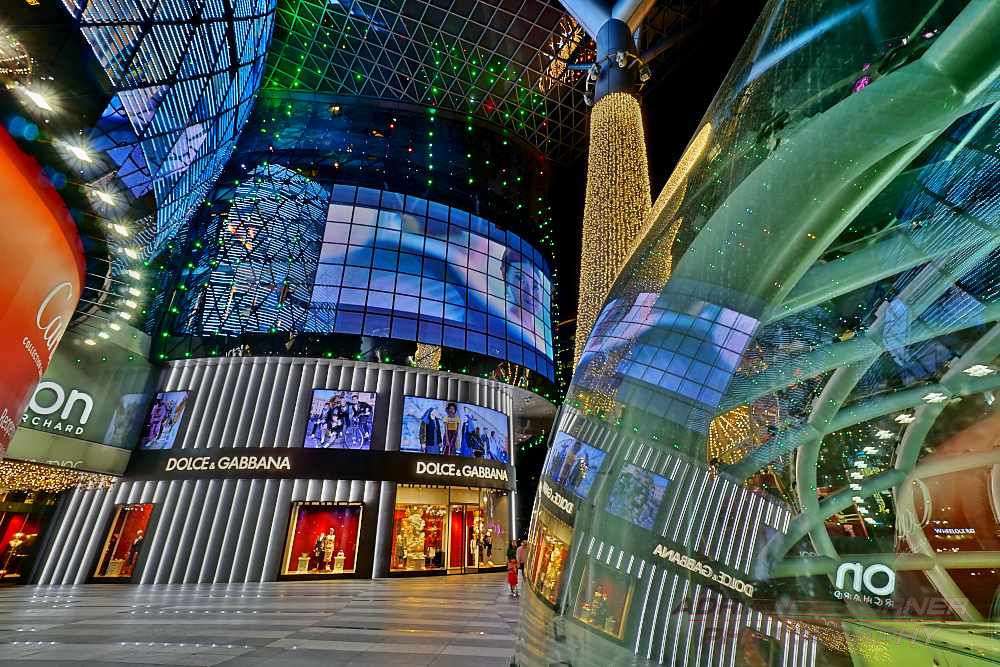
Finally, we come to the factor which probably has the most influence on many car buyers choices: brand. Or rather, brand image.
Car manufacturers spend huge amounts of time and money trying to create the right brand image. When Toyota identified that they wanted to enter the luxury car market in the 1980s, they also realised that they needed a new brand, and so created Lexus. The original Lexus LS400 was released onto the domestic and American markets first, because Toyota also identified that in some markets customers are more brand conscious than others. In fact, what they really identified was that in some markets there is more brand snobbery - Europeans have much more snobbery about prestige car brands than Americans, who were more receptive to a new car brand that was quieter, smoother and more refined than the long established European marques at half the price. Toyota also realised the importance of after-sales support in brand image, and when it was identified that the car had an issue with its lighting system, they sent an engineer to every owners home to fix it, valeted the car, and fill the tank with gas.

Car buyers self-image, particularly at the "premium" end of the market, is just as significant and results in customers who choose car brands whose marketing appeals to their ego and their perceived social status. Who wants an uncool Vauxhall Cascada cabriolet when they can have a much more expensive Audi A4 cabriolet to flatter their ego, even though it may be worse in almost every way?
Camera buyers really aren't that different, particularly higher up the market. Canon and Nikon both know this, and follow the same slow evolutionary approach to product development as the car makers, who often become stuck in a rut of brand-value sameness across generations of products made more to appeal to their customer base than to actually offer anything innovative. The dominant camera makers both want to be a safe pair of hands that buyers trust as a result of marketing and careful product placement. The other brands stake out their market segment with their own marketing and brand values, whether it is tradition, innovation, or performance. Loyal brand customers are often like evangelical zealots, with unshakeable belief in the superiority of their religious choice.
Brand capital is king: look a Leica, a brand that almost always scores highly in those "top 10 most powerful brands" in spite of almost nobody actually owning one, mostly because of the mythos steeped on it. Even at the very top end of the market it's more about image than substance. If you buy a Bentley, what you're actually getting is a very fancy VW. Buy a Rolls Royce, you're getting a BMW. The most prestigious camera brands are now owned by investors who see the "brand capital". Buy a Leica, you might be getting a Panasonic.
At the other end of the spectrum we have what we might now call the hipsters, for whom cool is at the opposite end of the brand image spectrum. There are plenty of drivers who still love the original VW Beetle, even though it could be considered one of the worst cars ever made. There are plenty of photographers who like Lomo cameras, based on terrible 1970s Soviet cameras that should probably have been consigned to the bin of engineering history. Sometimes, you just can't predict what people might like.

Should any of thisinfluence your choice of car or camera?
Just because someone else says something is "the best" based on some arbitrary and unsubstantiated measure probably shouldn't mean it's "best" for you. The manufacturer claims it does 65mpg, and that's "class leading" and therefore the best car, even though real drivers get 48mpg, whereas rivals models claim 56mpg and drivers achieve it.
So which is best fora real driver on a real road?

I'm actually all forindependent empirical testing. If it'simportant to you, knowing the dynamic range or noise characteristics of acamera sensor could allow you to choose the camera that's right for you. I wouldn't trust a lens manufacturerscomputed MTF chart, especially when the line pairs per millimetre is well belowthe resolution of the sensor in your camera, but I would read a selection ofindependent lens bench tests to get a feel for how a lens might perform. That won't tell you it's character, but it should inform you how wellit resolves or how much distortion it has.
Test results can be taken too far of course. If a one car has a 0-60 time that is 0.2 seconds faster than another, it may not mean anything in real world driving. A certain breed of camera "enthusiasts" get very very worked up by DXO lens test results and their "perceptual megapixels", even though there is no clear definition of what it means or how it's measured. One of the lenses used to take photographs in this article apparently has a score of 8Mp, which is very bad, and so is regarded by many of them as useless rubbish. As far as I'm concerned, they can stick their perceptual megapixels where the sun don't shine.

Before we conclude, let's reflect on where all of this goes wrong. Sometimes, in spite of all the market research, segmentation and quality focus groups, they just get it wrong. Very wrong. For every Lexus, there's an Infiniti lurking.
About a decade ago Renault launched 2 new cars, a luxury saloon called the Vel Satis, and a sort of sports people carrier called the Avantime. At the time they were both modern, striking, and mostly very capable. They were both also epic failures that were quickly withdrawn from sale. The Vel Satis was a kind of soft, comfortable luxury saloon with big seats like armchairs launched into a market where everyone wanted a German sports saloon with hard seats and a Teutonic interior, not cream ruched leather. The Avantime seemed to be a solution looking for buyers who had a problem - a 2 door sporty people carrier, a kind of Espace coupe hybrid. Hindsight being what it is, perhaps they were just ahead of their time: Lexus made a market for comfortable luxury hybrid cars such as the CT200h to which the Vel Satis bears a striking resemblance; BMW sell SUVs such as the X6, a kind of high riding sports SUV for people who want to look like they can go off road very quickly - or kerb crawl past topless bars. Where Lexus and BMW succeeded was brand - the former with a kind of thinking persons eco-concious luxury, the latter with the old classics of snob value and speed.
Cameraland has an equal history of things that looked good on paper, or good ideas that simply failed to find their market. For every Sony A7 there is a Nikon 1.
Pentax released the K-01, a K mount camera with the mirror taken out, emblazoned with the signature of industrial designer Marc Newson. It tried to be cool, but neither appealed to traditionalists nor hipsters, and became an experiment never to be repeated. Sony's QX series of camera modules that attached to smart phones which acted as their LCD probably seemed like the answer to pocket camera sales that had fallen off a cliff because of smart phones, but they were probably too difficult to understand, too fiddly to use, and didn't really take better photos than consumers phones, which were improving at incredible speed. Hasselblad released badge engineered versions of the Sony RX100, NEX-7 and Alpha 99 with stratospheric price tags, clad in fancy materials and wooden grips, which were obviously supposed to appeal to the well heeled brand conscious consumer. Unfortunately, unlike Leica, Hasselblad don't appear in those top 10 lists of cool brands, so rich brand snobs didn't want them, and they soon ended up in the discount bins at Best Buy.
Wherever you look there are parallels, ones that worked, and ones that didn't.

Cars have become a commodity item, often more likely leased rather than owned outright. This suits many drivers, who see their car as a lifestyle choice and a fashion item, used until it goes out of style or they get tired of it, and then given back. In a market where it's increasingly difficult to make sales or a profit, this changing business model may suit manufacturers. With camera makers trying to appeal to customers by pushing the same emotional buttons of brand image, quality, or performance, perhaps it is only a matter of time before the ownership model also changes?
Remember the Ricoh GXR with it's interchangeable sensor and lens modules? What if you leased them? In a shrinking market with difficult sales and unpredictable profits, maybe it's time for one of the more vulnerable manufacturers to do something really radical with their ownership model?

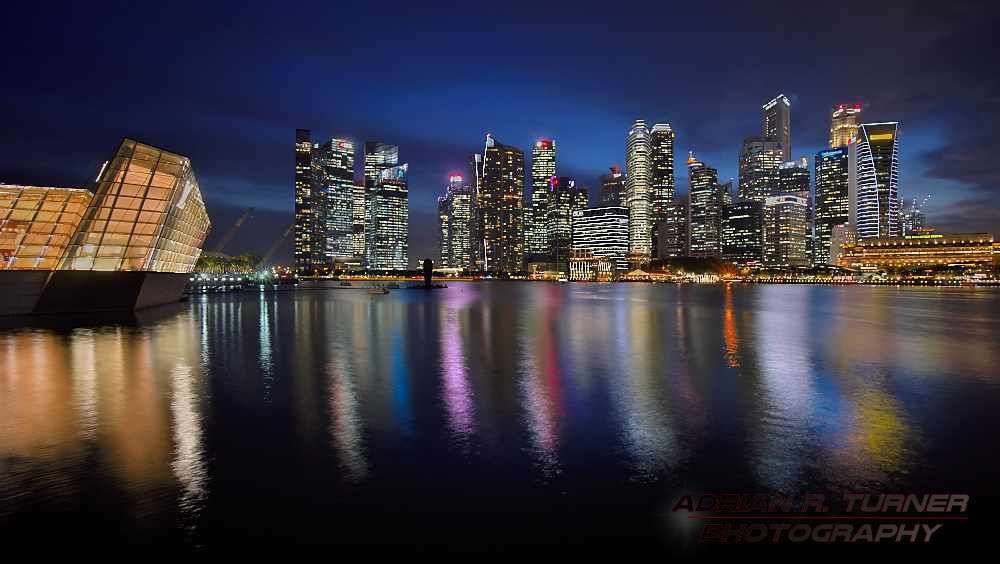
Photographs in this article were taken in Thailand and Singapore in 2018 with a Sony A6500, a really excellent little camera, which may be a cross-over. Or a sub-compact. I'm not really sure. The pictures were post processed using SilkyPix Developer Studio Pro v9.