
#656. Photographing the autumn colours of Provence
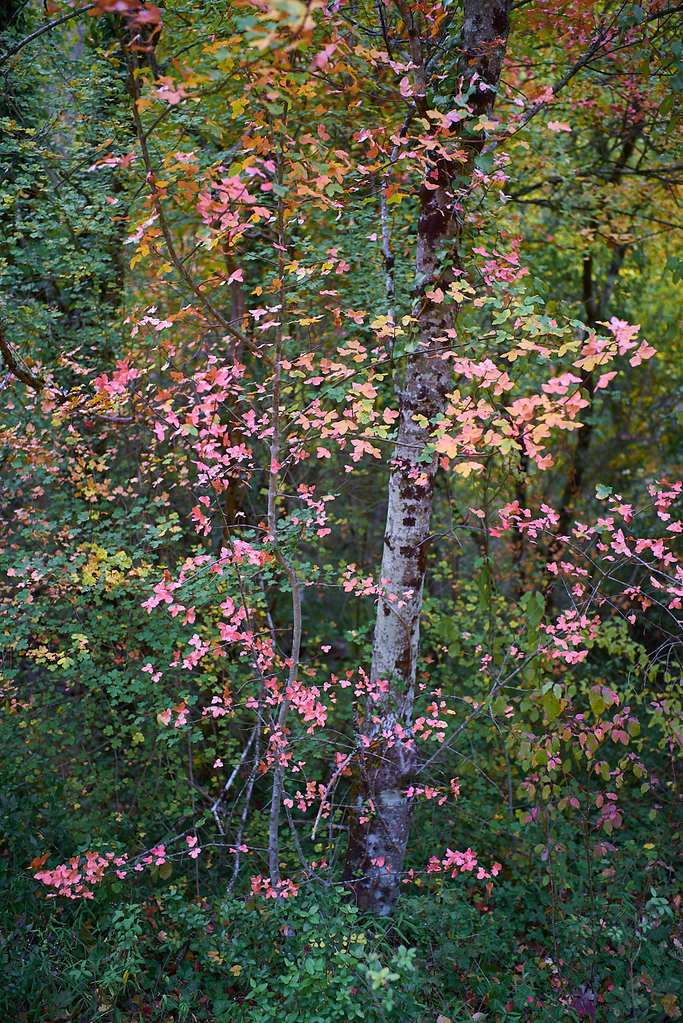
Provence is best known for its cities, its traditions, its lavender fields, the beautiful coastline. Not really as a competitor for Algonquin Park, then. And it's true that you'll struggle to find sweeping landscapes coloured in bright orange. The closest we have to Pando are chestnut trees groves and they mainly turn a murky brown and bomb you with prickly things. This doesn't mean you can't get colourful images of autumn in the area, though ... 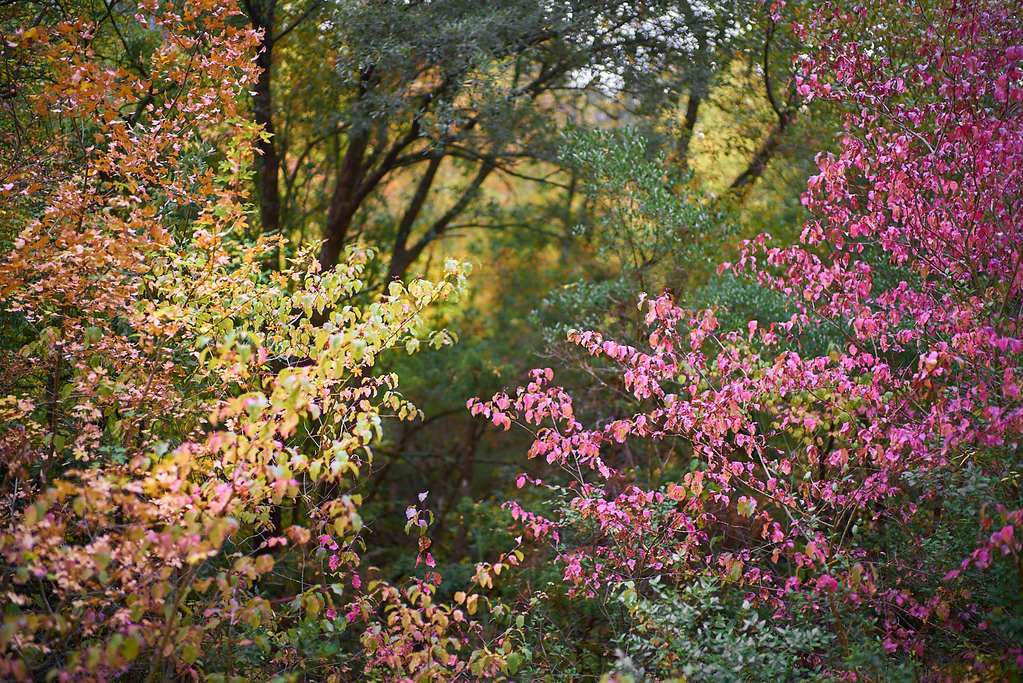 Now, if you were to walk with me along the busy main road where those photographs were made, you might feel somewhat underwhelmed. Initially at least. Colour, other than shades of green, is rather rare in the area. This is what most trees look like.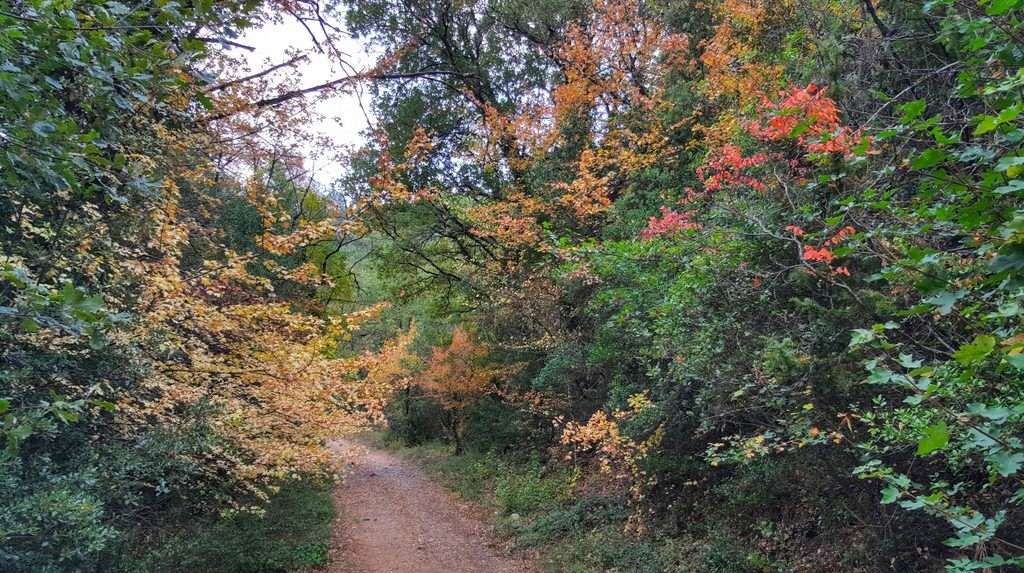
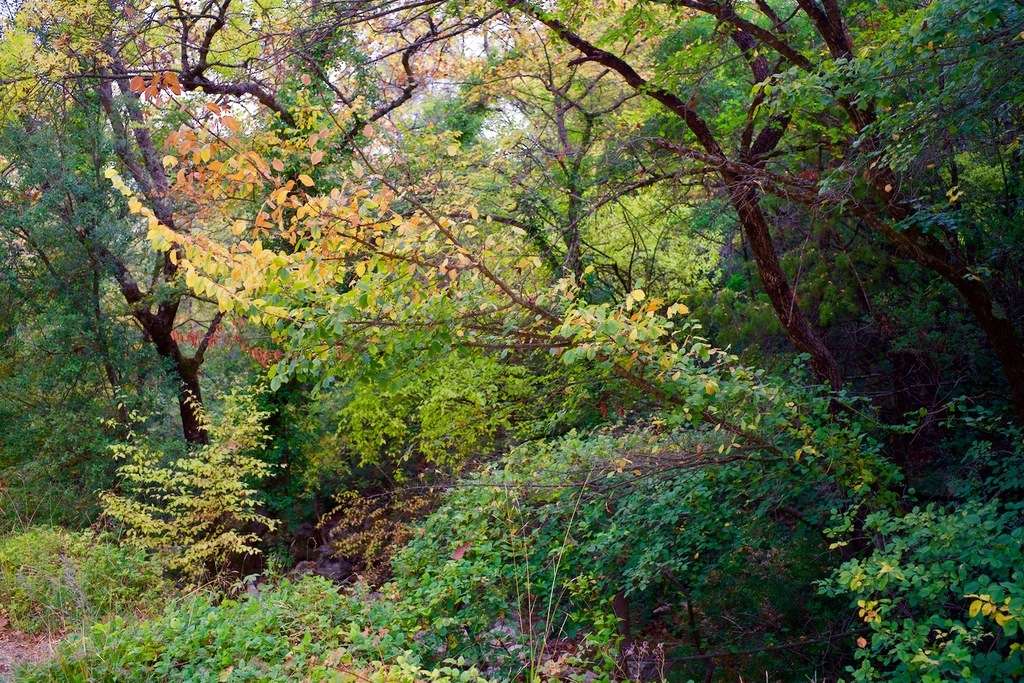 But, for those who love the thrill of the chase, the game is really worth the effort.
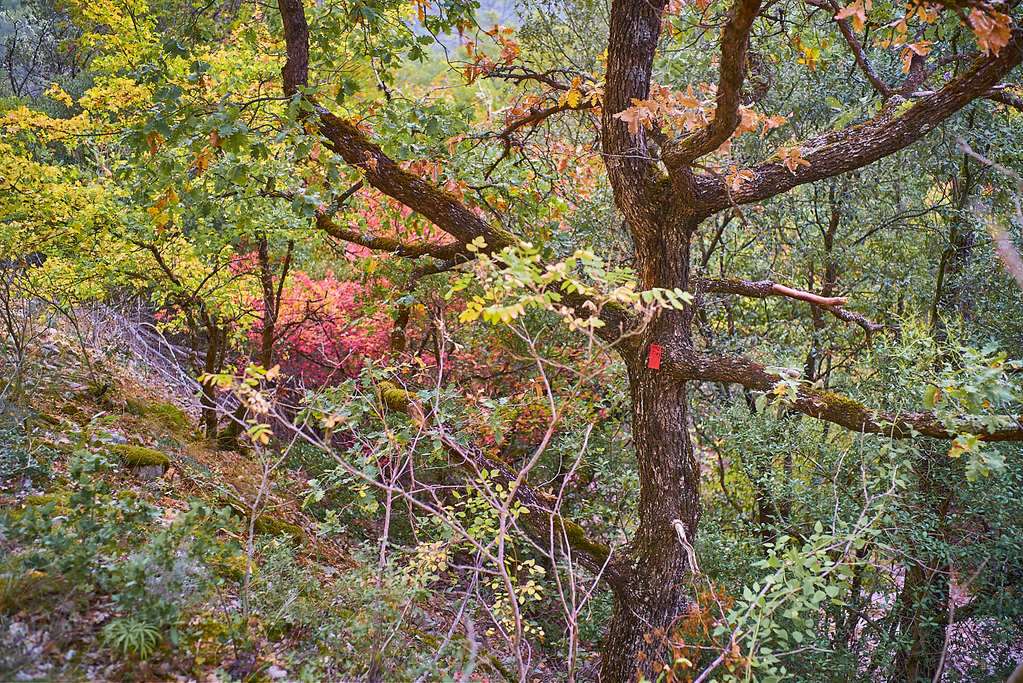
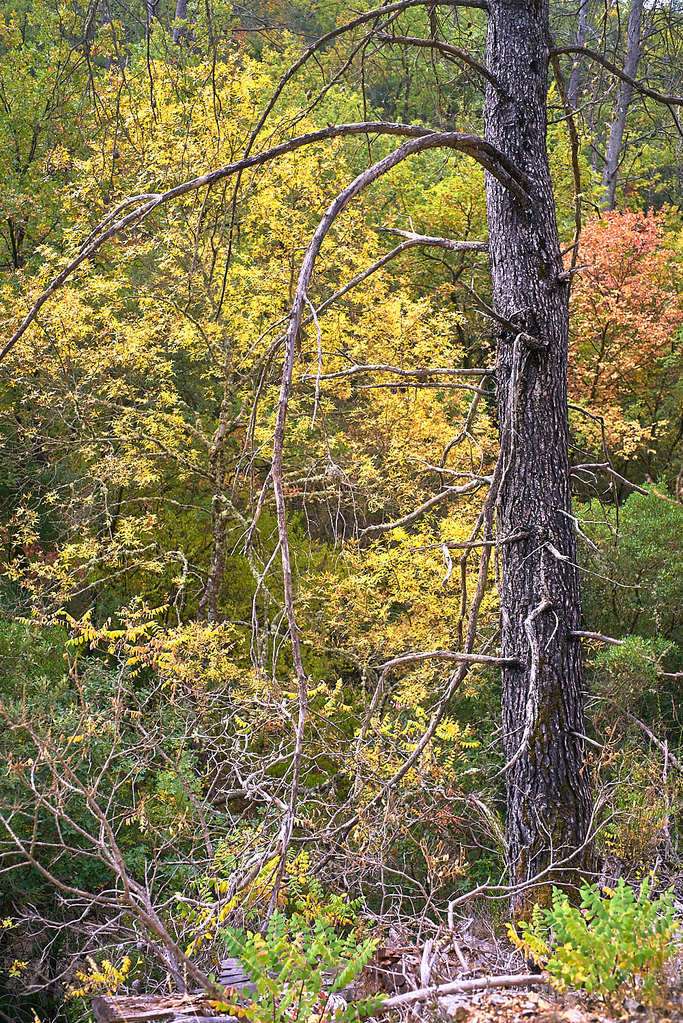
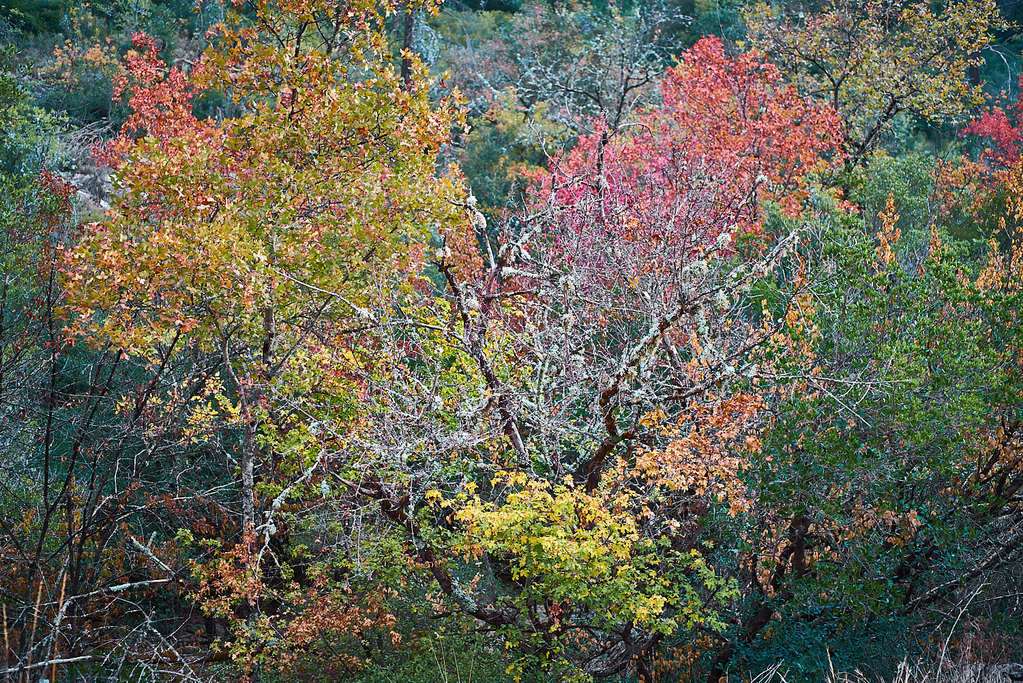
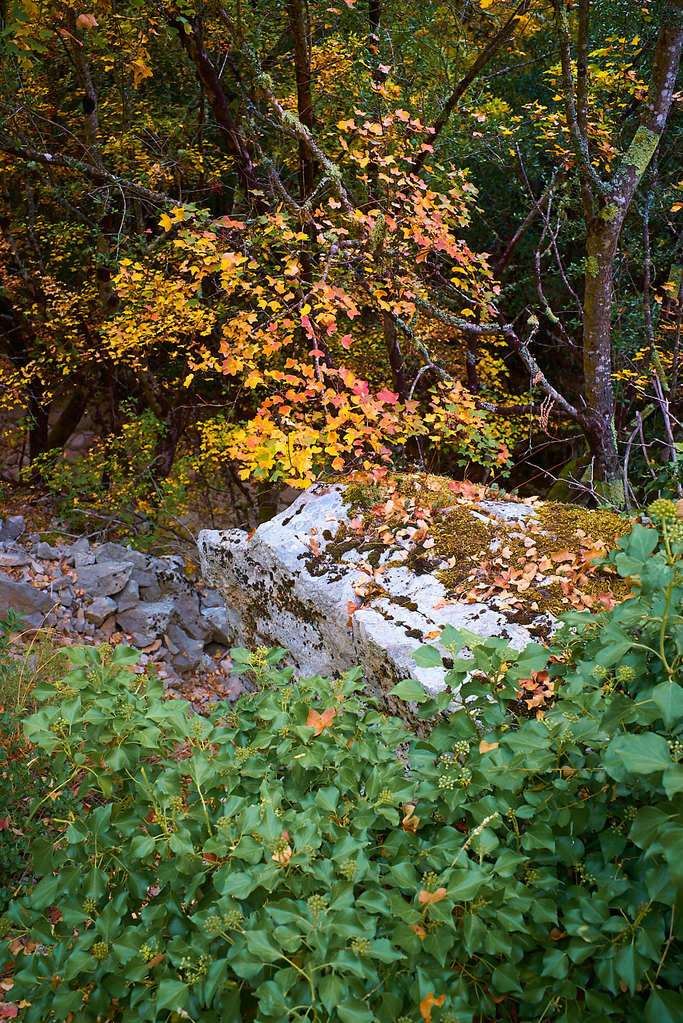
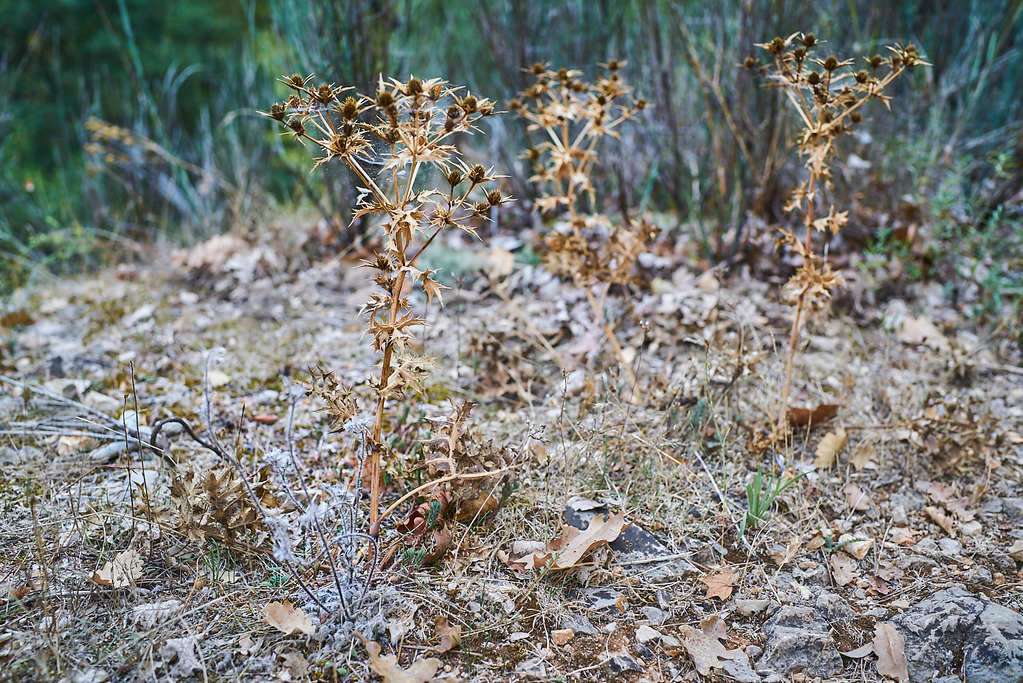
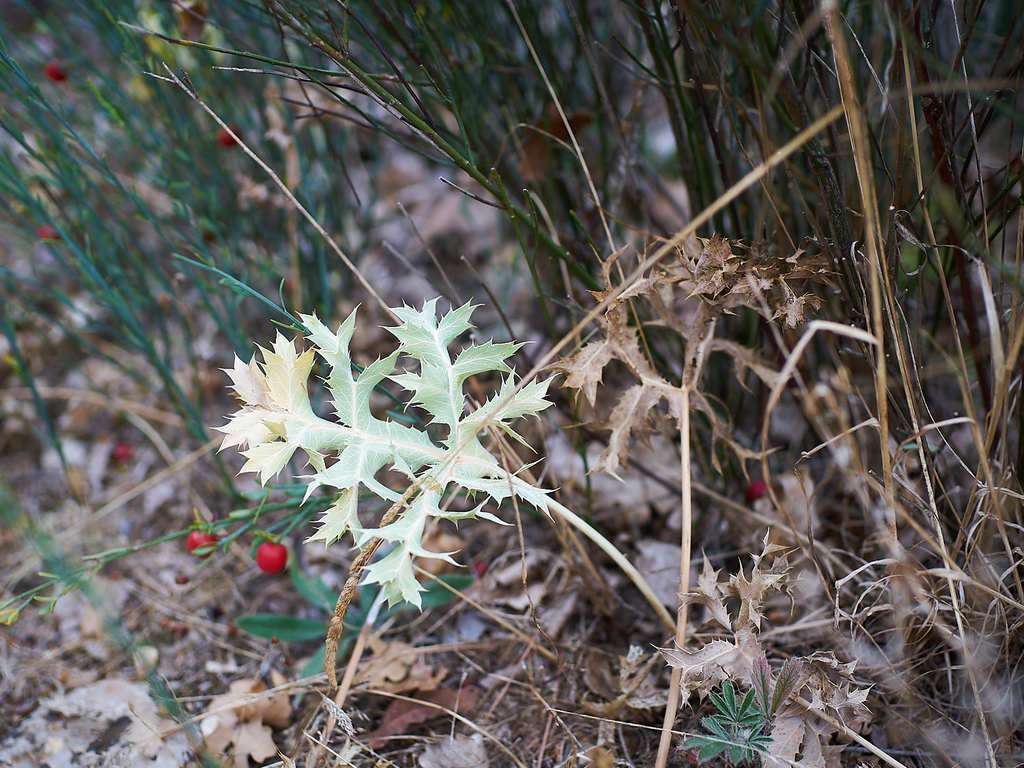
 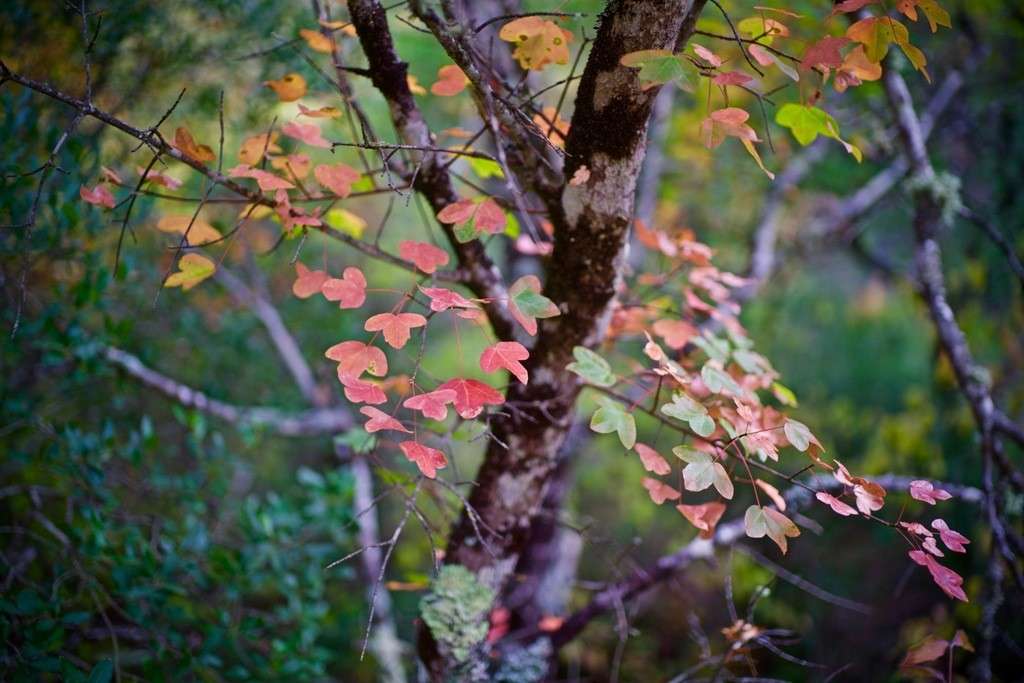 Unlike the better-known fall-colour jaunts, some parts of Provence offer a kaleidoscope of tiny colourful landscapes created by the great variety of local plants. After the dominant species were burnt down (due to severe forest fires as well as by large military deforestation programs to force resistance fighters out of hiding during WWII) pine trees were introduced in the area and now cover most of the visible landscape. But a great number of small ecosystems thrive along streams and rivers that provide shelter for a much more interesting and varied flora. It's a shame the web can't yet relay fragrances as summer in the hills is an experience you remember for a long time. And autumn brings about a stunning palette of browns, greens purples and dull oranges that make up in variety what they lack in vastness.I would love to see what the Japanese masters of photographic delicacy would make of this area.
 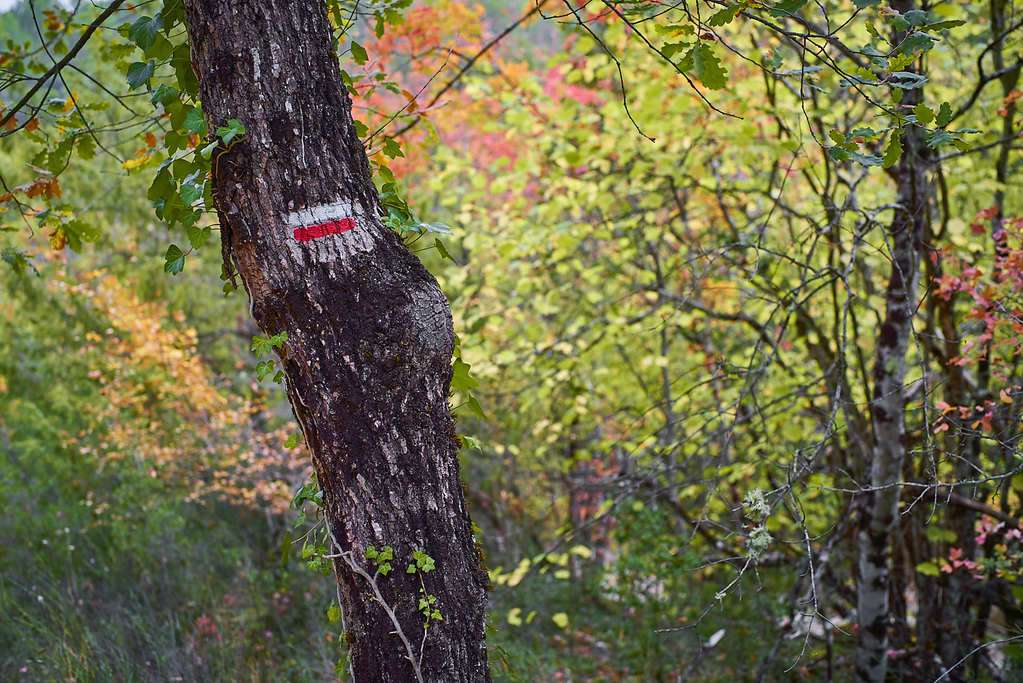 It's a wonderful experience because nothing is obvious. Focus on the big picture and nothing strikes you as particularly interesting. But get your eye in, focus on the more intimate landscape and you are rewarded with endless compositions and the tough but thrilling job of organising all this visual mess into something that makes some kind of sense.
 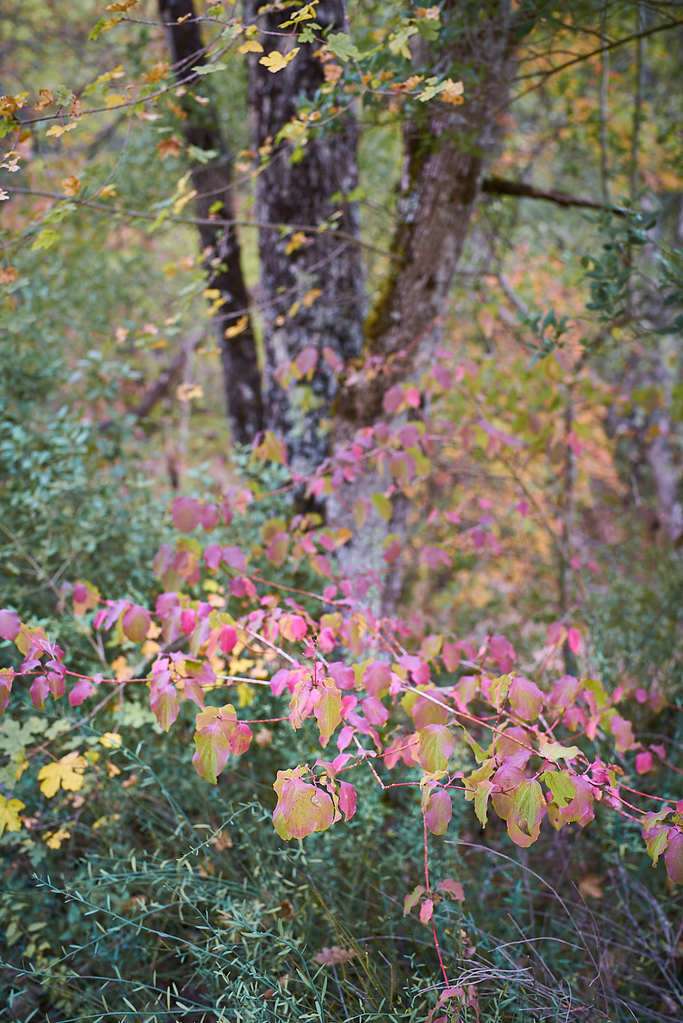 Truth be told, I found these hellishly difficult to process. Definitely not my usual 10 second exposure / contrast correction. These required some heavy dodging and burning, individual colour channel editing, selective sharpening, crazy local cast removal ... and I'm still not entirely happy with most of the results (see the crazy magenta on the stones and branches at right, below, for instance). Out of camera, the results are desperately flat, out of balance, and colours are nothing like when my eyes saw just minutes earlier. Whether the Sony A7rII is to blame or whether something else is at play, I don't know (Ming Thein got rid of his A7rII after a similar experience but others seem plenty happy). At any rate, this is the sort of PP heavy lifting that not everyone will enjoy.
 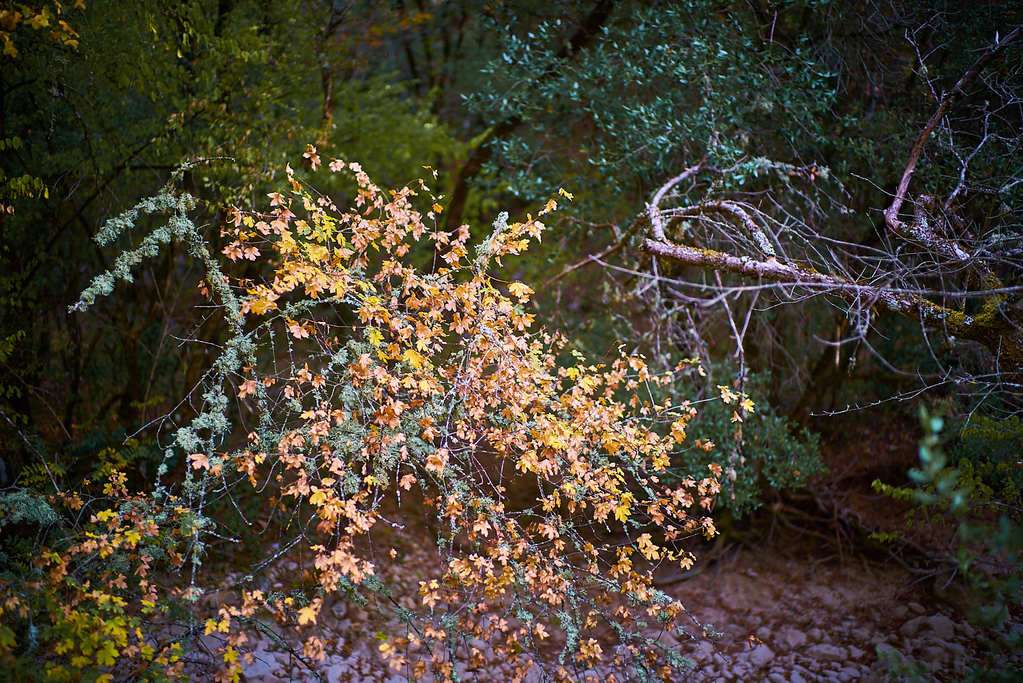 Some casts are just impossible to get rid off completely. Some colours simply never materialise in the file as they were in the field. But others come to life in thrilling, if not totally accurate miniatures that still do justice to the original scenes.
 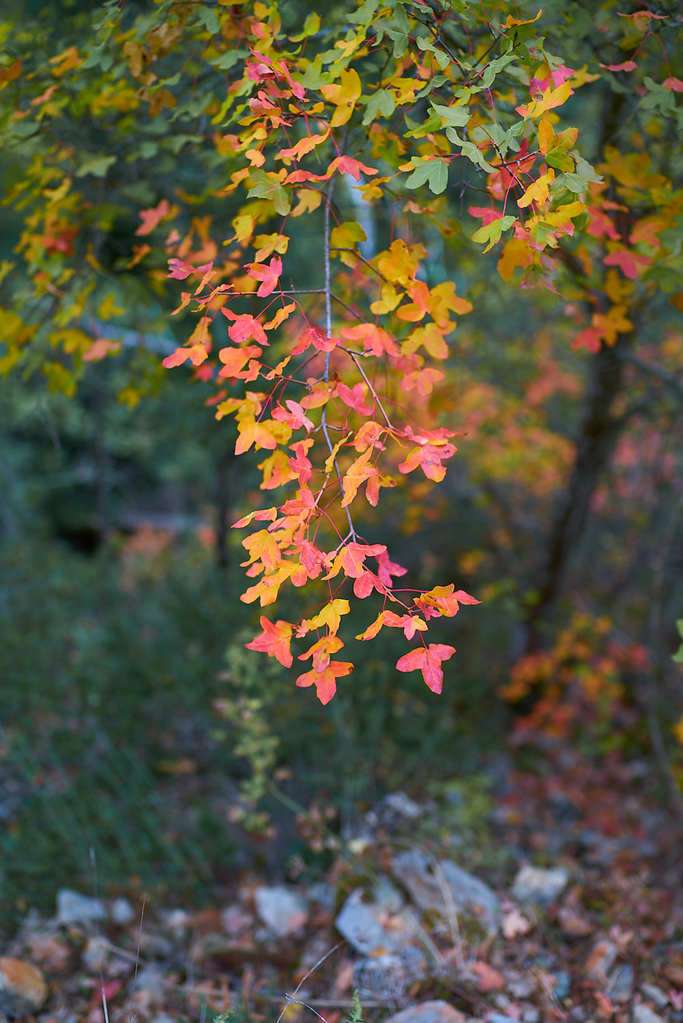 At any rate, the mental exercise is worthwhile and rewarding. Viewing these images a couple of days after the shot, now that I have forgotten the details of the originals, I can simply love them for what they are. Not all of them are perfectly accurate. A fashion photographer would go nuts with all the hue mismatches. But I don't care, the photographs just work as standalone items. Who said drawing with light, photography, always has to be an exercise in scientific perfection ?
 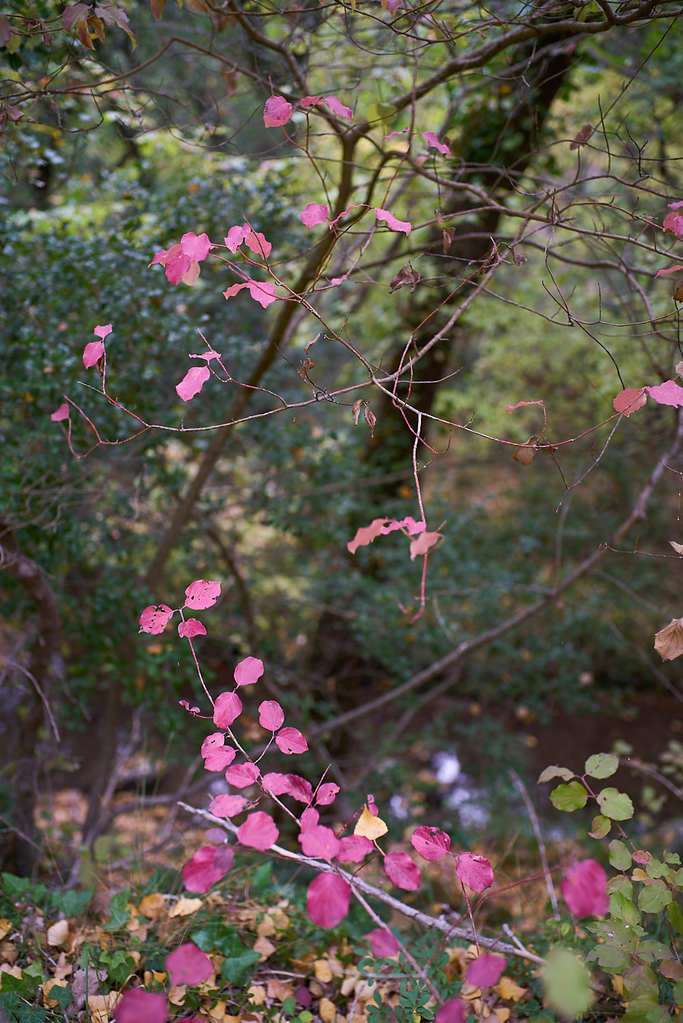 So there you have it. 40 minutes of walking, a few hours of post-processing. All within a 5 minute drive from the village center. To me, it makes more sense than flying to the other side of the globe to photograph the more famous glowing aspens of Canada. And I kind of like the multitude of microworlds you can find by looking under low branches or behind thick bushes. They are there for all, who take the time to look intently, to see. They force me to slow down, search, find, visualise, compose, decide the DoF, exposure compensation and process.
 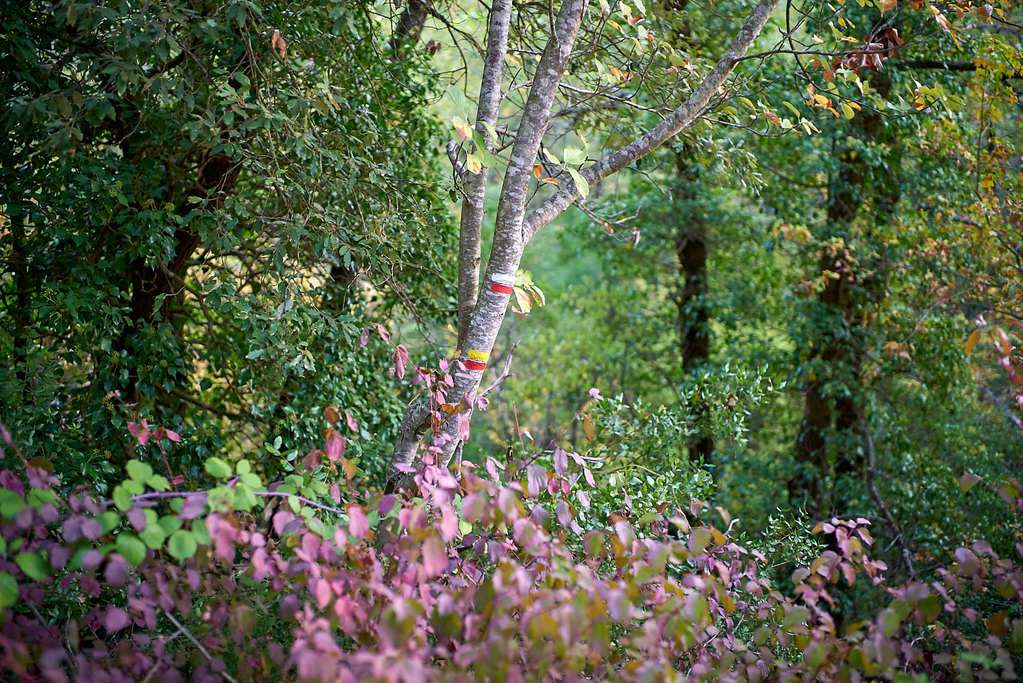 And, after a while of shooting mostly with my phone, they allow me to better appreciate the different look of a FF camera with fast lenses. An autumn renaissance of sorts ;)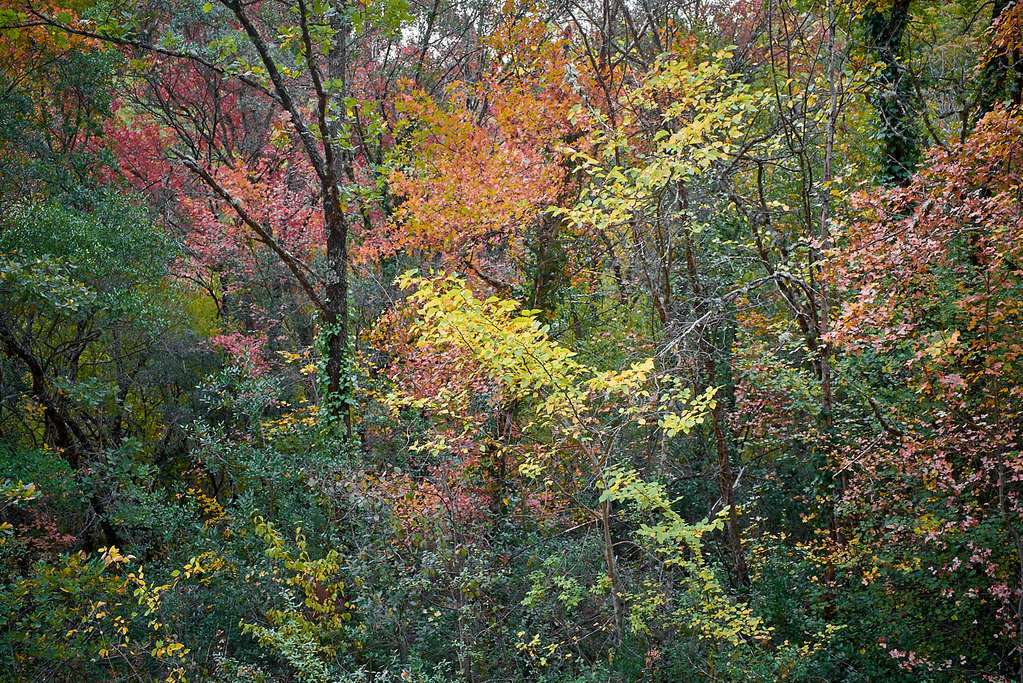
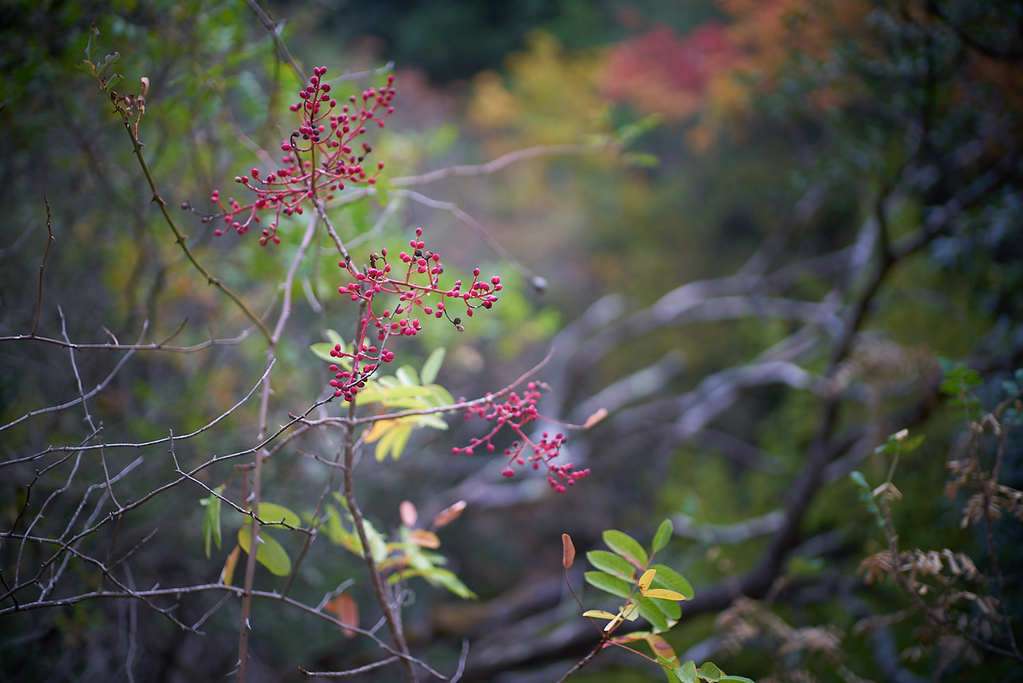
 What say you ? Are tiny vegetation worlds as interesting as the vast landscapes that make it into competition finals and calendars ?
[hcshort id="7"]