
#1432. The Blue Mountains of Mizoram
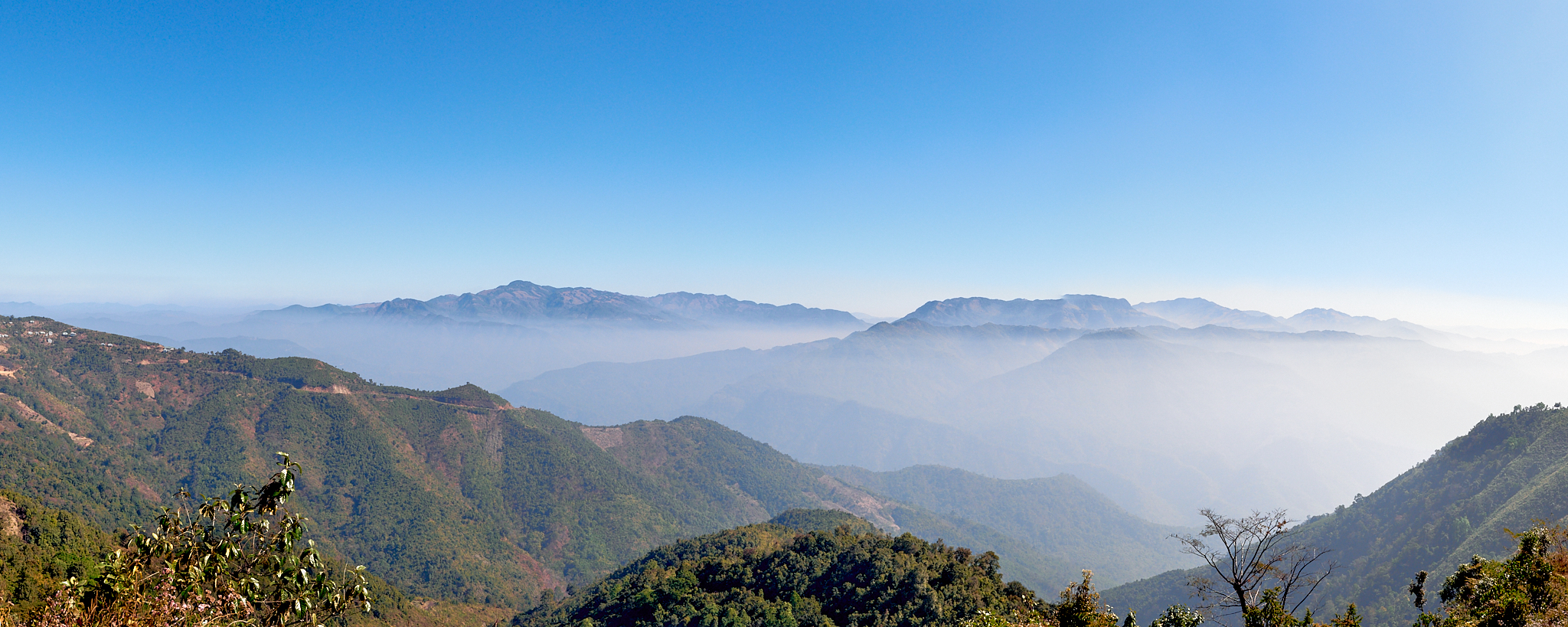
From Sangau in Mizoram, the Arakan range came into view, folding the Lushai, Chin and Naga hills into one long, bruised spine running across the border into Myanmar. We were driving up a dirt road to the highest point in the state—Phawngpui—in a National Park Ranger’s Bolero pickup.
Standing there on the edge of the track, it looked beautiful and peaceful, untouched by the histories folded into it.
It all began back in Delhi one November day with an email from Bornav and Vaivhav waiting in my inbox. It confirmed my upcoming trip the following January to Mizoram, a state in India’s northeastern corner.
I had chosen the Blue Mountain tour, starting in Aizawl, the state capital, and winding through places I was hearing about for the first time—Vanlaiphai, Hmuifang, Hnathial, Sangau, Phawngpui, Reiek and Baktawng.
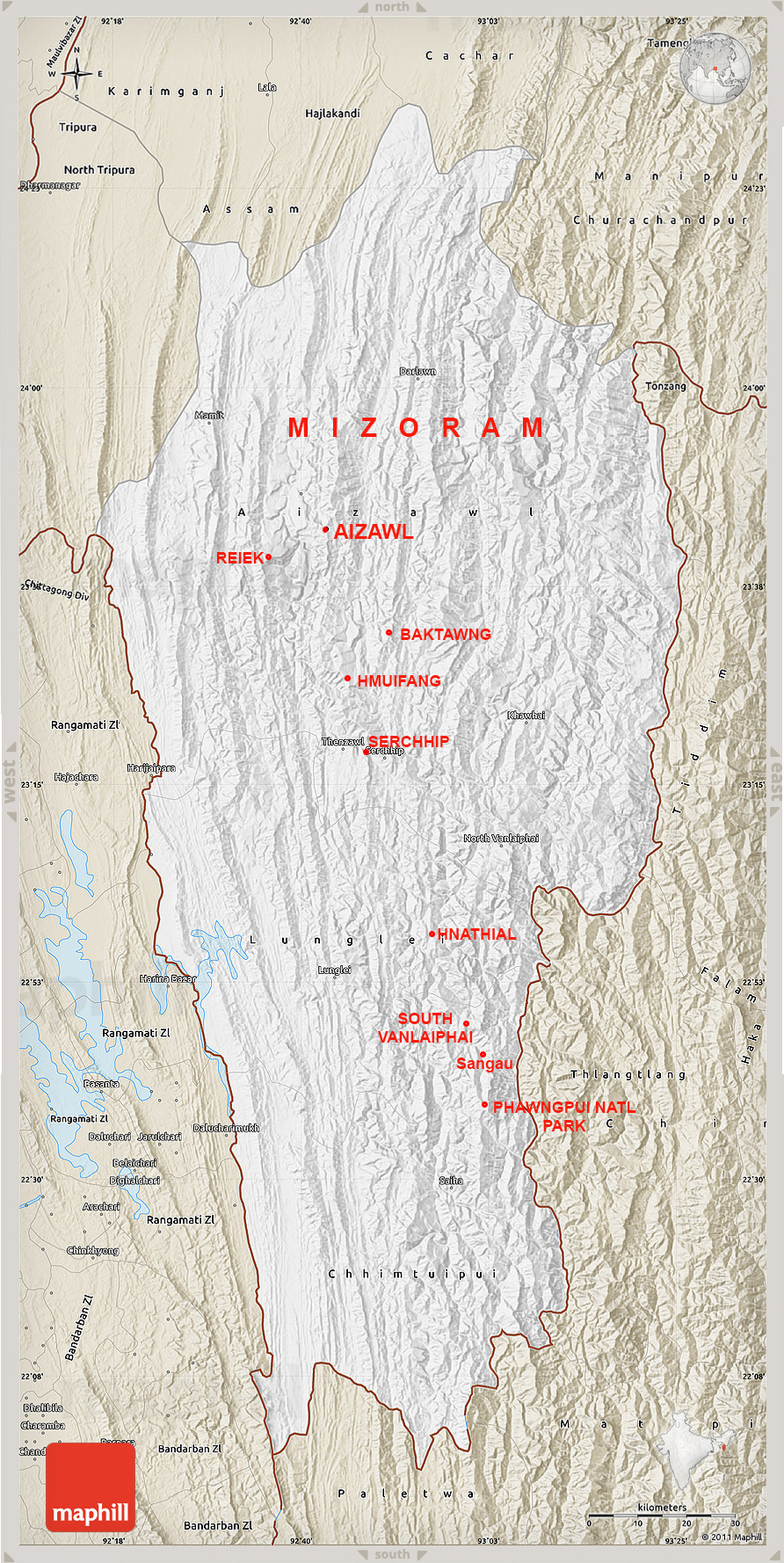
Aizawl—Silent Night
To give me a sense of the city, Rina and Hruaia (pronounced Shu-ai) drove me to Zemabawk, from where Aizawl spreads out along a north–south ridge. Through the afternoon haze, its density was evident. Commercial centres, government offices, hospitals, schools, churches, temples, mosques and playgrounds competed with residential neighbourhoods for space
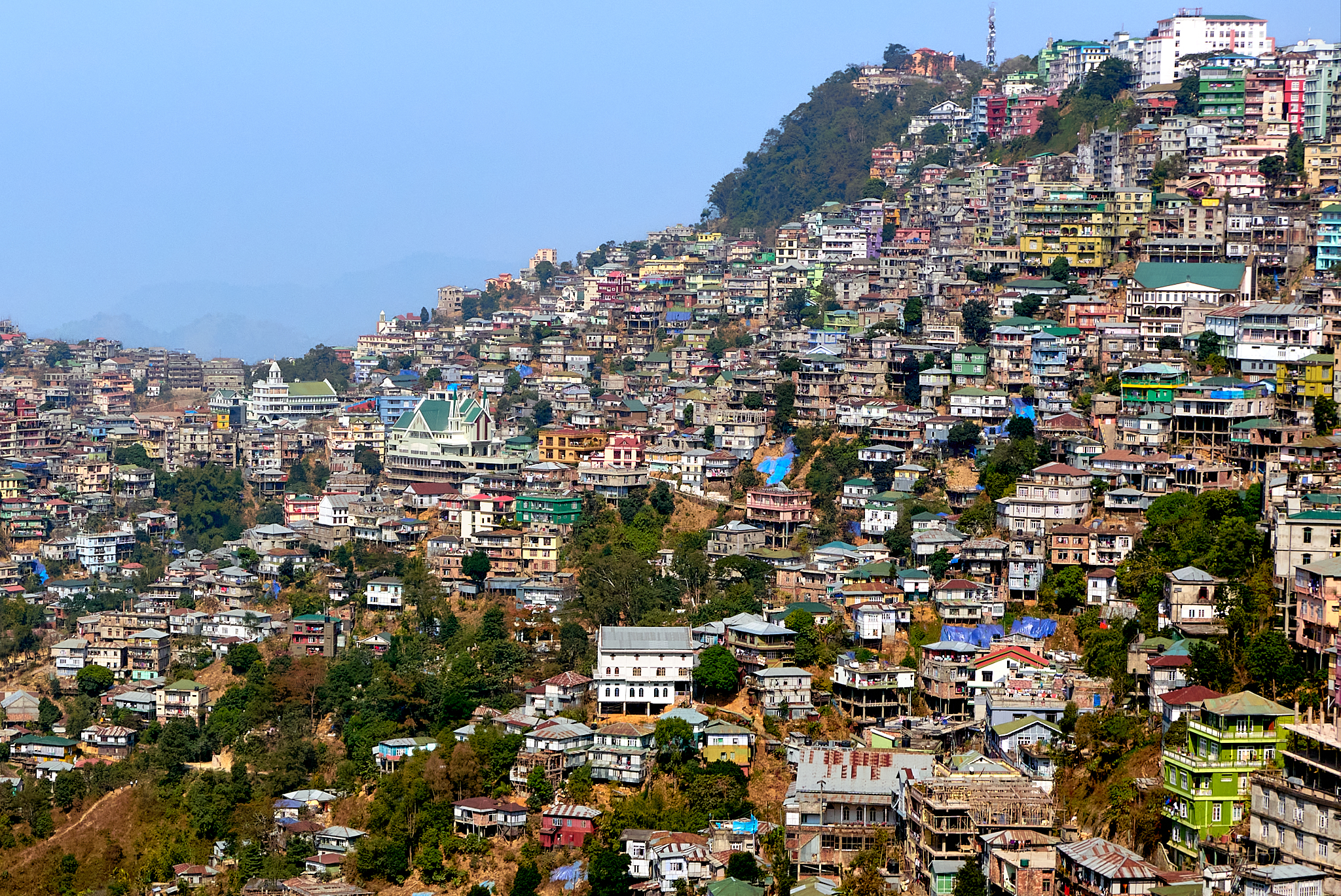
I spent my first night in the busy Zarkawt area. A night in the heart of any Indian town usually guarantees little sleep—traffic unrelenting, horns insistent. But Aizawl is different. Not a single horn sounded. The city prides itself on being silent.
From my hotel window I watched Mizo traffic discipline in action. Maruti 800s, Tata and Mahindra SUVs, bikes and scooters shared the road. The slowest vehicle set the pace. When a city bus stopped, those behind waited. I saw no impatient overtaking, except by two-wheelers. Pedestrians shared the road with ease, navigating parked and moving vehicles with a confidence familiar to any Indian.
A DIY MPV
By seven the next morning Maliana, Hruaia and I were on the road, hoping to beat the traffic that would soon choke Treasury Square and the southbound exit from the city. We climbed into mountain country. The road traced the ridge, dipping and rising, bending sharply to skirt rocky outcrops. Far below to our right flowed the Tlawng, hidden beneath a thick blanket of cloud; somewhere to our left ran the Tuirial.

Despite reports that Mizos wake at five, lunch at ten and sleep by six, I can vouch for only one of those claims. We stopped briefly at Hmuifang for tea and booking confirmations, then continued to Thenzawl. By ten-thirty we were ordering lunch. As a certain Mizo acquaintance of mine would say: Lolz.
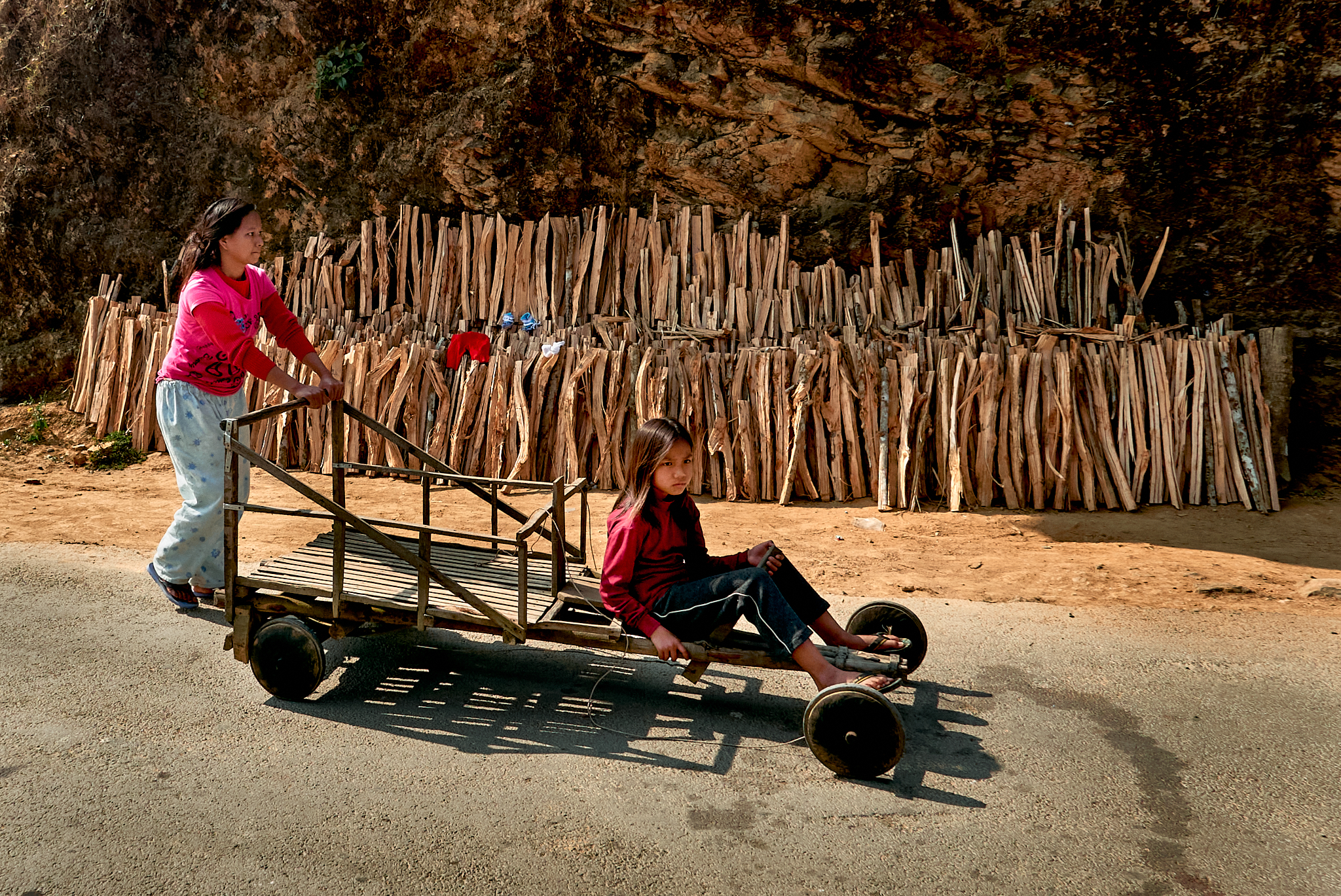
Retracing our route, we rejoined NH-2 at Rawpui in Lunglei district. Along these mountain roads one frequently encounters the tawlailir—a versatile, do-it-yourself multipurpose cart with a wooden lever for steering and braking. They haul firewood, bamboo, sacks of grain, gas cylinders and people. Any respectable village home has one parked outside.
A Folktale About a River
After Rawpui we passed through Hnahthial, turned left off NH2, and took the road to the village of Tuipui D.
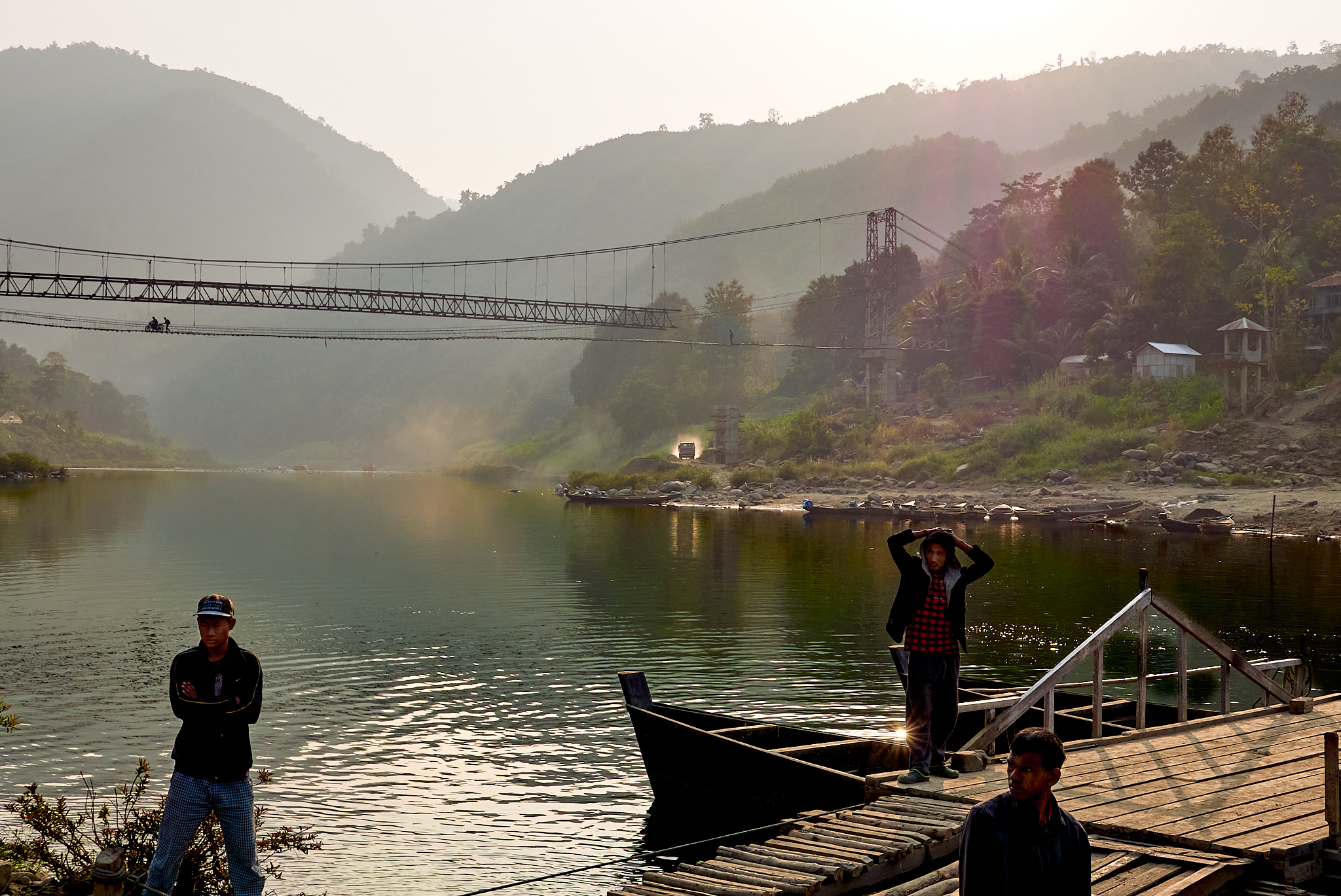
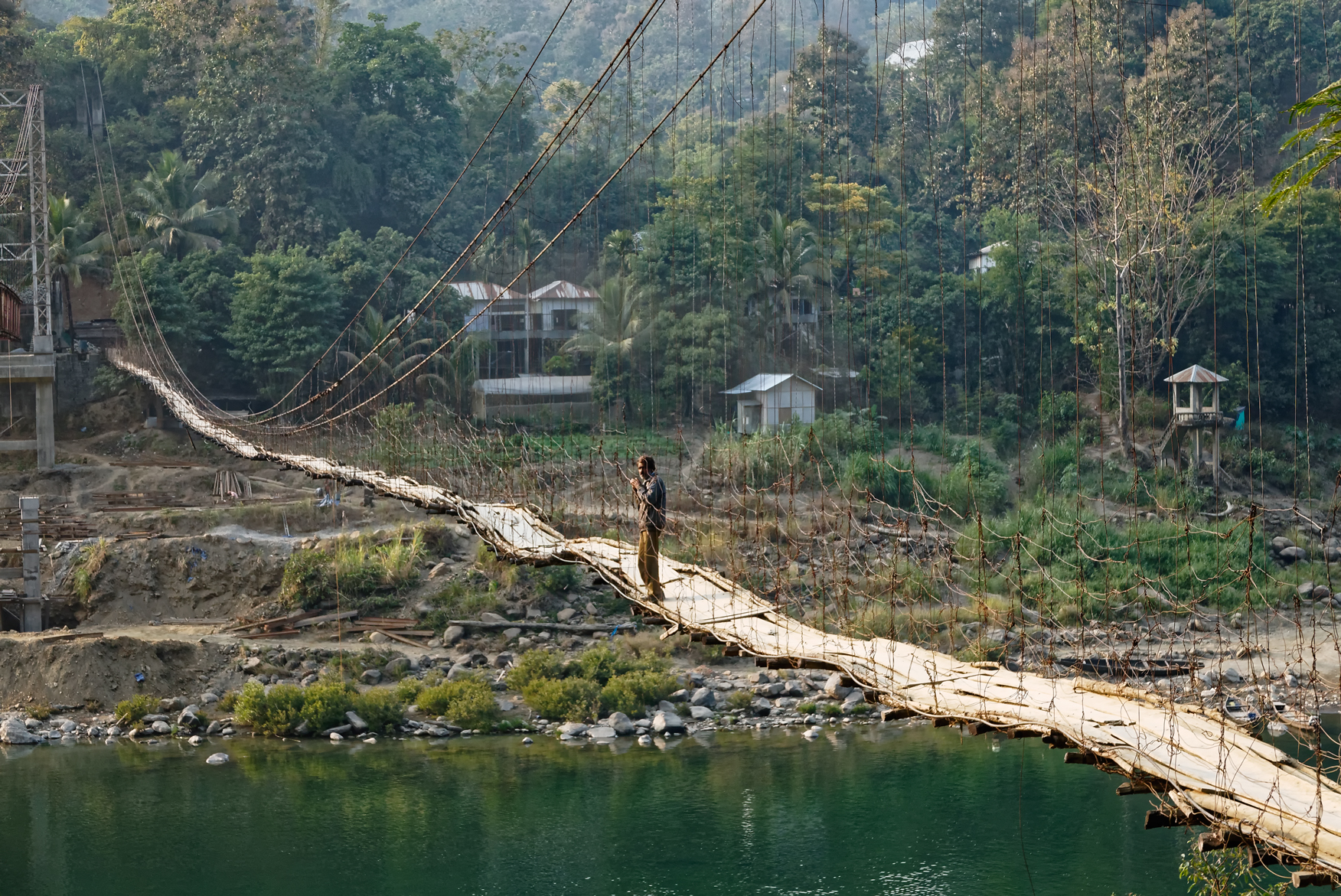
Before the missionaries arrived in 1894, Mizo history existed entirely in memory and voice. Stories were carried from one generation to the next, shaped by repetition rather than record. One such tale, which survived both the arrival of formal education and the influence of Christianity, is the story of the girl who saved her village.
The tale goes like this.
Once there was a young orphan named Ngaitei who lived with her grandmother. Together they went into the forest to collect yam. Nearby lay a lake in which the girl’s father had drowned. Ngaitei had been warned never to say the word “Ho” near the water.
One day, feeling thirsty, she approached the lake. Curiosity overcame caution and she called out, “Ho.” No sooner had she spoken than her father appeared before her and carried her away.
Ngaitei’s grandmother waited, but when the girl did not return she went in search of her. She first asked a pair of red deer if they had seen the child. “We saw her on the other bank of the Tuipui and Tiau rivers,” they replied, “where her father has taken her.”
Next, she asked a pair of partridges. They gave the same answer: “We saw her on the other bank of the Tuipui and Tiau rivers, where her father has taken her.”
When the grandmother reached the spot and found Ngaitei there, she pleaded with the father to let the girl return. He agreed, but only on the condition that she be sent back to him after a few days. The promise was never kept.
Angered by the betrayal, the father caused a great flood that threatened to drown the village where Ngaitei lived. In desperation, the villagers threw into the waters a piece of cloth that had belonged to the girl. The flood receded—but only briefly. When it rose again, they threw in her comb. Once more the waters fell, and once more they returned.
Finally, the villagers gave Ngaitei herself to the flood. The waters subsided forever, and the village was saved.
Darzo—A Buried History
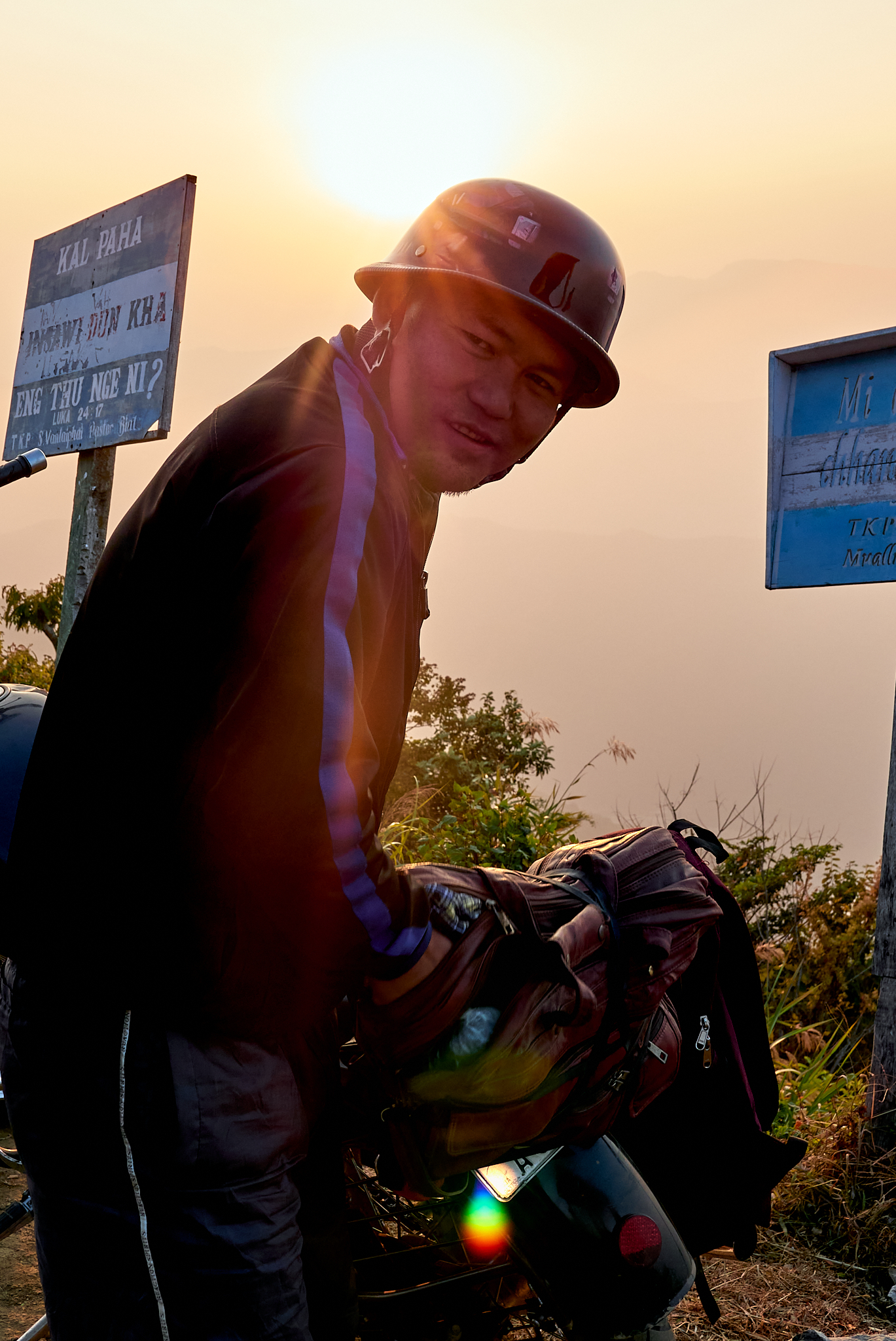
Our route to the Blue Mountain took us past a place called Darzo. On the day we drove up to the Darzo viewpoint, I knew nothing of its history. Only later did I come across A Mizo Civil Servant’s Reflections, and it was a painful account to read. The events described belonged to the years of insurgency, before the formation of the state of Mizoram.
Darzo, the officer wrote, was one of the richest villages he had ever seen, with ample stores of paddy, fowl, and pigs. His orders were to clear the village of its inhabitants and burn their homes, preventing the settlement from falling into insurgent hands. The villagers were to be resettled in Hnathial under the protection of government security forces, as part of a wider village regrouping scheme intended to drive insurgents into the jungles and cut off their supply lines.
As night approached, the officer failed to persuade the villagers to set fire to their own homes. He then ordered his soldiers to torch the village, setting the first house alight himself.
What followed, he wrote, was chaos.
“There was absolute confusion everywhere. Women were wailing and shouting and cursing. Children were frightened and cried. Young boys and girls held hands and looked at their burning village with a stupefied expression on their faces. But the grown men were silent; not a whimper or a whisper from them. Pigs were running about, mithuns were bellowing, dogs were barking, and fowls setting up a racket with their fluttering and cracking. One little girl ran into her burning house and soon darted out holding a kitten in her hands.”
That night, they marched out of Darzo.
“We walked fifteen miles through the jungle,” the officer continued, “and the morning saw us in Hnathial. I tell you, I hated myself that night. I had done the job of an executioner. When I saw children as young as three years carrying huge loads on their heads for fifteen miles, with very few stops for rest—their noses running, their little feet faltering—for the first time in my life as a soldier, I did not feel the burden of the fifty-pound haversack on my own back.”
Mizoram became a state in 1987, following successful peace talks between the Indian government and the rebels. Vala, the school principal we met in Darzo, was probably too young to remember those years.
We left Darzo as we had entered it, quietly. The road climbed away from the village and back into forest. Hills folded into one another, and the view widened, then closed again. From the viewpoint there was nothing to mark what had taken place there—only green slopes, scattered homes, and ridges fading into the distance. The land held its shape, indifferent to memory.
The road carried us on, higher into the hills.
By the following morning, we would be on our way to Phawngpui.
Blue Mountain
The early morning air in Sikul Veng was crisp and cool, the valley still holding a thin veil of mist. The RD Rest House, a modest tourist lodge on the edge of the village, faced east across a wide patch of cleared ground. As the sun climbed, light spilled into the valley, lifting the mist in slow, uneven sheets and revealing the folds of the surrounding hills.
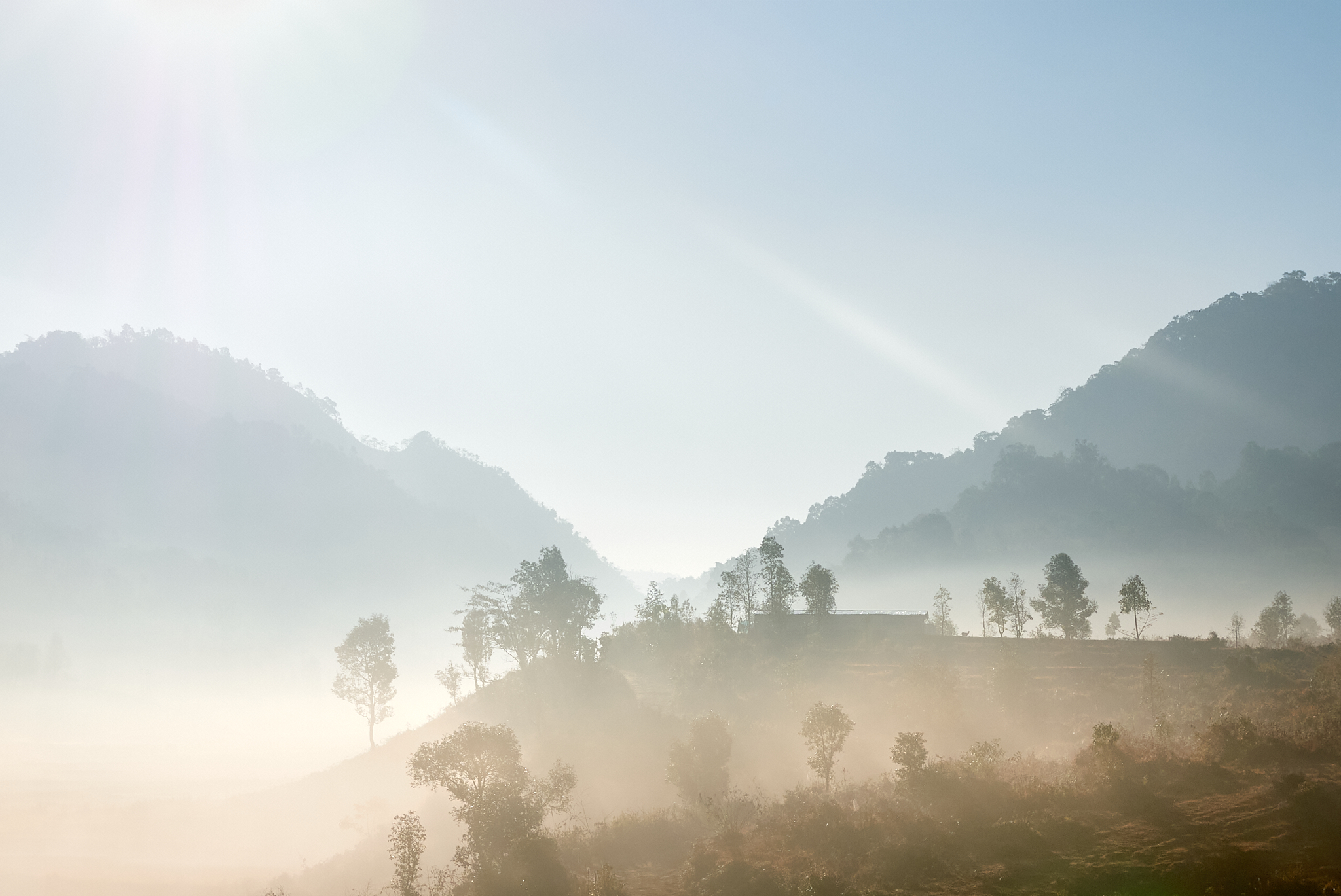
Breakfast was unhurried. There was nowhere else to be but on the road, and no need to rush getting there.
To reach Phawngpui we first drove to Sangau, a village of just over a thousand people, making it one of the larger settlements in this part of Mizoram. Life here moved at a measured pace.
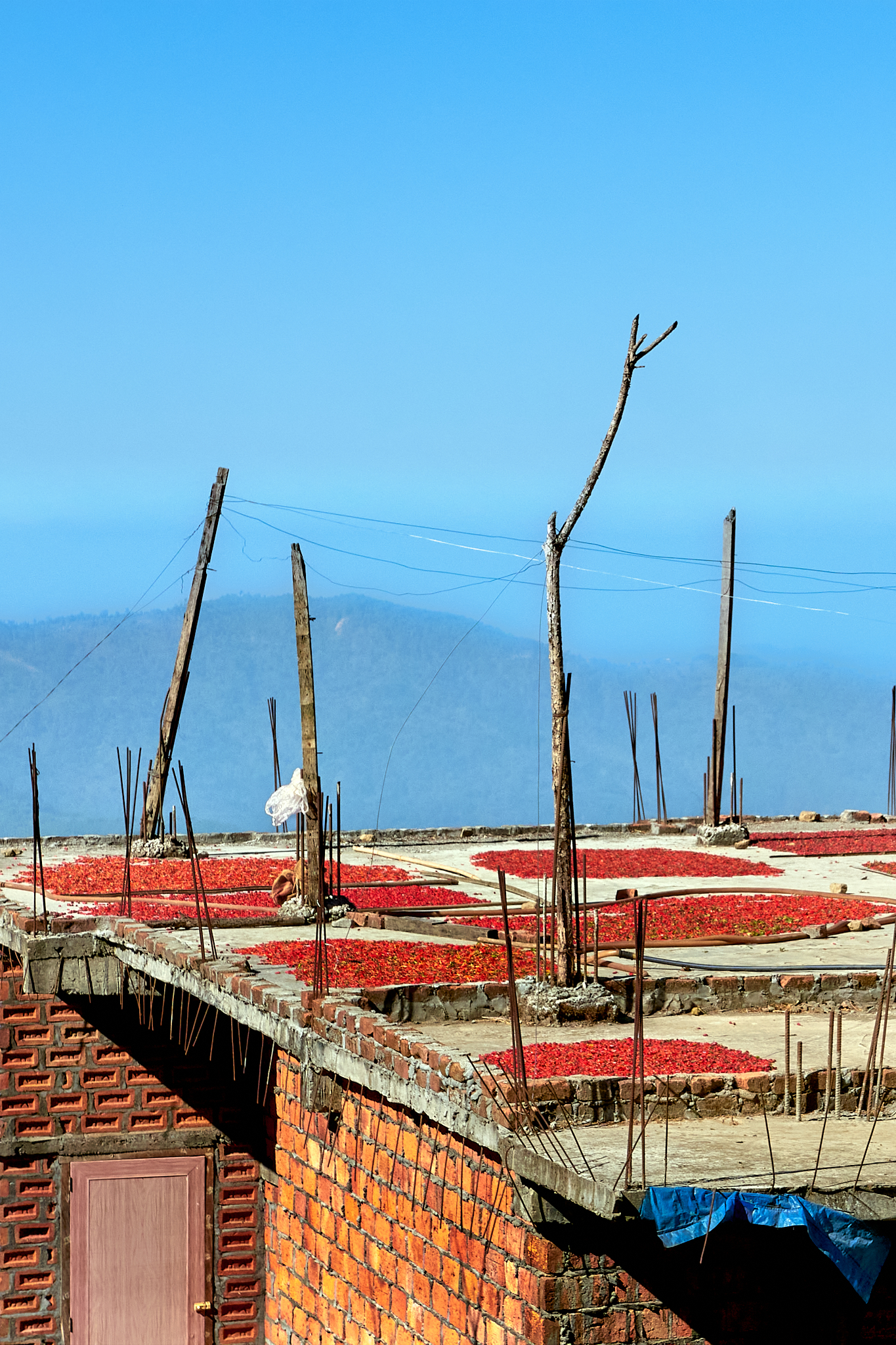
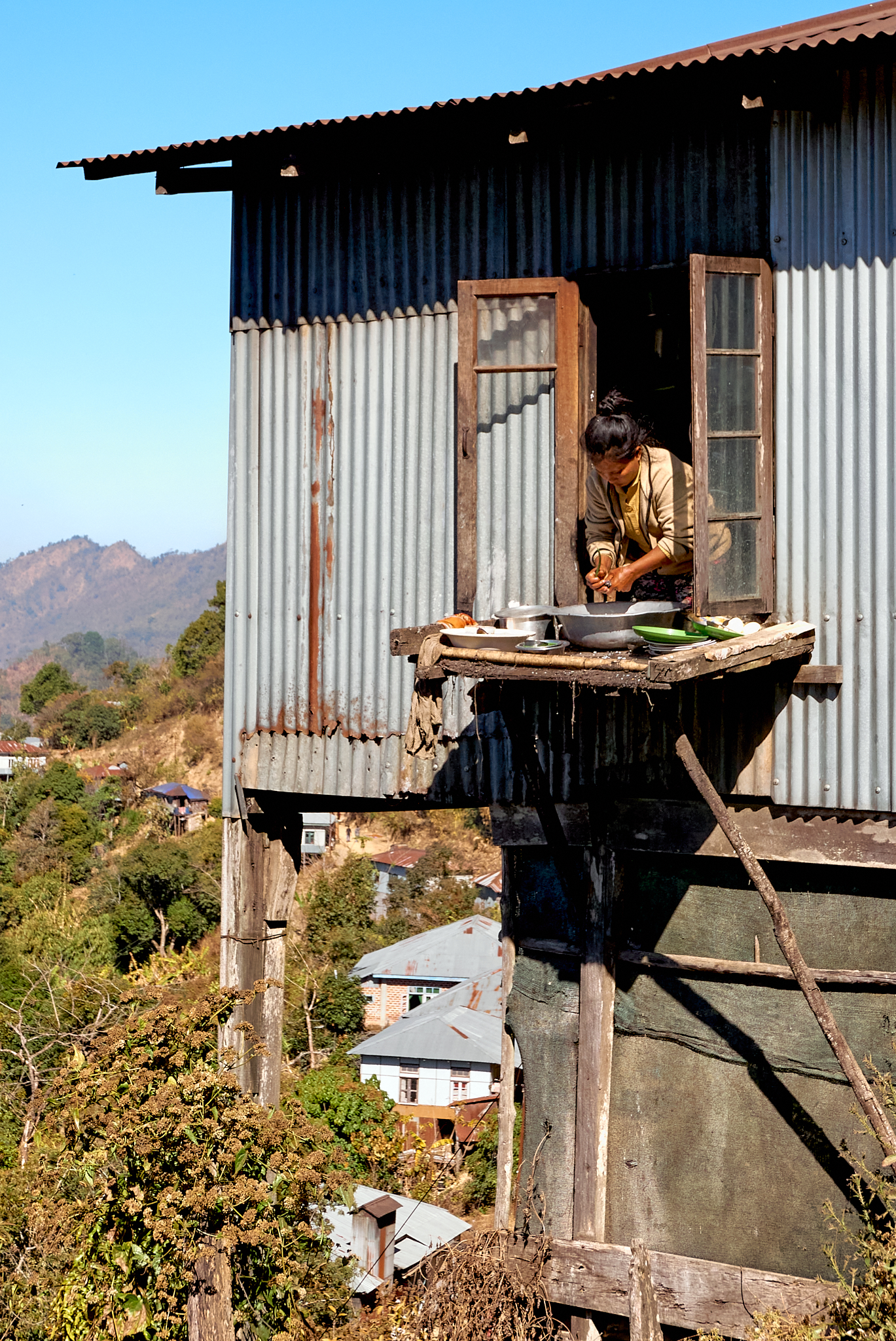
Red chillies lay drying against walls and rooftops; smoke drifted from kitchen extensions; the morning’s chores unfolded without ceremony.
In Sangau, Maliana arranged for the services of Chanuka, an accredited National Park Ranger. Access to Phawngpui is regulated, and only authorised vehicles are allowed beyond a certain point. Chanuka’s Bolero pickup—four-wheel drive and built for punishment—would take us the rest of the way.
We made a brief detour to Thaltlang village, where a young girl at the ticket booth issued our passes. She did so with a seriousness that belied her age, as if she were a gatekeeper to something more than a protected landscape.
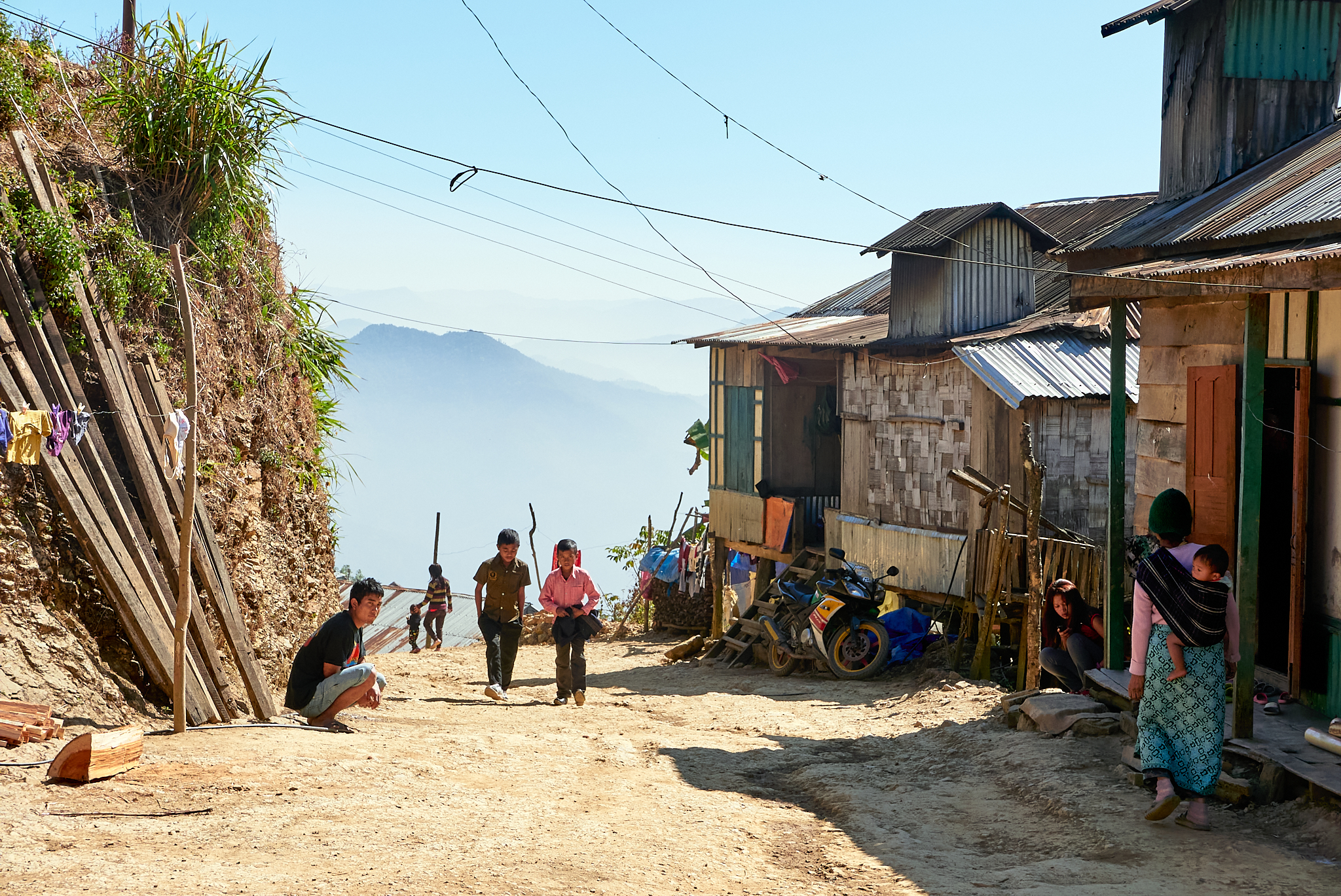
From there, the road narrowed and soon dissolved into a track of mud and rock. The approach to Phawngpui—at 2,157 metres the highest peak in Mizoram—was steep and unforgiving. The jeep bounced and lurched across deep ruts as Chanuka wrestled with tight hairpin bends, the forest pressing in on both sides. I was fortunate to occupy the lone passenger seat. Maliana and Hruaia, standing in the back, held on grimly, bracing themselves against every jolt to avoid being pitched out.
Phawngpui owes its more romantic name, Blue Mountain, to the cloud cover that so often crowns its summit, giving it a bluish hue when seen from afar. On this day, however, the mountain was clear. The track emerged suddenly into open space, and just as abruptly, the forest fell away.
The summit was not a peak in the conventional sense, but a broad meadow, dry grass rippling in the breeze. To the west, the land dropped sharply at Thlazuang Khàm, a sheer escarpment where the mountain seemed to end in mid-air. Beyond it lay the Arakan range, the hills folded into one another, running unbroken across the border into Myanmar.
We had the mountain entirely to ourselves.
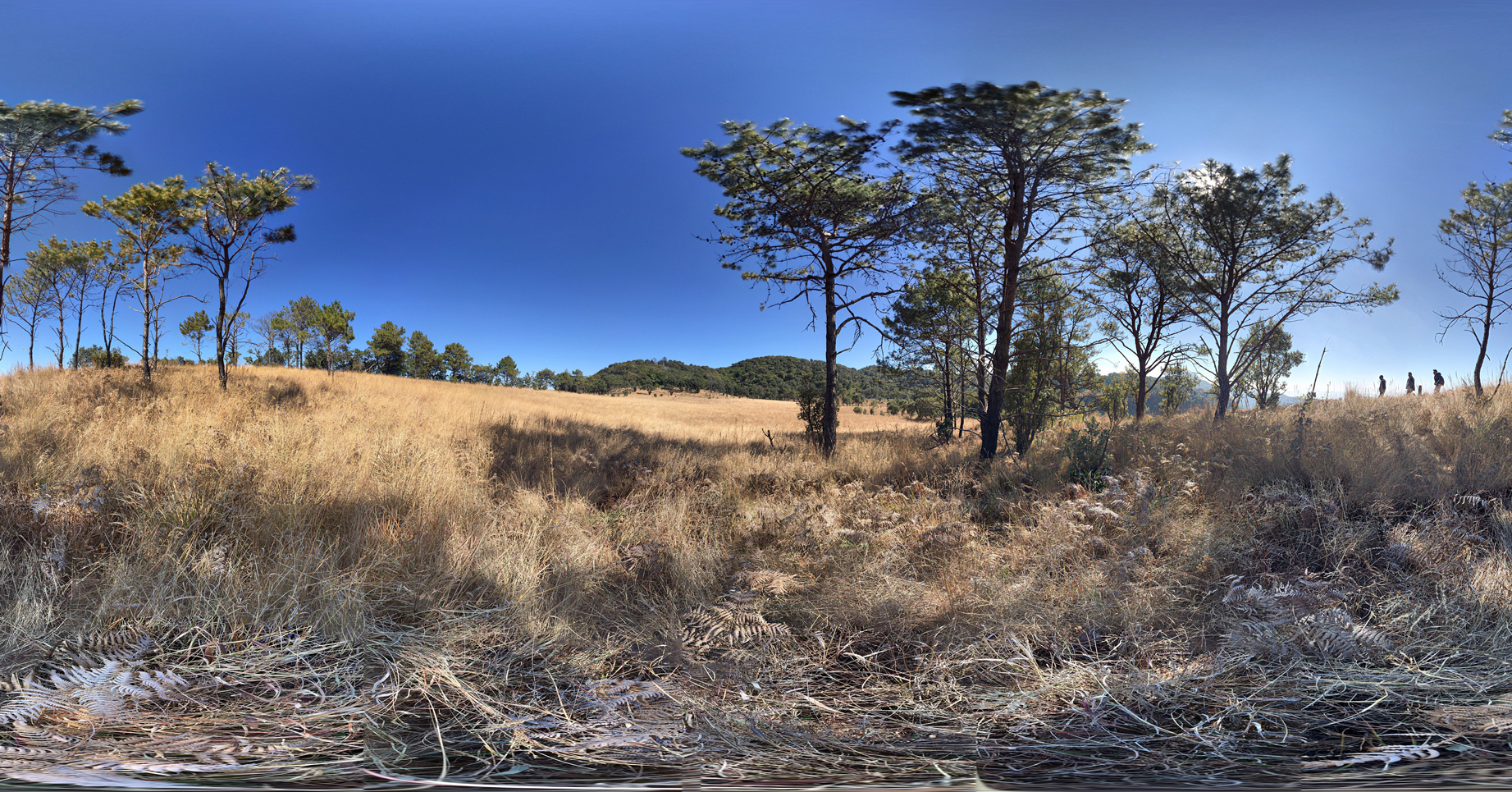
Standing there, it was easy to understand why Phawngpui occupies a special place in Mizo imagination. Long before Christianity arrived, the mountains were believed to be inhabited by spirits and demons, and Phawngpui was among the most powerful of their abodes. The demon said to dwell here is Darkualpa, brother of Tiauchhumpa. Together, the stories say, they watch over the animals of the mountain.
Demons, like humans, marry. When they do, they exchange gifts: gibbons, hawks, and the morning mist itself. Pine trees are said to serve as wedding gowns.
The stories felt neither quaint nor performative up here. They seemed to belong to the land as much as the wind and grass. Even now, in a state remade by faith, Phawngpui retains something of that older authority.
Eventually we made our way back down, the jeep retracing its path through forest and ruts, gravity now working against Chanuka’s brakes. Back in Sangau, Chanuka invited us into his home for tea.
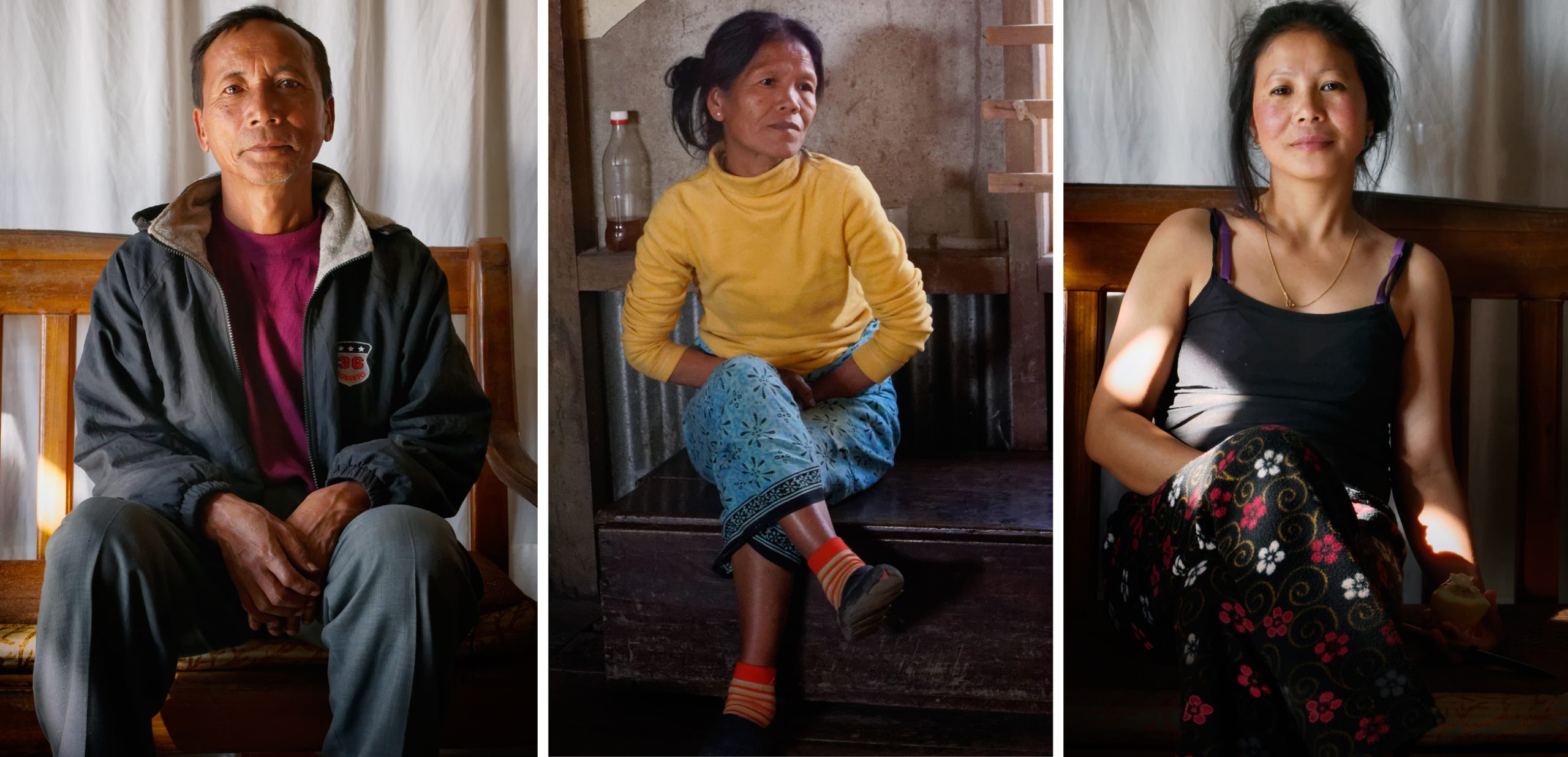
We sat together quietly, cups warming our hands. Outside, village life continued much as it had before we arrived. The mountain loomed somewhere above us, unseen again, already retreating into cloud and story.
“It Might Be Dangerous… You Go First”
Reiek, barely thirty kilometres west of Aizawl, was our next stop. Rina replaced Maliana, who had returned to the city.
The trek climbed through thick undergrowth, then along a narrow path skirting steep drops, past a place where an unfortunate hiker had met his end. Eventually we emerged into tall, windswept grass with the summit in clear view.
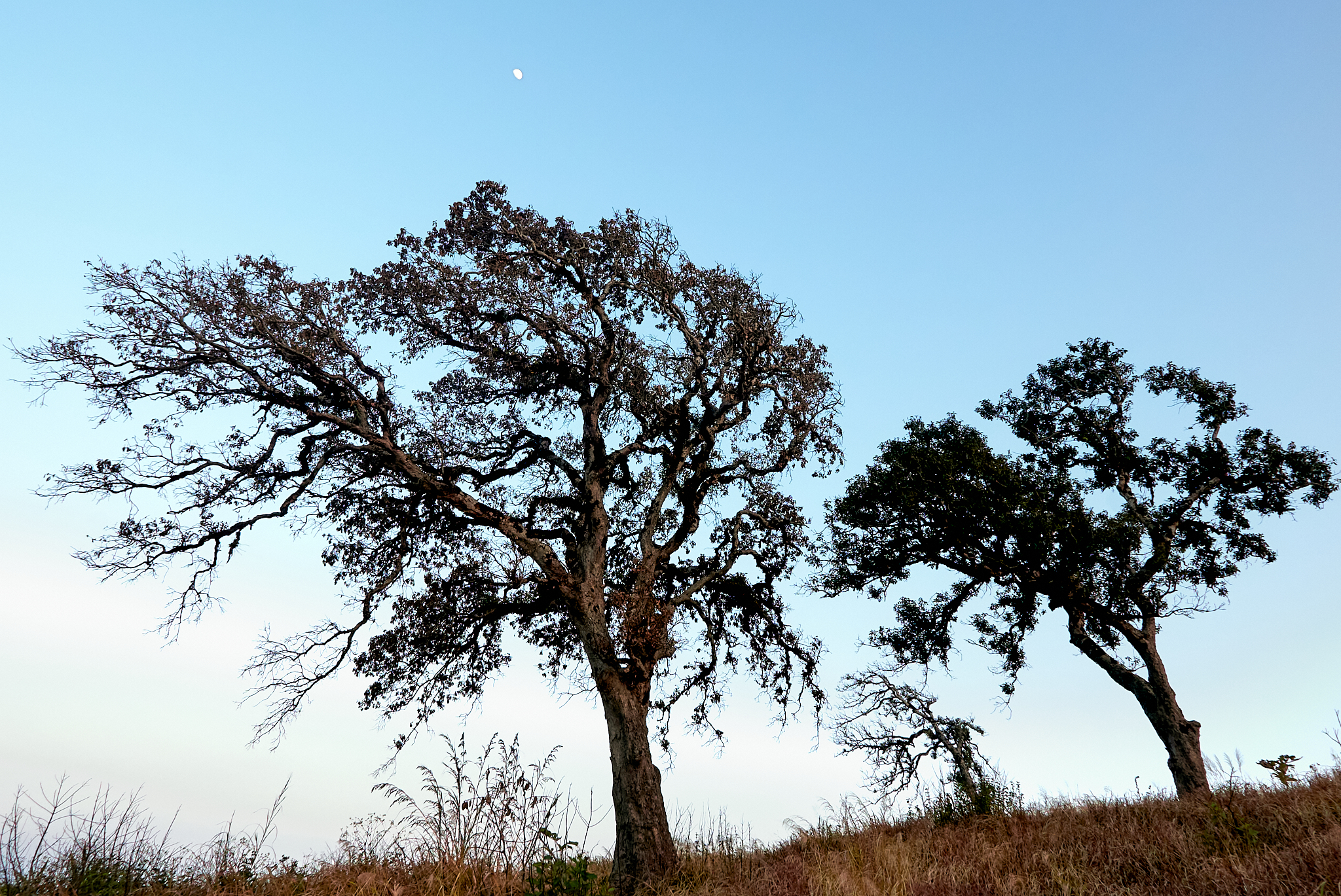
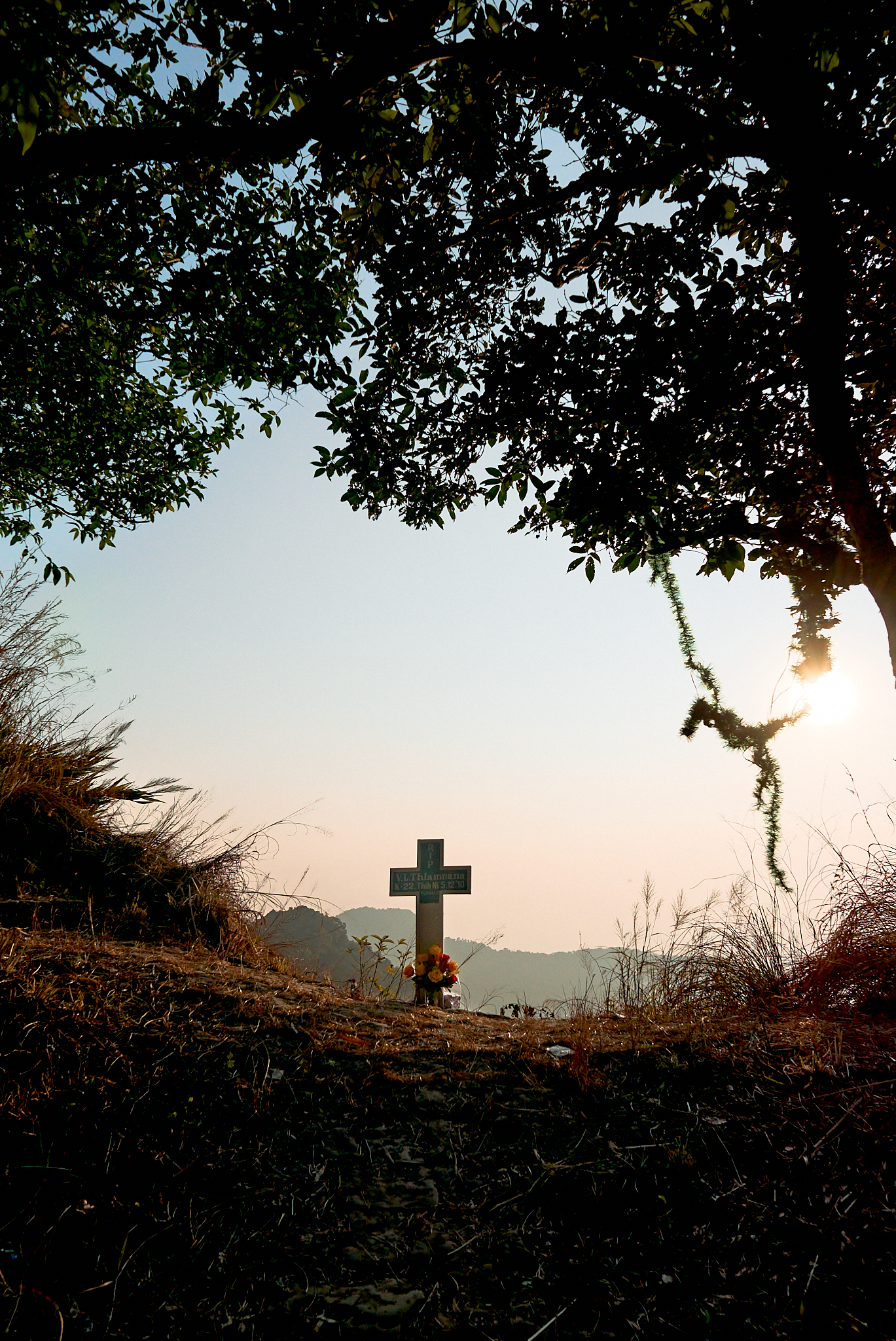
Folklore says Reiek was guarded by the demon Khawluahlali. When rival mountain demons attacked, they enlisted the Tlawng river demons, whose waters crashed against Reiek but failed to break it.
Defeated, the river was forced to change its course.
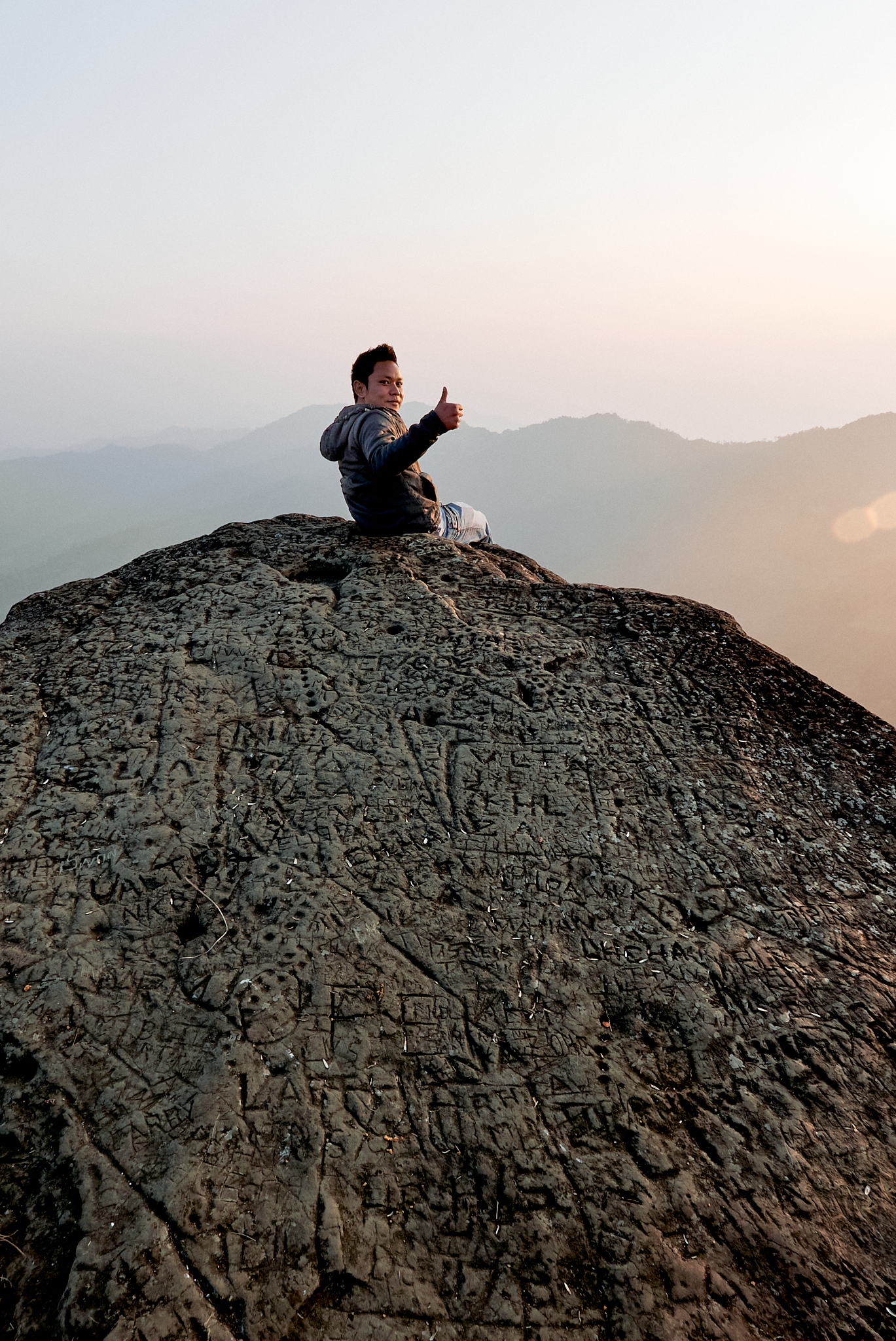
At the top, Hruaia climbed onto a rocky outcrop jutting over the precipice. I hoped some demon was still keeping watch.
Solomon’s Temple
In a land once governed by demons and rivers, it was impossible not to notice how completely faith had reshaped Mizoram.
One afternoon, Rina and I drove just beyond the city limits of Aizawl to Solomon’s Temple. Set against a hillside, the building rose unexpectedly from the landscape—a white marble structure, symmetrical and deliberate, its brightness stark against the surrounding green.
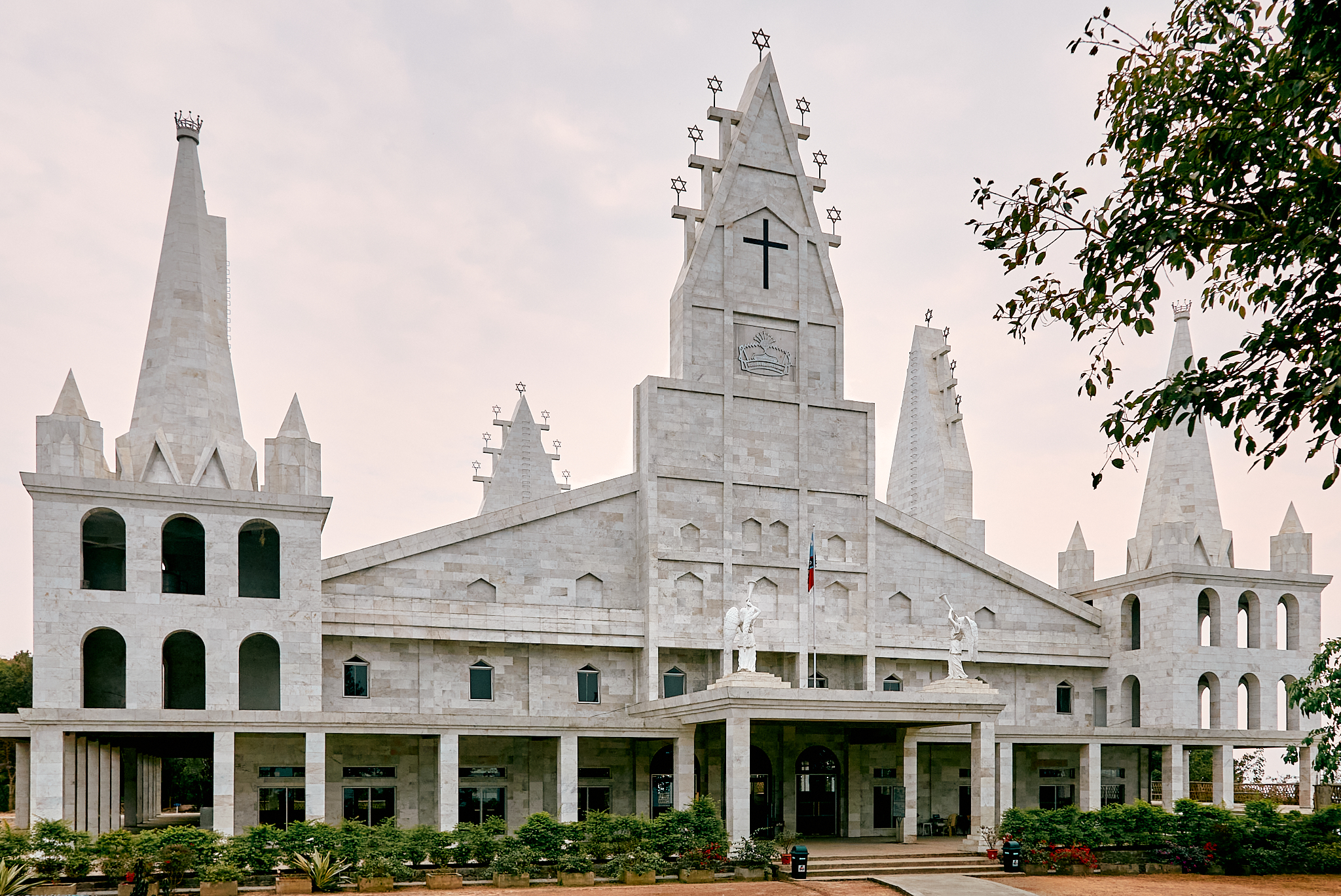
What began on Christmas Day in 1996 as a single man’s vision had, over the years, grown slowly and methodically into what now stood before us. Lalbiakmawia Sailo had dreamt of building a temple inspired by the Biblical House of Solomon, and from that moment onward had relied entirely on donations from well-wishers and the faithful. Progress came not in phases dictated by funds or deadlines, but in increments—whenever enough had been gathered to add another wall, pillar or tower.
The architecture was symbolic rather than ornate. Four towers rose from the corners of the structure, each topped with a crown. Four pillars supported the entrance, each bearing seven Stars of David. The numerology was intentional, the design less about embellishment than about declaration.
Inside, the scale of the main hall was striking.
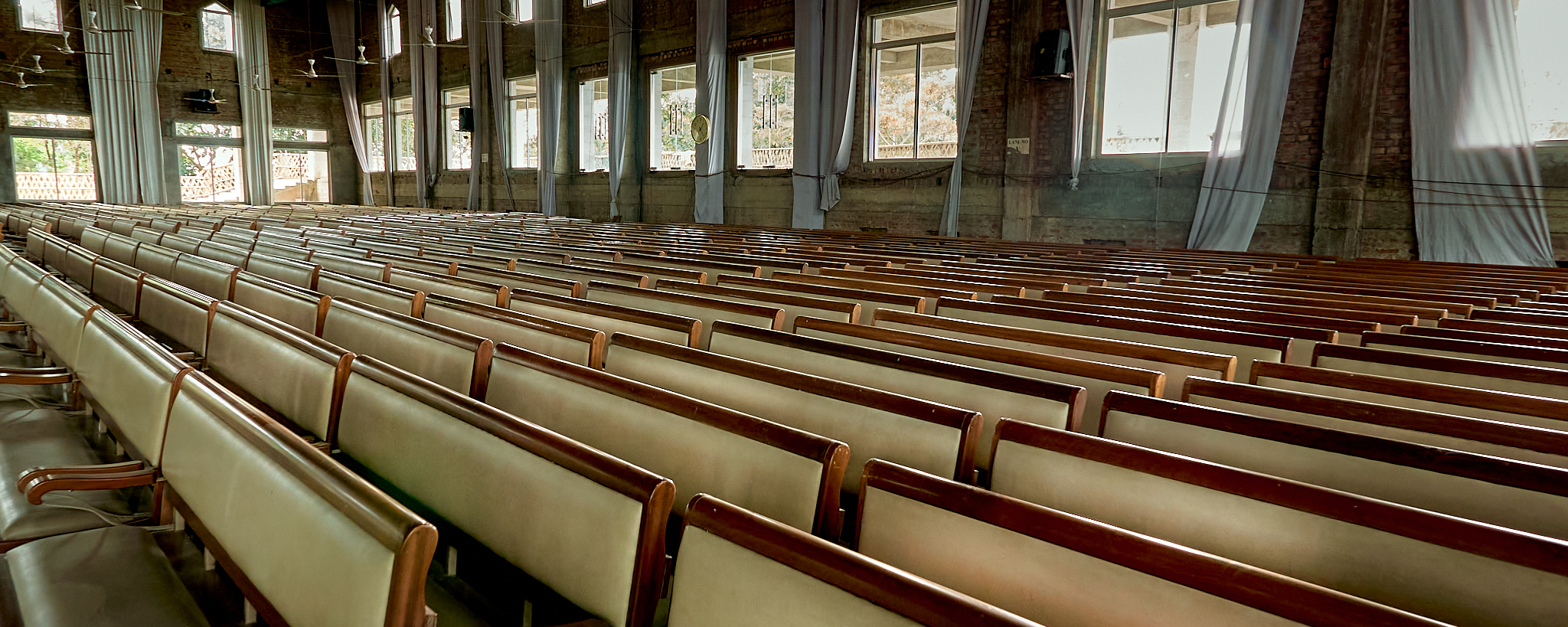
Rows of pews, enough to seat nearly two thousand worshippers, were stacked neatly at one end, leaving much of the floor bare. Along one wall, a stage had been erected, still dressed with a banner from the church’s recently concluded annual convention. The emblem—a crown—was repeated everywhere, a reminder of the authority and promise that underpinned the project.
The hall was empty when we arrived. There were no worshippers, no hymns, no sermons—only the echo of our footsteps and the sense of a space perpetually in the making. Construction was ongoing. Walls bore the marks of recent work, and unfinished surfaces hinted at future additions. The temple did not feel abandoned so much as paused, waiting for the next offering, the next act of faith.
What struck me most was not the ambition of the structure, but its patience. Solomon’s Temple had taken over two decades to reach its present form, built not through institutional backing or state support, but through belief sustained over time. In a region where mountains once housed demons and rivers were thought to bend at the will of spirits, this was faith made solid—measured in marble, crowns and carefully counted symbols.
As we drove back toward the city, the temple receded quickly into the hillside, its white façade soon lost among trees. Yet it lingered in my mind as a marker of how completely Mizoram had been remade—not by erasing its past, but by building something new, slowly and deliberately, on top of it.
Chhuanthar Run
By now I had rated my Mizoram trip a decisive success. But Rina had one final visit in mind, something that, he promised, would stay with me long after I had left the hills.
That night I was staying at the Tourist Centre in Beraw Tlang, my hotel in Aizawl having been taken over by a visiting football club. Just a couple of hours’ drive from here lay the village of Baktawng, home to what is widely known as the largest family in the world. A visit there felt like the right way to end a journey shaped by faith, folklore and community.
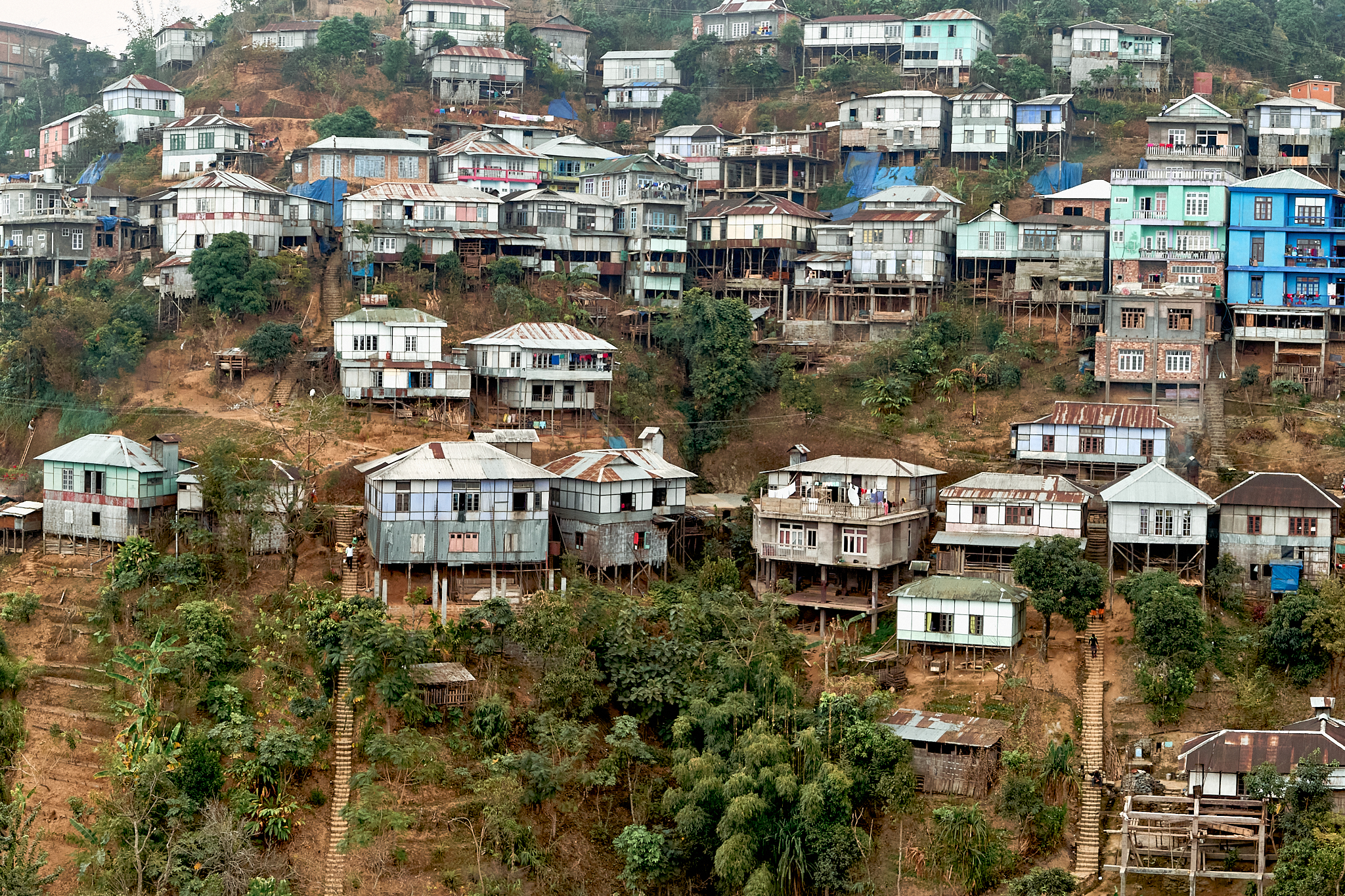
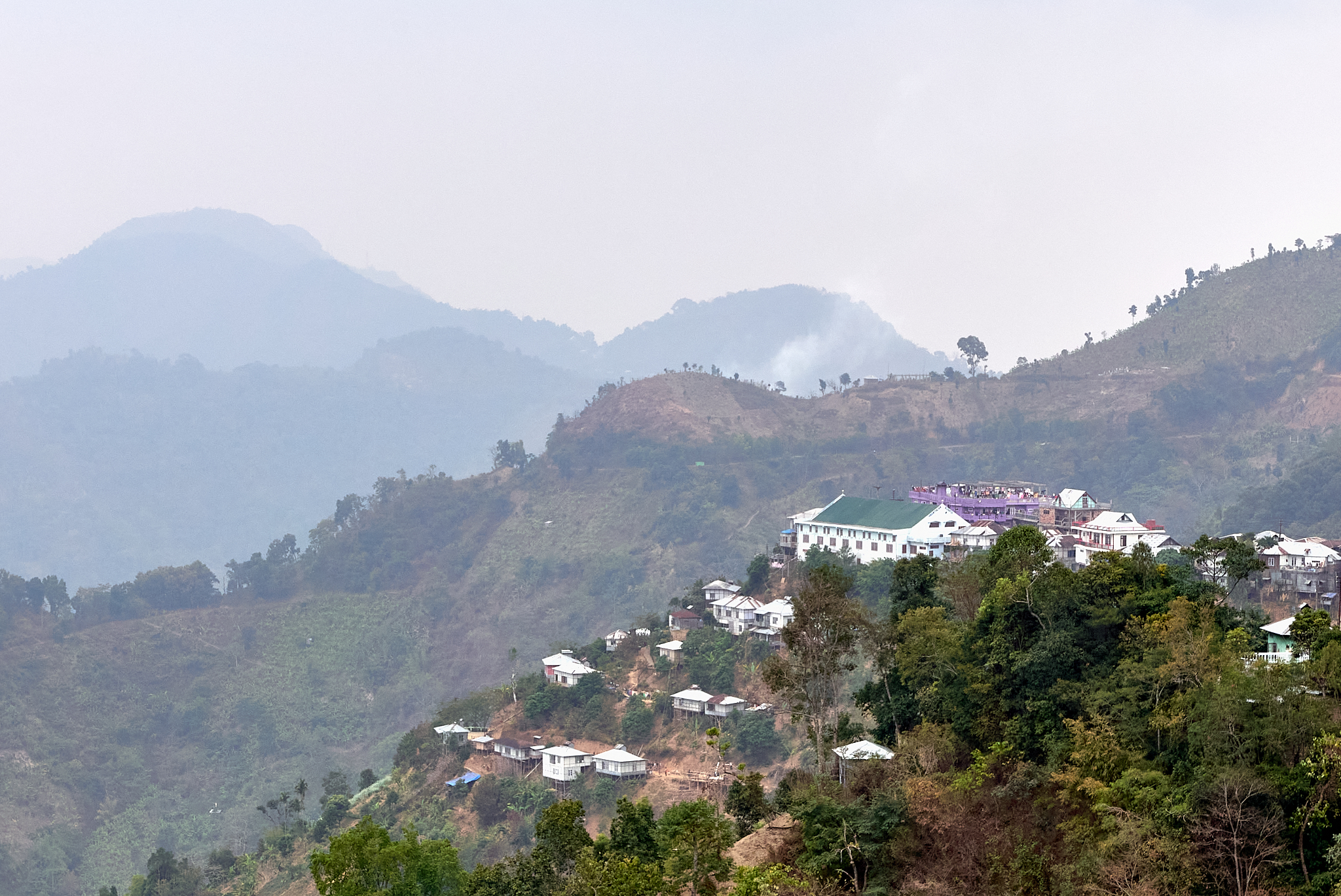
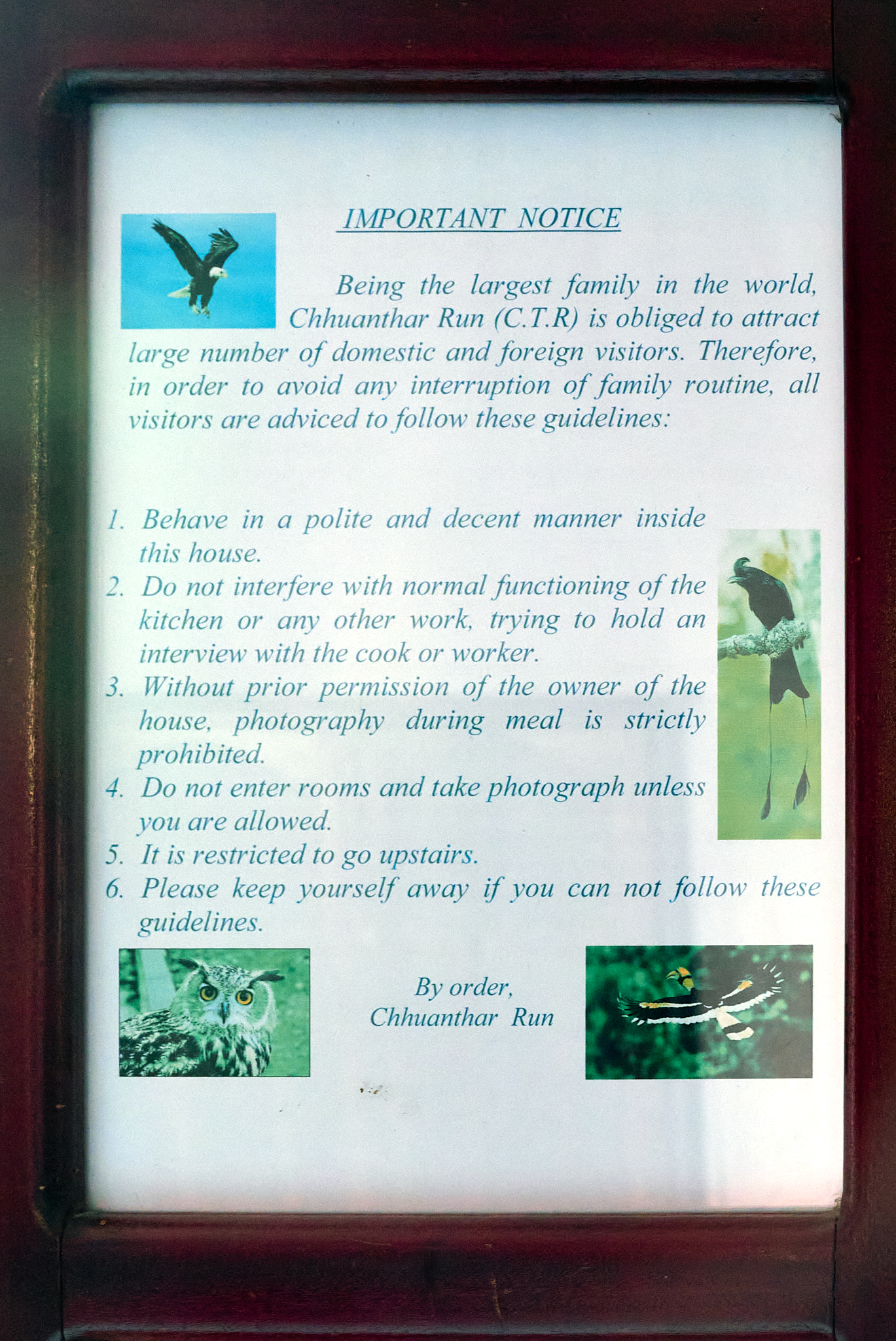
The family home was impossible to miss: a sprawling, multi-storey structure painted a distinctive shade of purple, rising above the village like a landmark. We were welcomed inside by a family member and led into a large sitting area on the ground floor. Long wooden benches lined the walls for visitors. Off to one side was the kitchen—vast, functional, and already humming with activity.
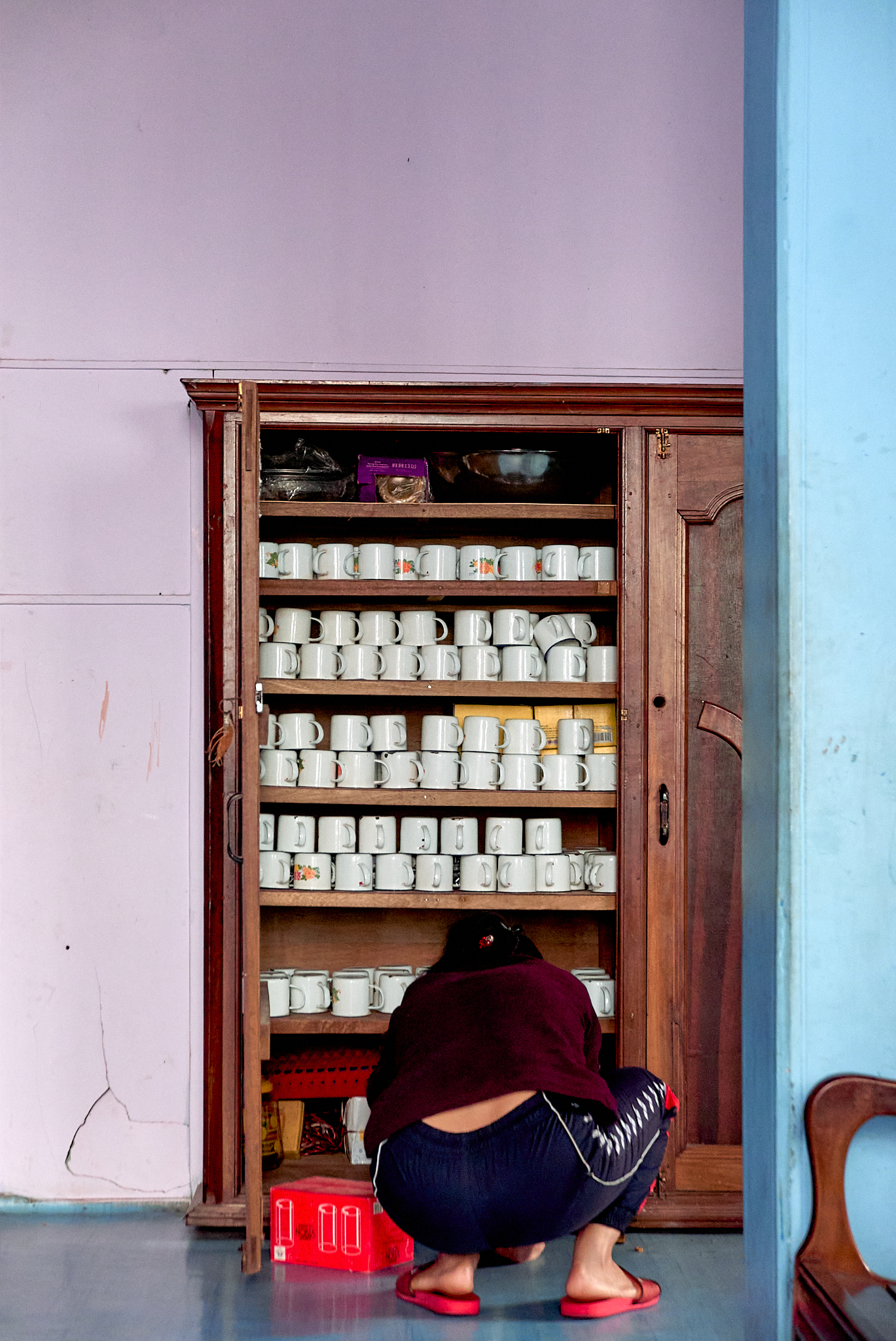
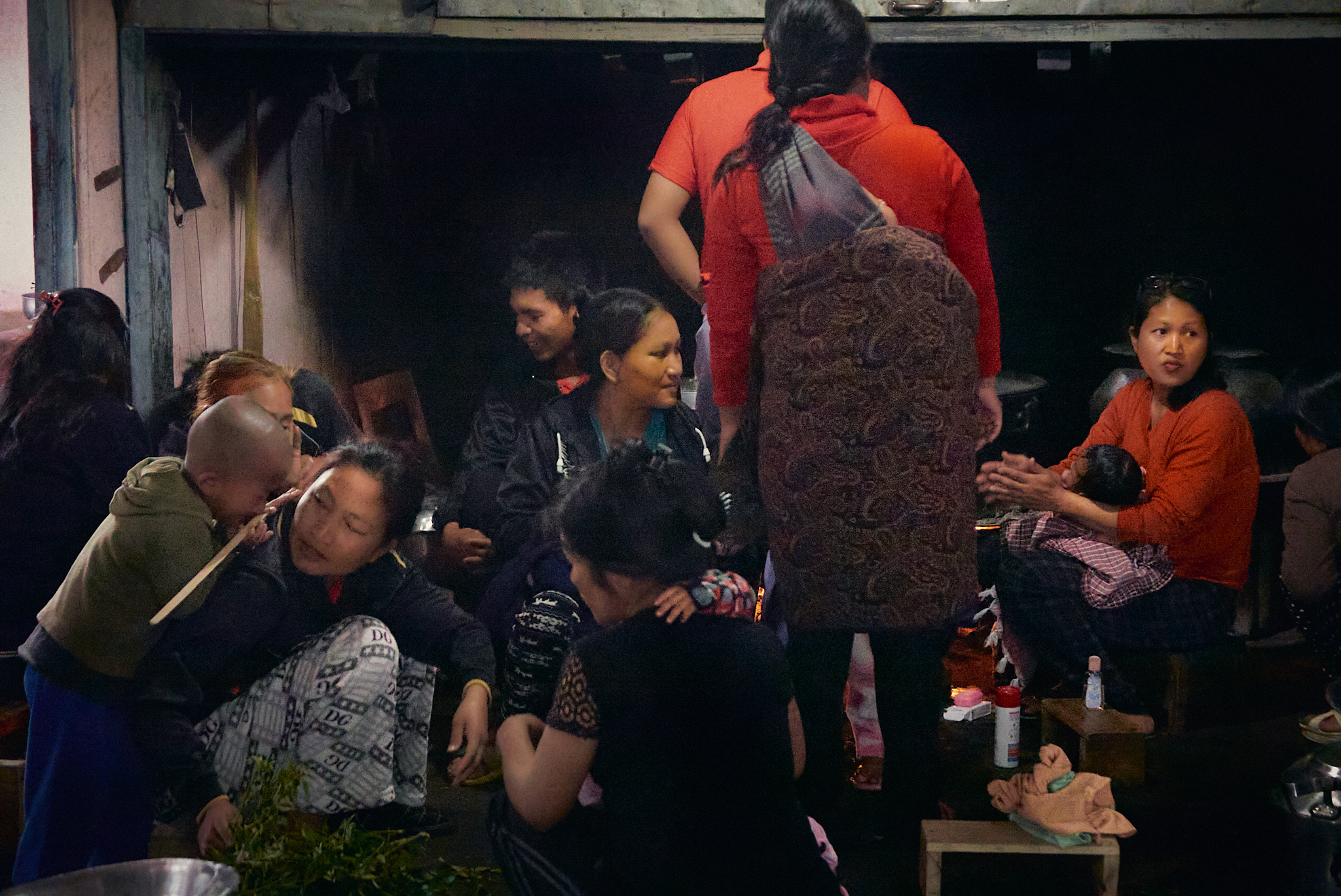
The kitchen was the heart of the house. Long shelves were stacked with utensils; pots and pans were in constant rotation. All meals in the household are prepared collectively by Pu Ziona’s wives, a system that runs with quiet efficiency rather than visible hierarchy. There was no sense of spectacle here—only routine, practiced and purposeful.
Pu Ziona himself was not at home. As per his daily routine, he had been up since five, working in the fields with other members of the family. One of his daughters went in search of someone to show us around and returned with Tluangi, his second wife. Calm and composed, she guided us through the house, pausing occasionally to answer questions or point out photographs.
Along one wall of the large hall hung framed photographs—group portraits of wives, children and grandchildren taken at different times. At the time of our visit, close to 180 family members lived under this one roof. The number has since grown.
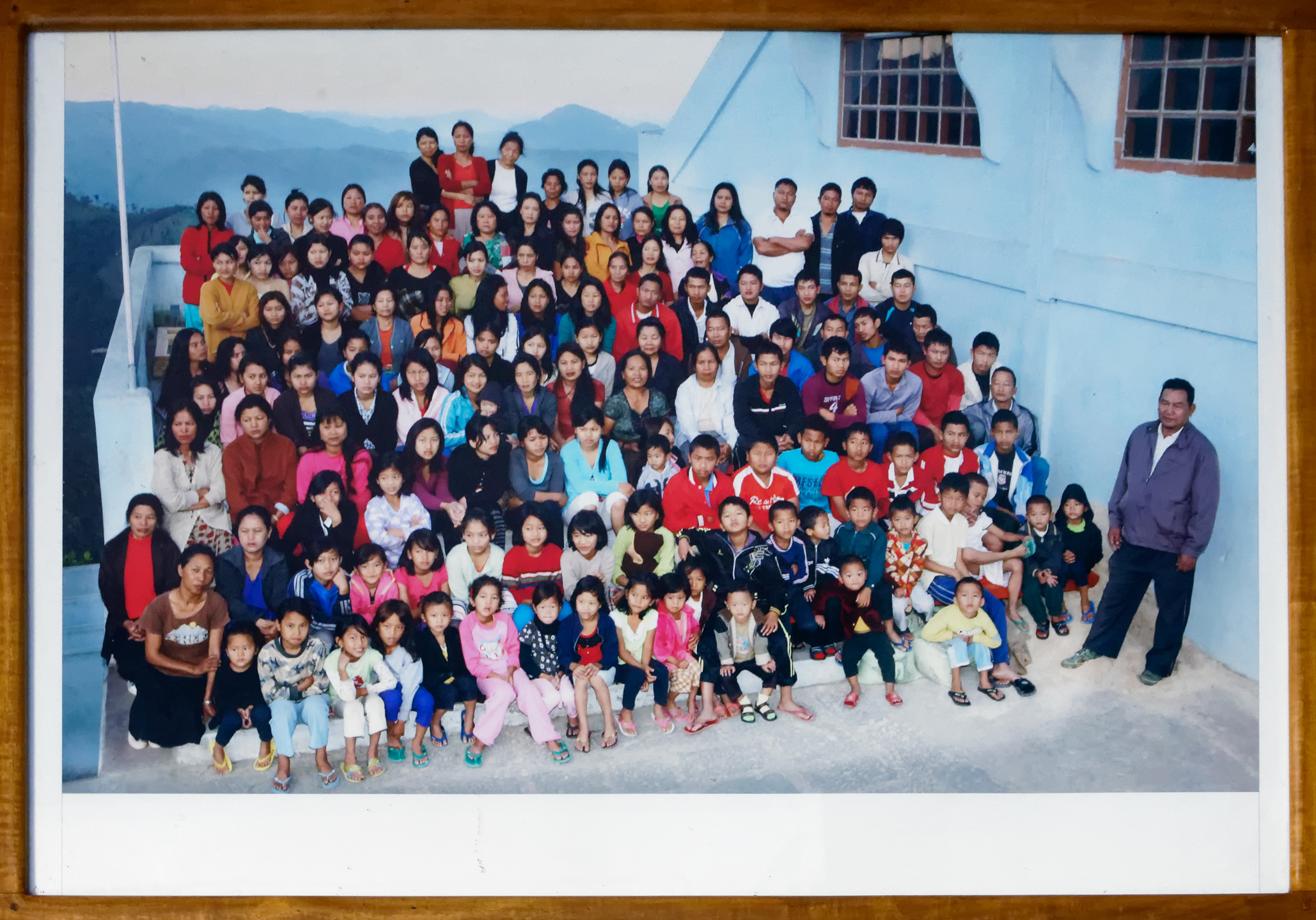
Pu Ziona has thirty-nine wives. Their domestic life is overseen by his first wife, Zathiangi, whom he married in 1959. She manages household affairs, resolves disputes when they arise, and maintains a roster that governs everything from meals to conjugal arrangements. Their children—sons and daughters alike—are assigned responsibilities in the fields, schools and workshops. Married daughters live in their own homes within the village. Grandchildren move freely through the house, absorbed into its rhythms.
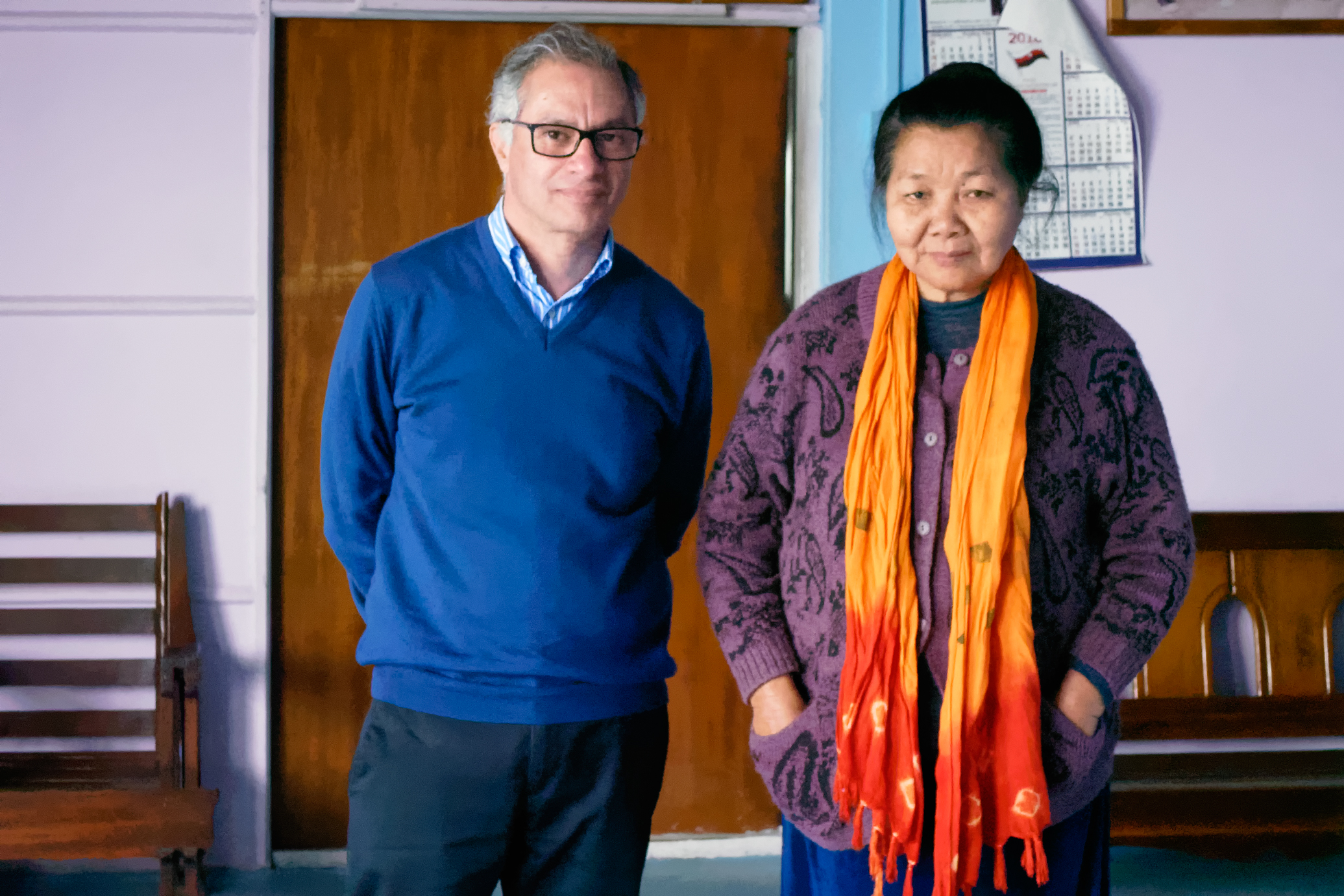
Zionnghaka—better known as Pu Ziona—is the head of a Christian sect called Chana Pawl. Founded in 1942 by his father, Khuangtuaha, the community calls itself Chhuanthar Kohhran, the “Church of the New Generation.” Leadership passed to Pu Ziona after his father’s death, and under him the community expanded both in numbers and in self-sufficiency.
They have their own church, schools, metal and wood workshops, even a small stadium. Work is central to community life. Traditional crafts—wooden utensils, doors, furniture and window frames—have been revived and refined. Of the village’s households, a large number are engaged in carpentry, giving the community economic independence with minimal reliance on the outside world.
Religious observance here follows its own calendar. Traditional Christian festivals such as Palm Sunday,
Good Friday and Easter are not observed. Instead, the community marks the birthdays of its founding figures and significant family events. Christmas alone is celebrated, a concession perhaps to the wider Christian world beyond Baktawng.
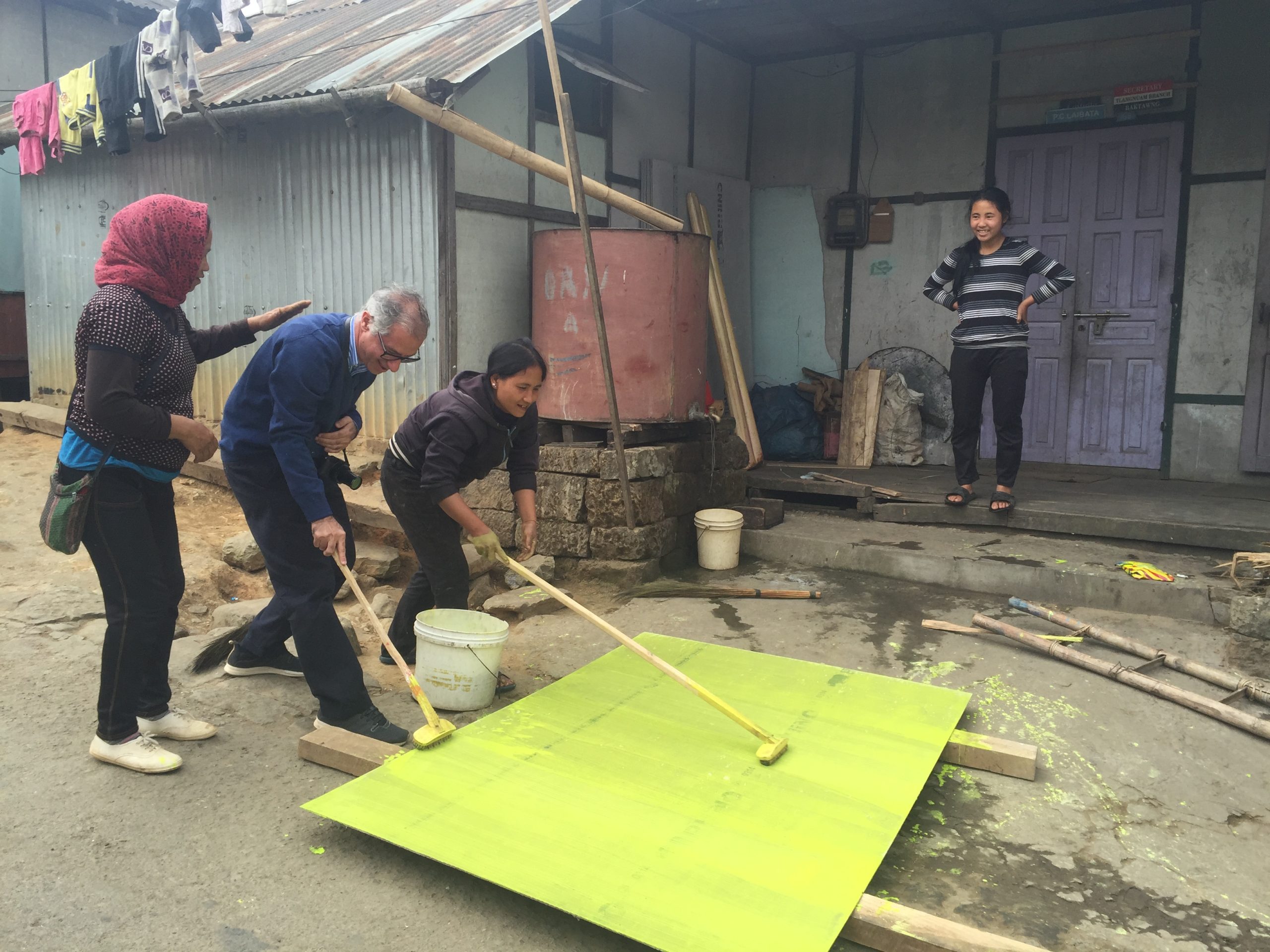
When we finished our tea, Tluangi waited patiently and then led us outside. Down the road, a group of women were painting a sheet of plywood, chatting as they worked. I joined them and took a brush. It felt like the most fitting farewell to a place where life, belief and labour were inseparable.
POSTSCRIPT
Pu Ziona, the head of the “world’s largest family” died in June 2021. Here is a report from NDTV.