#1254. Rockbridge Churches, Part II
Part I portrayed some of the numerous Presbyterian churches in Rockbridge County, Virginia,
which make up one third of the whole. Part II takes up the other two-thirds: churches from
other denominations. This is a collaborative effort, with narrative by my good friend Ed Craun,
paired with my images. Once again this is a sampling, not a catalog; but we do hope it conveys
what churches look like in this part of the world—and hence what this part of the world looks
like.
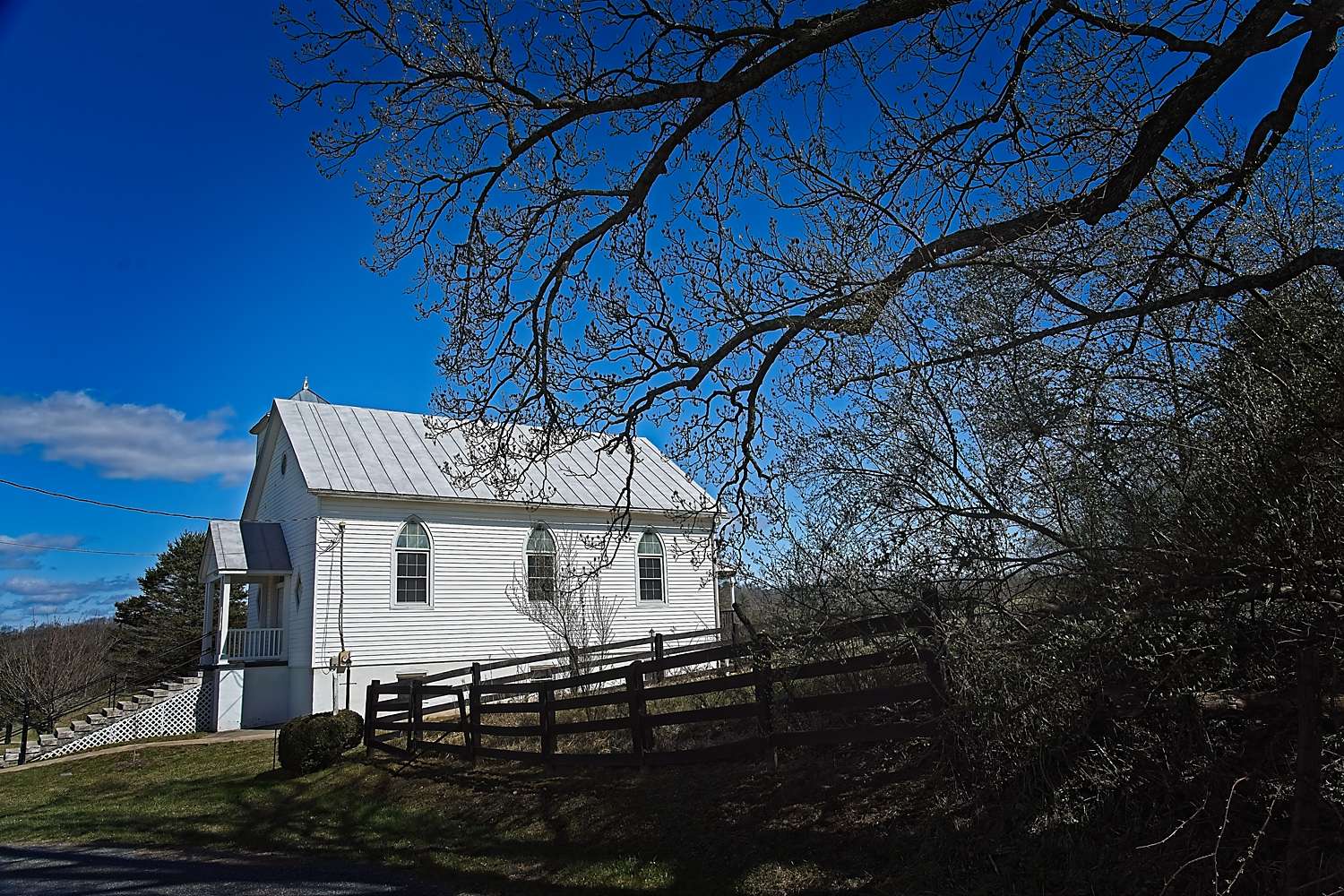
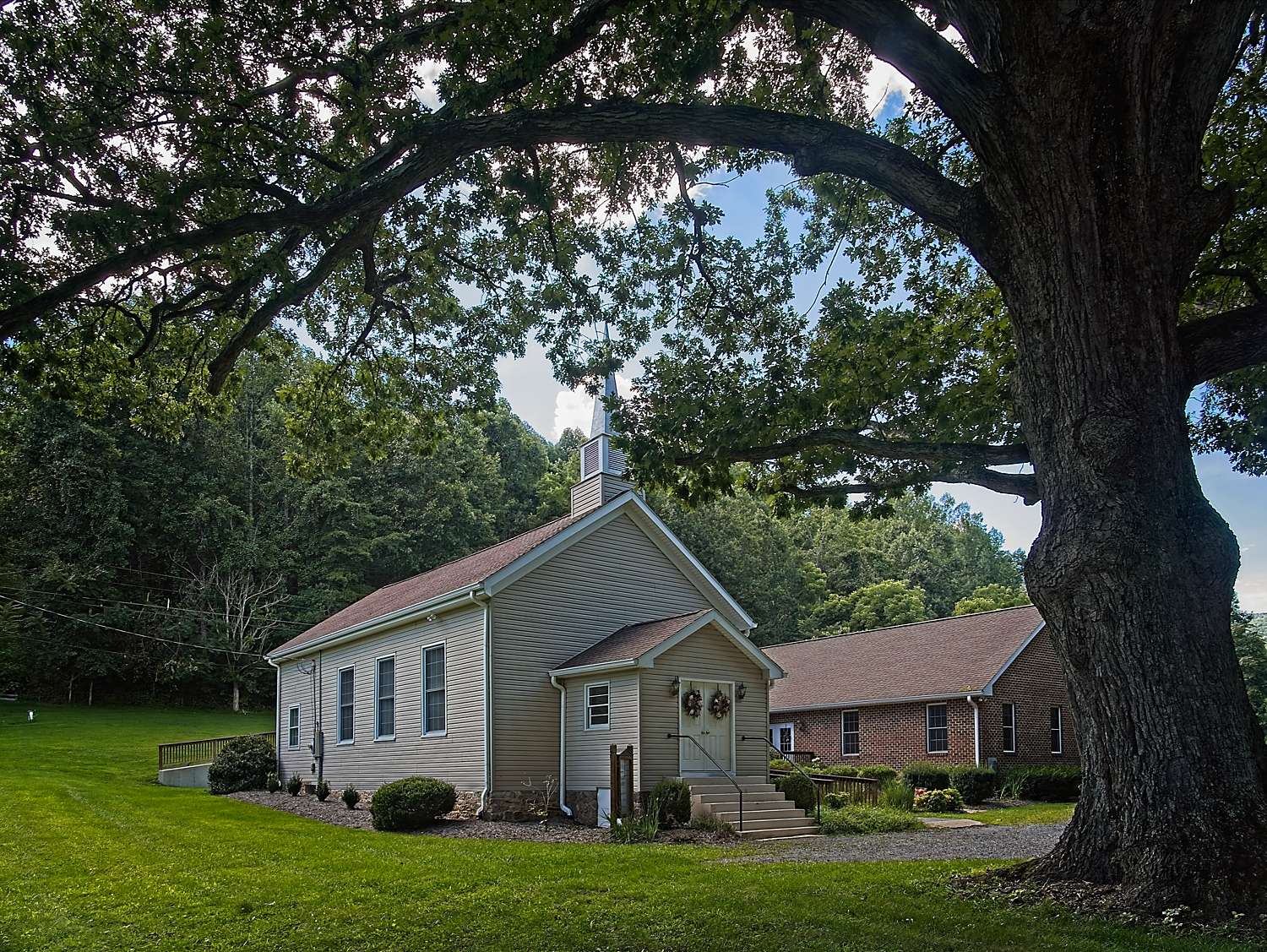
From the 1790s Methodist circuit riders began meeting in houses with disciples; they served a host of small congregations, riding from one to the other. These groups, made up of farmers and artisans accustomed to building houses and barns, built small frame churches in hamlets or among farms throughout the nineteenth century.
Some of these survive:
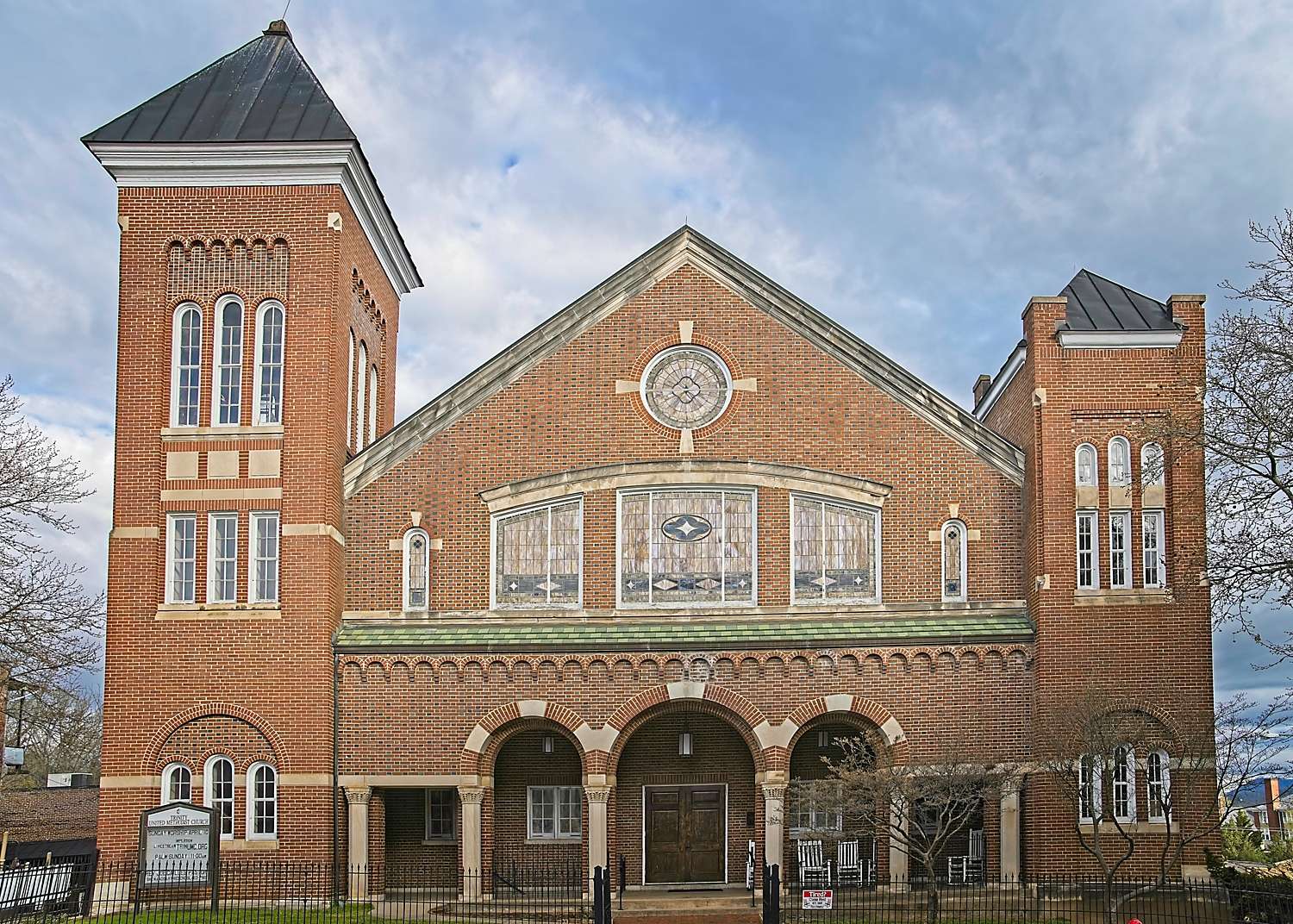
In Lexington, a much larger Methodist congregation formed, largely of merchants and artisans.
In 1890-94, it built, on Main Street, this substantial brick church in the Romanesque style, with rounded arches and windows, its façade flanked by two unequal towers.
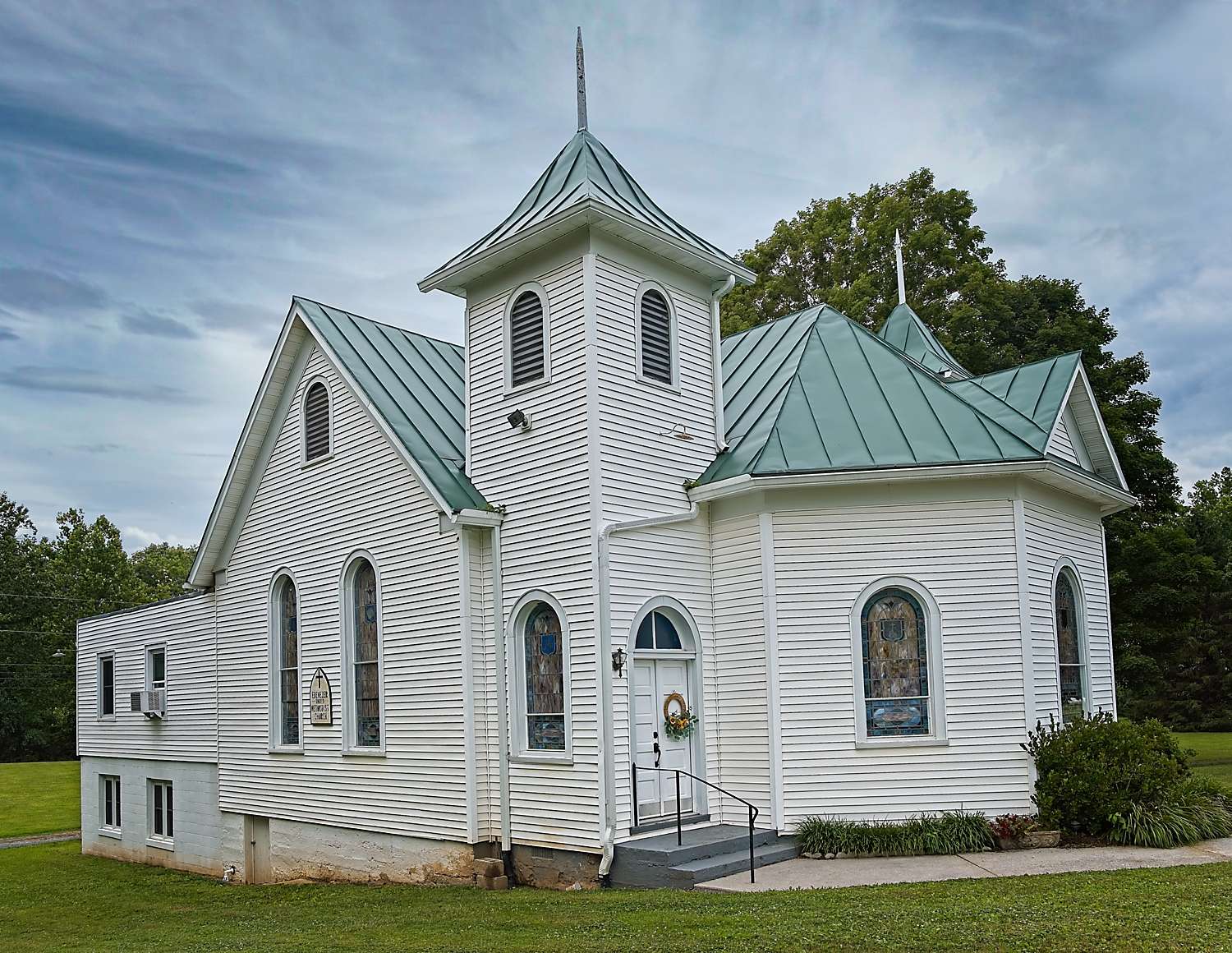
Almost the same Romanesque design as that found at Ebenezer ARP Church was used for Ebenezer Methodist Church in the hamlet of Rockbridge Baths. Like the ARP church and many other buildings in the county, it is roofed in sheets of tin, painted green.
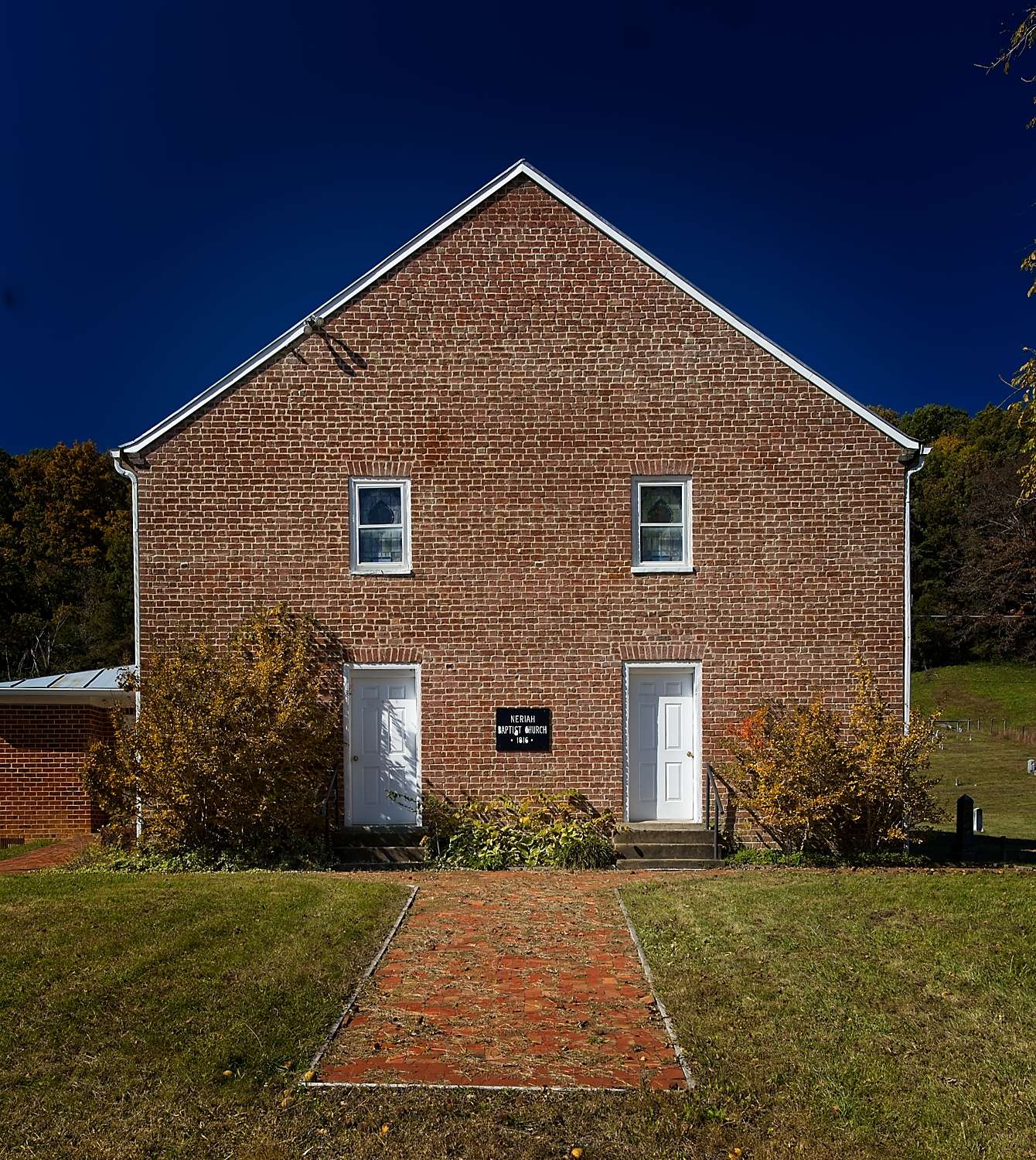
Rural Baptist congregations were formed at much the same time as Methodist ones, often gathered around uneducated charismatic preachers. In the second decade, John Jordan, a bricklayer and preacher, designed and built Neriah Church, an unadorned brick preaching box at a crossroads.
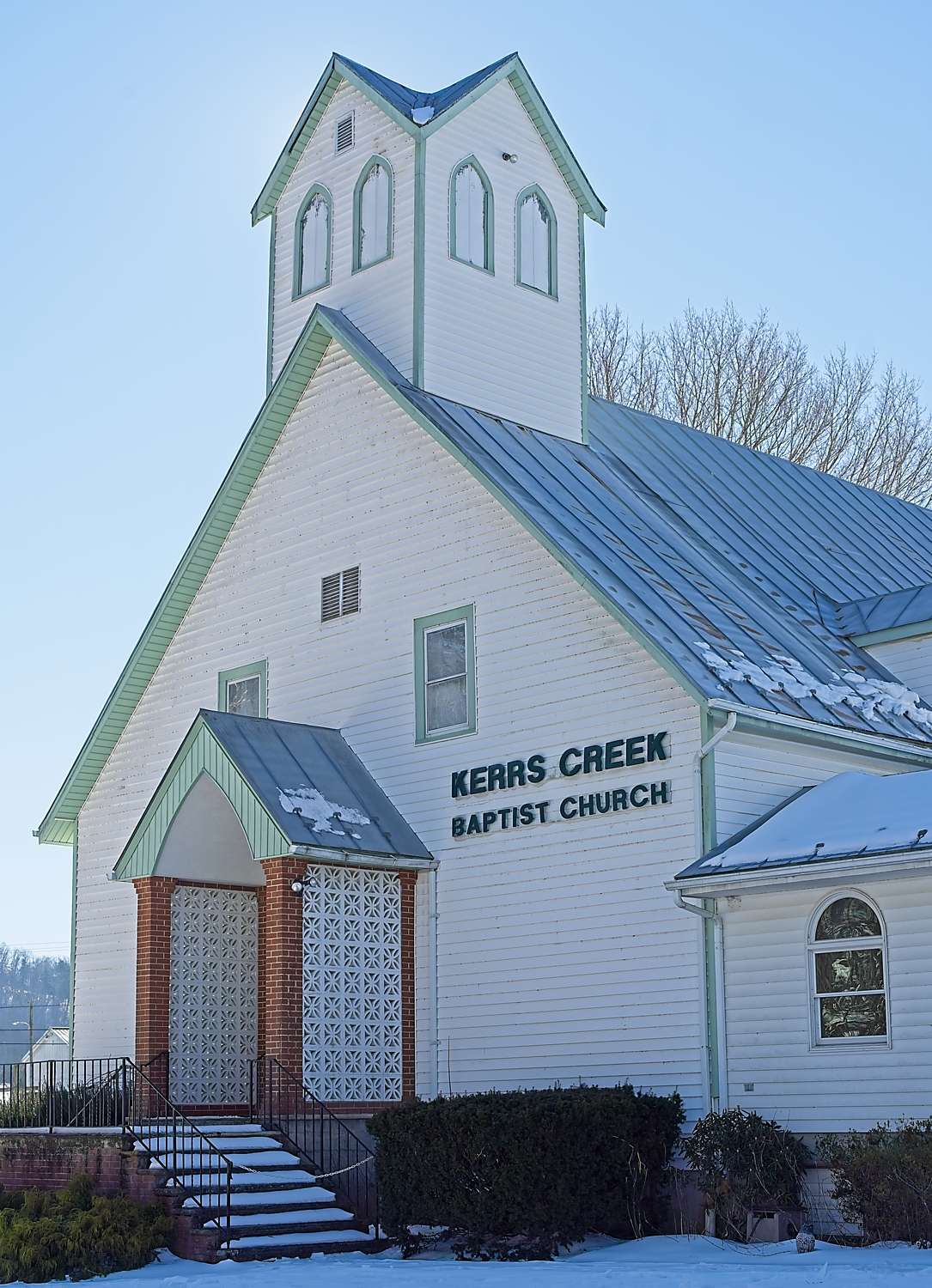
Often they were built of timber by congregants themselves, as at Kerr’s Creek in a simple Gothic style.
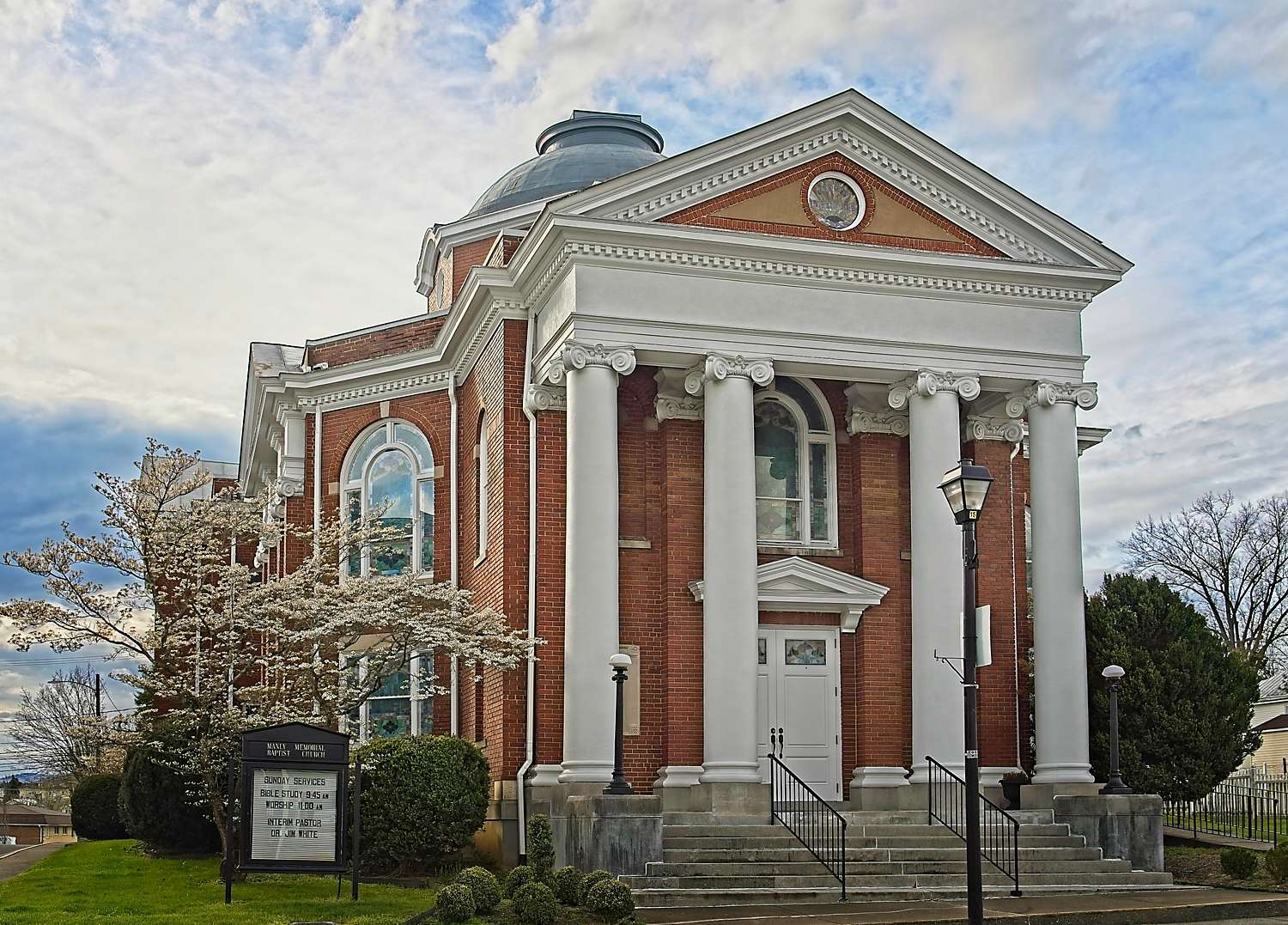
In the county seat, however, Baptists built a grand Greek revival church on Main Street, outdoing the Presbyterians with an elaborate Ionic portico, ornamented entablature, larger pediment, and dome.
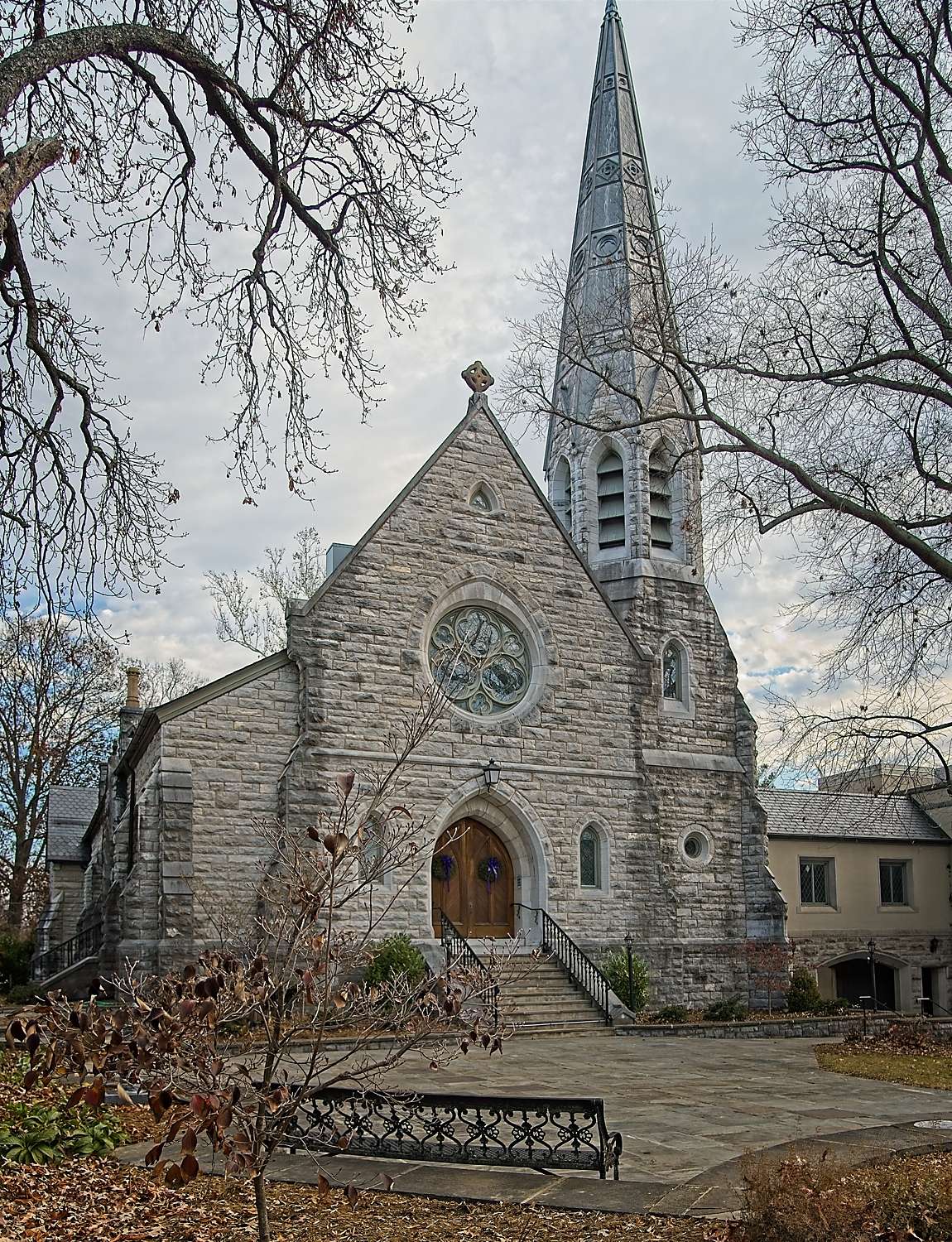
Although the Church of England was the state church of the Virginia colony and its successor in the new republic, the Episcopal Church, was a dominant Christian group in eastern Virginia, no congregation formed in Rockbridge County until 1840, when the Superintendent of Virginia Military Institute founded Grace Church. The congregation was transformed after the Civil War when Robert E. Lee became a member of the vestry. After his death in 1870, money was raised in his name for this new stone vernacular Gothic church, with a rose window, a steep lead roof, and a tall steeple clad in ornamented lead. Early in the twentieth century, at the height of segregation, the vestry renamed the church Robert E. Lee Memorial Episcopal Church, a name returned to Grace in 2017.
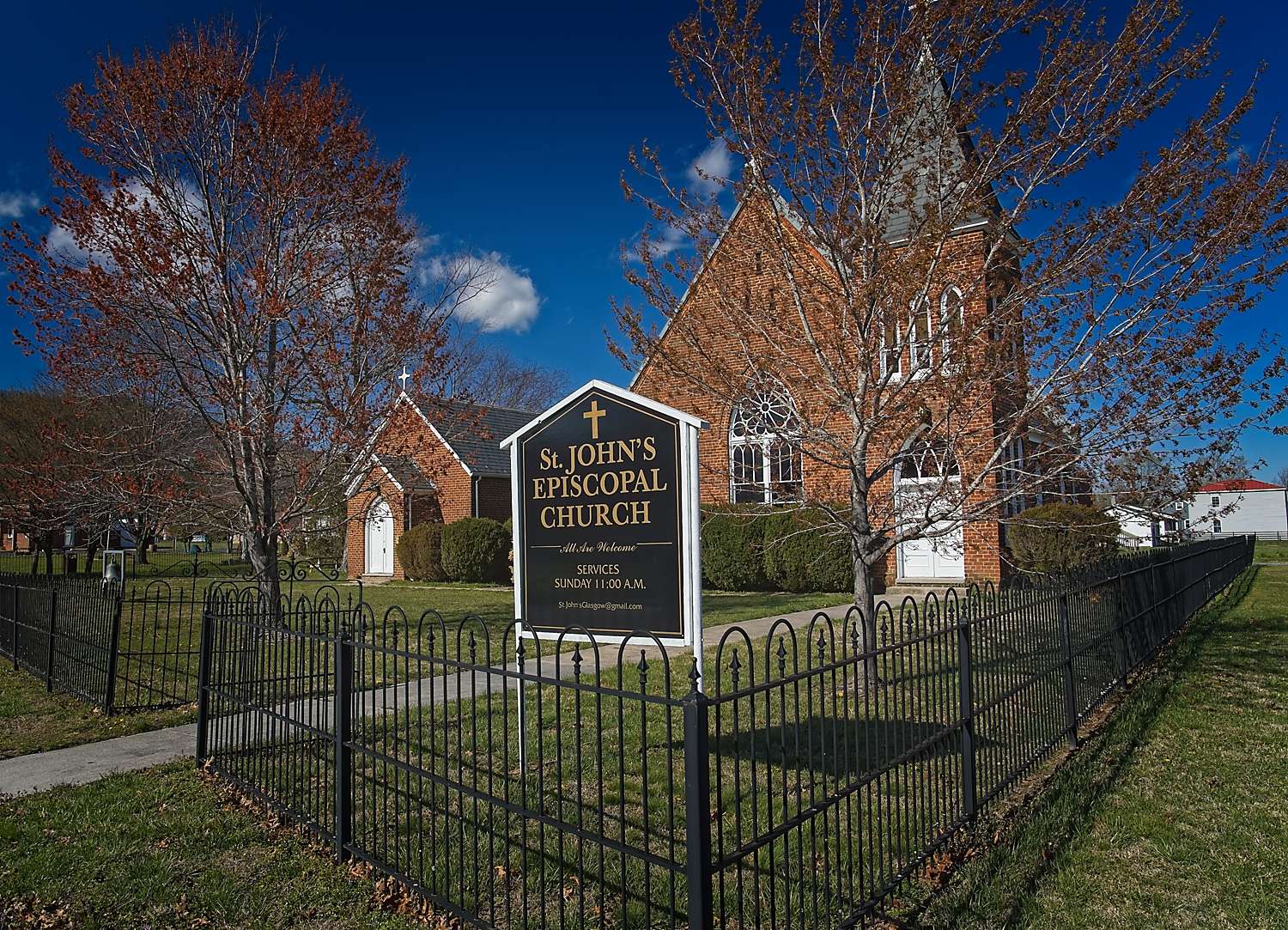
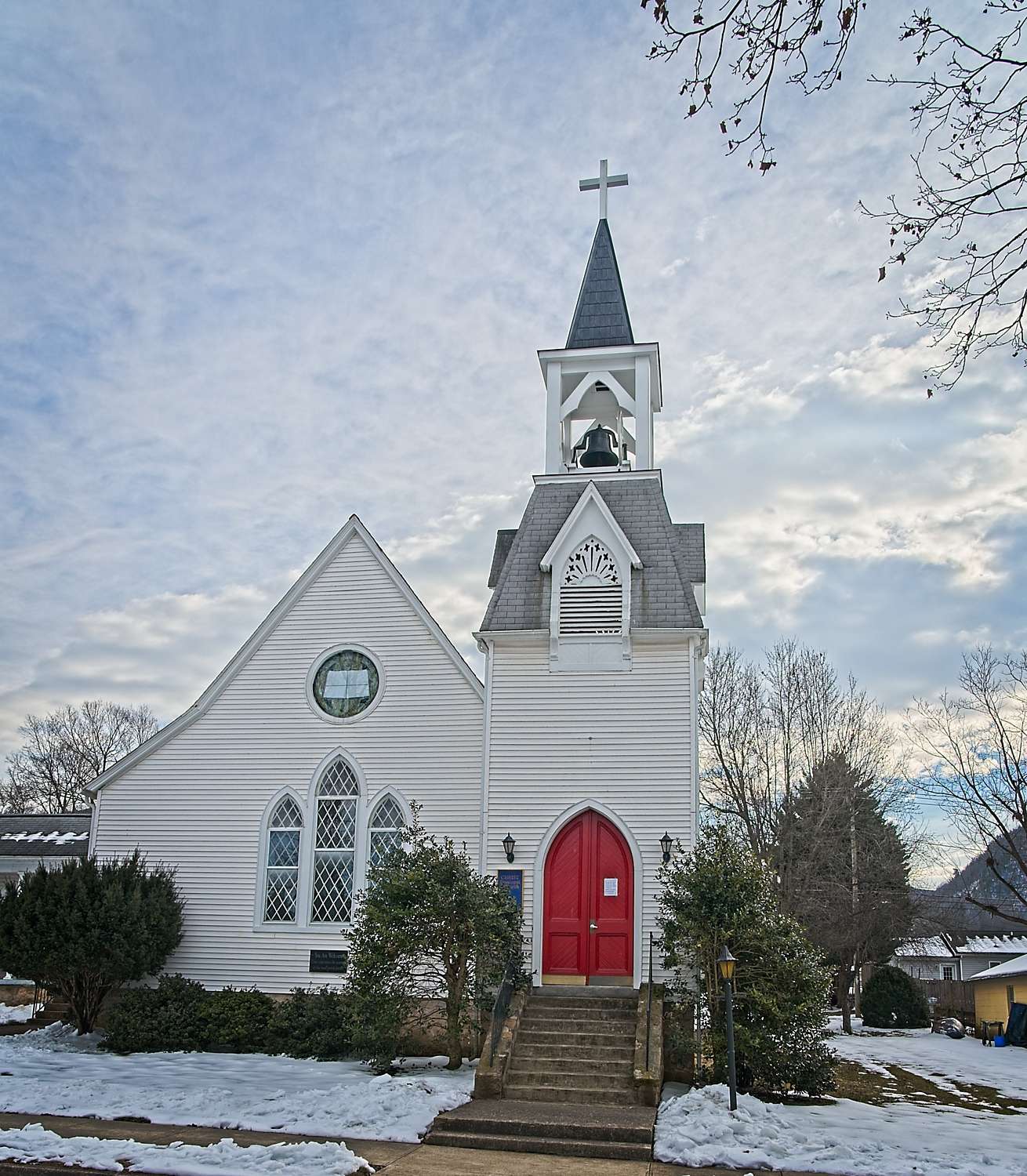
In the late nineteenth century, when the new industrial towns of Glasgow and Buena Vista grew up along the Maury River and the railroad, small Episcopal congregations built modest Gothic churches, each with an ornamented bell tower topped with a cross.
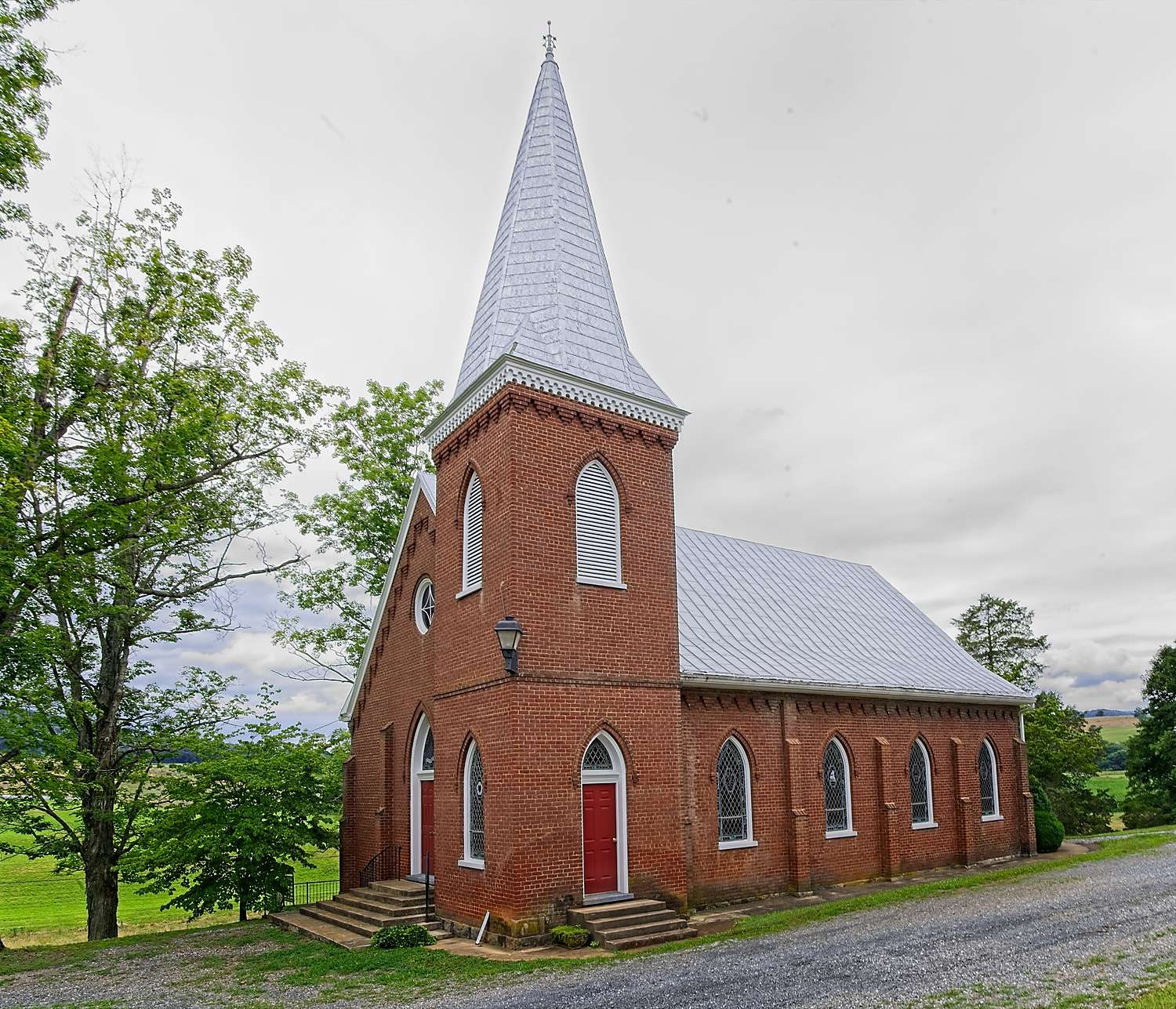
German immigrants trickled slowly into Rockbridge in the nineteenth century, founding this simple rural brick Lutheran church, Bethany, in a grove amidst prosperous farms at Alone Mill.
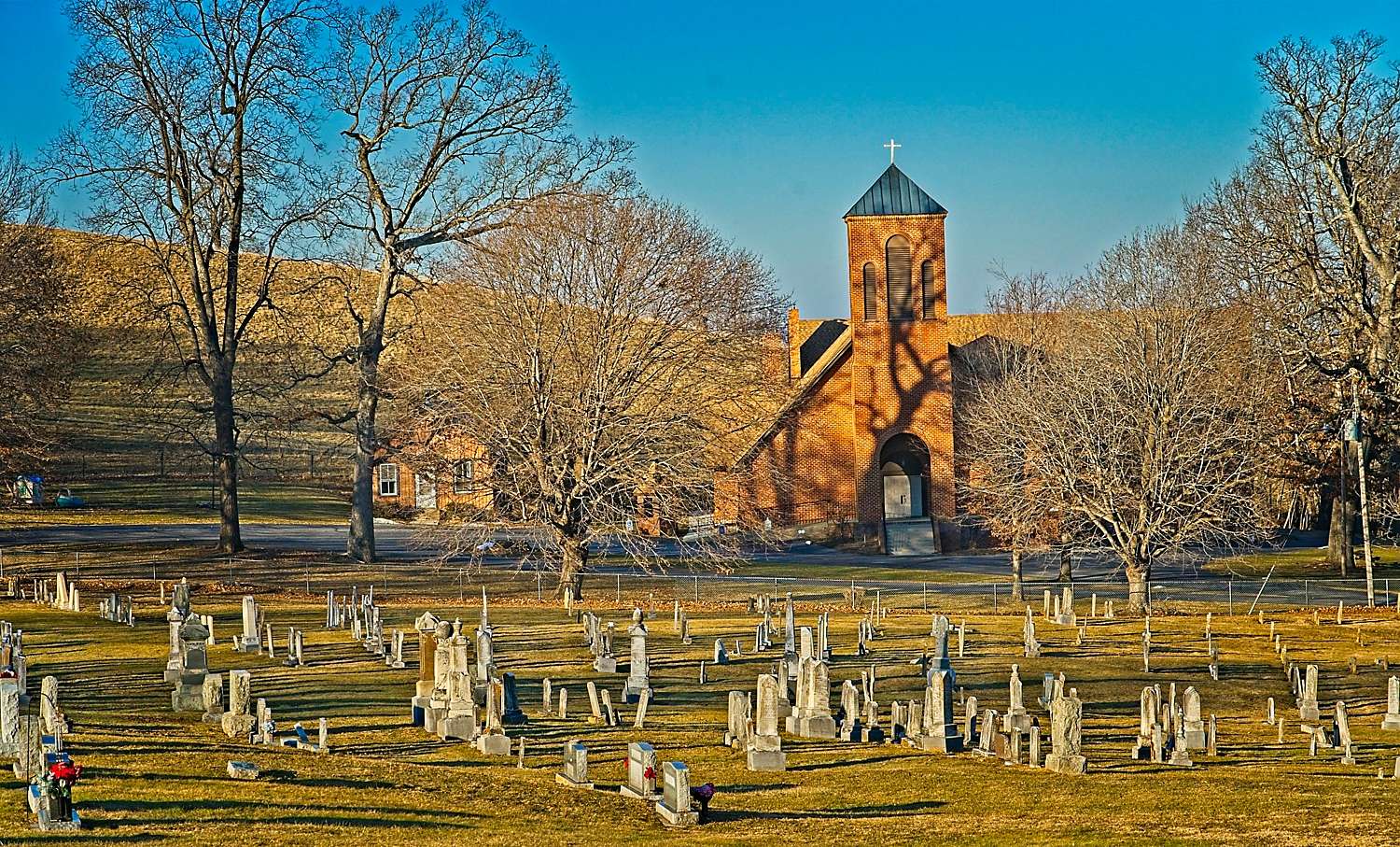
An earlier group of Germans settled just north of Rockbridge County, founding in 1760 St. John’s Reformed Church, rebuilt in the twentieth century in a German Romanesque style with rounded windows and arches, plus a striking tower.
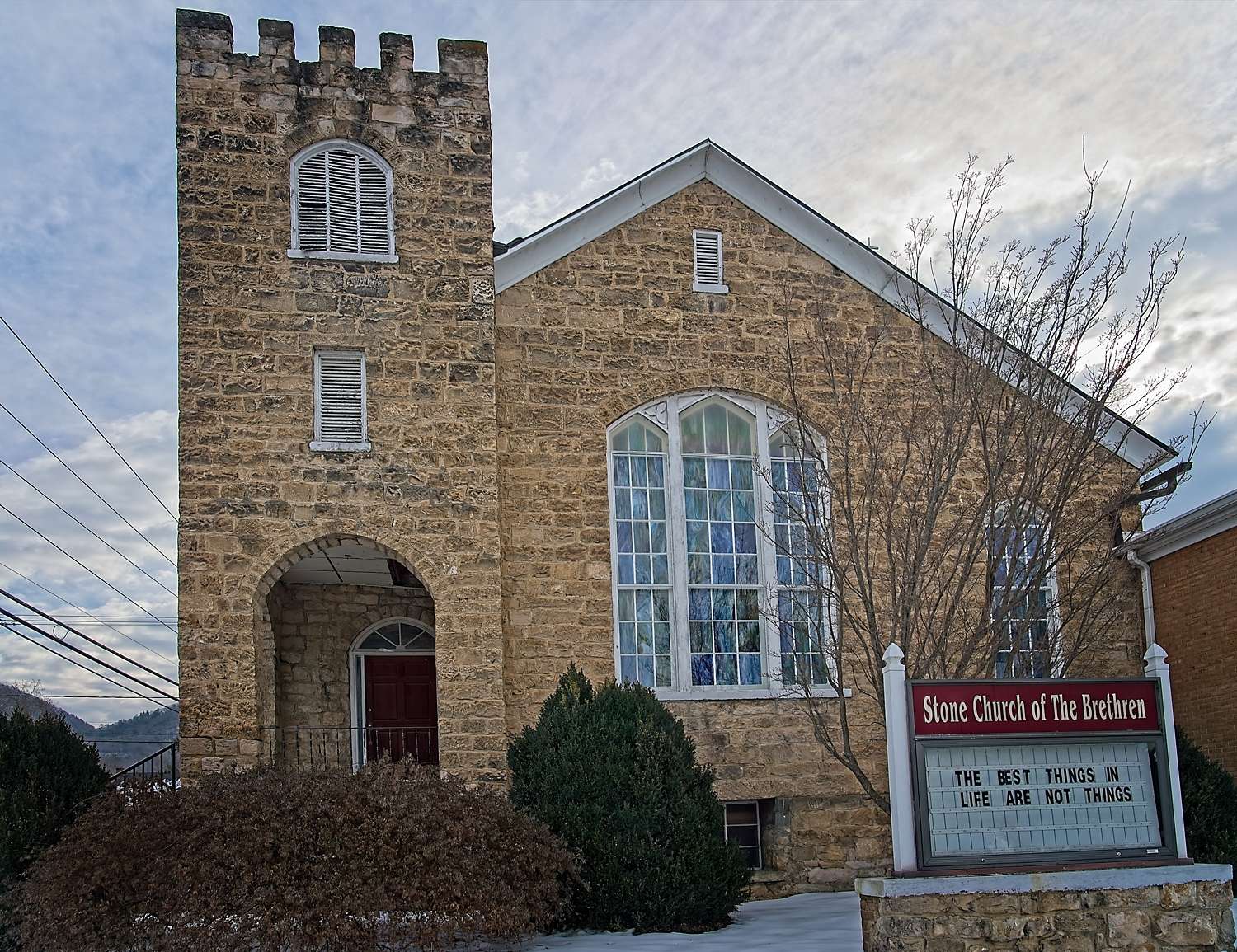
Some Germans who settled in the late-nineteenth-century industrial town of Buena Vista were pacifist Anabaptists; they formed three Brethren congregations, one of which built this strong-lined stone church.
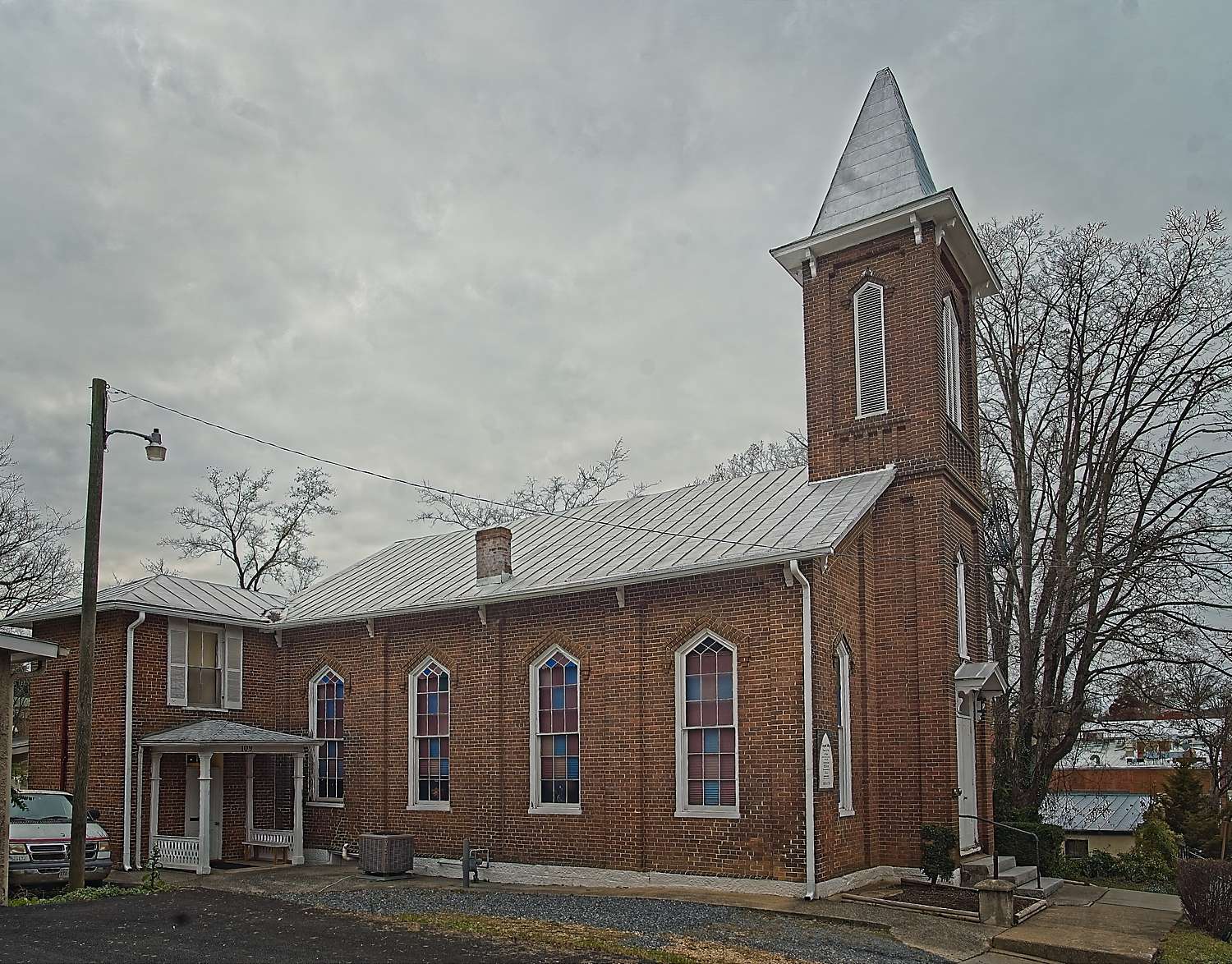
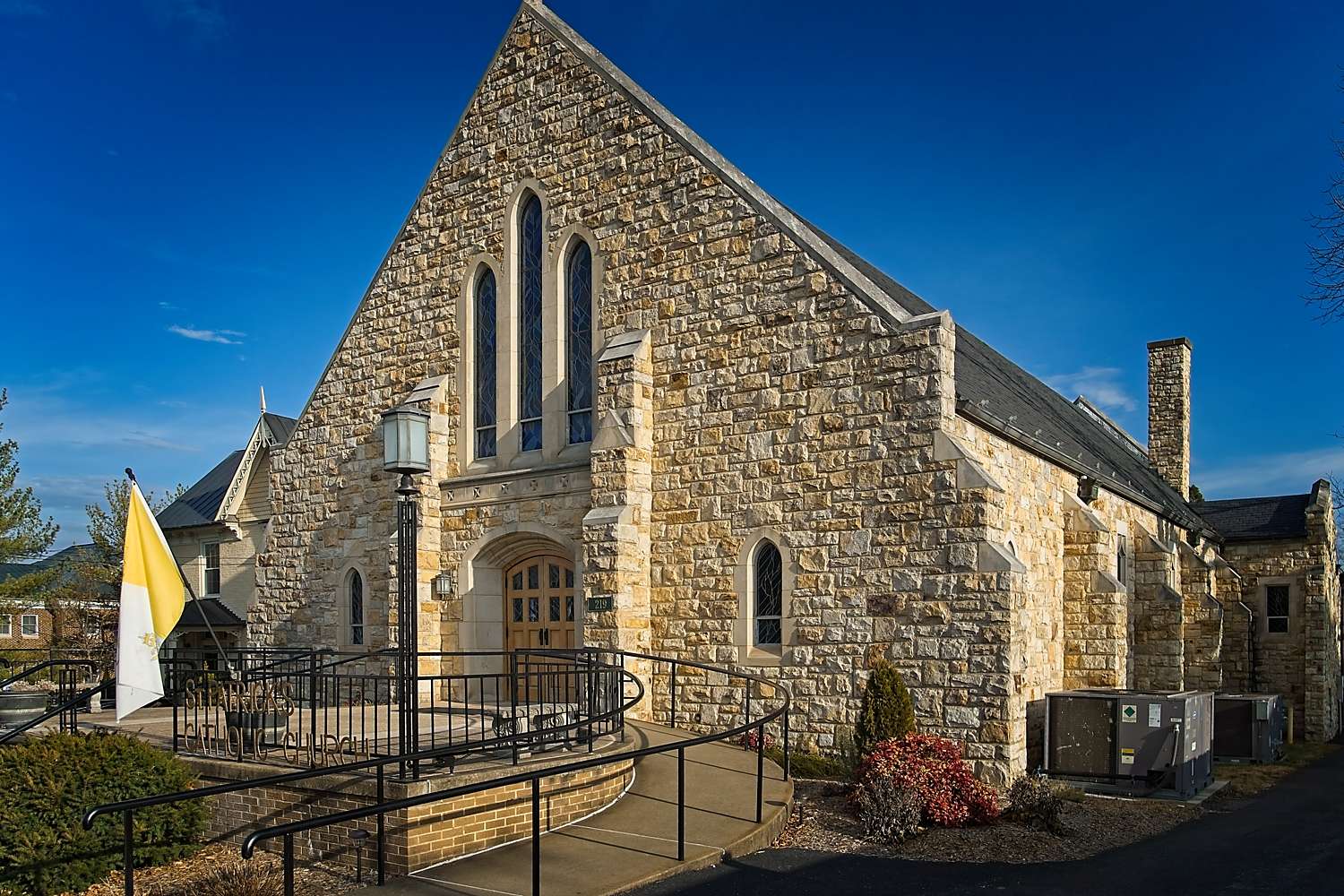
Roman Catholics, a small minority still in the late nineteenth century, built a Gothic church with a prominent tower on a side street in the county seat; in the mid-twentieth century, when large-scale regional mixing began to affect the Upper South, a larger stone building, ornamented with buttresses on the front as well as the sides, replaced it.
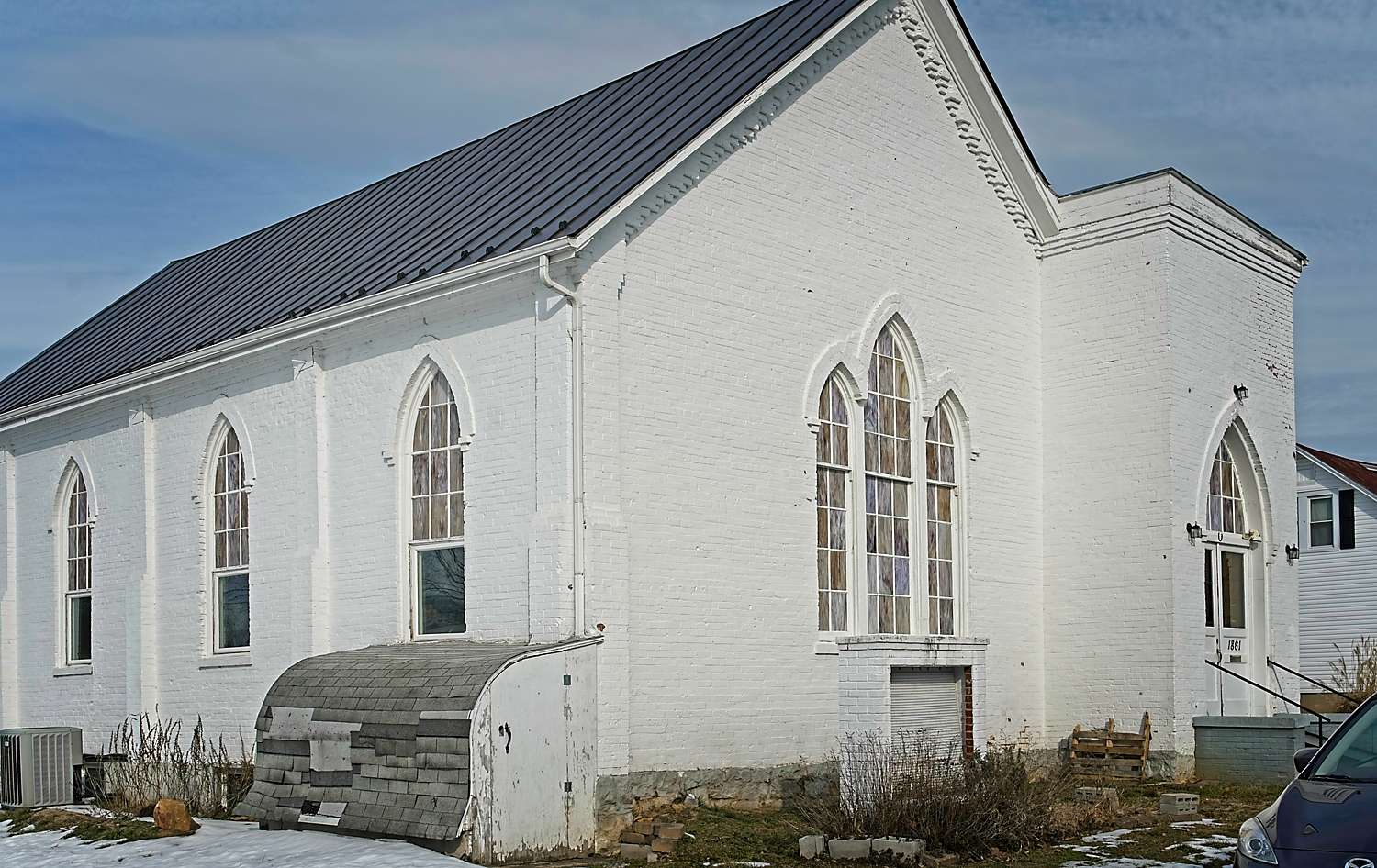
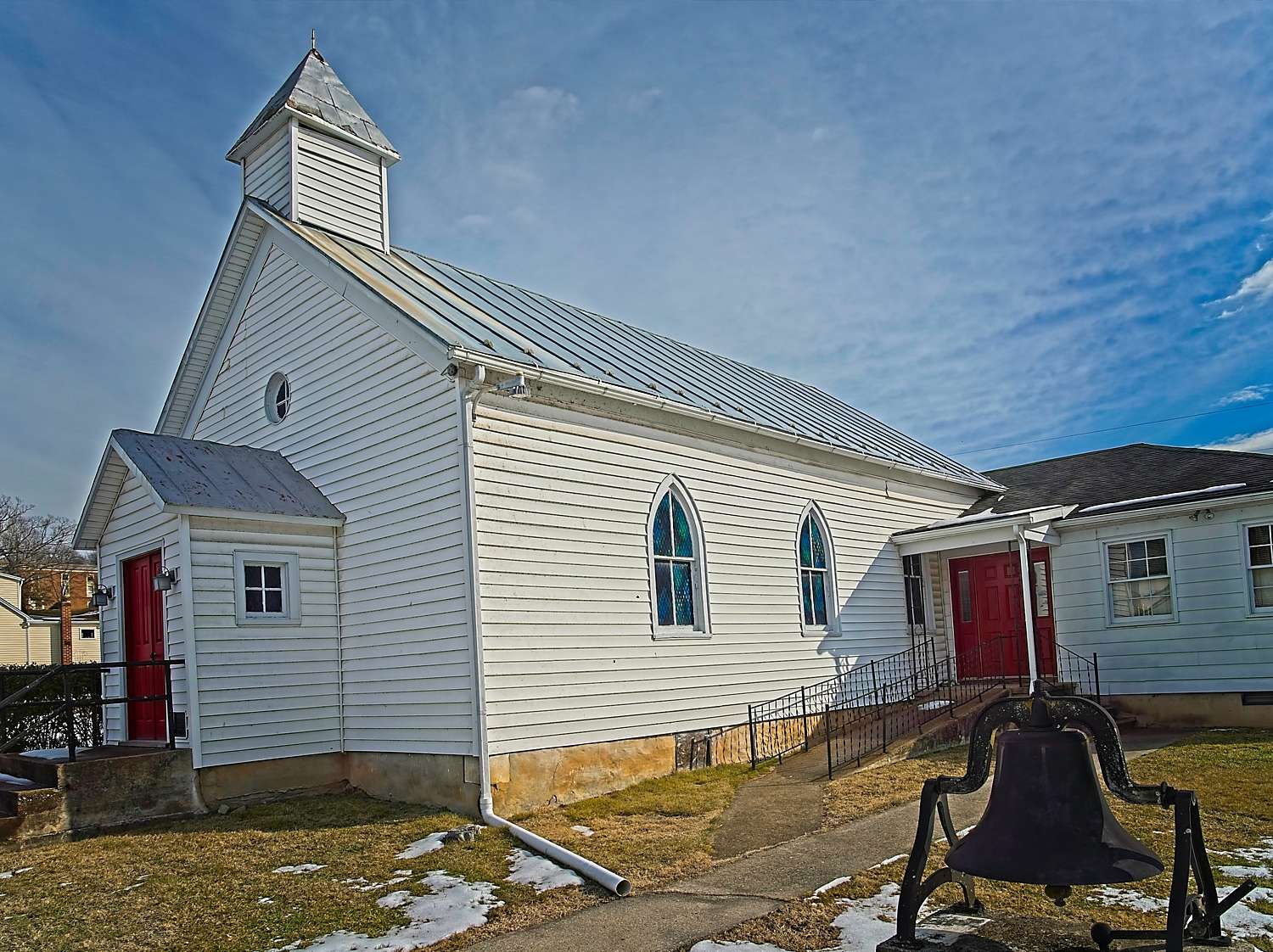
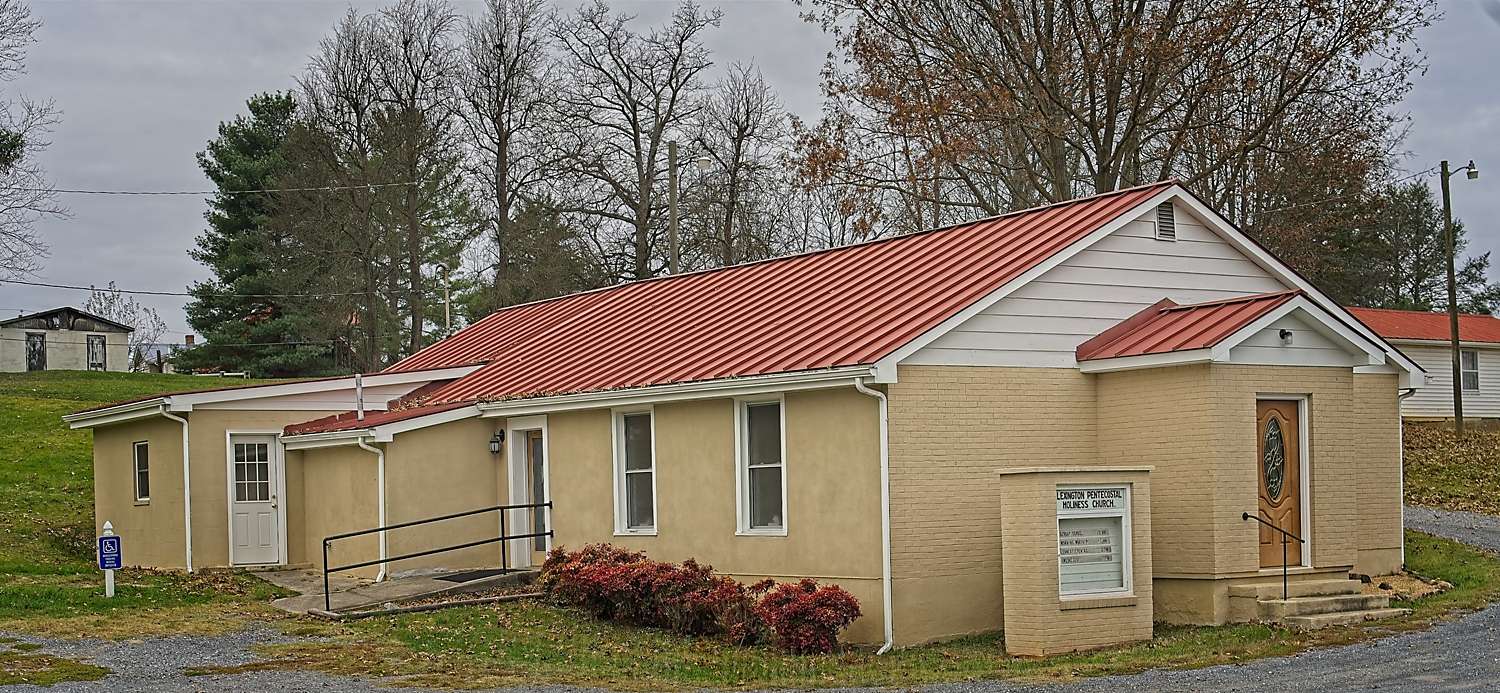
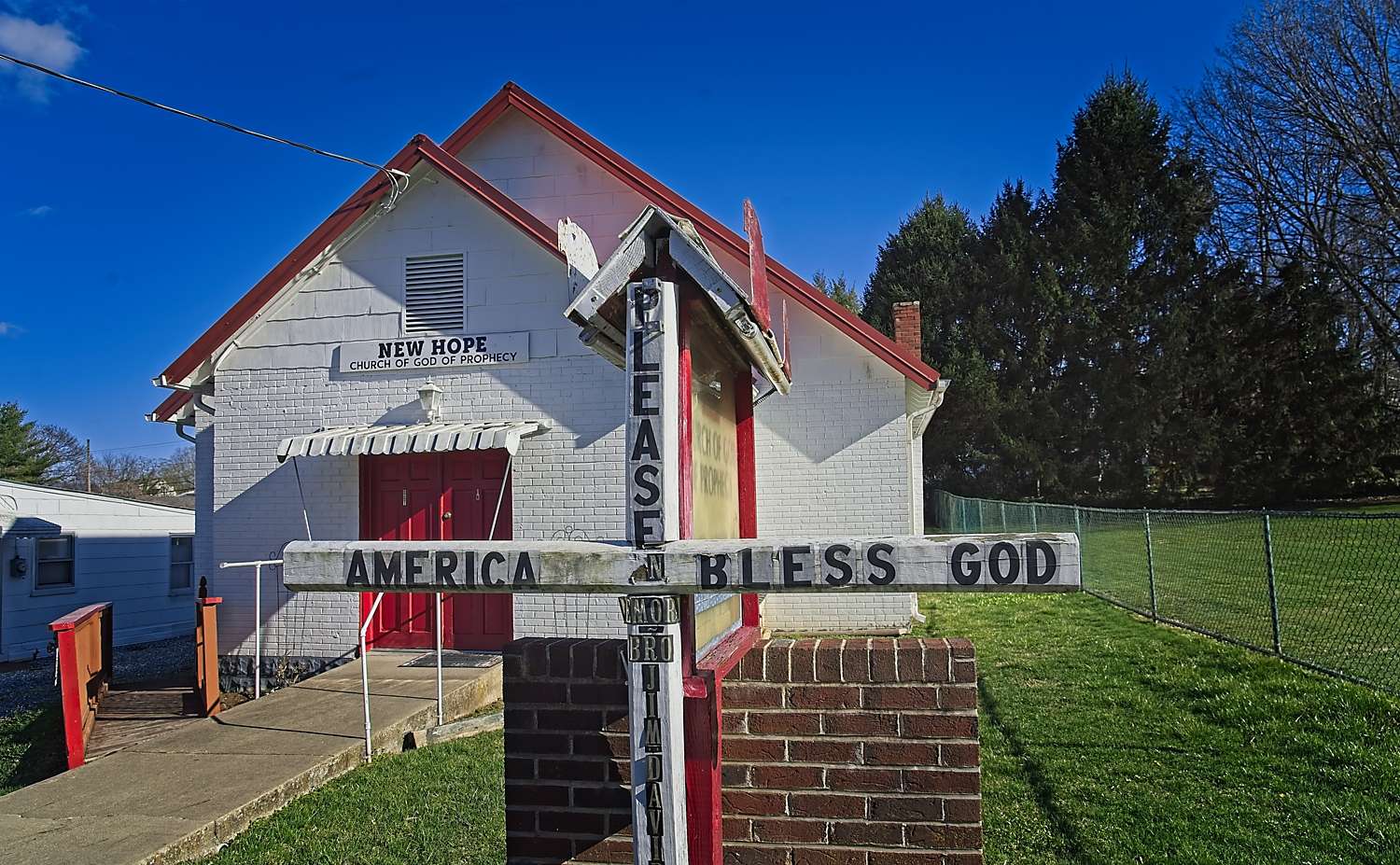
In the late nineteenth century, charismatic or Pentecostal churches formed in Rockbridge County; all stressed speaking in tongues, but they fractured along racial lines and local leaders. As a result, their small congregations could afford only modest houses of worship, like these.
Black Churches
Before the Civil War began in 1860, most enslaved blacks worshipped in the churches of their masters, often in segregated areas, like balconies. When the war ended five years later, blacks comprised one quarter of the population of the county. What happened at Lexington Baptist Church in 1867 was typical: the white and black members separated, and blacks began worshipping in other buildings, until they had enough money for materials to build a church using their own labor.
In the 1880s, Blacks built this little frame Gothic “African Church” (now Methodist) in the village of Brownsburg, where enslaved people had worked on large farms.
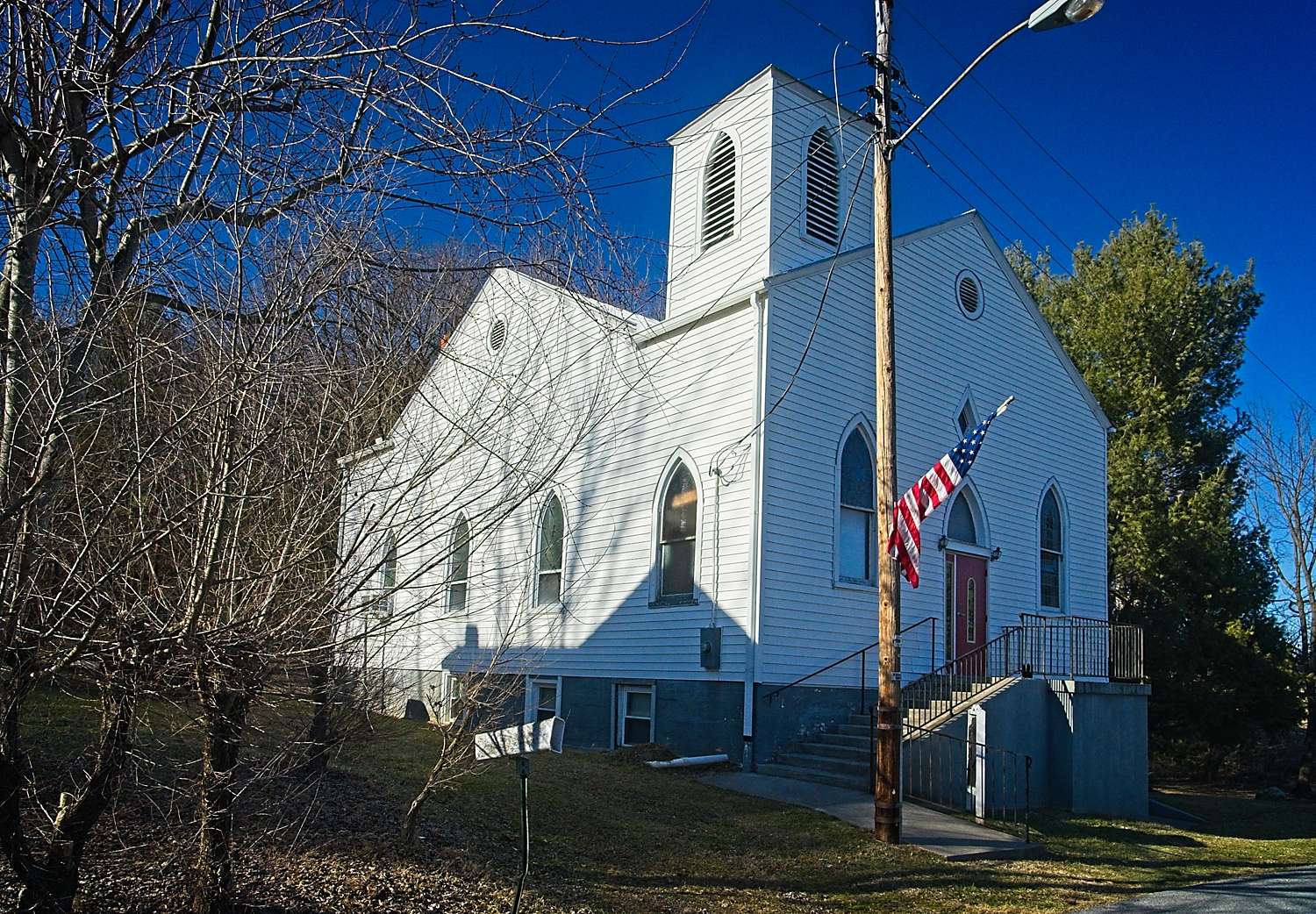
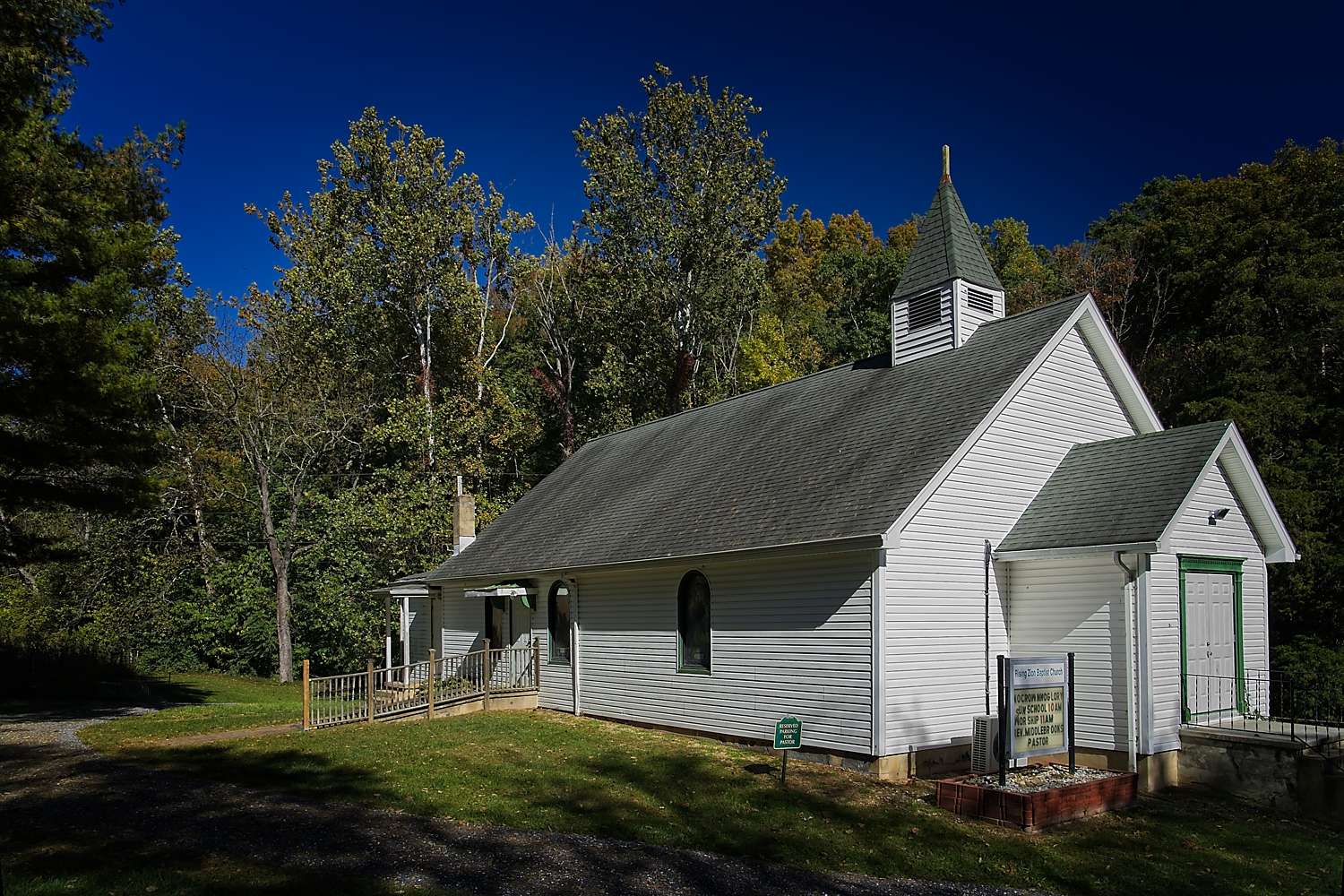
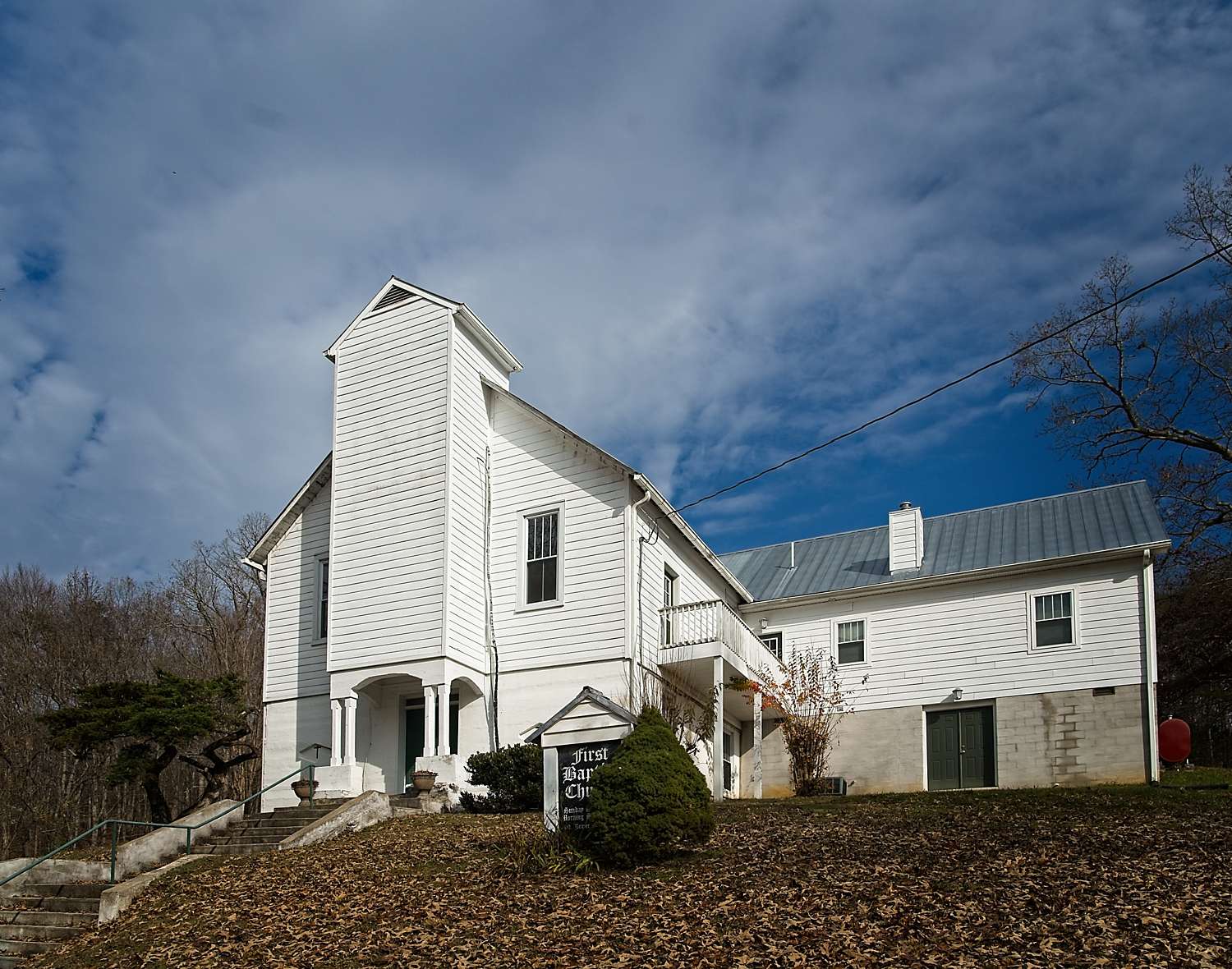
One black Baptist church, Rising Zion, stands amidst fields in the north of the county with its graveyard for Blacks nearby; another is nestled in wooded hills far down the county at Natural Bridge.
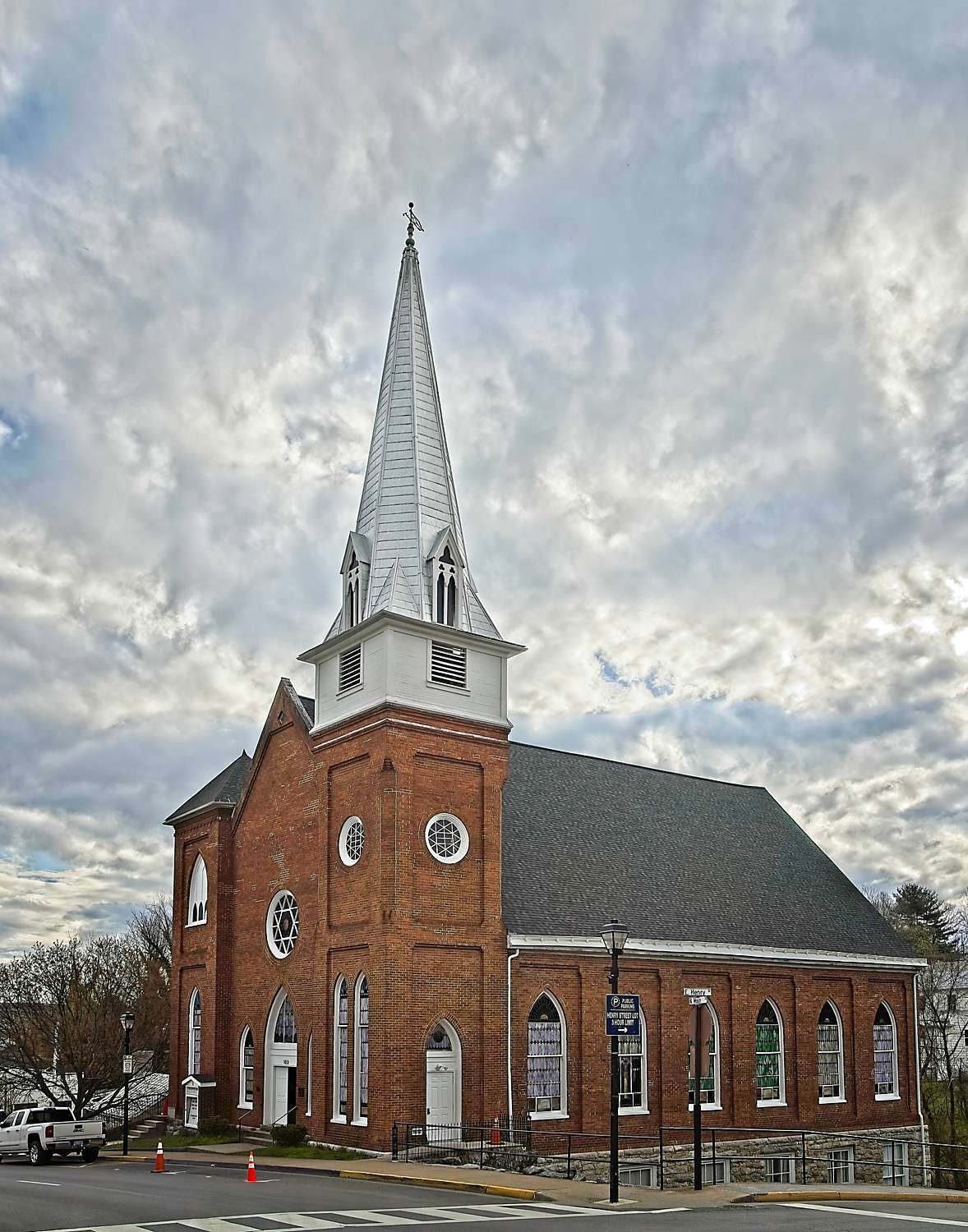
In Lexington, increasingly prosperous Blacks slowly raised this handsome Gothic brick Baptist church in a Black neighborhood on Main Street from 1894-96; around 2000 it was reroofed with a gift by the famous painter Cy Twombly, in memory of his nanny.
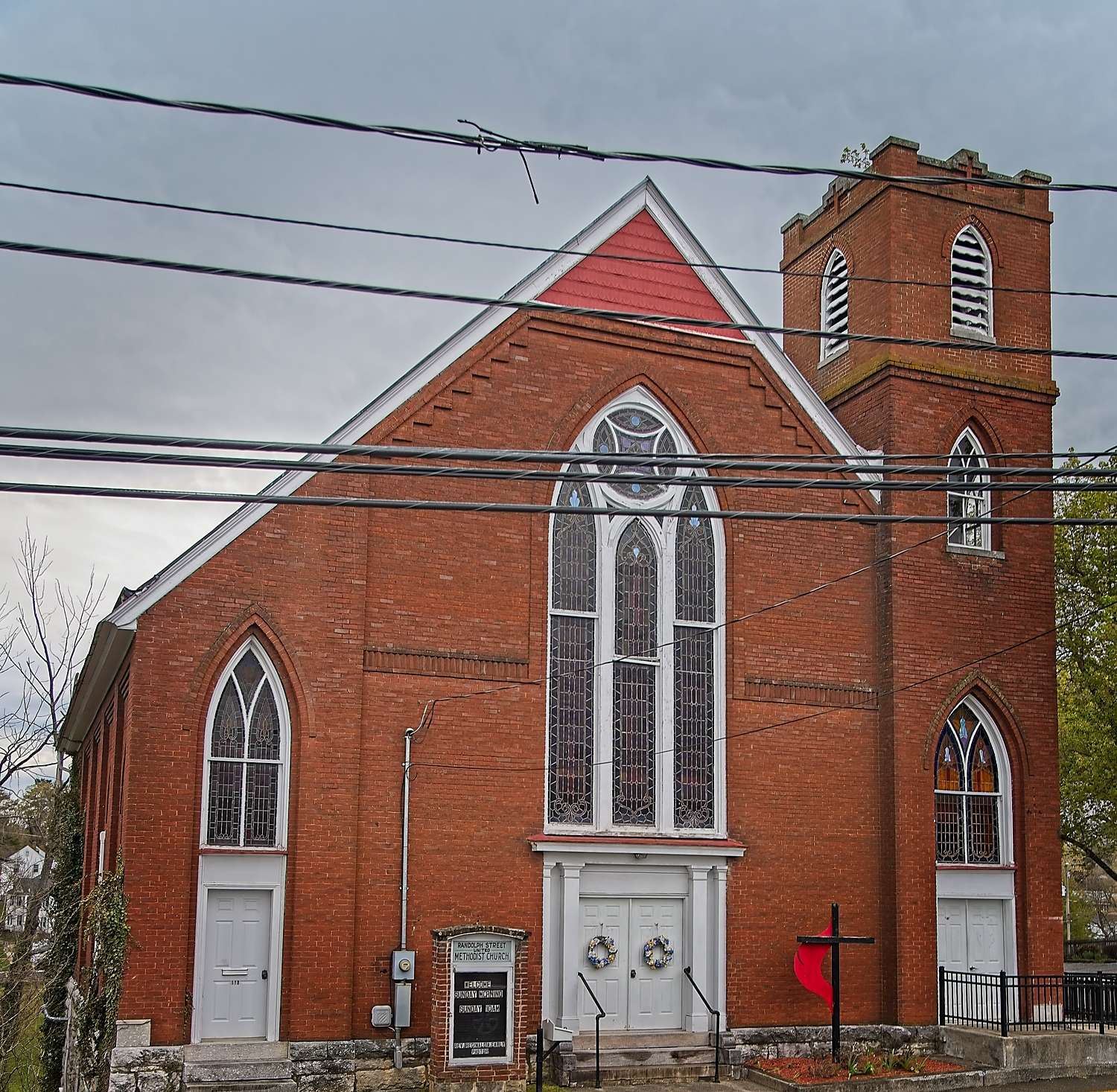
About the same time, in another black neighborhood, Methodists built a small brick Gothic church; the present bell tower replaced an earlier steeple destroyed in a fire.
New Religious Groups
The influx of people from outside the Upper South after World War II led to the formation of new religious groups in the county. Churches come and churches go as demographics shift.
Here’s the New Grace Church, a church of God of Prophecy Ministry, in Glasgow, founded in 1969.
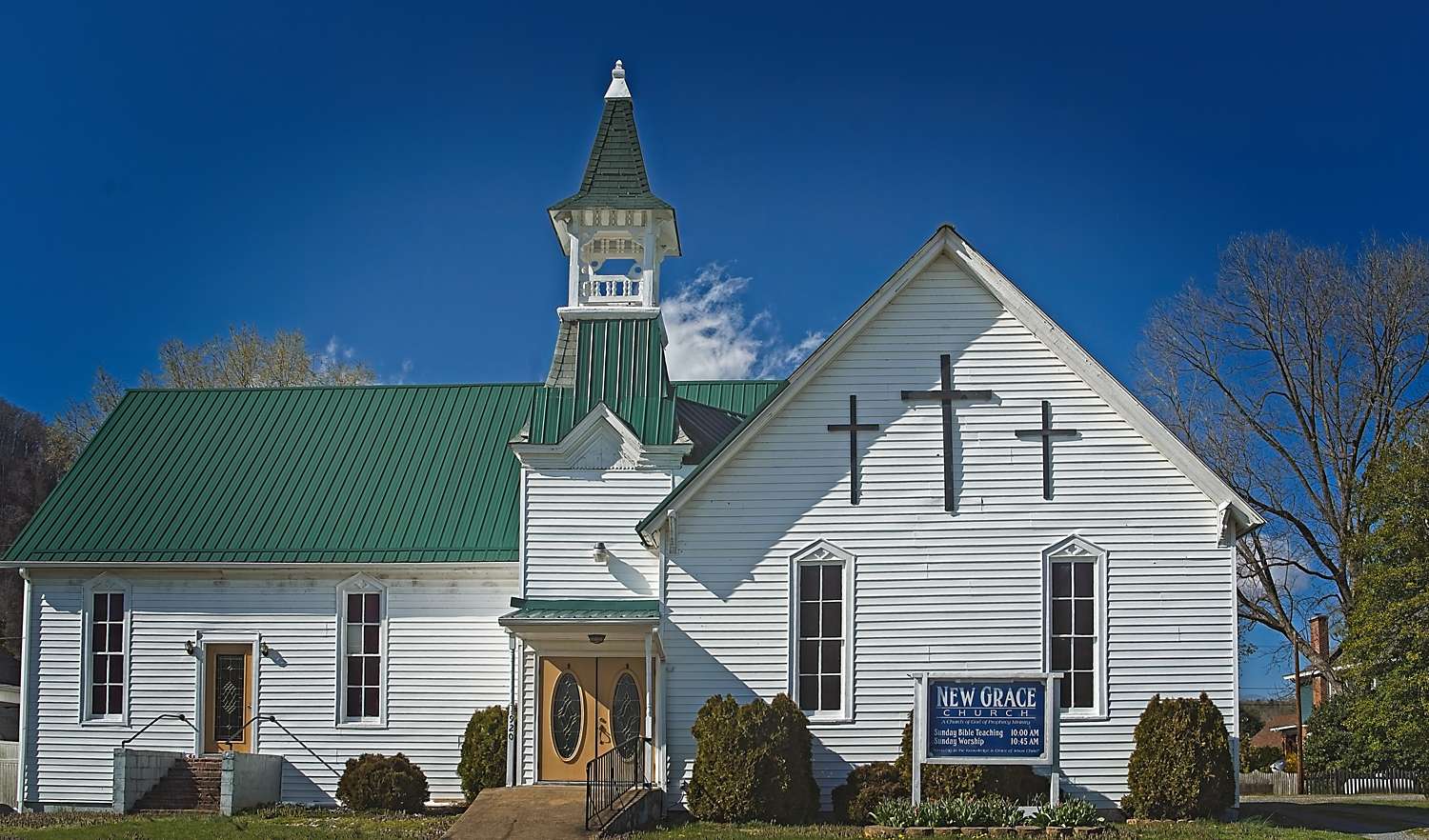
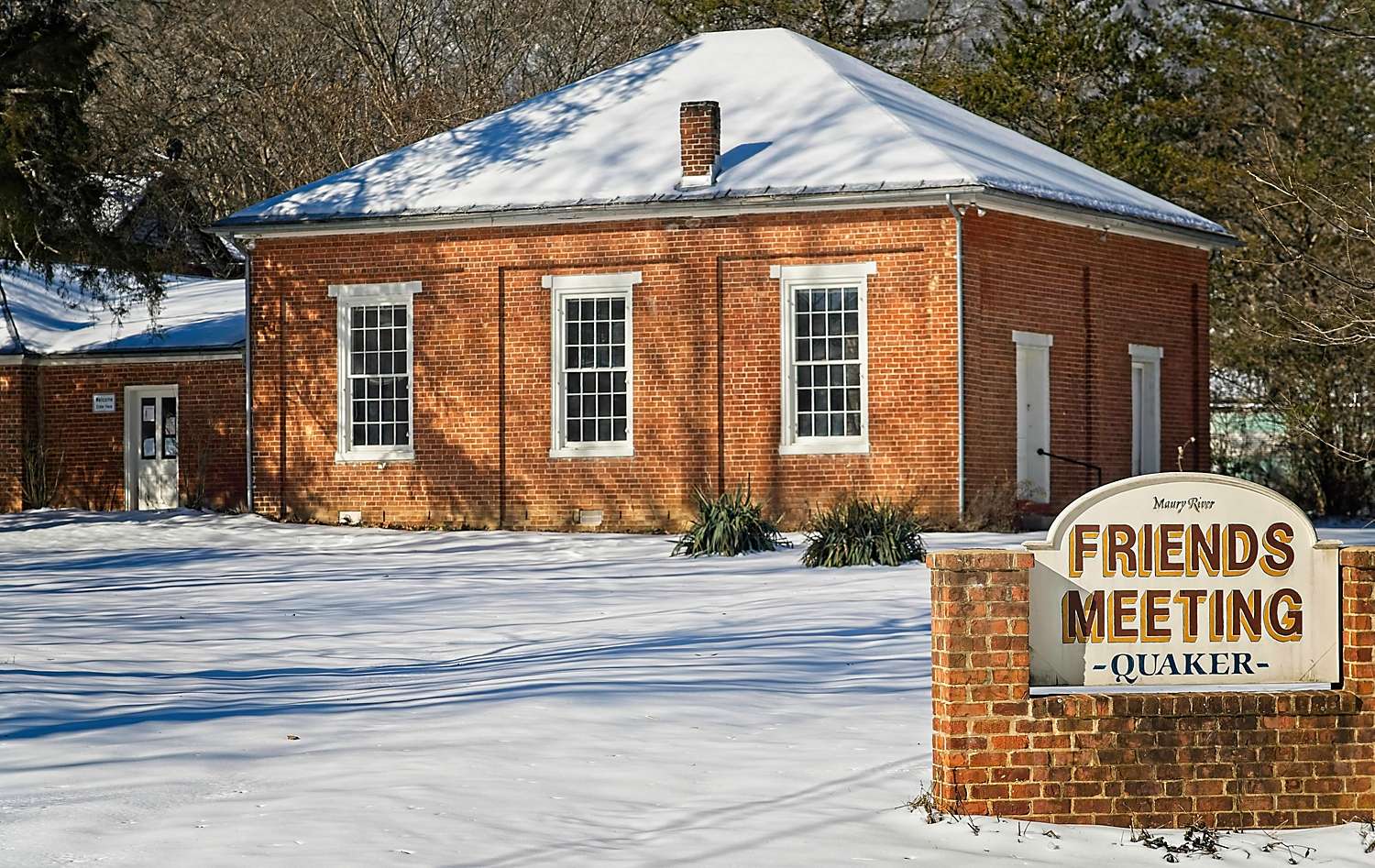
Many other congregations took over abandoned rural churches, like this Friends Meeting House
(Quaker), in a former Adventist church that was in turn repurposed from a Presbyterian one.
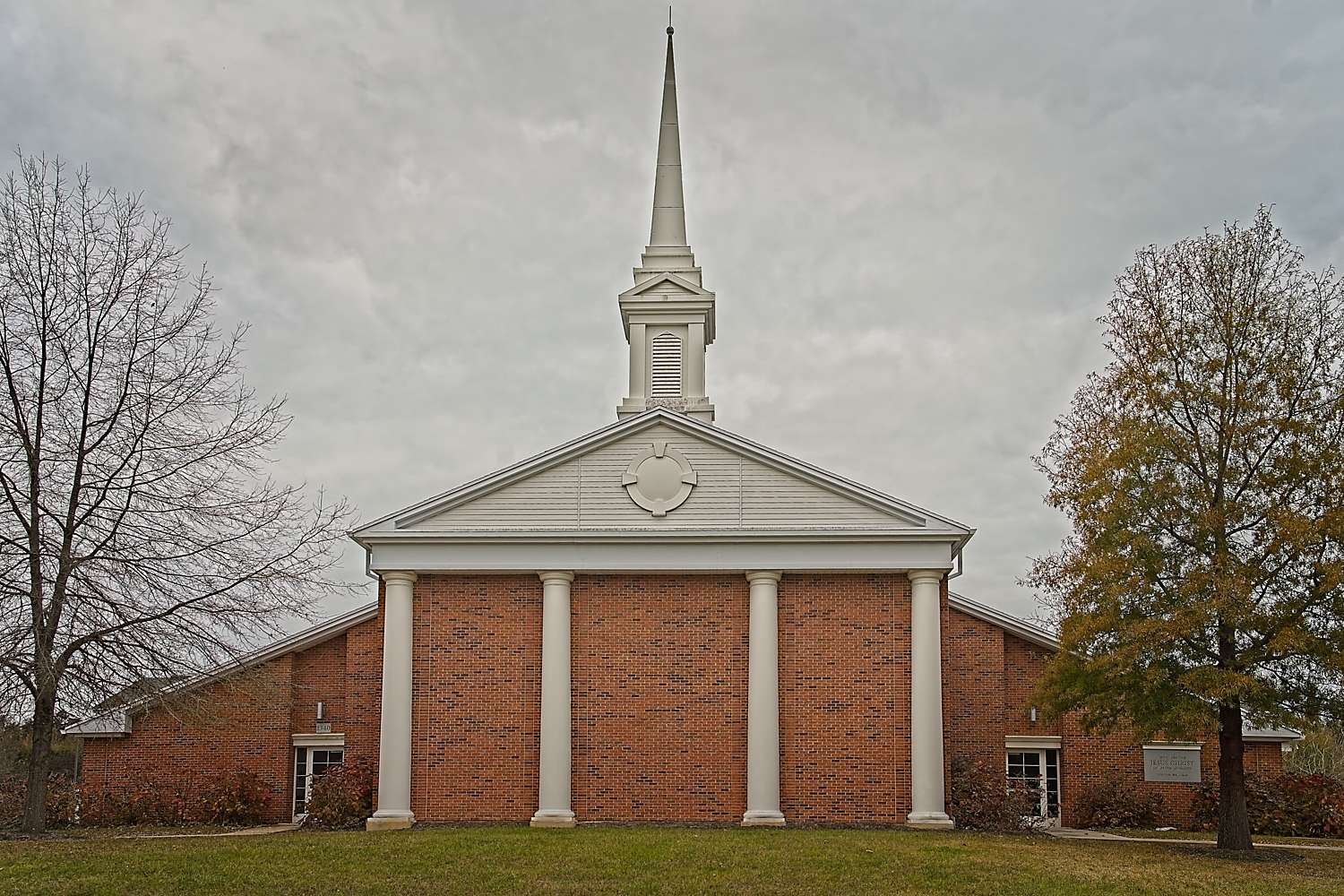
Some built large houses of worship on the edge of town, like this Latter Day Saints church.
There are also empty church buildings, like these two in Buena Vista, a town in decline to the East of Lexington.