#1170. Photographing roots
Roots. The word has so many fundamental connotations: ground, foundation, basis, cause, origin, source. Roots are plants’ way of being grounded in space, at a place, but all life is rooted in time, through its ancestors. So roots run deep, and they touch us deeply.
Every living thing has roots, its temporal roots. All species on earth evolved from ancestral species, and tracing out these lineages is important: where does it belong on earth’s great tree (or bush) of life, which organisms are its nearest relatives? Scientists are interested in these ancestral roots, scrutinizing a variety of traces, especially genomes, to determine lineages. But most humans are more interested in our human lineage and especially our own particular lineages, our familial and cultural roots. Some people are so obsessed with their family roots that they spend countless hours in genealogical research; their particular lineage forms part of their identity (or even, in extreme cases, nearly all of it). Others have a more casual or even a blasé attitude. Still, we are all rooted in our ancestors; they are our lifeline to the past, and without them we wouldn’t exist.
But temporal roots are only a metaphor for other kinds of roots, the ones belonging not to animals but to vascular plants: these plants are the ones which are literally rooted (non-vascular plants such as lichens and mosses lack proper roots but may have rhizoids anchoring them to a substrate). Their roots are spatial, not temporal. After an amateur’s brief foray into biology and natural history, I’d like to explore the roots of plants as a photographic subject, however unpromising it may seem to some. Once again my main guide is Peter H. Raven, Ray F. Evert, Susan E. Eichhorn, Biology of Plants, 7e (W. H. Freeman, 2005), kindly loaned to me by John Knox along with some other material on mycorrhizal fungi, plus the Encyclopedia Britannica and Wikepedia. Errors doubtless remain, but they are mine alone. My partner in crime, Pete Guaron, will follow later with a different kind of exploration—and with more images.
Roots have an ancient evolutionary history, with fossil records (infilled voids where roots rotted after death) going back at least 430 MYA [million years ago]. They are probably modifications of rhizomes, which are themselves modified horizontal stems. Botanists distinguish between monocotyledons or monocots and dicotyledons or dicots, fancy terms for flowering plants that have a single seed leaf (the earliest to appear from the seed) and those that have two such leaves. The former are such as grasses, lilies and palms; the latter includes all else, a much larger group. Not surprisingly, monocots and dicots typically have different kinds of root systems. Monocots have many independent roots, a mat of usually fine branches reaching into the ground—think sod. Dicots usually have a different root structure, with a main root or taproot and various lateral roots—think trees.
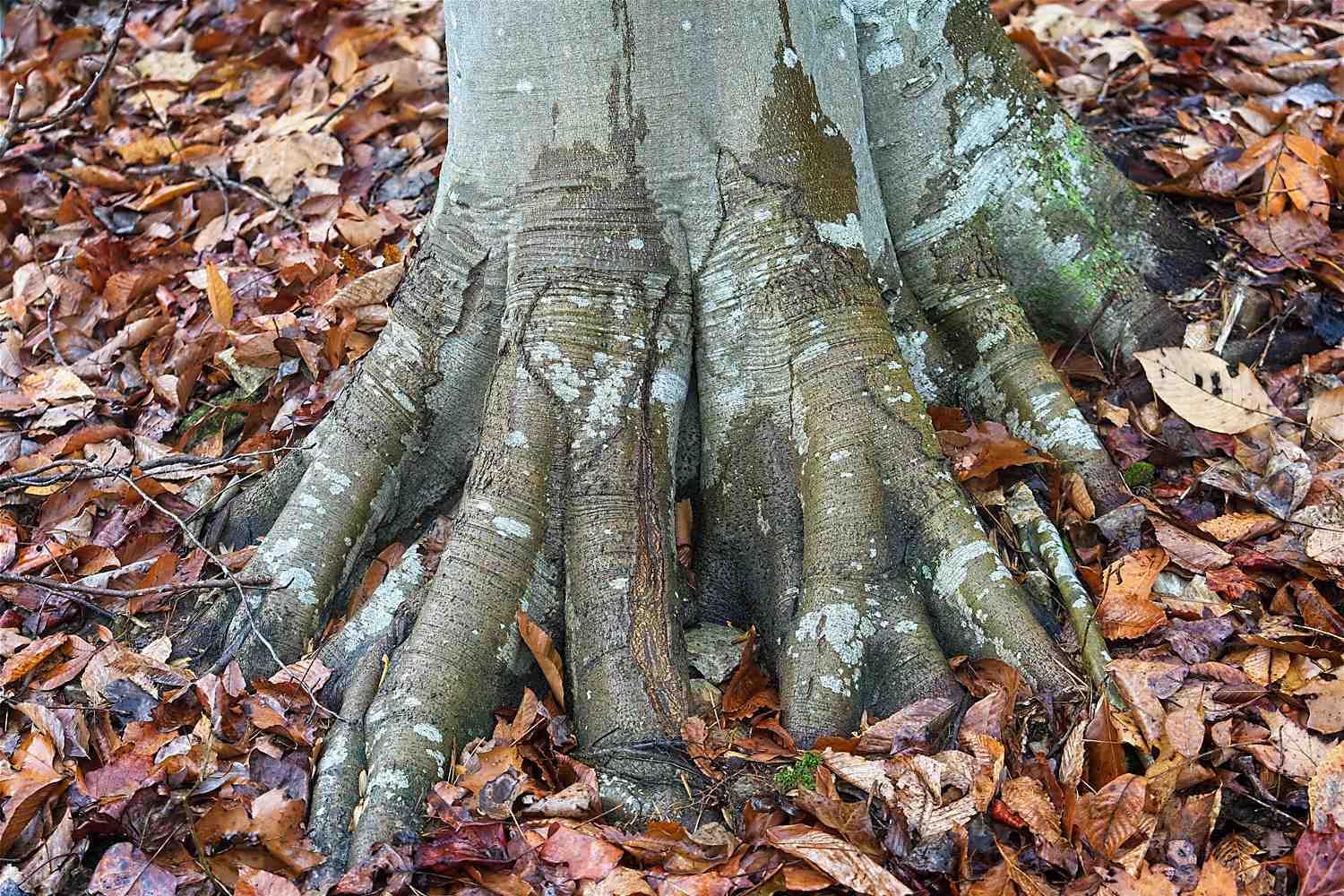
There are four main functions of roots:
- Anchorage to a substrate (earth or rock or trees). Roots provide stability and the ability to withstand turbulence in the environment (wind and water). If you can’t run from trouble, at least you can remain firmly rooted where you are.
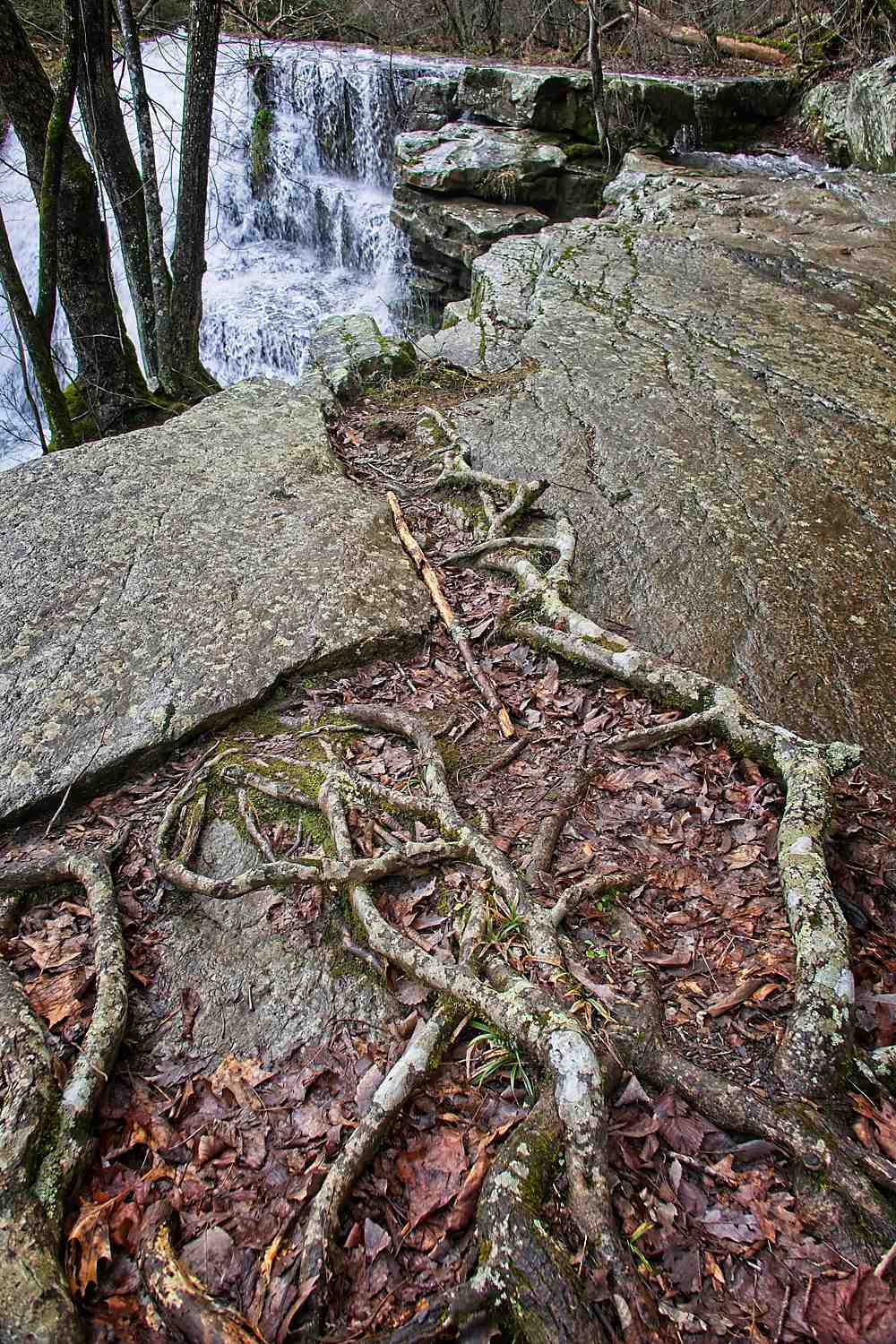
- Absorption of water and minerals necessary to the life of the plant, through constantly branching roots and root hairs. Some plants can absorb these things through leaves, but they are a small minority.
- Conduction of absorbed water and minerals upward to stem and leaves via xylem conduits. These are, after all, vascular plants, plants with vascula or vessels.
- Storage of nutrients sent below from the photosynthetic factories topside via phloem vessels. Roots are like underground refrigerators, keeping food cool and out of harm’s way.
A lot goes on underground that we cannot see. Roots dive deeply into the soil, but also spread extensively beyond the scope of above-ground foliage. The lateral spread is usually greater than the crown’s extent. Sometimes the numbers are mind-boggling. The roots of a four-month-old rye plant, e.g., have a surface area of something like 640 square meters, about 130 times the surface area of the four-foot shoot. And this in only six liters of soil! Some roots don’t need to go deep, because they can find all the water and nutrients they need near the surface; spruces, beeches and poplars, e.g., rarely have deep taproots and are more easily uprooted by wind.
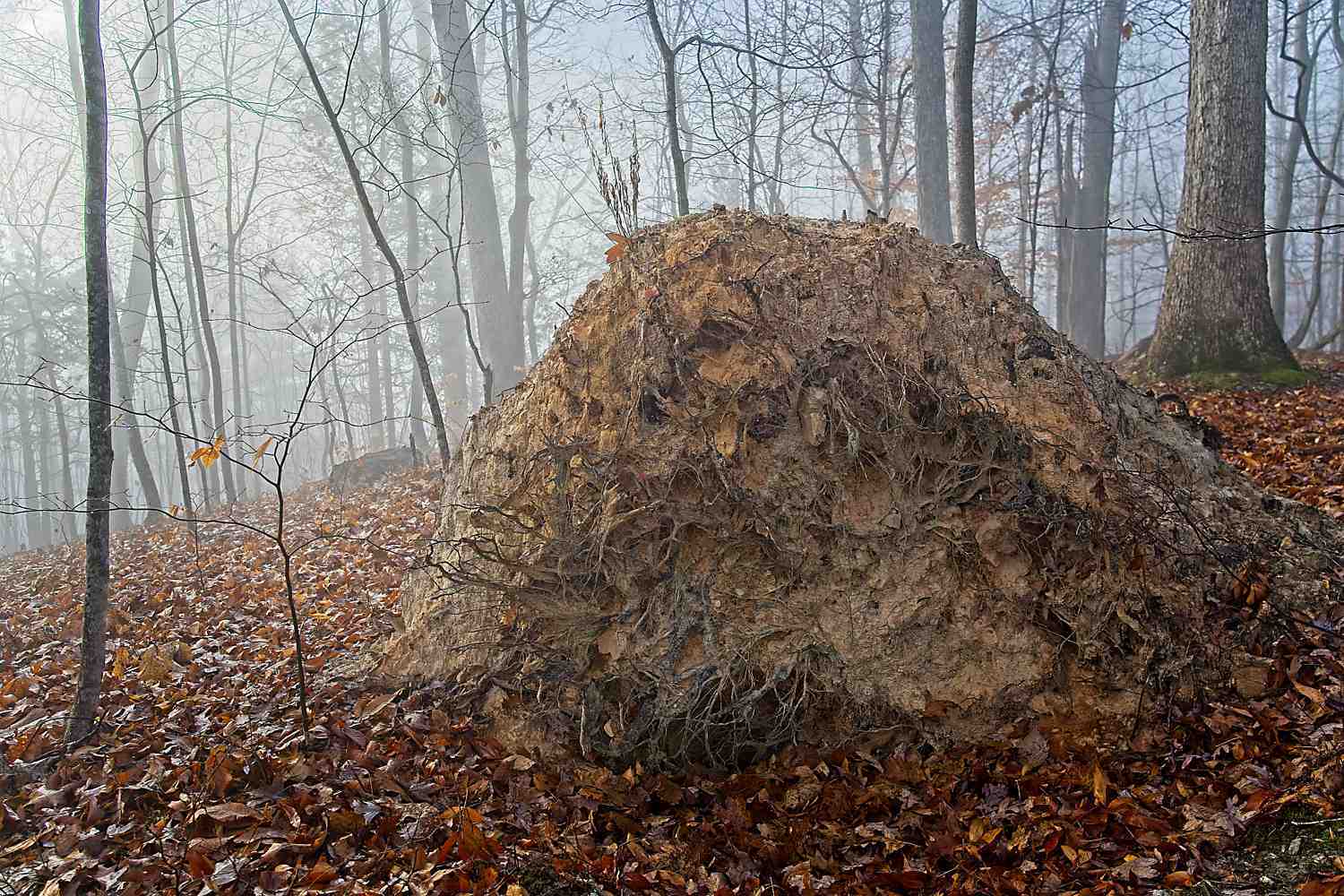
But it’s quite different for desert plants, which must search more deeply for moisture. The record seems to be held by a mesquite that was unearthed in an Arizona open pit mine: its roots extended over 53 meters into the ground! And tamarix and acacia roots unearthed in digging the Suez Canal were over 30 meters deep. Survival in desiccated places depends on deep roots.
In addition to all the extensive root growth, there’s a lot of underground communication with and through structures called mycorrhizal fungi, which increase nutrient access, connect with soil microbes and other plants, and shape whole ecosystems. Though still mysterious, a lot has been learned in this area in recent decades, and it shows that the life of roots is rather more complicated—and interesting—than we have hitherto imagined.
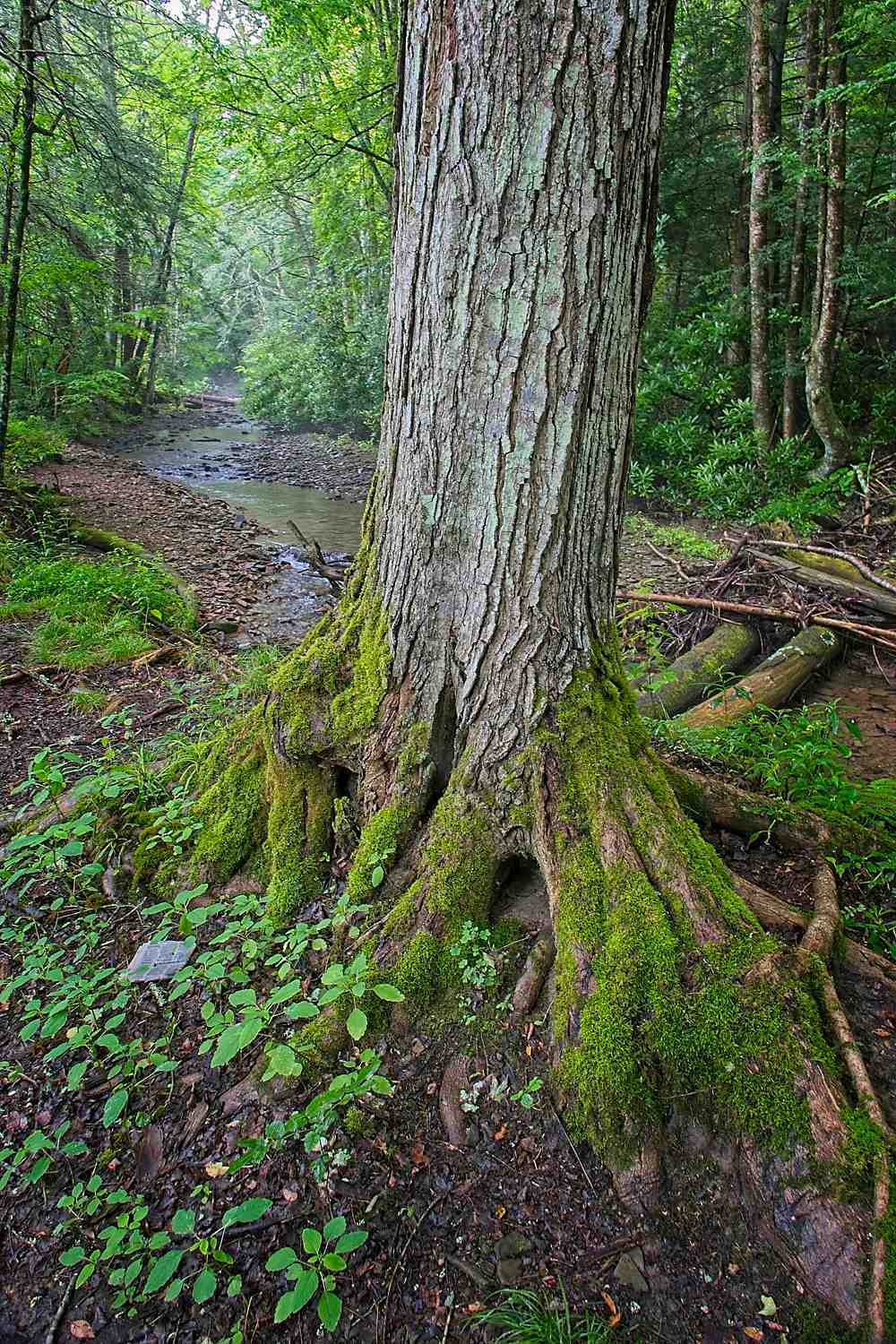
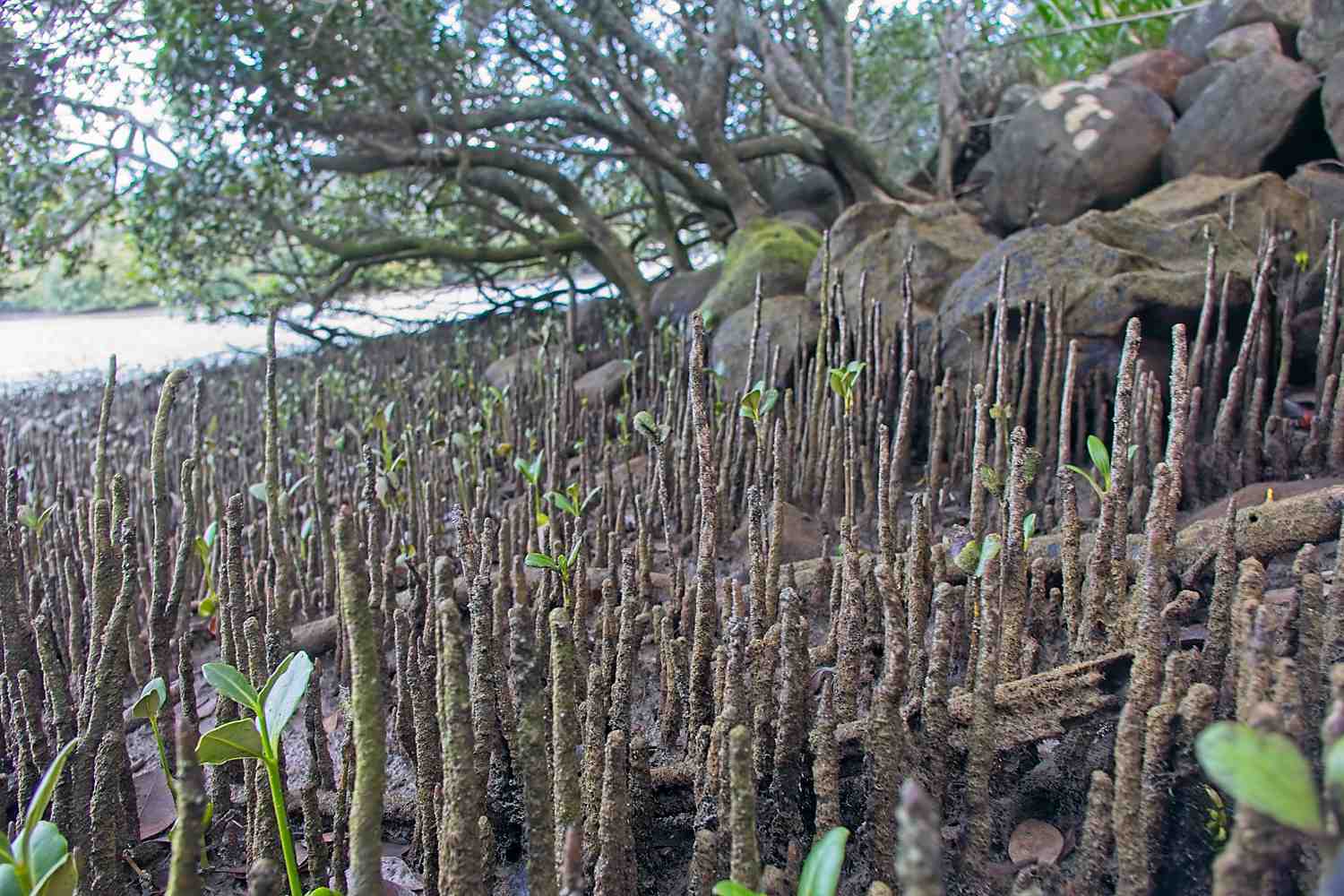
Most roots are underground, but there are some kinds above ground. Buttresses, for example, prop up trees especially where the soil is saturated and root systems are shallow (think tropical rain forests). Mangroves living in salt water often have “knees” or air roots that grow against gravity (unlike usual roots) to enable the trees to absorb oxygen from the air.
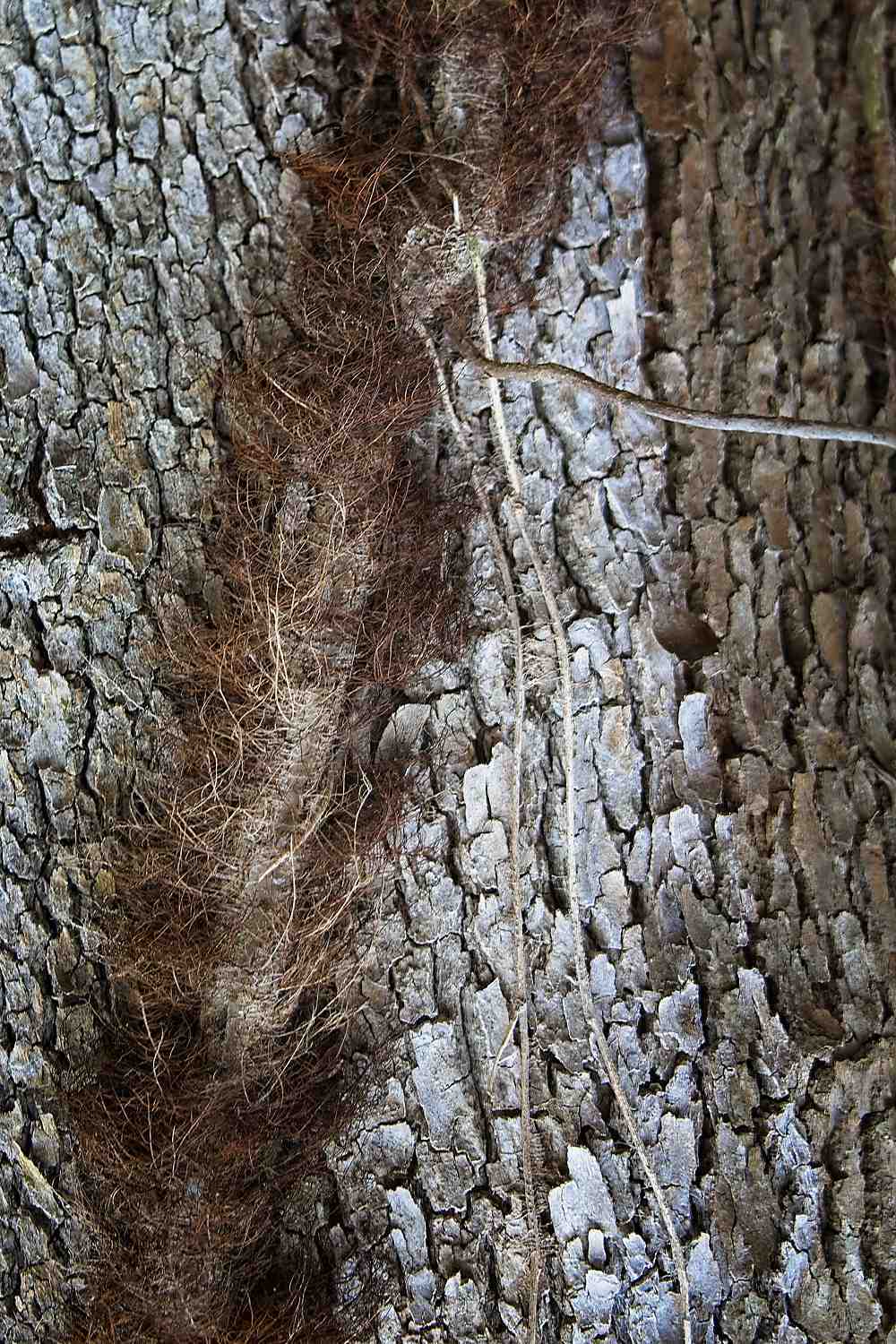
Then there are so-called adventitious or aerial roots, extending from such vines as ivy, that enable them to cling tightly to trees or walls; this image is of poison ivy.
There are also arboreal roots, where trees bore into mats of epiphytes on their branches, and haustorial roots of parasitic plants such as mistletoe that absorb water and nutrients from another plant. Many are the ways of roots.
Photographers tend to ignore roots because they’re not flashy like stems and leaves and flowers. They mostly lack the appealing shapes and colors of above-ground parts. Let’s face it: roots are drab, so if they are to have any photographic interest it won’t be color. One feature I find fascinating is their complex structure, the endless twisting and branching that produces abstract non-repetitive patterns. In fact, roots can provide many opportunities for imaginative togs, not least in winter when vegetation dies down.
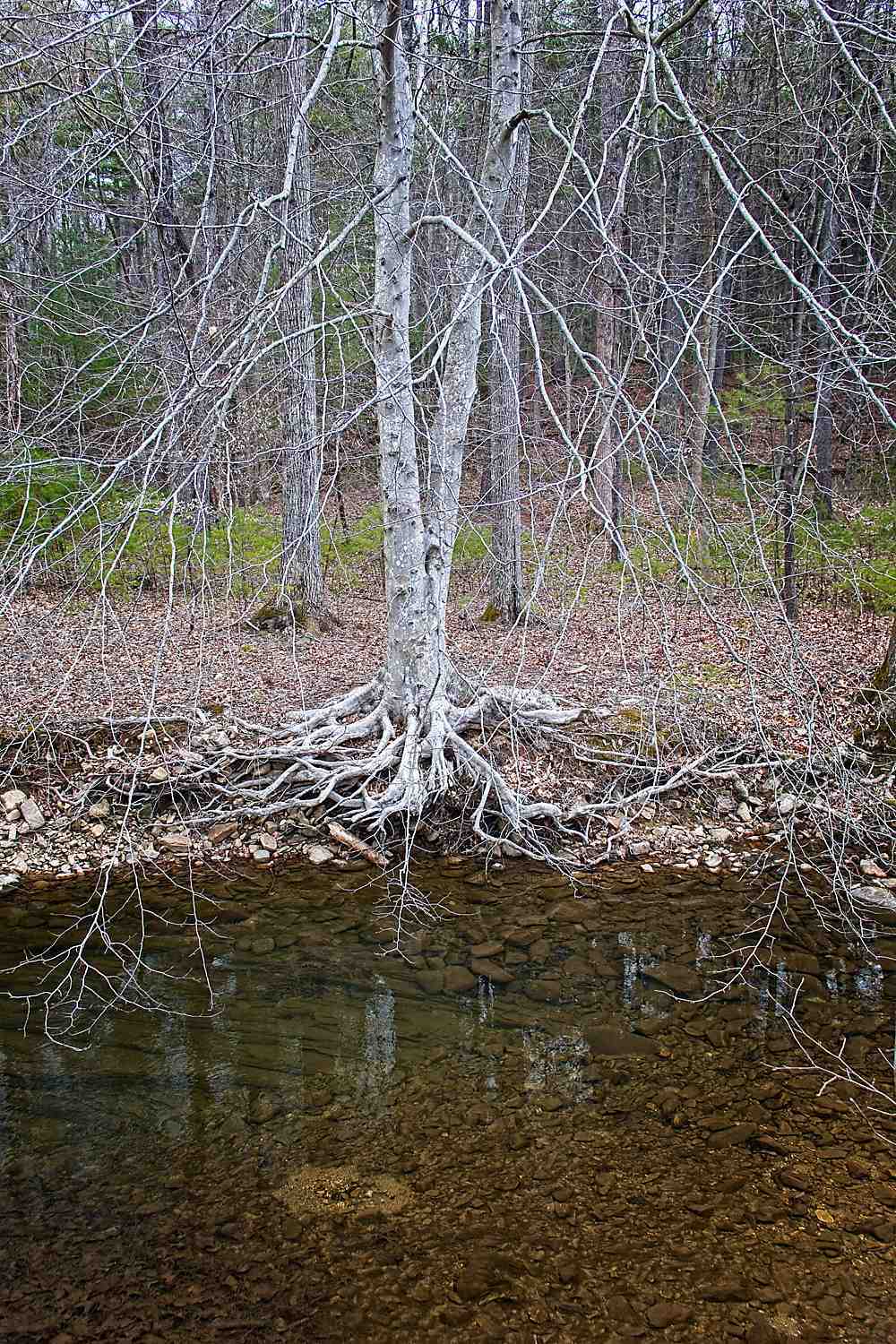
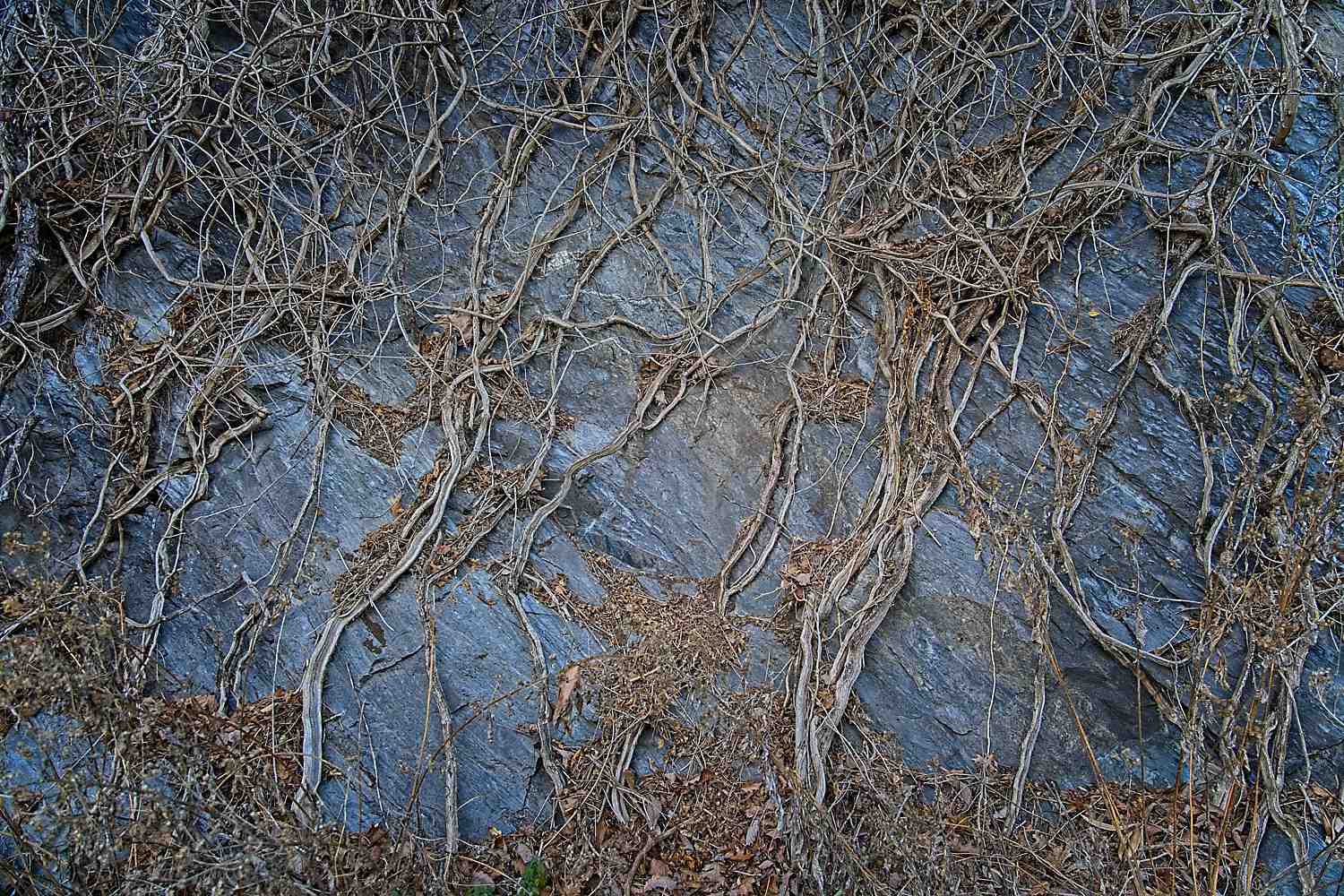
The first image below is of vines, not roots, but their complex pattern partially suggests what life underground might look like, as in the second image.
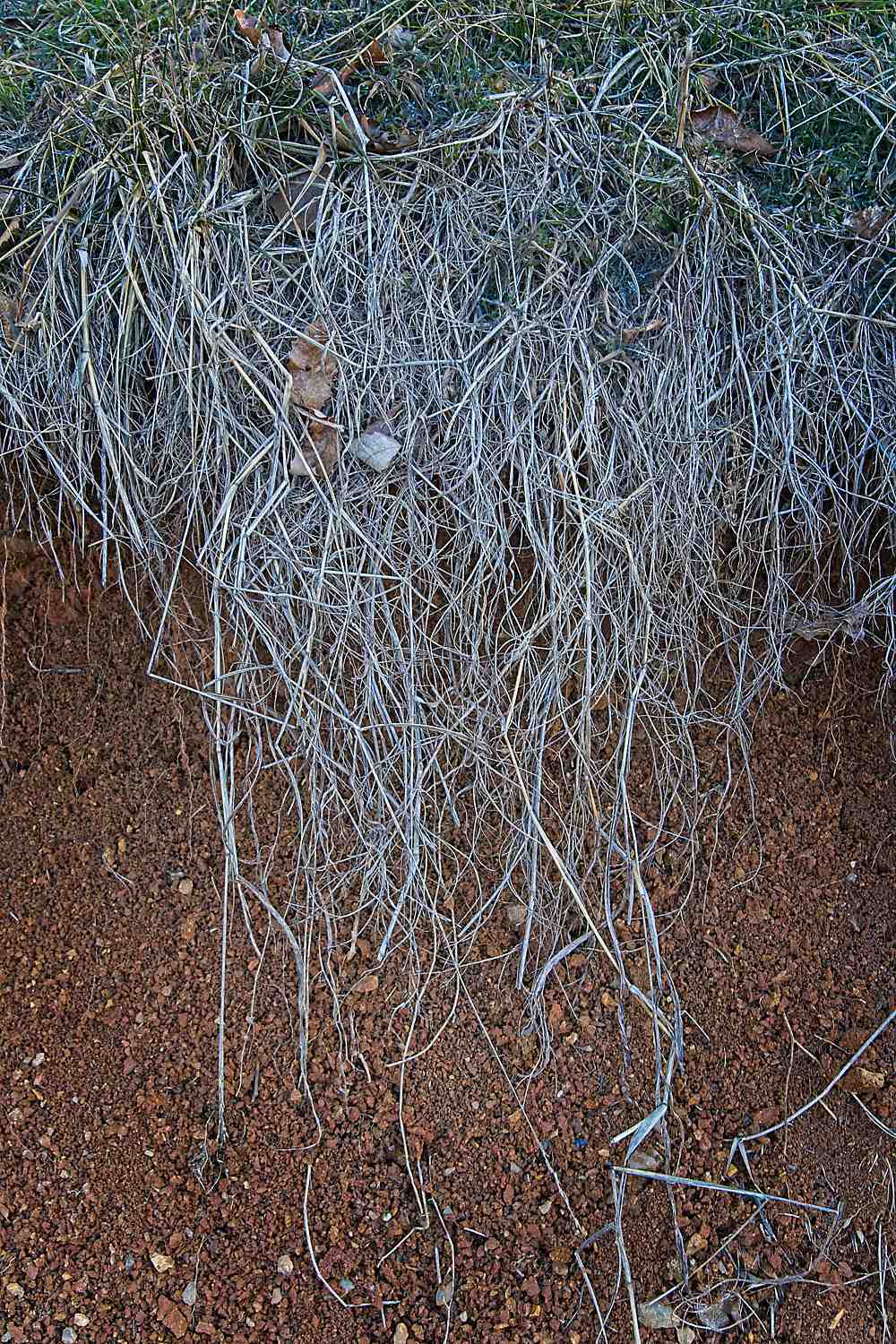
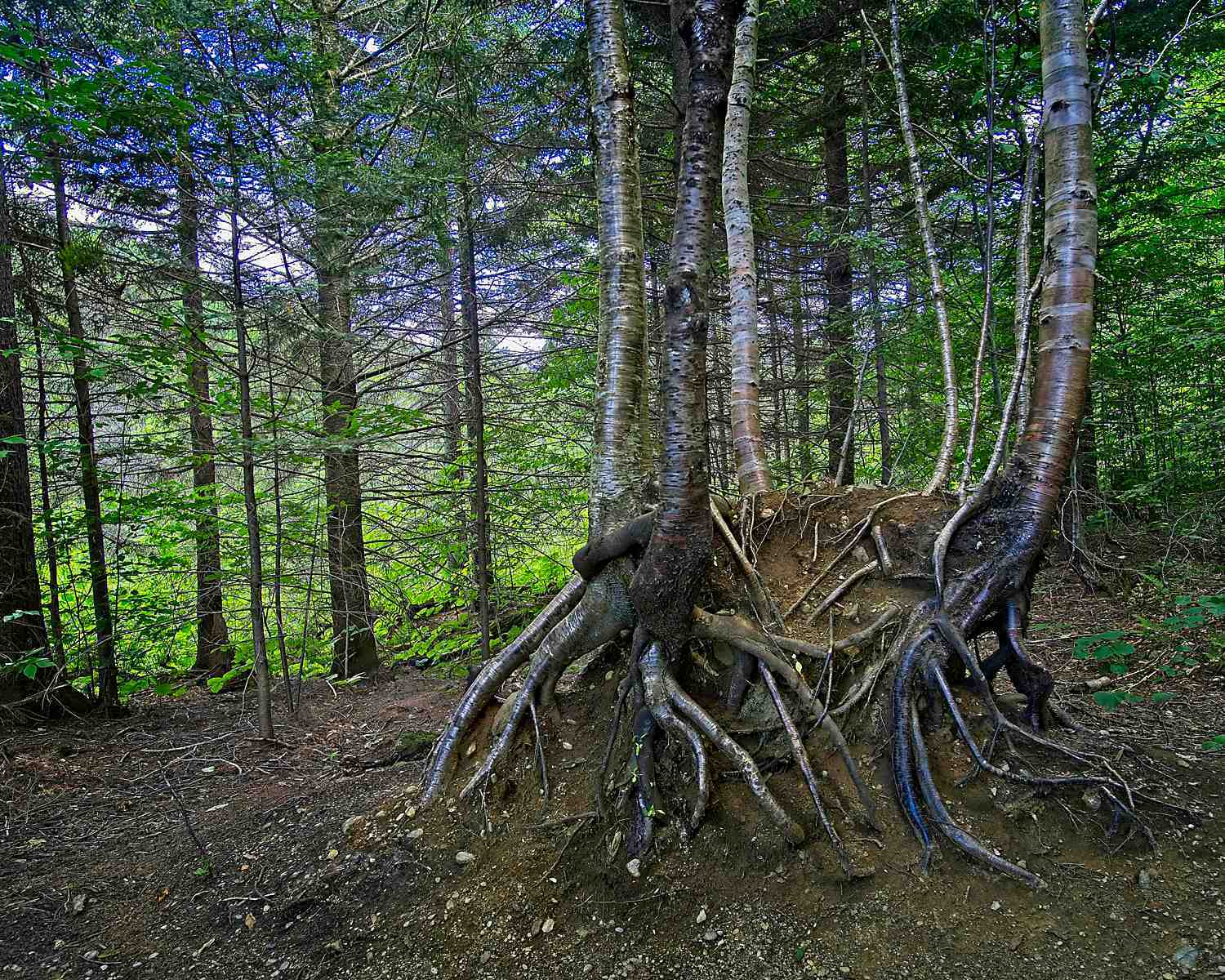
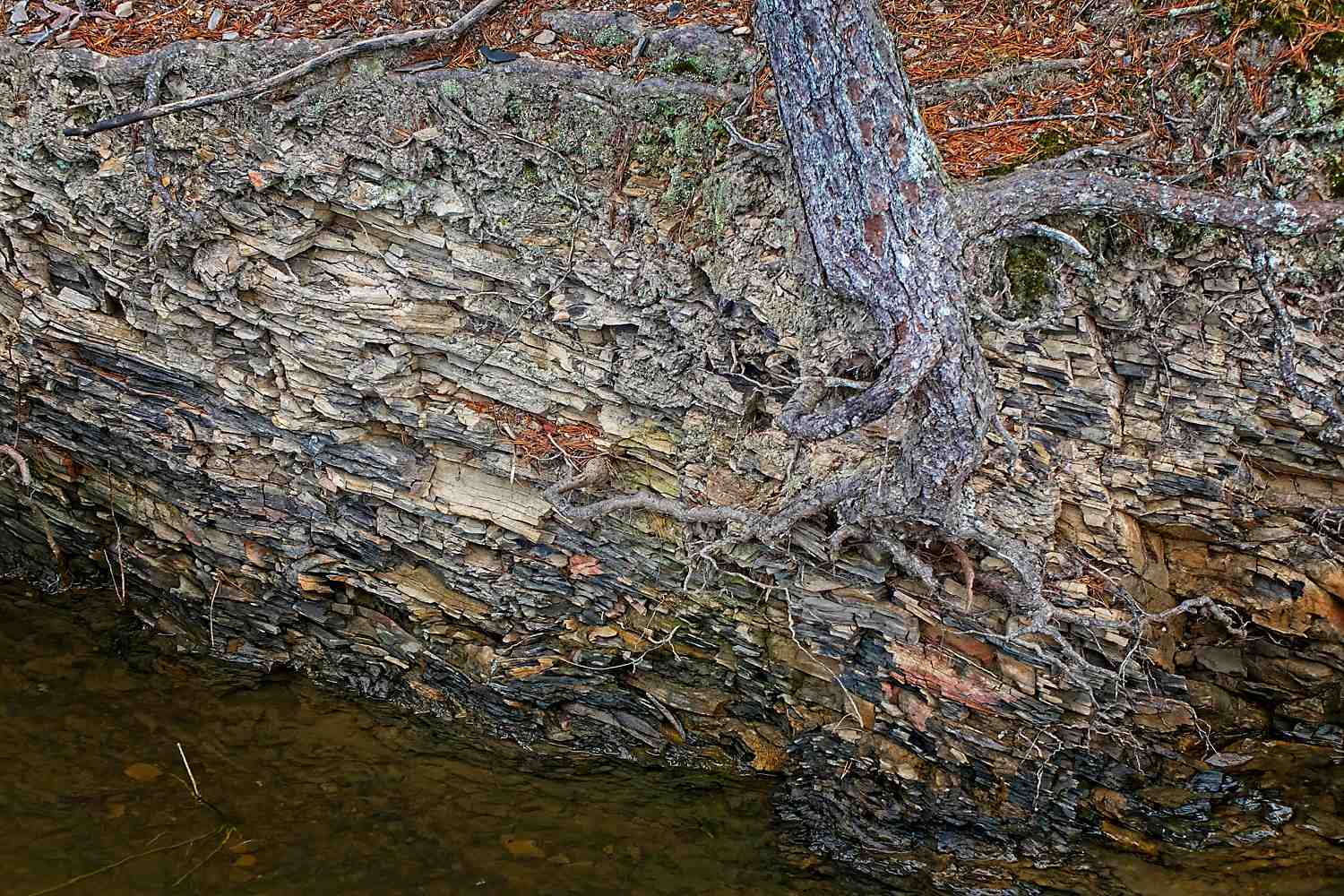
Roots exposed by erosion or horticulture are often interesting. Riverbanks are ideal locations, but they can also be found by the side of roads or other human excavations. The ways in which they anchor leaning trees is often made evident along streams.


Exposed roots can beautify riverbanks, but sometimes they just look naked.



Roots of large trees in cemeteries provide occasion for reflection on the transience and interconnectivity of life. Where are all those roots going?

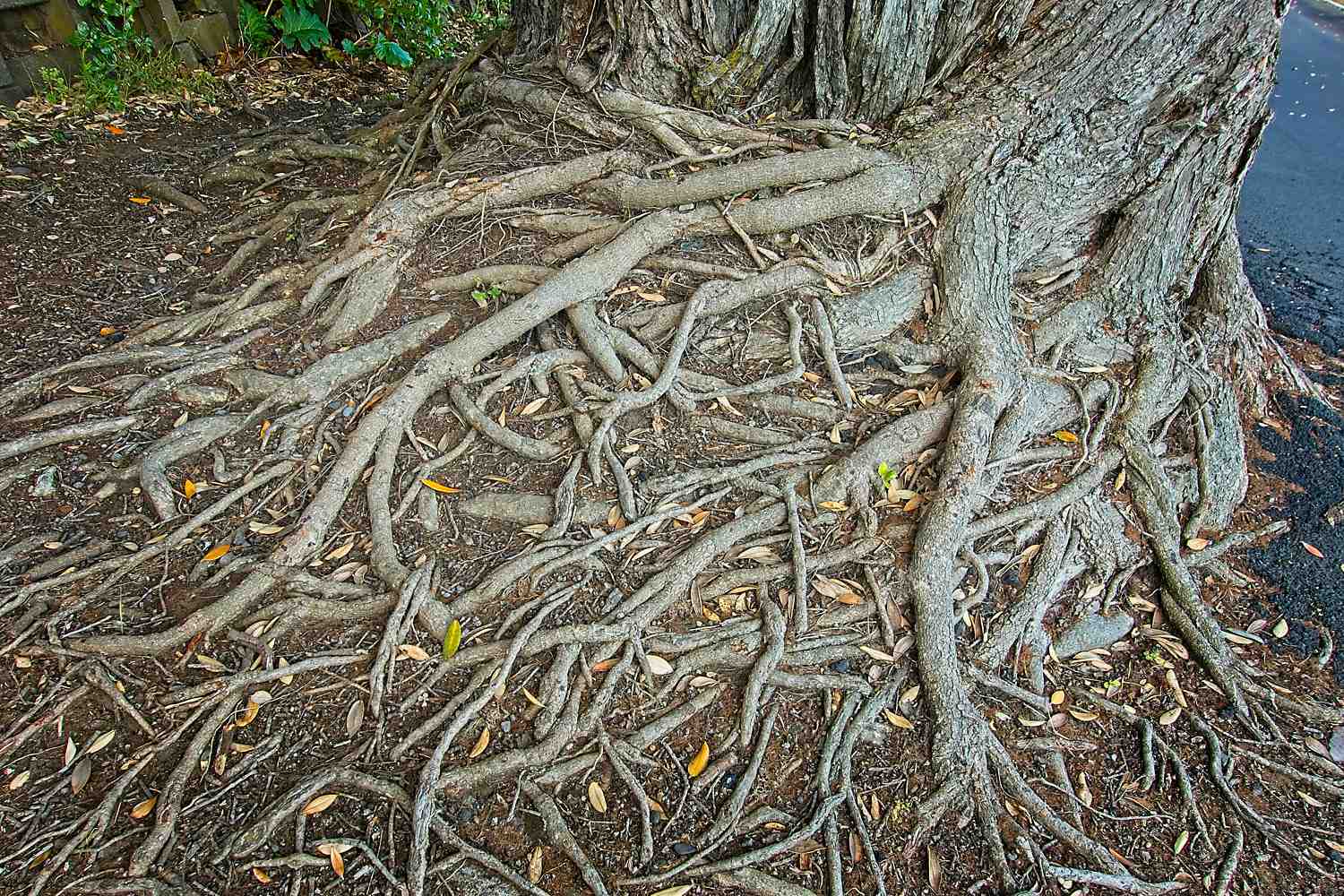
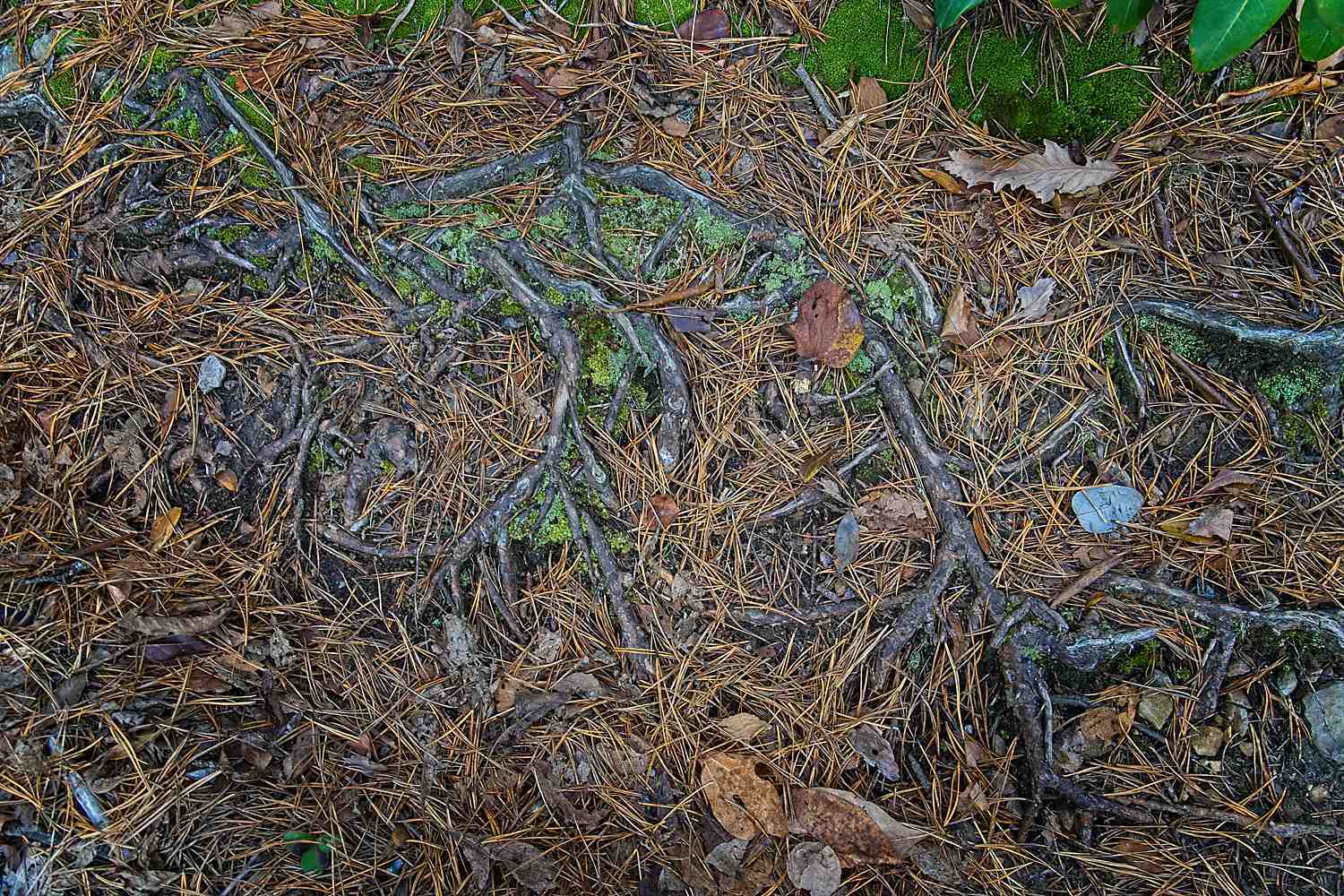
Sometimes roots snake along the surface and provide interesting patterns. I remember being impressed decades ago by large surface roots of some tropical trees in the Daintree Forest in Australia that resemble giant pipes extending hundreds of feet; perhaps I instinctively saw them as enormous snakes? Unfortunately I haven’t been able to access any images; they reside in memory but not in my hard drive. Still I do have images of exposed surface roots in the temperate forest around me, perhaps uncovered by erosion or foot traffic.

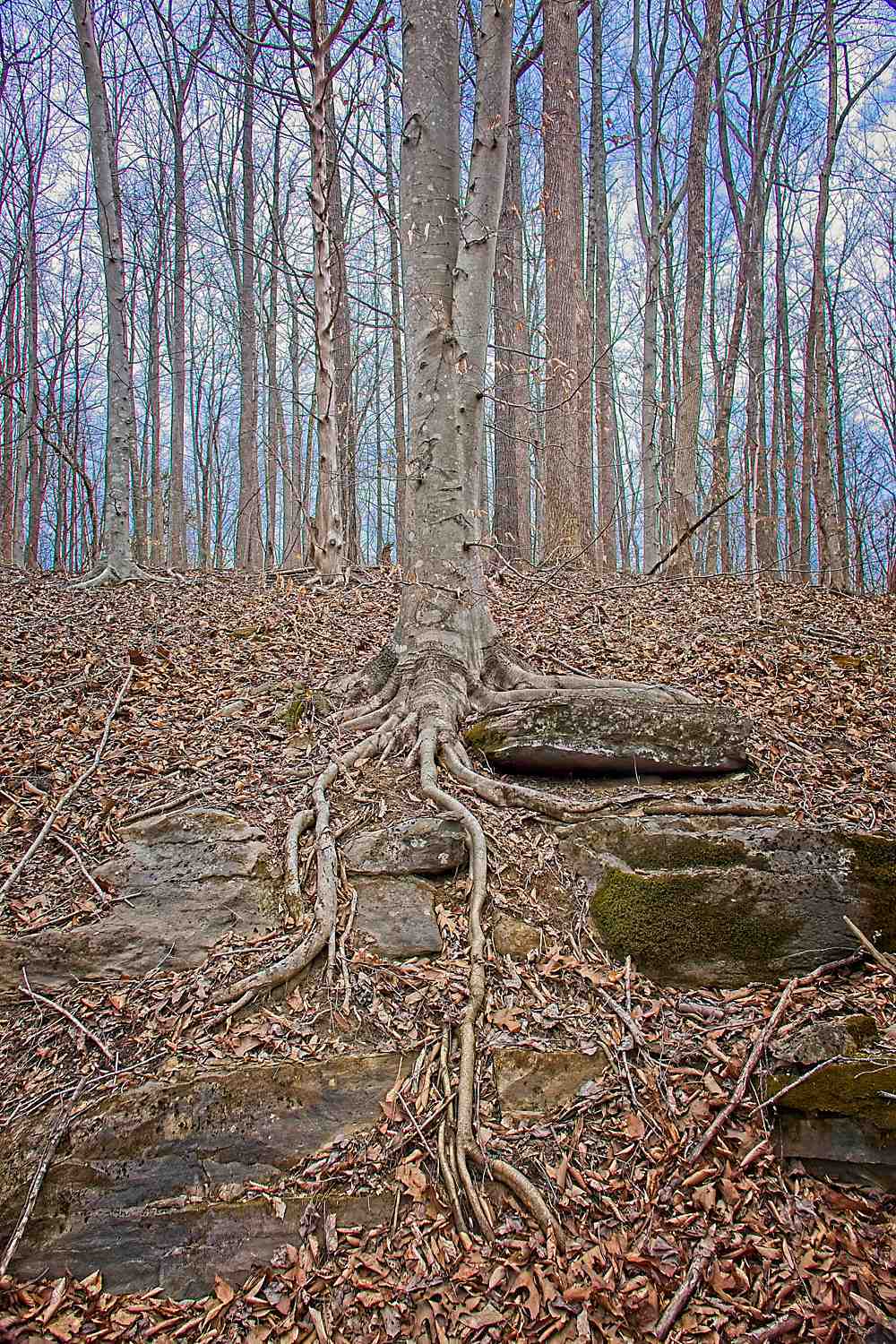
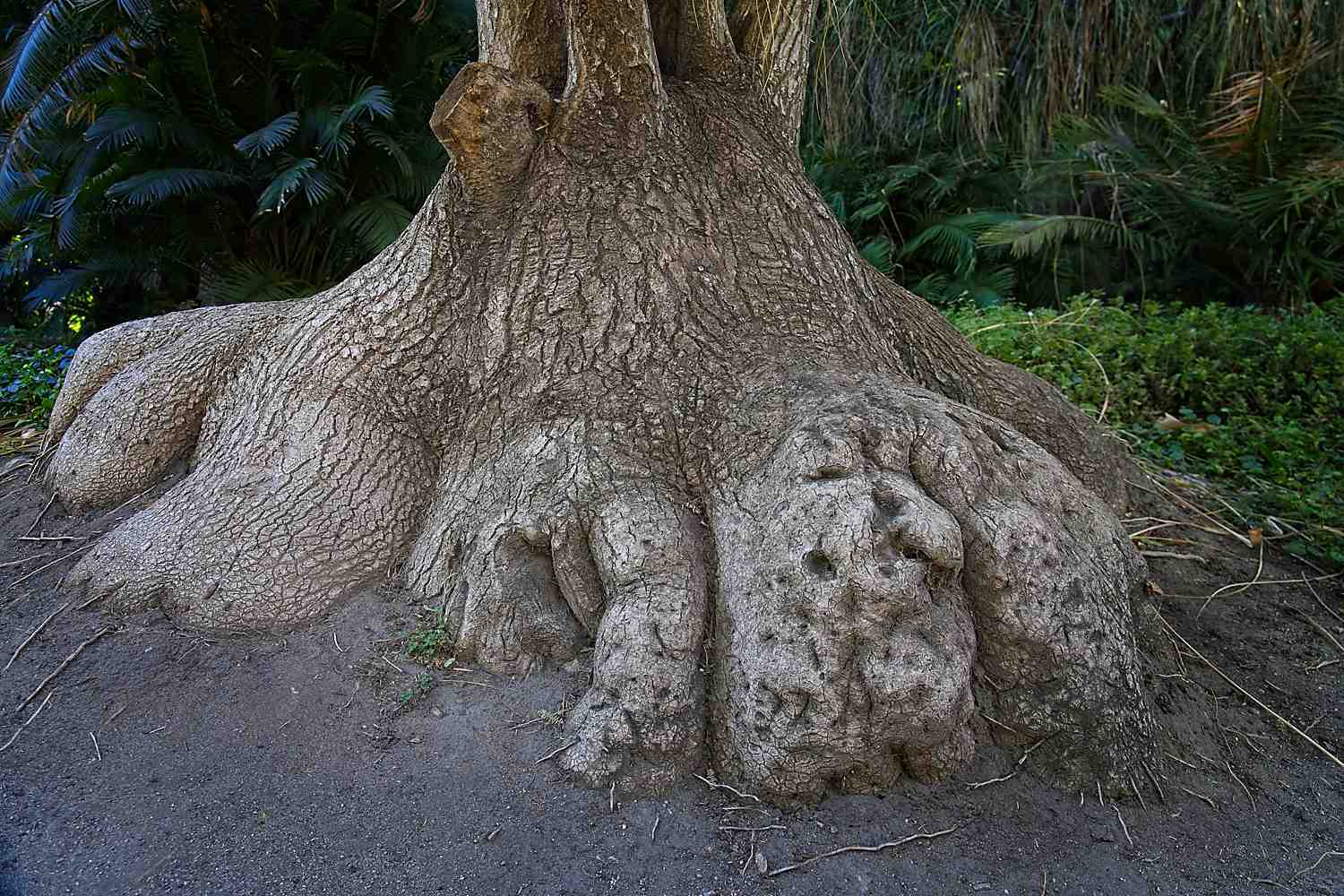
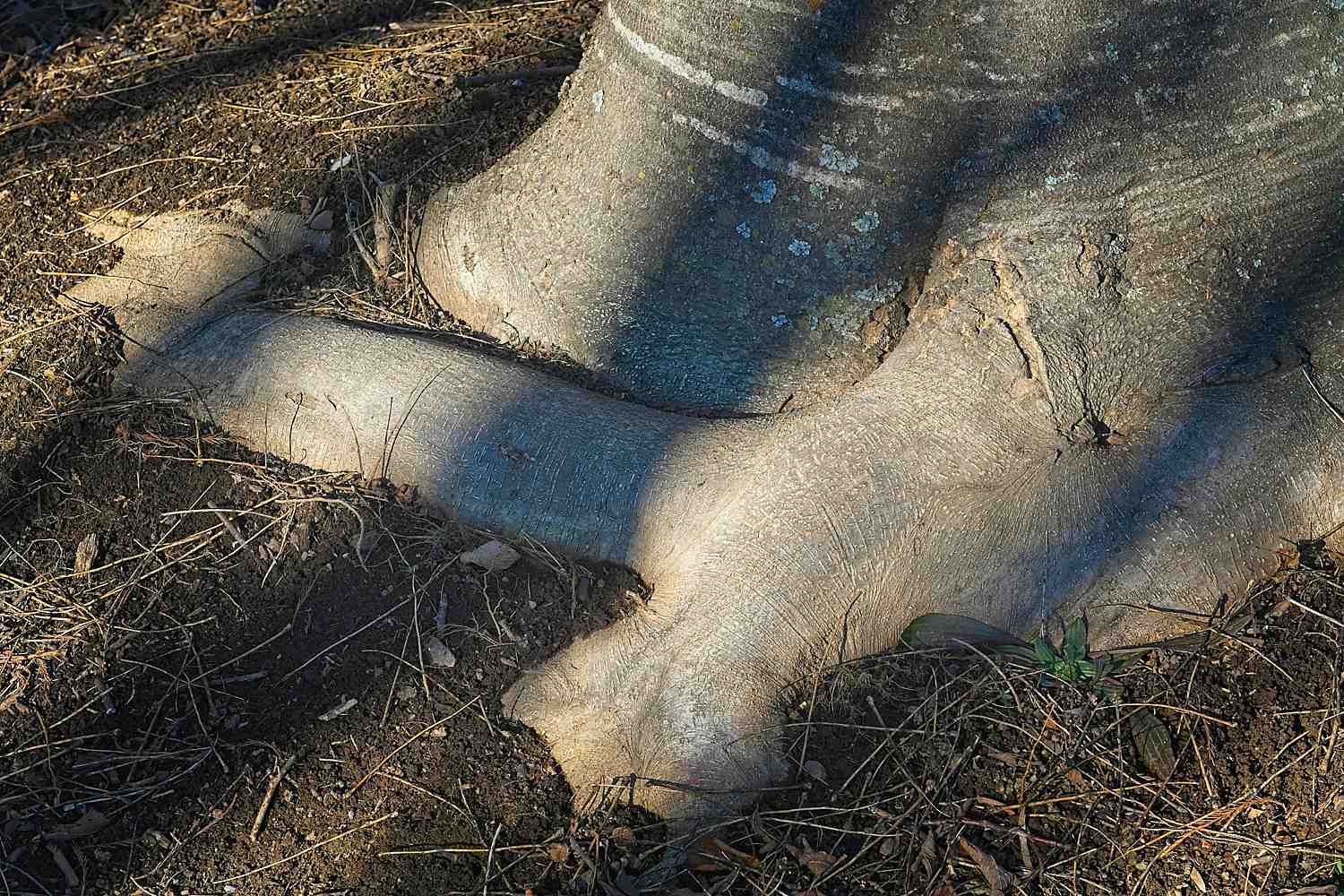
Sometimes roots massively project above ground, hinting of interesting underground architecture.
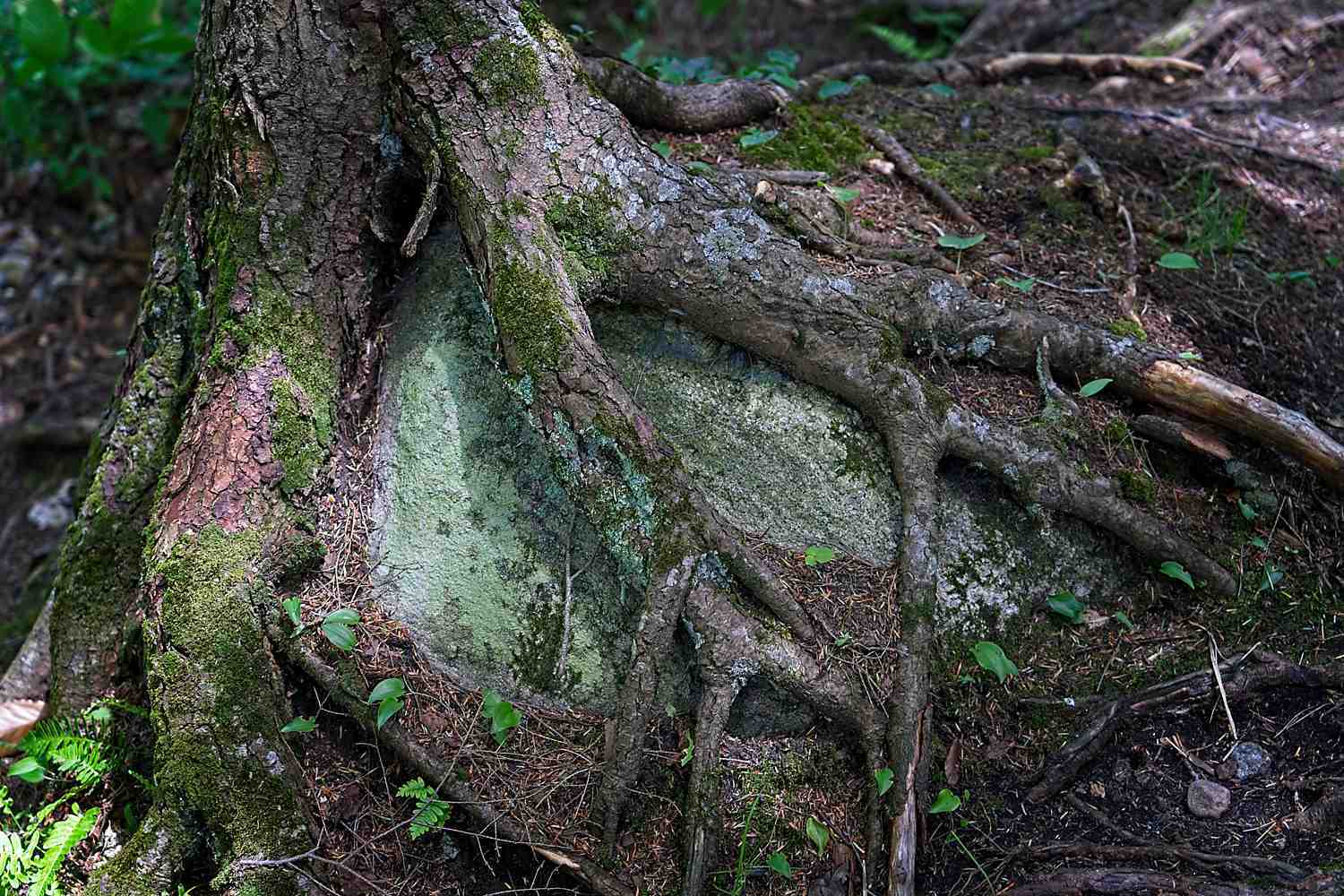
Sometimes they hug rocks.
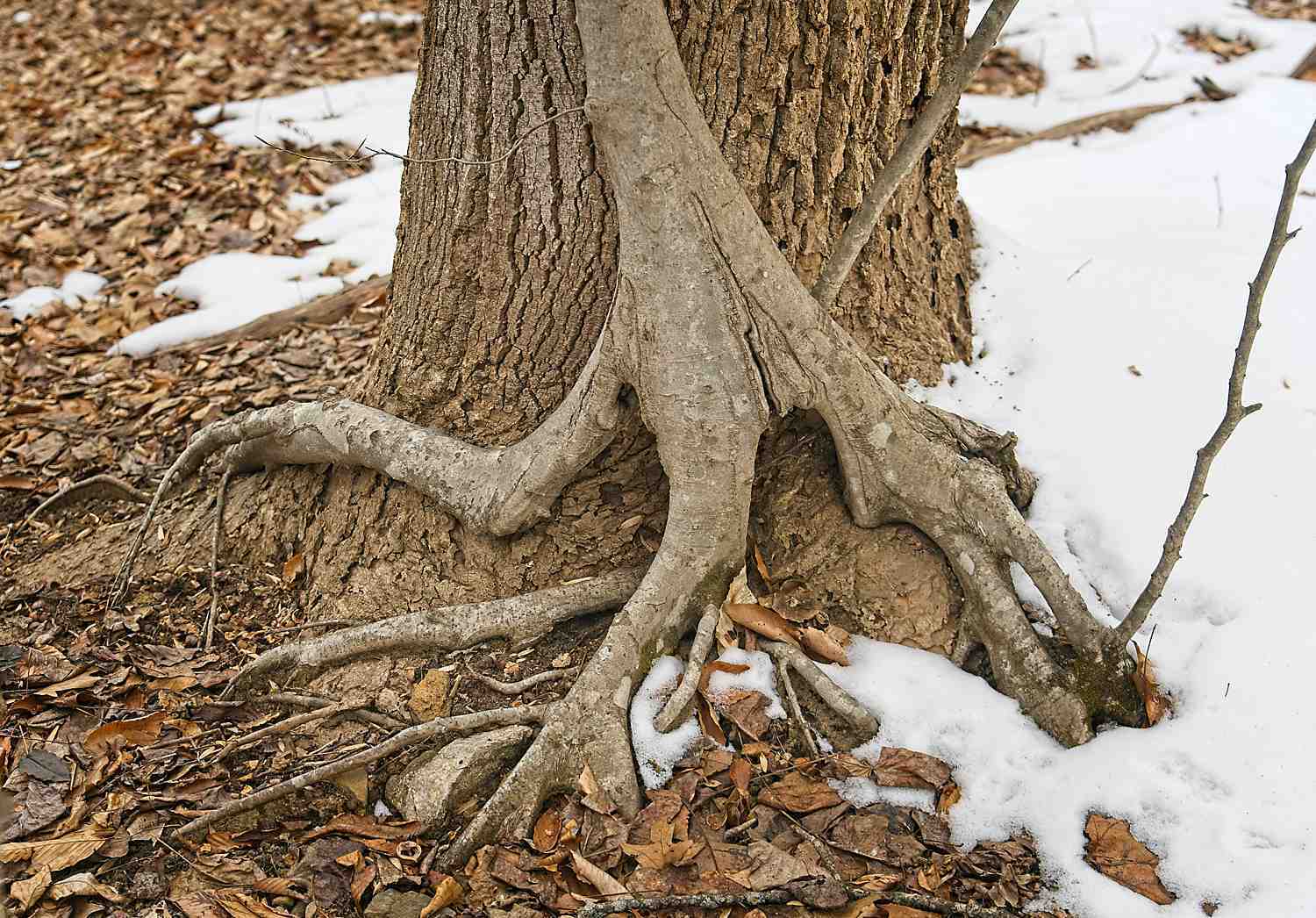
Sometimes they cascade down hillsides.
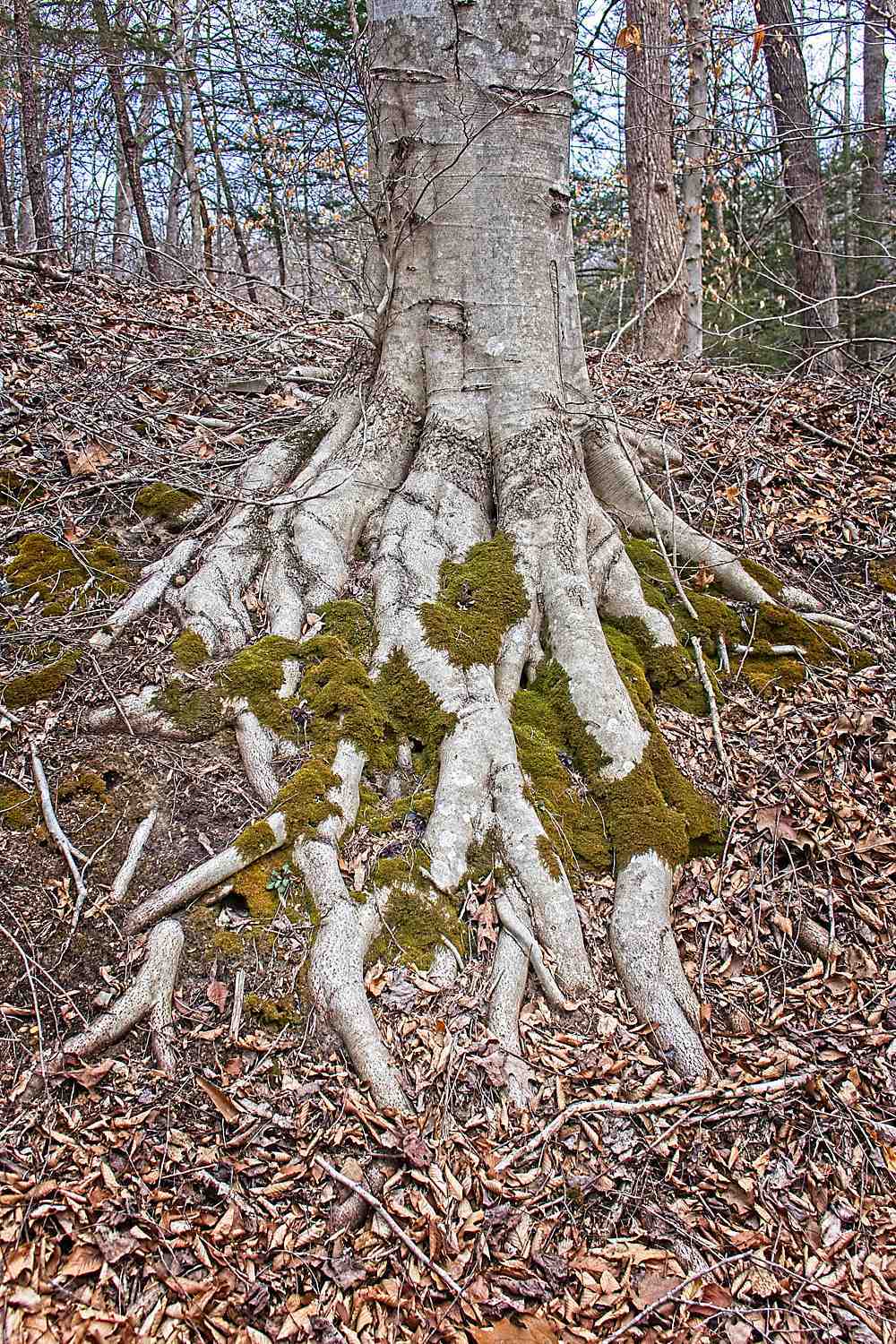
Let me close with a few suggestions for photographers who might become interested in roots:
- Root vegetables (carrots, cassava, sweet potatoes, rutabaga, beets, yams, turnips, radishes, turnips and more) are photogenic when extracted, particularly when cooked and on a plate. They are essentially swollen roots (potatoes are actually swollen stems), used by plants for food storage, and by humans for daily nutrition. “Eat your vegetables!” is often a command to consume roots. Food pictures constitute an entire genre of photography, and some cameras even have a special “food” setting. But it takes special skill, and patience, to expertly stage foods, arrange compositions, and light them properly.
- Roots are used by humans for more than food. There is a whole pharmacy of traditional herbal medicines, many of them derived from roots: ginseng for flavoring and a dietary supplement, ipecac to induce vomiting after poisoning, gentian for improving digestion, and reserpine for high blood pressure [many traditional uses have dubious efficacy]. Modern medicine does find some useful chemicals in roots, such as hormones like estrogen (from yams!). Some uses are less salutary: rotenone, e.g., a fish poison and insecticide, is derived from the roots of the legume Lonchocarpus. I suppose one could compose a photographic series of medicinal and poisonous roots.
- Urbanites usually notice roots only when repotting their plants or when city trees lift up and break through concrete sidewalks, snap water lines, or crack foundations. These seemingly delicate structures are insidiously powerful. But they are not just agents of destruction; they are also invaluable for stabilizing soil on slopes, preventing many a landslide and reducing soil erosion, not least on sand dunes.
I wish I had images to illustrate all these cases, but failing that I leave it to you, gentle reader. Root around. You’ll find unexpected pleasures.