#1117. A Babe in Lichenland
Lichens are vastly underappreciated by photographers (and indeed by almost everyone except lichenologists). To get the inevitable pun out of the way, most people don’t like ‘em, or don’t care much about ‘em. Both are mistakes.
Once again I’m in over my head, a babe in lichenland, and I will rely heavily on a marvelous tome by Irwin Brodo and Sylva Duran Sharnoff and Stephen Sharnoff, Lichens of North America (2001: Yale University Press). Brodo is a professional lichenologist, and the Sharnoffs are professional nature photographers (she died before the book’s publication). The volume is not something to rest on your lap, as it tips the scales at almost nine pounds! But it has a clear and comprehensive introduction by Brodo, as well as beautiful photographs by the Sharnoffs, with more detailed descriptions of species than I can comprehend. My own images don’t measure up to the Sharnoffs’ in many ways: they’re all drawn from this area of western Virginia, not spanning the entire continent; they depict only a very few species of over 3600 known for North America; and they lack the technical excellence of the Sharnoffs’ images. But I have a different goal in mind: to arouse the curiosity of Dear Susan readers about these lowly creatures. I hope my shallow dive into the deep pool of lichenology will stimulate others to plunge more deeply.
Some may think that a shallow dive, much less a deeper immersion of prolonged study, isn’t worth much to a photographer, or perhaps even counterproductive. After all, don’t photographers explore the visual appearance of things, not the underlying causal reality? Isn’t science a distraction to a photographer? No. I firmly believe something that John Dewey constantly preached: that experience is enriched and enhanced by all the content we can bring to it. We have more deeply satisfying experience when we inform that experience by all the arts of human invention: science, history, literature, art—and yes, even philosophy. We don’t distract ourselves by looking behind or beneath the appearance; rather, we give our experiences depth and connection. Of course a little learning can be a dangerous thing (Alexander Pope), if it deludes us into thinking we know more than we actually do know. But it can also deepen our immediate glance: we see something better by seeing it more deeply and extensively. Such knowledge—and not just technical understanding of photography—can enhance photography. I will admit that they can also be antagonists: seeking knowledge without appreciating beauty makes one a dull nerd, while appreciating beauty without seeking knowledge makes one a frivolous dandy. But combine the two and you can see the glories of appearance while also appreciating its depth.
Alas, there’s a problem. Those of you who dwell in urban areas will find few if any lichens in your neighborhood. That’s because most lichens are exquisitely sensitive to pollution, and they will not survive in human haze. As a result, they are often used as indicators of environmental air quality—canaries in the atmospheric mine, so to speak. To see lichens you’ll have to go into the wild, or at least into a natural area that is relatively undisturbed and unpolluted—or a cemetery. I urge you to do so, for many reasons, and not just to appreciate lichens. But also to appreciate lichens!
Lichens are neither vascular plants like daisies nor bryophytes like mosses. In fact, they aren’t one single thing at all (most organisms aren’t either, but that’s another story). Instead, they are combinations of two or more vastly different kinds of organism, from different botanical kingdoms in fact: fungi on the one hand (the “”mycobionts”) and usually algae or cyanobacteria on the other (the “photobionts”); the former provide shape, structure and shelter, the latter do the work of making food. [Some lichens even have three symbionts!]. The relationship is complex, and differs among species.
Traditionally this arrangement between mycobiont and photobiont was considered purely mutualistic, a happy symbiosis, where each symbiont contributes something vital to the relationship: algae, with their chlorophyll factories, make the sugars that sustain both fungi and themselves; fungi provide structure, shelter and moisture retention (a home, if you like). Lichens and algae reproduce independently, but must somehow coordinate their talents in order to make new lichens. As Brodo says, it’s “a little complicated.”
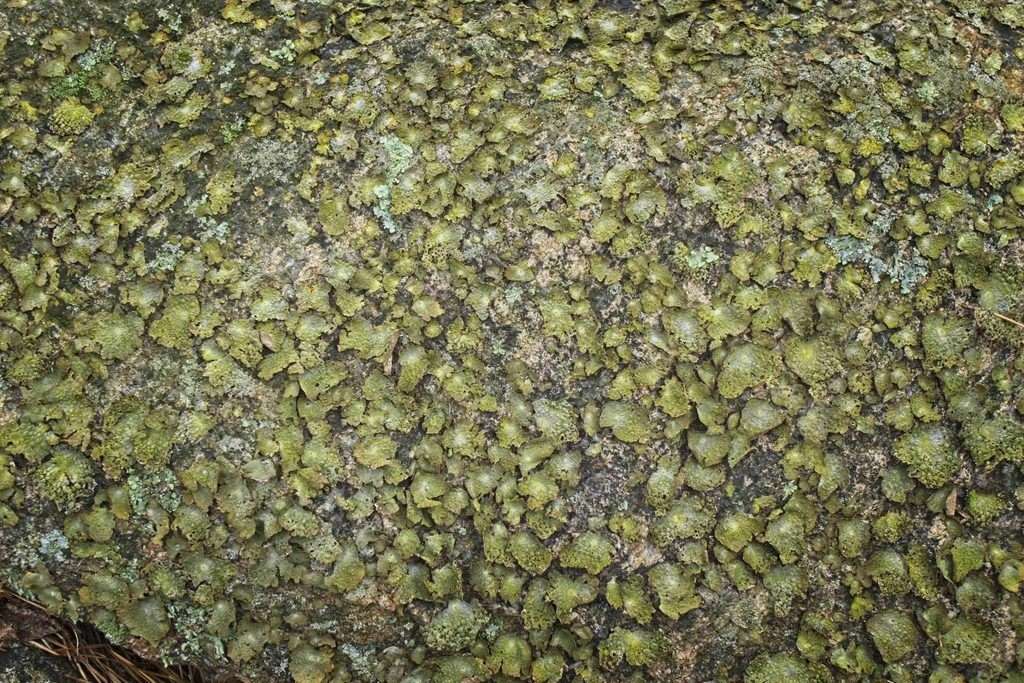
But there are other ways to look at their relationship; it’s not all sweetness and light. Trevor Goward says that lichens are “fungi that have discovered agriculture,” cultivating and benefiting from the algae, who are almost indentured servants. Others have thought that the fungi downright exploit the hard-working algae. It’s less mutualism than “controlled parasitism,” and some algae don’t just get drained of nutrients, they die in the process [they have to reproduce faster than they are eliminated]. So let’s just say that fungus and alga have a complicated relationship. Nature is an intricate and beautiful harmony of incredible complexity.
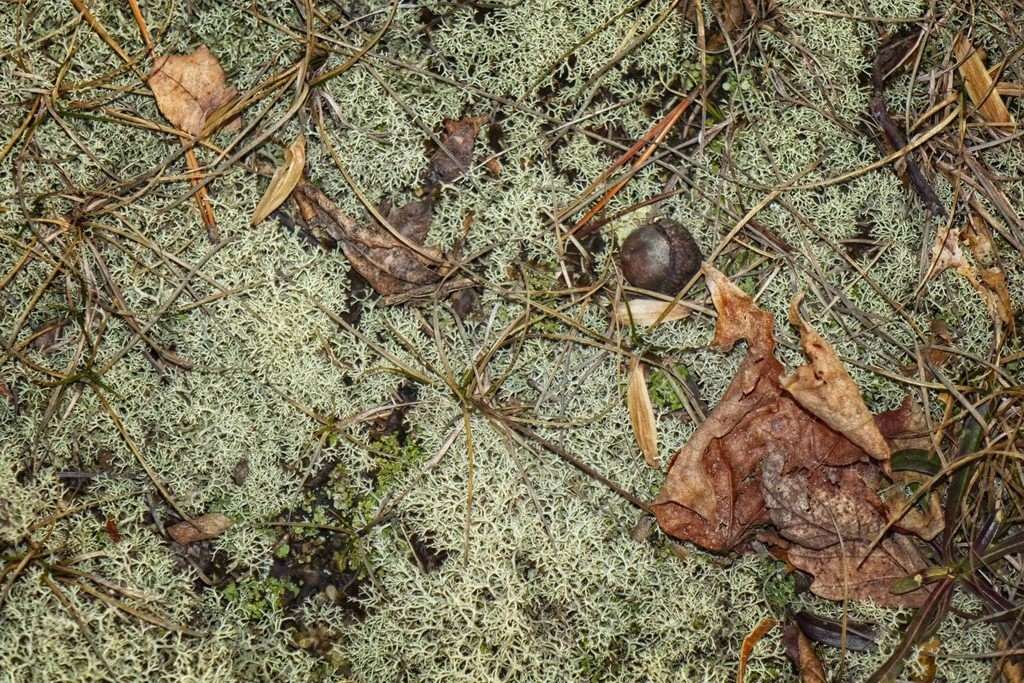
Lichens are very ancient kinds of organisms, dating back to the Cambrian period, over 500 million years ago. Individual lichens can live for thousands of years; one specimen of Arctic map lichen has been dated at 8,600 years, perhaps the world’s oldest organism. Their survival is testimony to the brilliance of their basic plan: combine two or more kinds of organisms for (mostly) mutual benefit and use. I think there are two important lessons here: on the sunny side, cooperation, in its many forms and degrees, can be a highly successful evolutionary strategy; on the dark side, exploitation can also work.
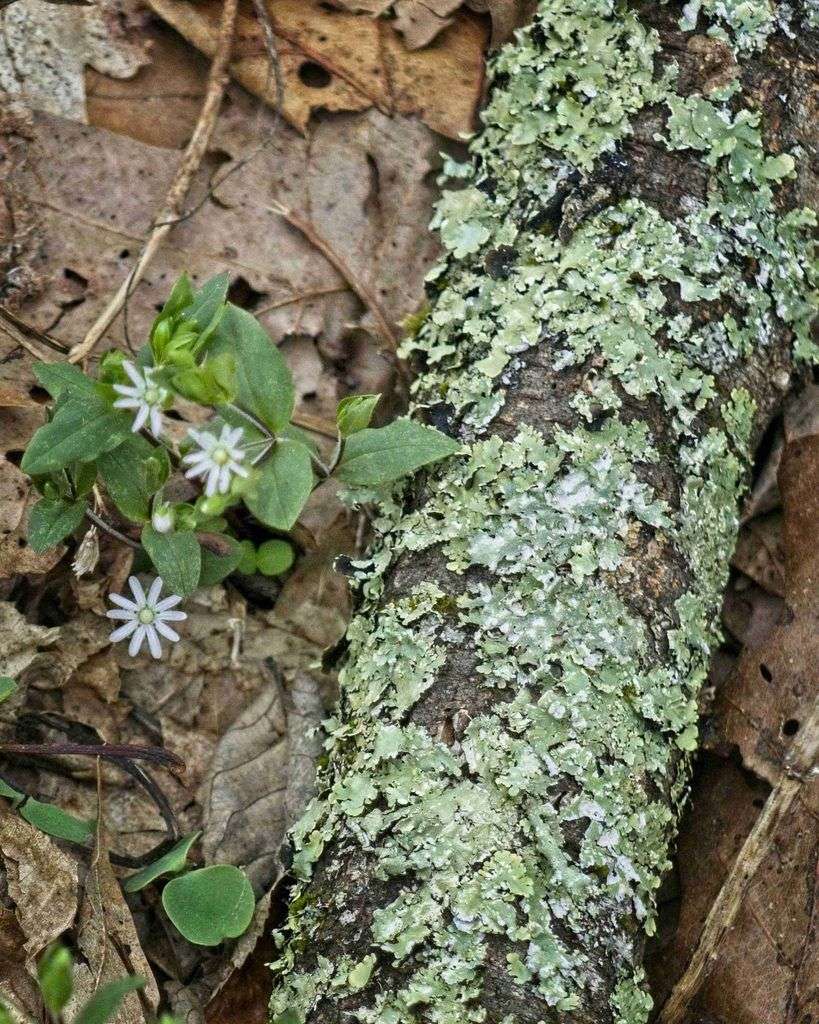
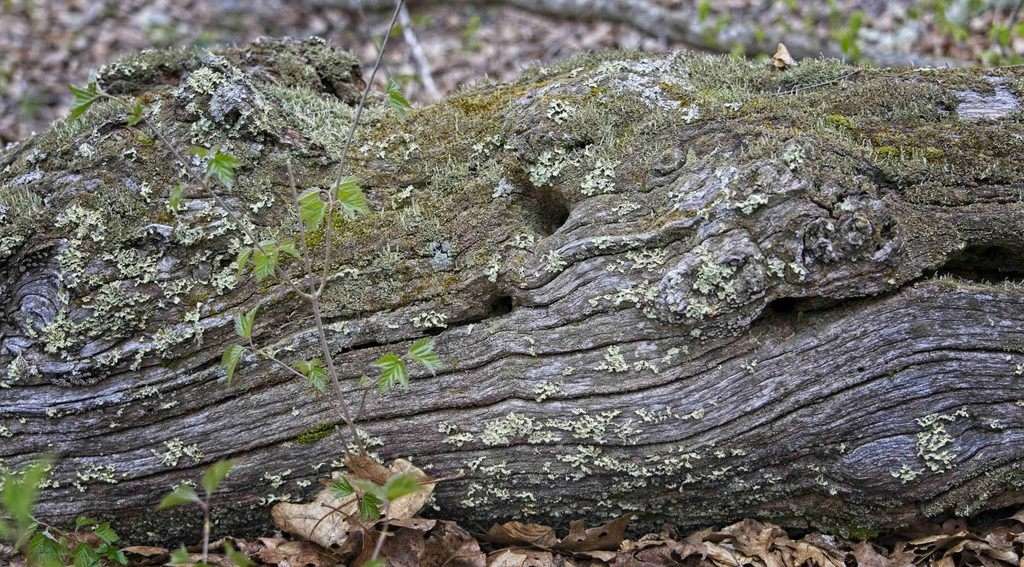
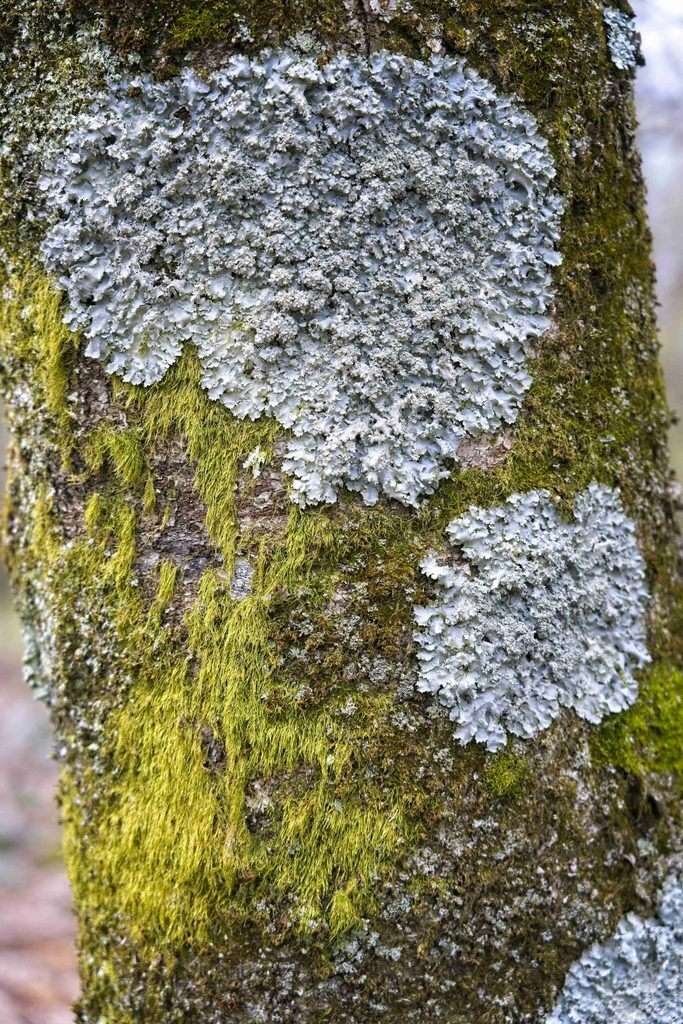
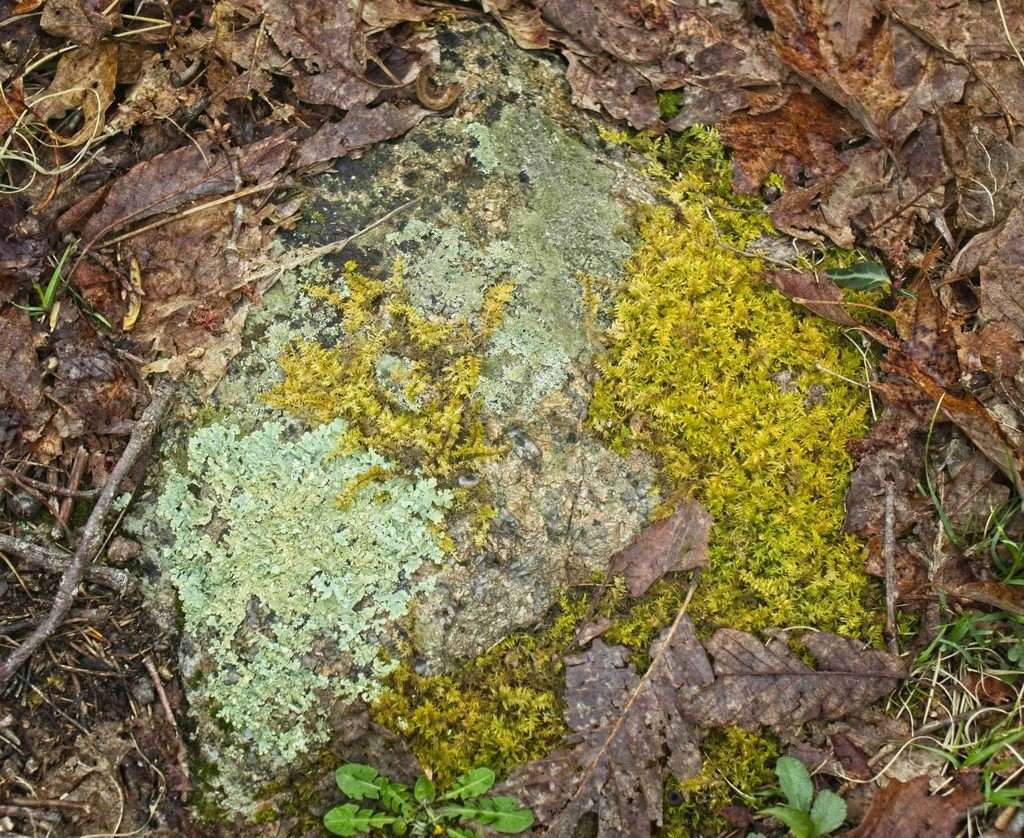
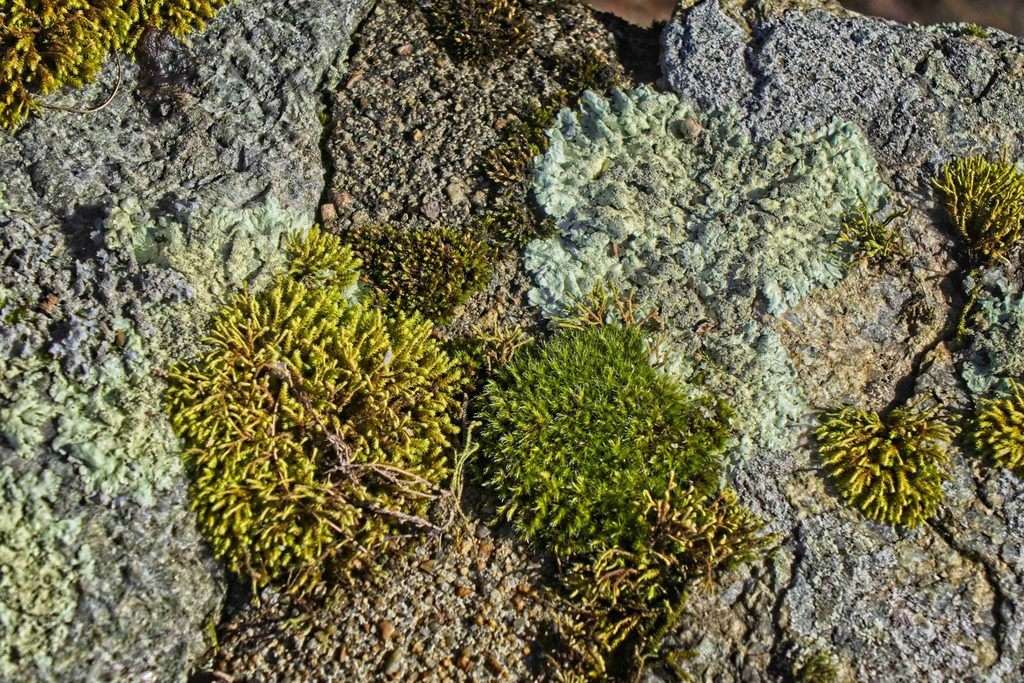
Especially for an amateur like myself, lichens can be difficult to distinguish in the field from mosses and other bryophytes, and too laborious to identify the many different species. Bryophytes are plants, non-vascular ones, and so will typically be some shade of green, except when desiccated. Lichens can also green up after rain or dense fog, but that is due to increased activity of their algal partner; at drier times they appear some other color due to their fungal partner. Compounding identification is the fact that mosses frequently snuggle up next to lichens, which may pose an existential issue to crowded lichens but offers an opportunity to photographers, as their colors, shapes and textures frequently complement one another. Interspecific aesthetic harmony, if you will.
It’s also difficult to classify lichens, and not just because they combine two (or more) species with independent lineages. The taxonomy usually is on the basis of the fungus alone, since they visibly differ, whereas the photobionts need DNA analysis to distinguish them (and there are indeed lots of them, with doubtlessly complicated ancestries). But there is not one single ancestral fungus from which all lichen fungi are descended (they are not monophyletic); ditto with the photobionts. Instead, different kinds of fungus have independently discovered the better life they can live, not by feasting on dead organic material (like the fungi that produce mushrooms) or parasitizing animals (think toenail fungus and ringworm), but by working with other living organisms that are diligent producers of food through the miracle of chlorophyll. Usually the fungus in a particular lichen will have domesticated its own special sugar vendor; but there are instances of the same fungus partnering with different algae species, and the same alga with different fungi. So once again it’s complicated.
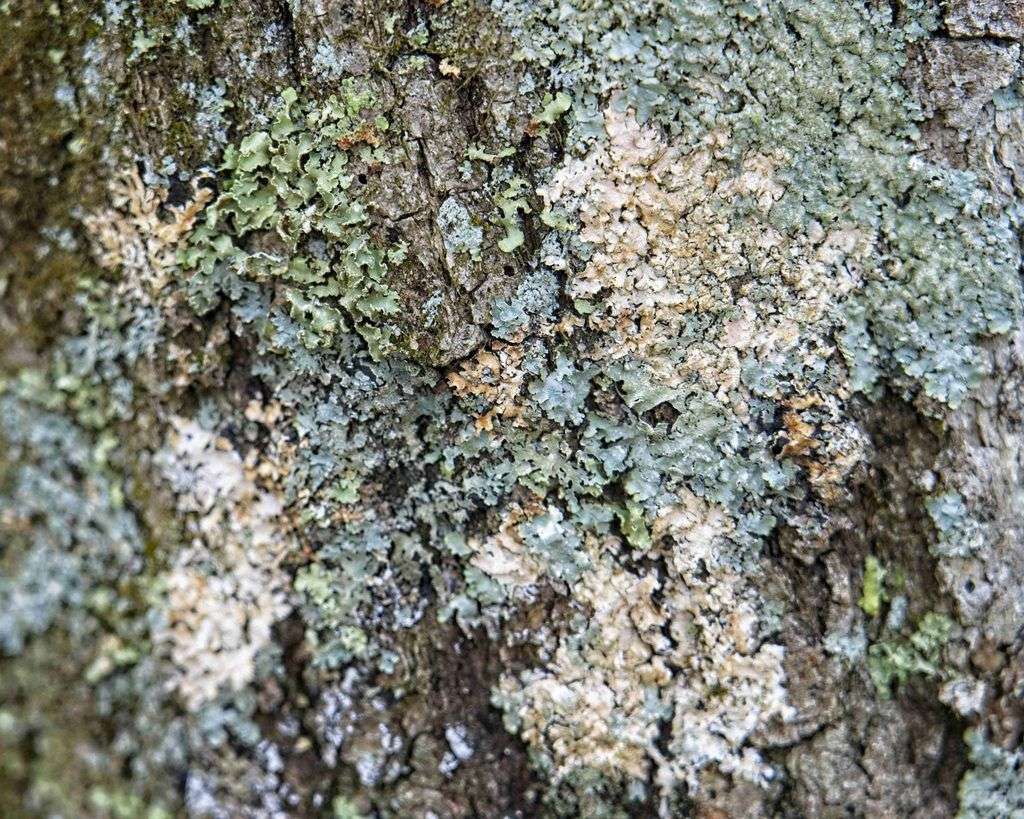
There are as many as 17,000 identified lichen species worldwide. They thrive in every unpolluted environment, able to colonize the hottest and coldest places on earth, from sea level to mountain tops. [In their dry state, some can survive up to 90C, and some have been frozen to -196C and resuscitated!]. They are the dominant vegetation on about 8% of the earth’s land, mostly polar regions. They grow slowly, because it’s not easy managing an inter-specific relationship and they have no vascular structure to transport food and water.
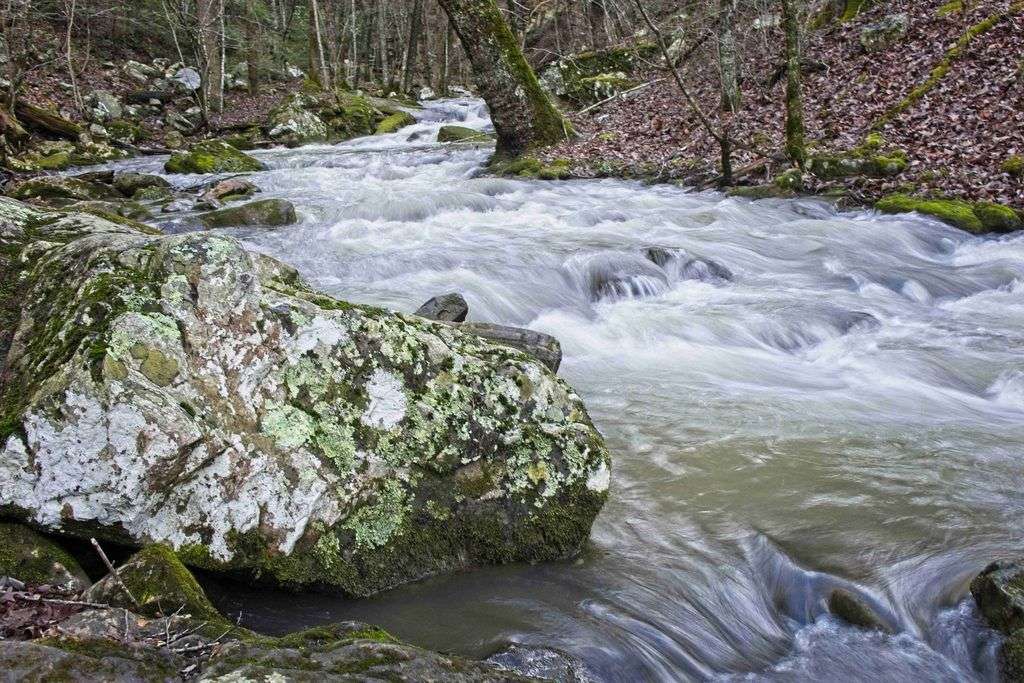
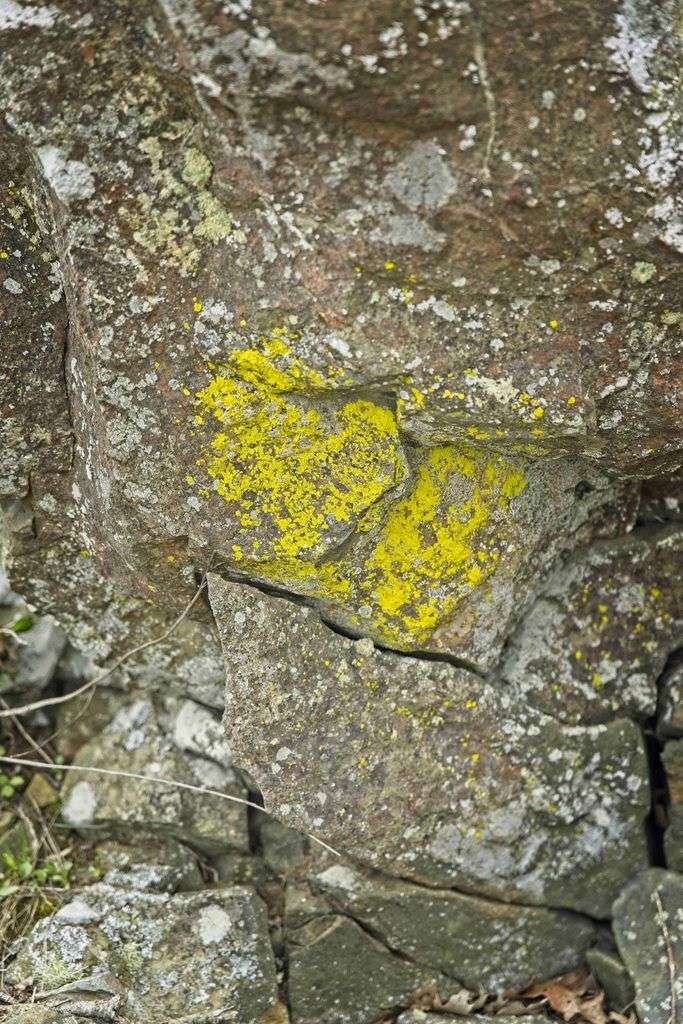
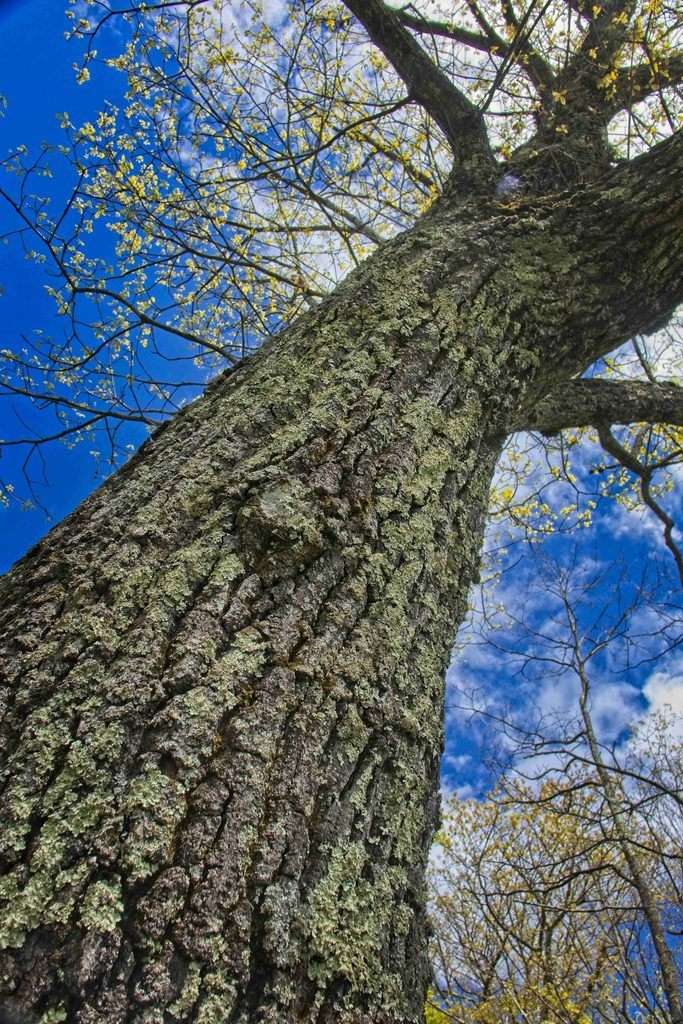
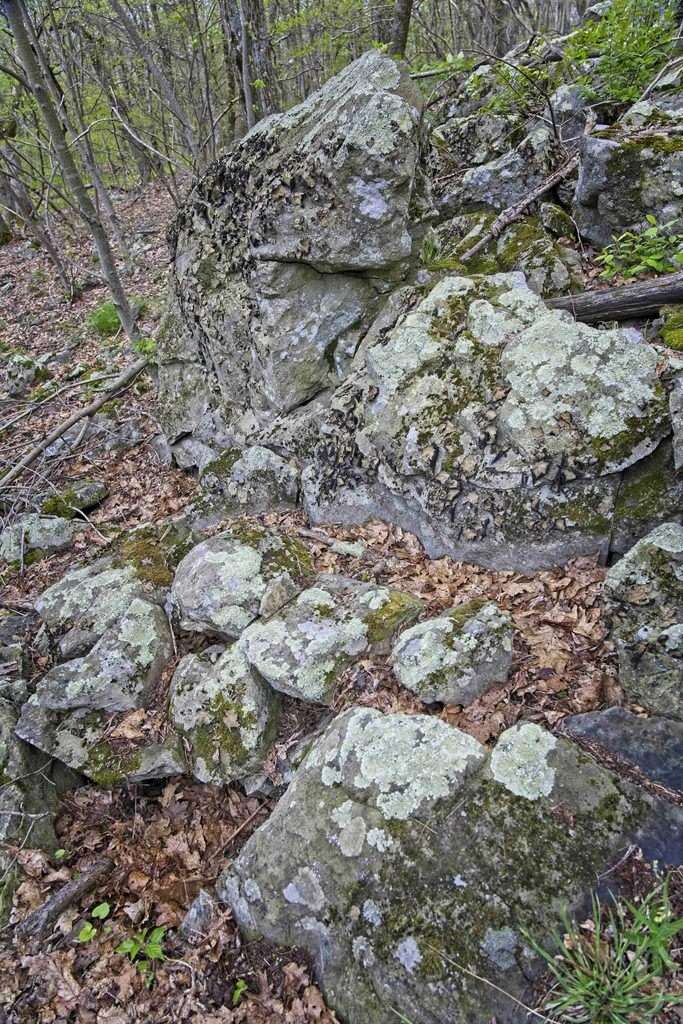
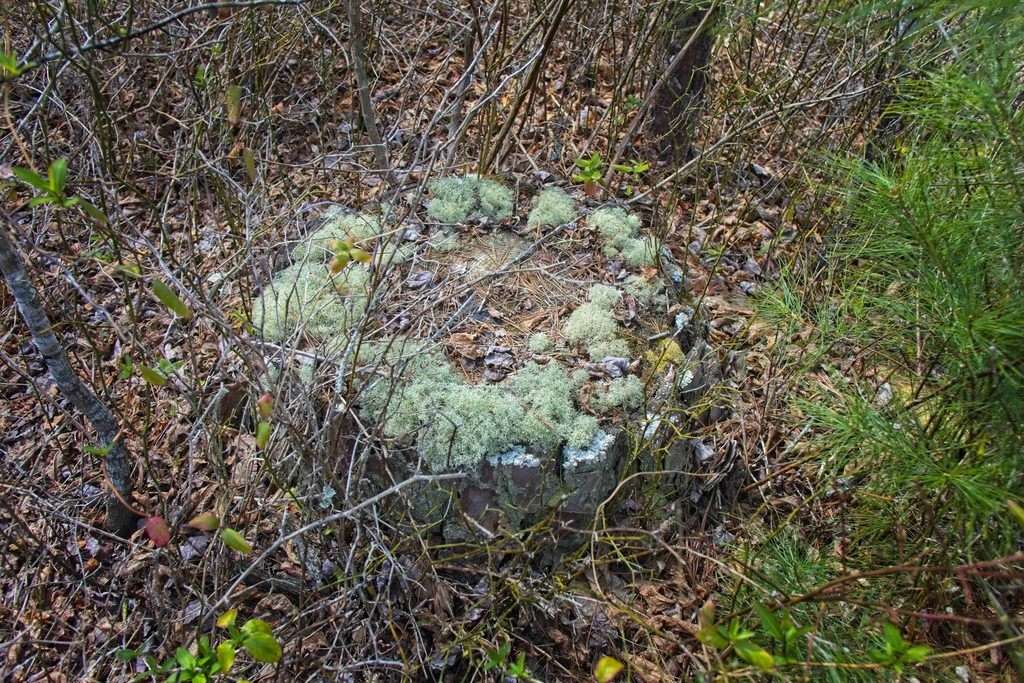
Most lichens need a substrate on which to grow. In nature, these substrates are usually tree bark, dead wood, bones, rocks and soil, but also sometimes living organisms such as mosses, other lichens, animals (barnacles, Galapagos tortoises) and even some insects (lacewing larva). Different kinds of substrate are preferred by different kinds of lichen (e.g. limestones v. silicates). But humans have lately supplied other substrates: glass, metal, plastic, leather, cloth, bridges, tombstones.
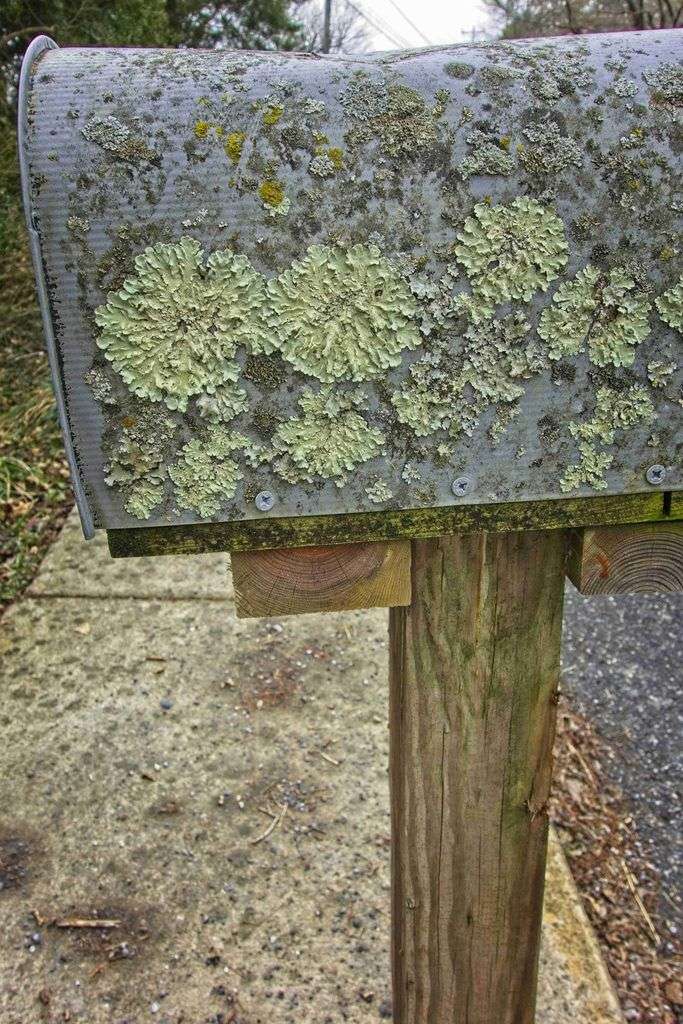
Lichens are sometimes the best available food for some animals, such as caribou in winter (“reindeer moss” is actually a lichen). Other animals such as birds use lichens for nesting purposes and camouflage. But humans make more extensive use of lichens. Lichens produce over 600 compounds useful for antibiotics, dyes, perfumes—and, yes, poisons. We also use lichens for (mostly emergency) food, decorations, and fibers. There is something called “lichenometry,” which gives approximate dating based on the age of slow-growing lichen. Prospectors can sometimes use lichens for finding metals, which they absorb in minute quantities from nearby dust. While humans may make some new niches for lichens, our impact is mostly negative, destroying or altering habitat and polluting the air and water, not to mention letting livestock graze indiscriminately. Perhaps the best use for lichens nowadays is as environmental monitors. They are exquisitely sensitive to pollutants, as they quickly absorb minute amounts of chemicals from air and water—and they are considerably cheaper than human technology.
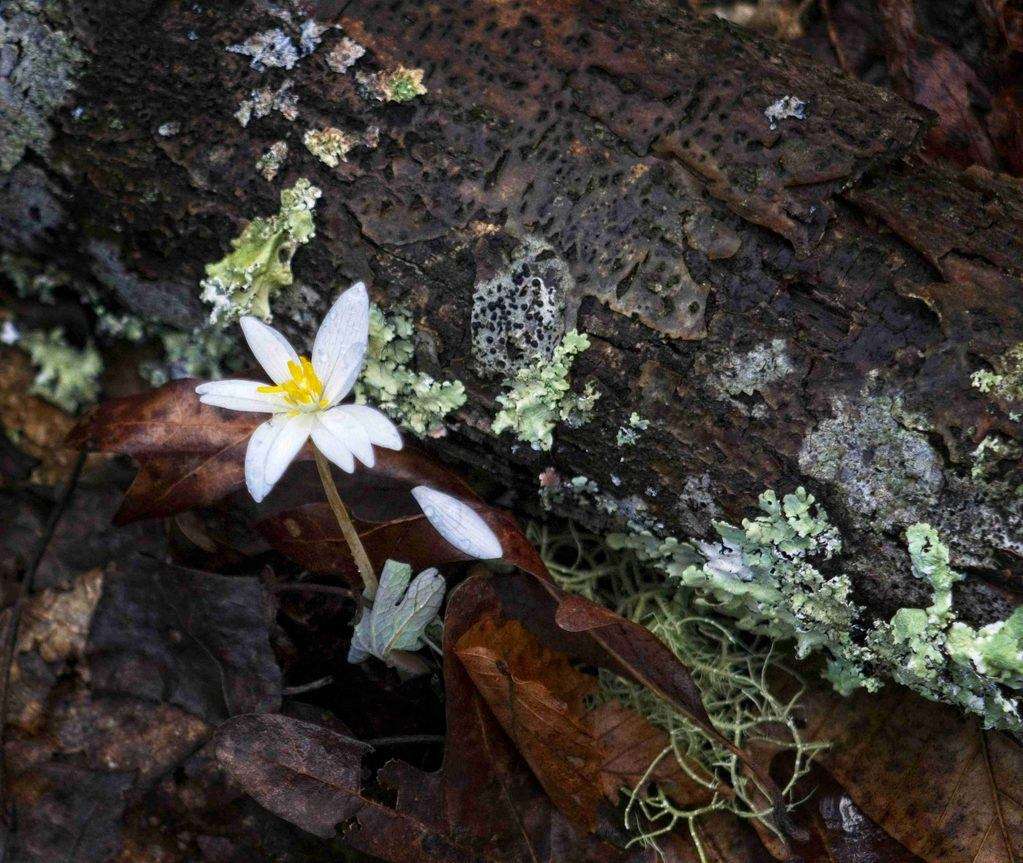
I used to think that lichens decomposed rock and damaged trees. Neither is true, exactly. Both rocks and trees are good natural substrates, but lichens don’t eat or destroy either material. Lichens are pioneer species, colonizing bare rock (with mosses soon to follow), and they do speed up chemical weathering a bit (over centuries!). Likewise they don’t harm bark, although they do absorb some minerals and water on that substrate, and they can harbor destructive insects. Think of them much more as interesting hitchhikers than as dangerous intruders.
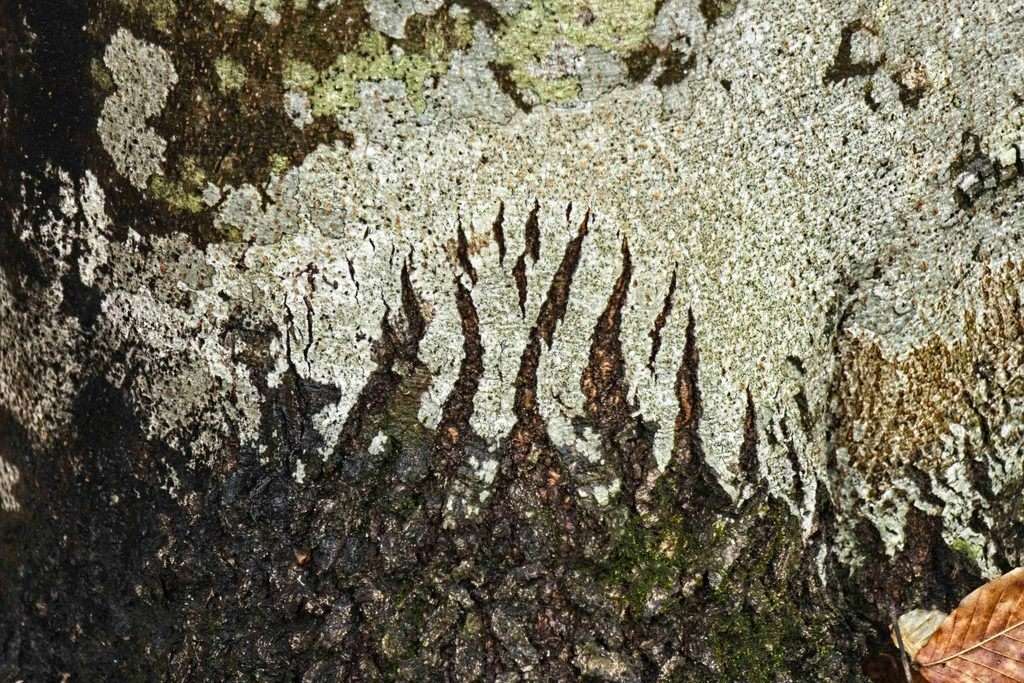
Much money and effort is spent in some places, particularly cemeteries, to remove lichen, regarded as “disfiguring.” I would dispute the aesthetic point, as I find lichens beguiling, but that’s a matter of taste. I do understand and respect the sincere motive uppermost in many minds: remembering and honoring our kin and ancestors, and thinking that lichen “defaces” their memorials. But I also think there’s another way to look at things: lichen can serve as momento mori and reminders of our transitoriness. We usually find many ways of denying our passing (an interesting term for our death), and one of them is to create mortuary monuments, of which the pyramids are perhaps the most extravagant examples—but less expensive ones may be found in almost every cemetery. We too will pass, and so will memory of our brief lives, even though we may delude ourselves into thinking that a tombstone is a permanent memorial, which it isn’t. Lichen are thus a living symbol of passage, of life prevailing over death, and a cemetery is a good place to reflect on such things. Can’t we do both—remember the dead and ponder the living?

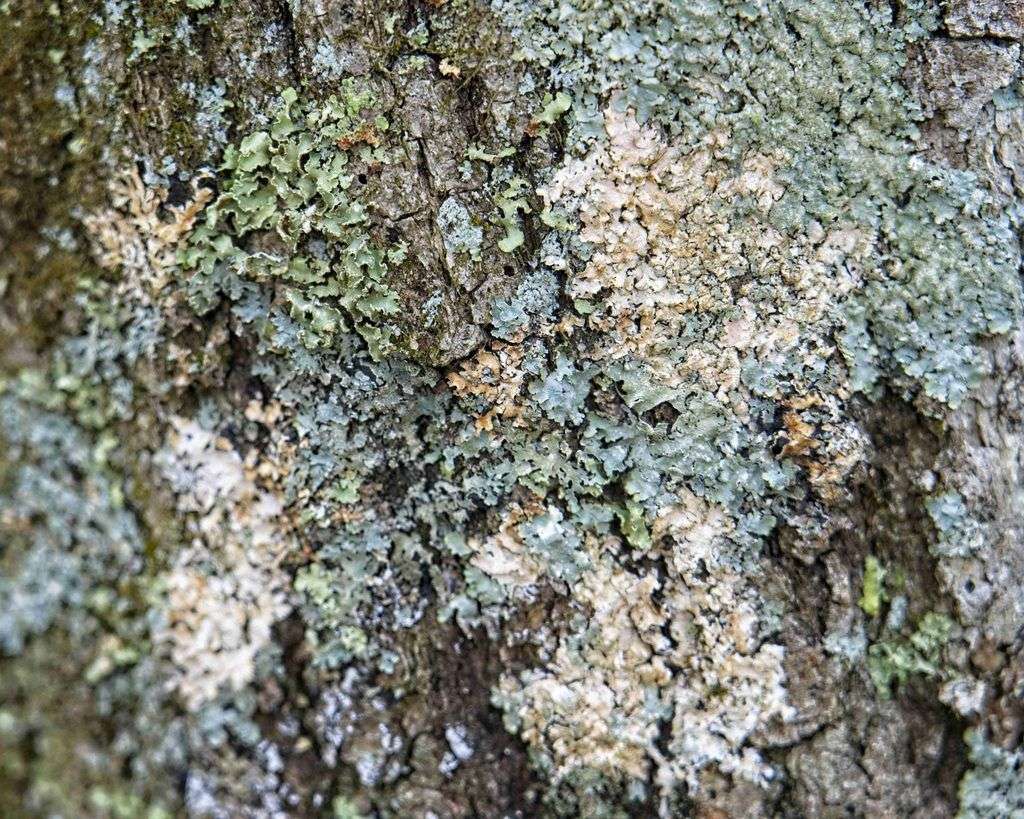
As there are multiple ways of appreciating anything, so lichens can be objects of interest not just to lichenologists but also to photographers. Photographers may not understand, or care much about, the morphology, chemistry, physiology or taxonomy of lichens, but they should care a lot about their appearance. I’ll attempt to note and illustrate some aspects of lichens that fascinate me:
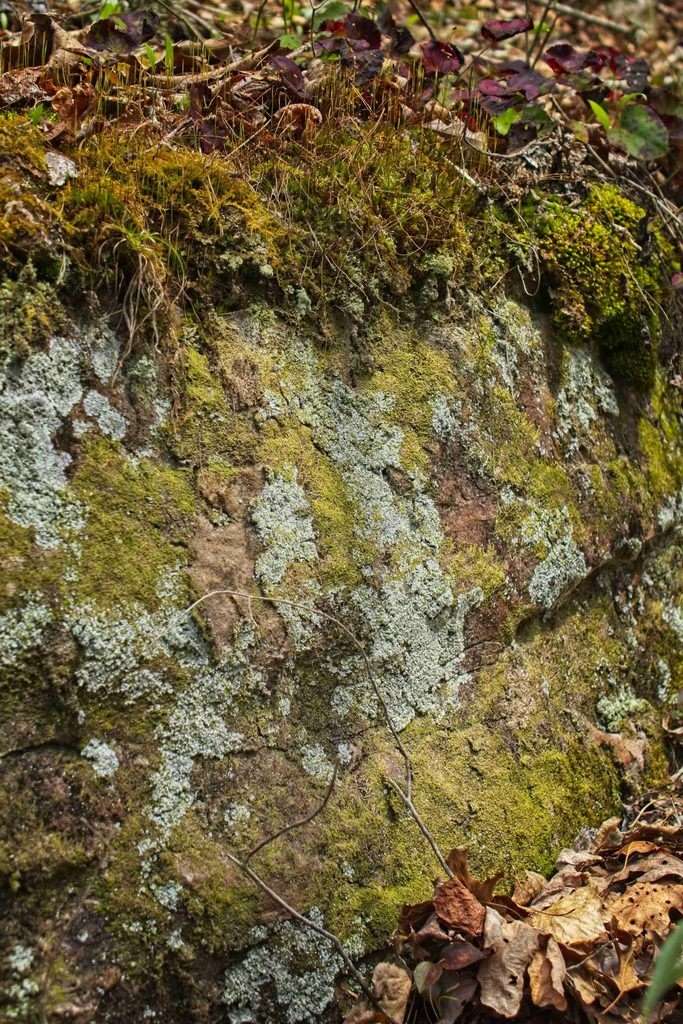
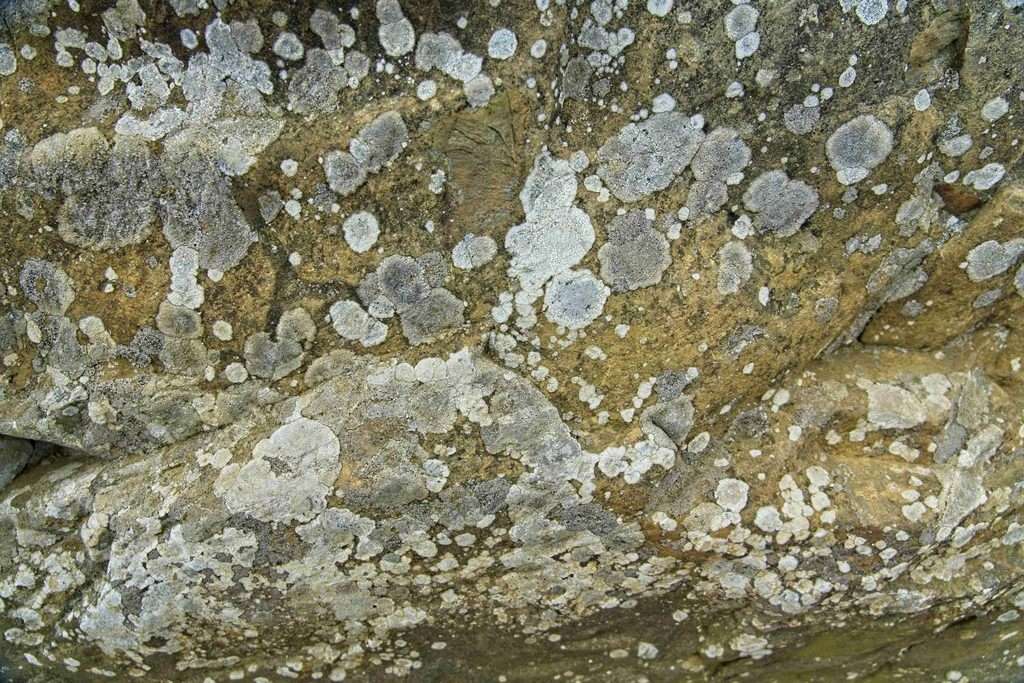
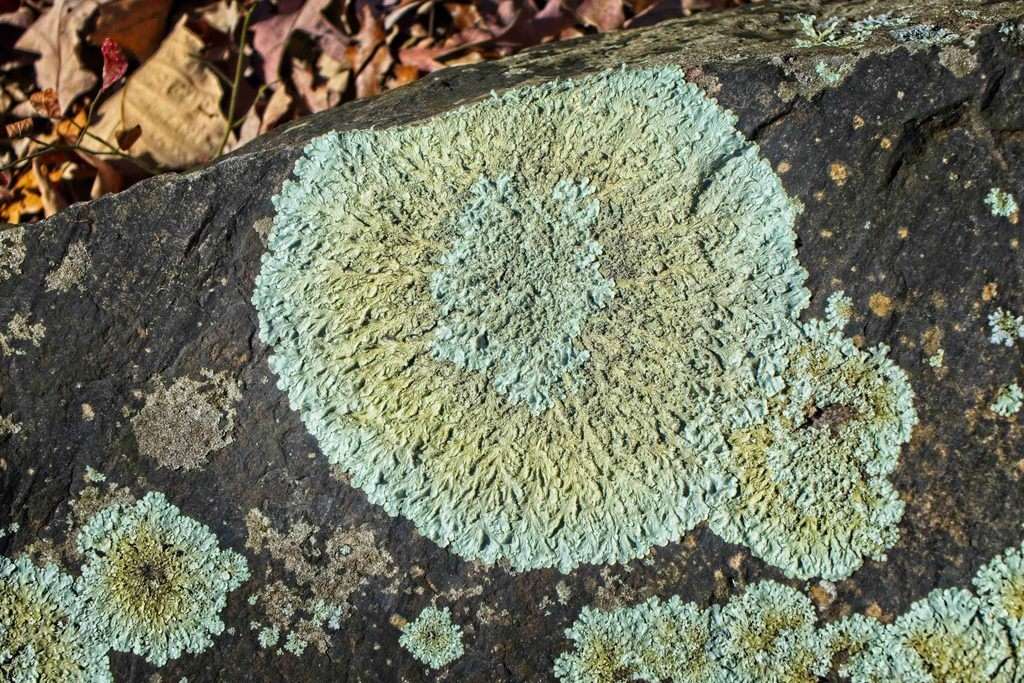
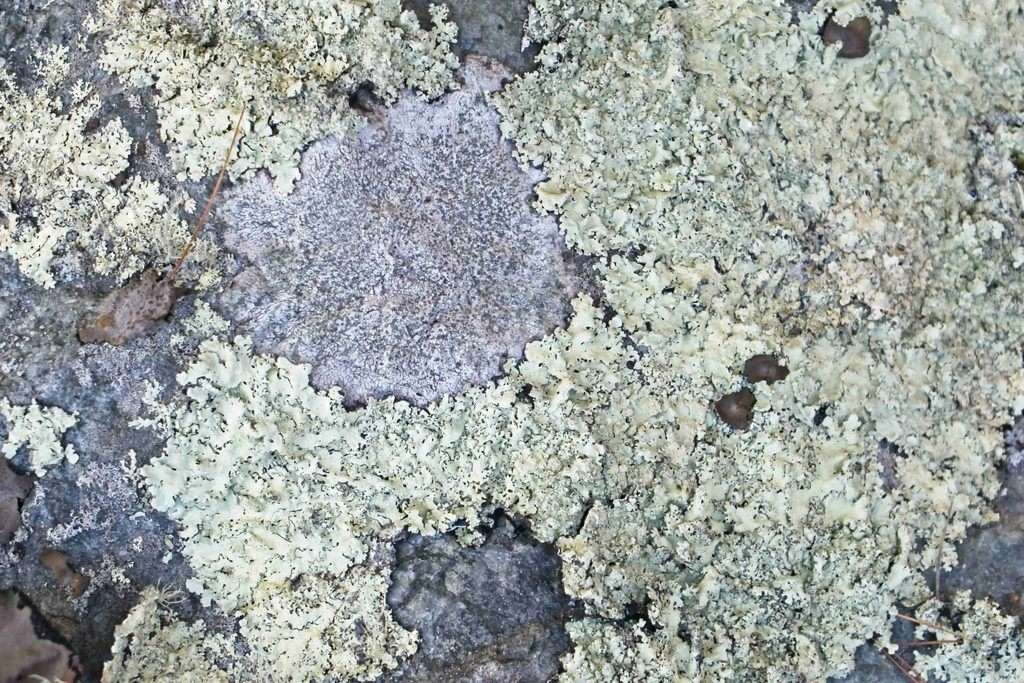
Colors: Many lichens are drab creatures, grey or brown when dry, and only slightly greener when wet. But many others display their photobionts more greenly, in a variety of shades, and if not they can showcase various yellows, oranges, reds, whites and browns. Colors are generally more vivid in arid climates, more drably dark in artic areas; the colors likely shield against UV exposure, the darkness absorbs more solar radiation. Interesting color combinations arise when different species of lichen overrun the same substrate.
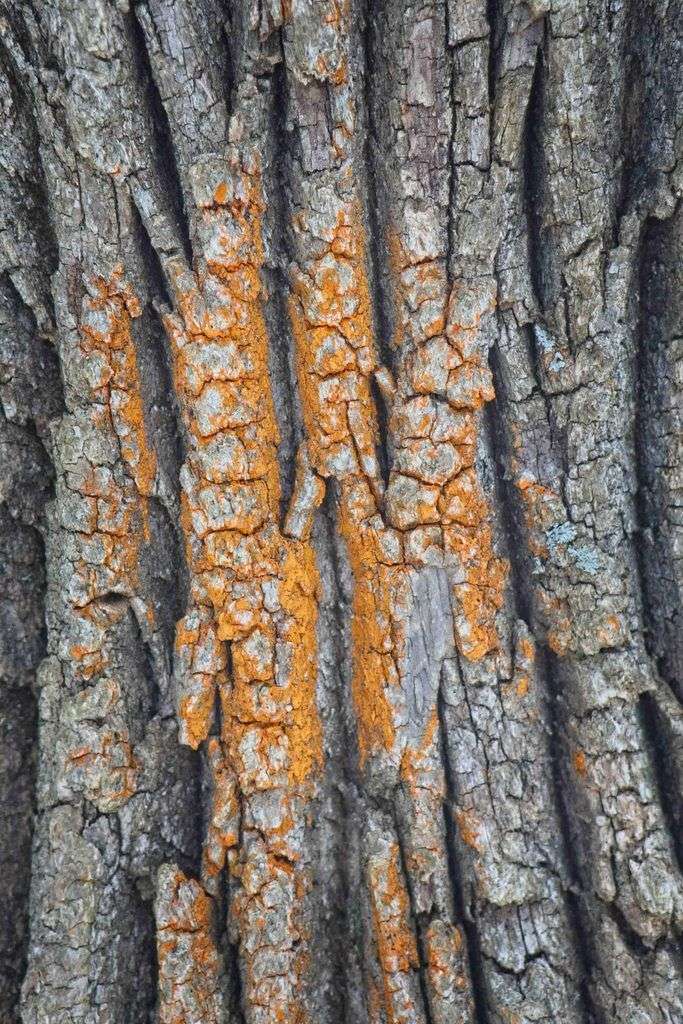
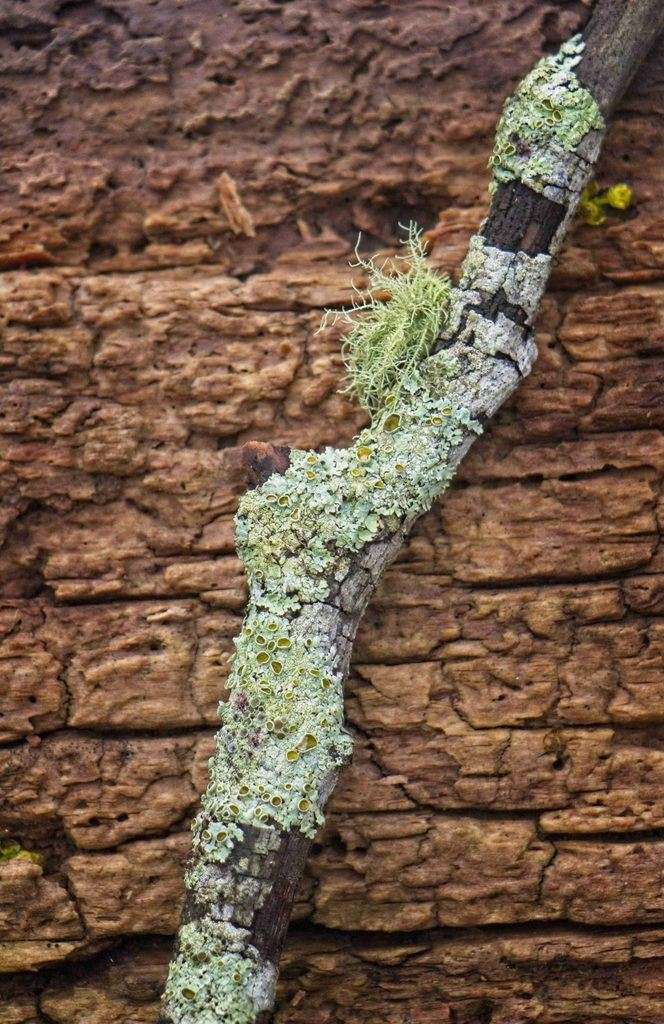
Shapes: Lichenologists have a wonderful time trying to classify lichens by their various forms, applying labels such as foliose [flat leaf-like structures], fruiticose [tiny leafless branches], crustose [like peeling paint], squamalose [small leafy lobes], and others. These categories are not distinct, as there are always intermediate species, and besides, they’re not very useful to photographers. What is useful for photographers to know is that lichens can assume a variety of shapes, some hard to distinguish from mosses, but interesting in their multiplicity. Indeed, I find individual shapes, particularly leaf-like and cup-like ones, picturesque on their own and an added enjoyment when snuggled against mosses. (My range of examples here is limited by my location; they are much more diverse elsewhere.)
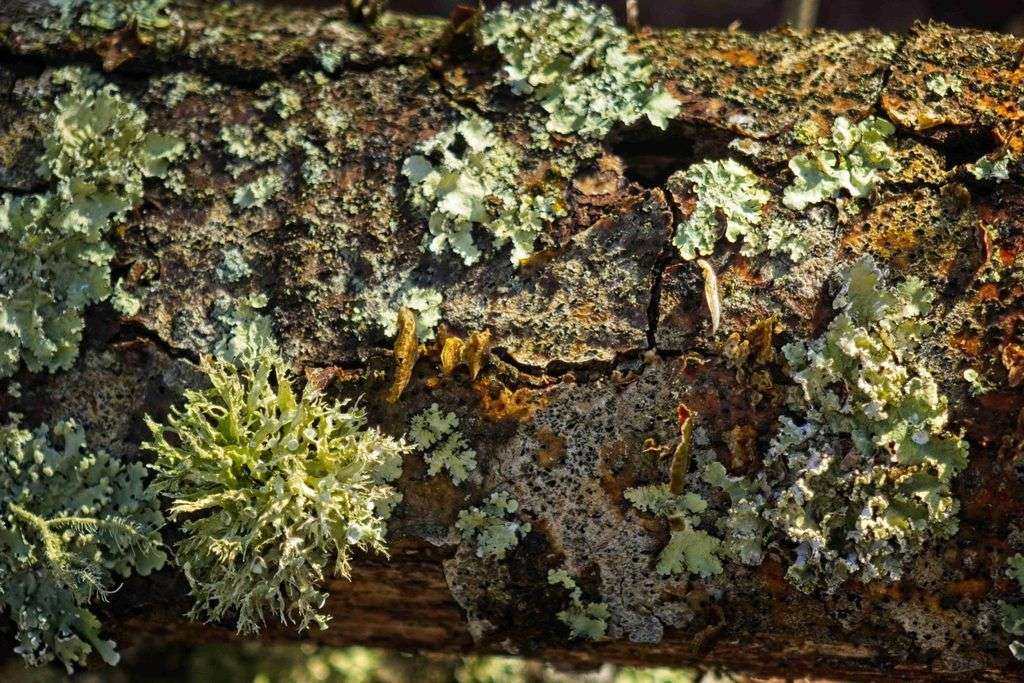
Textures: Some lichens appear as mere pigments, others as coarse powder, others plump succulents, still others as miniature leaves or stalks. Their surfaces can be smooth or grainy, and much can be done with incidental and diffused light.
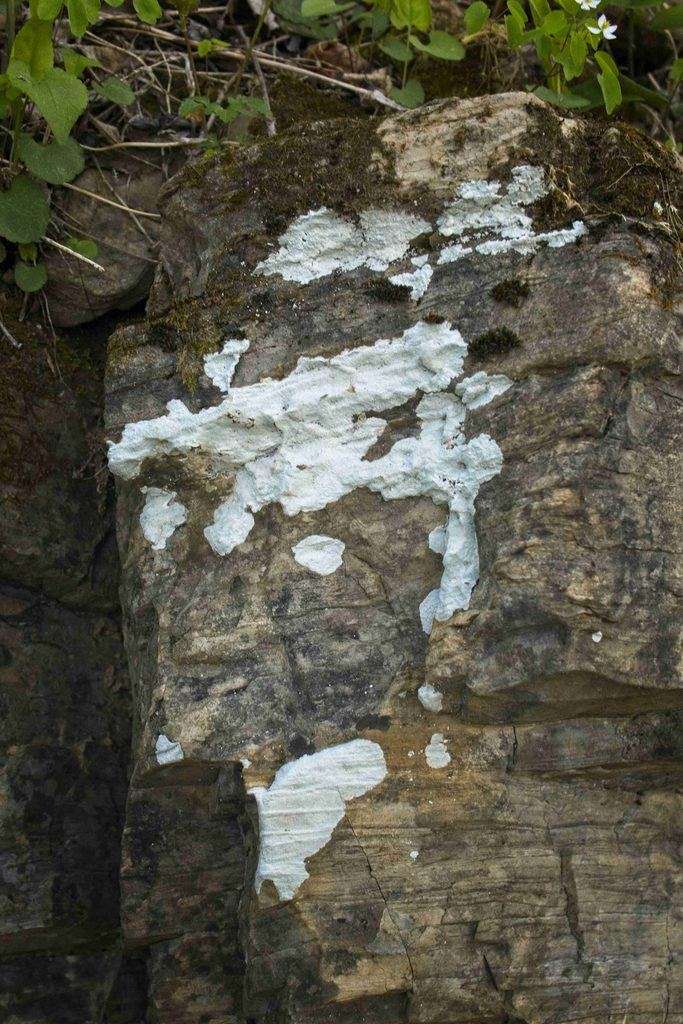
Sizes: Lichens can range from almost microscopic to small growths (a few inches tall). Remember that lichens lack roots, and so their stability depends on close contact with their substrate. To get a close-up I use the longest reach of my trusty Sony RX10 travel zoom, which has its considerable limitations. The smallest lichens really need a good macro lens, or perhaps a microscope, both of which I lack. Good images can be made at all focal lengths, however.
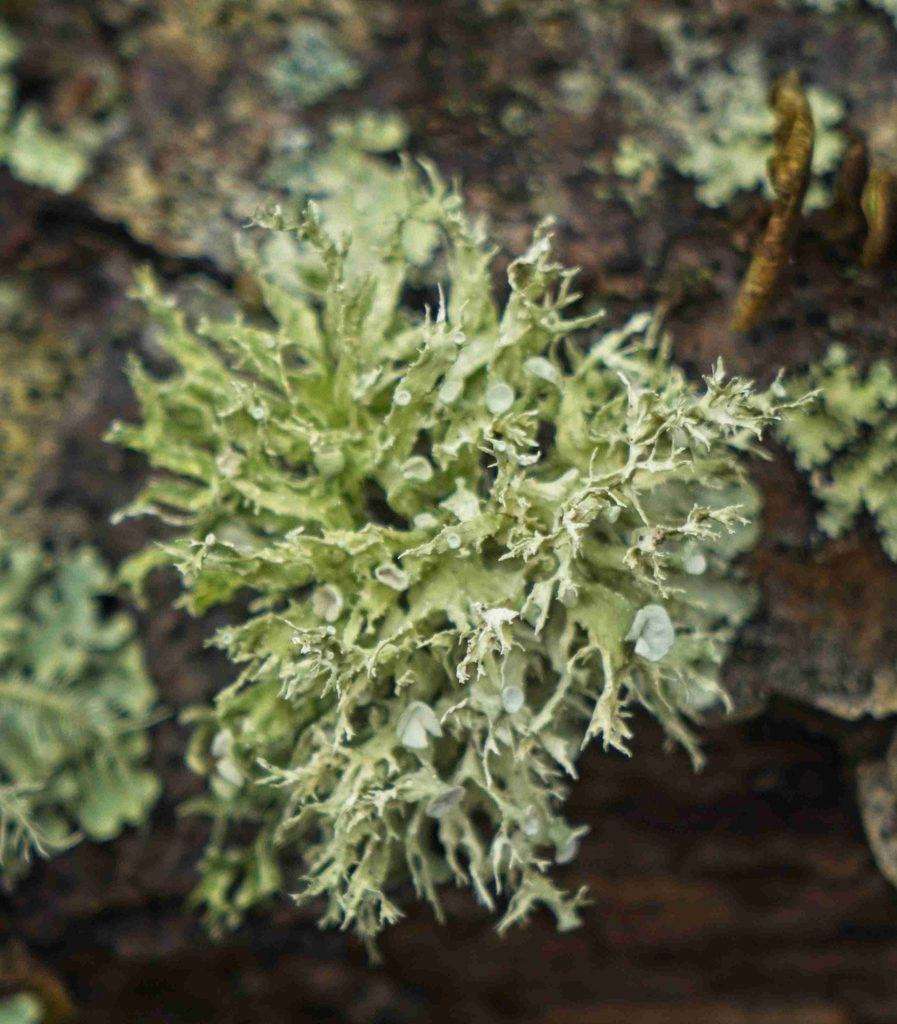
Compositions: Lichens form their own interesting compositions, many veering into abstractions, spreading radially and in splotches. But I find them even more interesting not as monocultures but when combined with other species, especially mosses, ferns and other kinds of lichen. Suspend all thoughts about natural competition and (slow-motion) struggle, and instead focus, both literally and figuratively, on how these different organisms form a contrasting but pleasing arrangement.
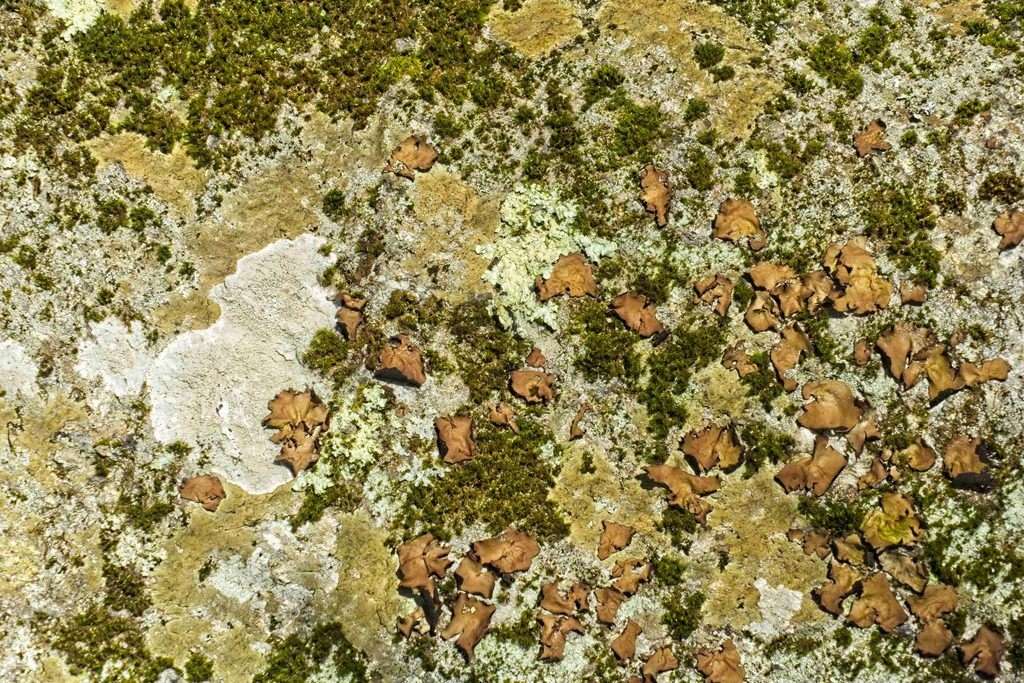
Light: I find that lichen are at their best shortly after rains or in misty conditions. Then they plump up, the outer layer becomes more transparent so the photobiont can shine forth, and their colors glisten. An added bonus is that the diffused light of clouds helps vivify their colors.
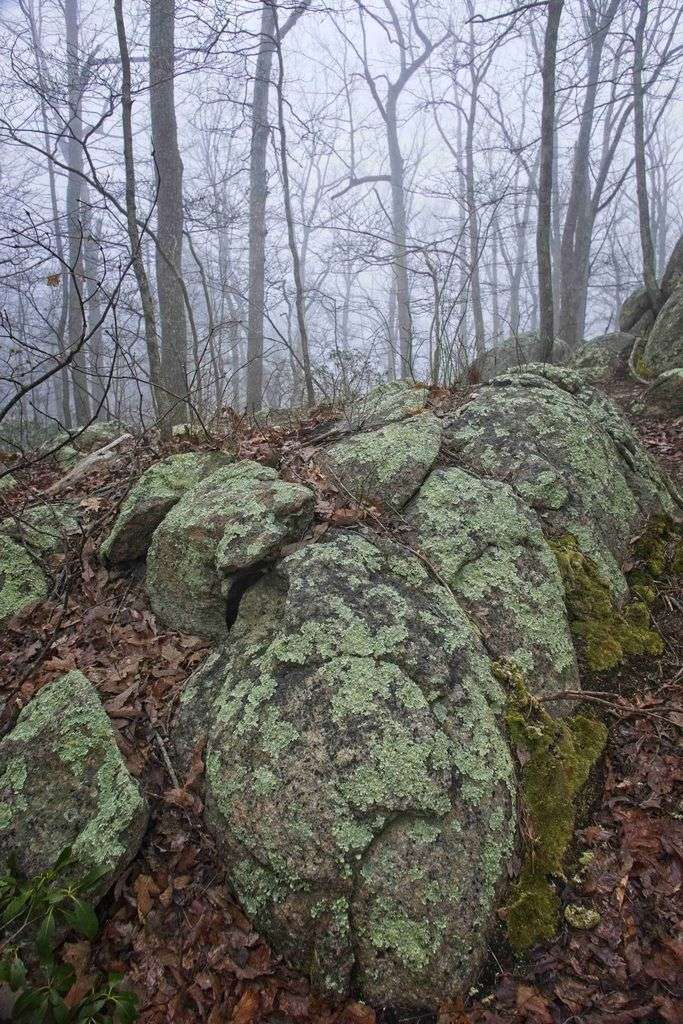
My concluding word to photographers is simply this: Get out into the “uncivilized” parts of the world and look down (or sideways) to examine those marvelous small creatures we call lichens. They will enrich your photography—and your lives.
Let me leave you with some final shots.